The post How Yoga Helped Me Accept That I’ll Never Have My Pre-Baby Body Back. first appeared on Jennifer S. White.
]]>
Don’t ever Google “post-baby body” and expect to find something uplifting.
Also, I shouldn’t have Googled my weight and height, what’s “normal” weight-loss post-baby or anything else along these lines, like I did.
The reason is simple: I’ll never have my pre-baby body back—thank God.
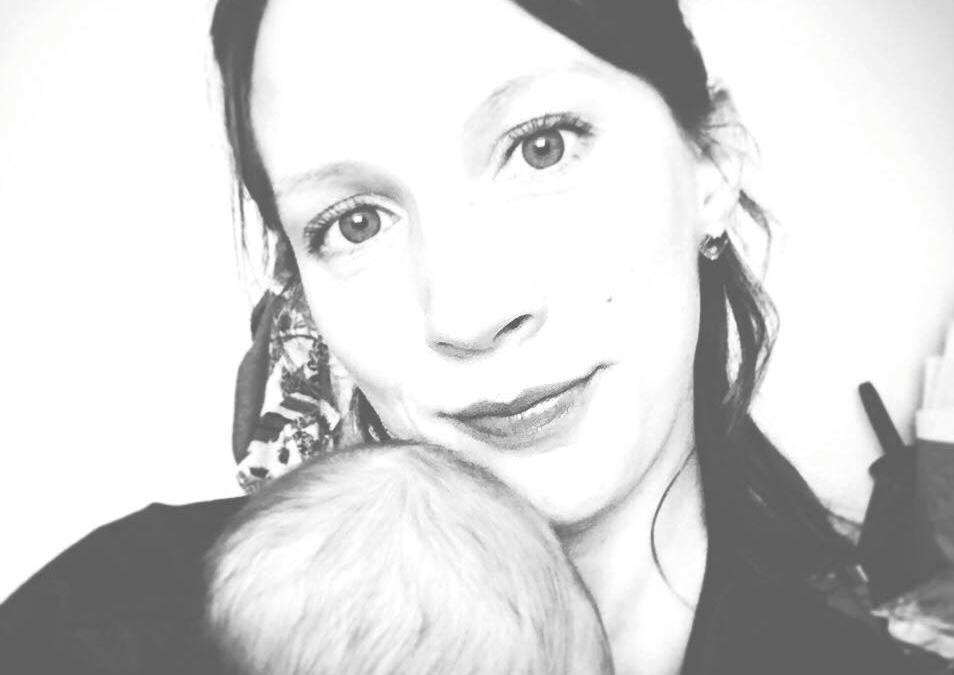
Right now, I’m 11 weeks postpartum and my linea nigra is fading, but still going strong.
I’m one of the lucky women who have a linea nigra, a dark line, running across my skin from my pubic bone to up between my ribs. I use the word “lucky” with no sarcasm whatsoever.
Having this kind-of-thick dark line running along my skin is one of the most beautiful things that happened to my body during pregnancy. My mother’s line faded from my first pregnancy and I do expect it to fade completely after this one too, but it’s a dead giveaway that I just gave birth, no matter how taut or tight my belly appears to people looking at it through clothing.
Yet I can’t say that I’ve been in love with my postnatal body. (I did, after all, honestly Google the things mentioned above.) And I’m not proud of that, but I’m not ashamed either—because many women want their “pre-baby” bodies back, but we feel either guilty for admitting it out loud as we cradle a gorgeous new life within our new-mother arms, or we unhealthily obsess over it.
My yoga practice has actually been pretty amazing since giving birth.
But the first time I attempted crow pose—a posture of strong spinal flexion and abdominal lift that I couldn’t safely perform during pregnancy—I felt “clunky.”
I felt “clunky” and heavy as I tried to shoot my feet back into chaturanga.
Gone was the quiet floating of my pre-pregnancy days and, here, were the new ones of big toes kind of plopping down as I tried to get back in touch with my abdominal muscles.
And I mean that: my yoga practice after having a baby was all about “getting back in touch.” It was like a friend I hadn’t spoken to in months and we were catching up, but instead of talking about work or my kids, I was listening and communicating with my intercostals and my obliques.
And I’ve been getting on my mat every single day since about four or five weeks after I had my baby. I’ve been arriving for at least five minutes of daily core work and, typically, 20 or 30 minutes of some sort of flow sequence.
Yet the reason I’ve been doing these things isn’t related at all to my aforementioned Google searches, but to the simple fact that every time I get on my mat I breathe away not only my life’s stressors, but I realize that I love my body so much, exactly as it is.
I love my linea nigra.
I love my slightly loose skin.
I love the fact that my crow to chaturanga is getting lighter and stronger and I love that I can feel my body as it regains both flexibility and strength. But I don’t love these things every day.
Some days I just feel ten pounds heavier than before I had my baby.
Some days I can’t stand the slightly loose skin.
Some days I feel clunky in general, not just in crow pose.
But that’s the thing: my daily yoga practice has given me the power of getting in touch with where I am, right now, regardless of whether or not that’s where some silly celebrity blog says I should be or whether so-and-so still has ten extra pounds.
Because, when I’m on my mat, there are no arbitrary numbers—only me, Jennifer, new mother, strong-super-woman-who-attempts-crow-pose-after-pushing-out-a-baby.
On my mat, I’m all alone, like on a deserted island, while simultaneously being connected to the larger theme of life that makes anything coming up on a “post-baby-body Google search” a complete waste of time.
So, yes, I’d love to pretend that I’m perfectly content in my postpartum skin. I’d love, too, to imagine a world where women don’t feel some form of pressure to be fit. However, we live in a world where “post-baby body” is a completely normal catchphrase (and Google search).
But that’s not why I get on my mat.
I get on my mat because I want to feel good—and a huge part of feeling good is taking care of my body, because it houses my new-mother soul.
And I’m raising two girls now—I’m raising two little human beings who depend on my teachings for how they will look upon their own bodies some day.
I want them to know they can talk to me about concerns and insecurities, but I also want them to know that our bodies are so much more than numbers on a scale, or how strong or how flexible we are.
So, thank you, yoga practice for reminding me that I’ll never, ever “get my post-baby body back.”
Nope, it’s gone—because, actually, after I had my first daughter, I was healthier than ever before, having a brand-spankin’ new reason to get on my yoga mat every day, and her name was Gemma.
And now, as a new year dawns, my resolutions aren’t anything like, “lose that ten pounds of baby weight,” or “practice yoga every day.”
My new year’s resolutions are more like, “remember to breathe through the hurt and frustration,” and “fall in love with myself all over again every single day.”
And I do fall in love with myself every day.
Every day I fall in love with my willingness to embrace my flaws—especially the flaw of caring so much about my imperfections—and I fall in love with where I am right now.
And right now I’m a writing, blogging, stay-at-home-yoga mama machine who needs her yoga practice—and who is learning to love her body, without labels.
Photos: Author’s own.
This article was first published by elephant journal.
The post How Yoga Helped Me Accept That I’ll Never Have My Pre-Baby Body Back. first appeared on Jennifer S. White.
]]>The post Prenatal Yoga Do’s & Don’ts For Every Trimester. first appeared on Jennifer S. White.
]]>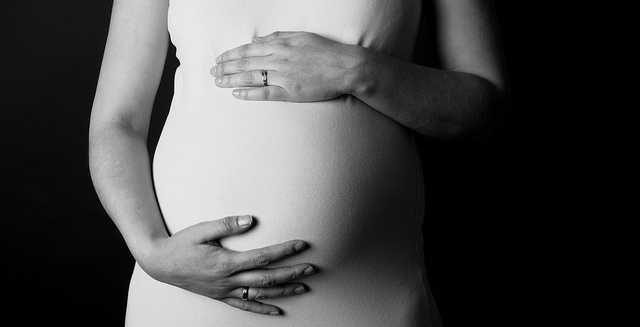
Pregnancy is a beautiful time to be a yoga practitioner.
It’s also a necessary time to practice safety and caution on the mat.
Many pregnant women find themselves modifying for what feels natural for their growing bodies and bellies, but still it’s important to know some fundamental ground rules of keeping mama and baby safe, so that we can fully enjoy our prenatal practices.
Following are some of the most important considerations for your practice during pregnancy, as well as some personal tips that I’ve discovered during my own pregnancies.
Remember to always discuss any concerns or questions with your physician.
First trimester:
1. Telling the teacher.
Some expectant mothers are dying to share their news the second they’ve finished peeing on a stick, while others want to wait and enjoy having such a special secret all to ourselves. Regardless of our preferences, make sure to stay safe in a yoga class setting by letting the teacher know.
Also, as a teacher, I’ve had that extremely awkward situation of thinking a student was pregnant but not wanting to ask. (Come on, we all know what I’m talking about here.) Rather than putting you in danger and your teacher in a potentially disastrous situation, let her know if you need help modifying. (Thanks in advance. Love, all yoga teachers everywhere.)
2. Morning sickness.
The first trimester comes with so many beautiful new experiences, and a few less ideal ones as well. Morning sickness, for example, was one of my primary issues for my practice. If you experience morning sickness, don’t skip breakfast. Allow your food two hours to digest before practice, but make sure to eat something light that will sustain, like my personal favorite of toast with natural peanut butter.
3. Breath work.
Avoid breath holding and fast, belly breathing like Breath of Fire.
4. Jumping.
I’m sure there are yogis who will disagree, but I dislike jumping when pregnant.
For one, as our pregnancies get farther along, we begin to realize how much core work is involved in a safe, effective jump and core-work does become limited (more on that in a bit). For another, strong and athletic women who become pregnant might feel fine jumping and might even get the go-ahead from their doctors, but I just find it awkward.
5. Prenatal classes.
If new to yoga, then prenatal classes are a must. With guidance, experienced yogis may still attend all-levels yoga classes, but please keep in mind that just because a teacher is qualified, doesn’t mean she’s qualified and knowledgeable about the pregnant woman’s body.
Finally, keep in mind that most modifications begin after the first trimester. Always use caution and do what simply feels good to you during the first trimester.
For example, in my second pregnancy, that I’m now at the end of, I wasn’t comfortable in any prone poses, especially backbends like locust, from fairly early on. So I avoided them. Better safe than sorry is my general yoga motto, especially when with child.
Second and Third Trimesters:
1. Backing off.
As pregnancy progresses, our ligaments and soft tissues are naturally meant to expand. This means that we’re more at risk for injury than our non-pregnant mat mates. Now is the time to tap into strength instead of sinking into flexibility (something many yogis are guilty of). For example, in your high lunge pose, make sure to press strongly through your lifted back heel, keeping the knee of your back leg strong and straight but not locked, and focus more on using the strength of your inner thighs squeezing in and the powerful lift of the hamstrings rather than how low to the ground your hips can get.
2. Forward folds.
Now is not the time to work on getting forehead to shin bones. Make room for your belly and baby by keeping legs at least hip-width distance apart and use a belt to get more stretch through your legs if desired. Additionally, proper form of lift in the lower abdominals and length throughout the spine will help dig into the stretch of the hamstrings.
3. Ab work.
Traditionally, pregnant women are advised to not do extreme ab work past 16 weeks. This means that you can still do boat pose, for instance, but that it should definitely be modified with either bent legs or toes touching the ground. Say good-bye to poses like crow pose that overly contract the abdominals and round the spine, but say hello to engaging the transverse abdominals and any lighter ab work that still feels good.
4. Back lying postures.
Generally, lying flat on the back is not for pregnant women after 18 weeks.
I love doing ab work along with my fellow yoga class students while propped up on my forearms. I also enjoy reclined bound angle pose while draped over a block for my shoulders and a block for my head, to help incline my spine. Point: be creative, be careful. And, please, no happy baby pose (ironic, I know).
5. Prone poses.
All stomach-lying postures should be avoided after the first trimester.
6. Extreme backbends.
All extreme backbends should be avoided.
If you comfortably and easily performed a full wheel before pregnancy, feel good about still doing it through the first trimester, if it feels good. However, come second trimester, say adios.
Camel is another one that can still be done within reason, but this is still a deep backbending posture.
In short, make poses like supported bridge pose and cat-cow your best yoga friend.
7. Twists.
Another category of postures to unfortunately avoid is all deep twists.
I have mild scoliosis and I usually use twists for therapy. During pregnancy, though, it’s better to add in side-bends to stretch through your low back and side-waist muscles.
Mild twists that keep your belly open, like modified lizard pose, are still a go.
8. Heated yoga.
When I was pregnant with my first child, I taught and practiced Bikram-style yoga. I actually had a nice correspondence with Bikram’s wife, who has a detailed set of instructions for pregnant women. Still, as my pregnancy progressed (and not far, mind you), the heat and class in general did not feel right for my body. I’m personally of the mindset that classrooms that get this hot and humid should be avoided, but you might find many yogis who disagree.
That said, mildly heated rooms can be safe for pregnant women as long as they’re staying hydrated, and not just during class. Also, it’s important to avoid raising your body temperature by taking wild-legged child’s pose and rests as needed, even if what we really want is to go through one more flow.
Remember, now is the time to experience our body’s overwhelming strength and endurance, but, equally, to learn the value in not pushing ourselves too far. (Learning to back off is a great skill in mastering ego for all yoga practitioners.)
In general, only yogis who practiced in heated rooms before pregnancy should even consider it after.
9. Inversions.
Inversions can be practiced safely and confidently in a yoga practice up to about 36 weeks if already a comfortable inversion practitioner.
The most important consideration is safety from falling.
I love practicing headstands, and I still do. Even though I don’t need the wall, I still practice with one close by. (Things like this.)
After 36 weeks, though, when the baby is hopefully in the “head down” position, inversions like even downward-facing dog should be modified and avoided. Instead of down dog, take puppy’s pose, by dropping to your knees and forearms. You’ll still get a great stretch through your lats and shoulder muscles (and, actually, I think I can dig more deeply into these areas in puppy pose).
10. Balancing.
Balancing postures come with the same inherent risks of inversions, when it comes to falling.
Our bellies are larger and our centers of gravity have shifted entirely. Be mindful of your special, expanding body and give yourself the opportunity to balance—and fall—but do so safely by a wall or by taking a modified version of a favorite poses. (Like keeping your foot on the shin in tree pose as pregnancy progresses and not all the way up to the groin.)
11. Vinyasa yoga.
Vinyasa flow yoga can still be wonderfully enjoyed during pregnancy, but listen to the body’s cue when you need to slow down. Skip a flow or drop into child’s pose, or be open to taking a slower moving class than normal, especially later in the second trimester and in the third trimester when we easily tire and overheat.
12. Say no.
Above all else, this is your body and your pregnancy. No teacher on earth wants you to step out of your comfort zone unsafely, especially when pregnant. Recognize and check that “need to please others at the expense of self” mentality, as it will come in handy to learn to say no willingly after you’ve had baby too.
And these are by no means all of the modifications or practice changes you might encounter during your time with child.
I began modifying my pigeon pose early on in both of my pregnancies, as my belly first didn’t feel comfortable overtop of my shin and, then, as my babies began to kick at my heel. (I love working my shin more towards parallel to the top of my mat, but also staying higher up and not placing my forehead lower than propped onto a block.)
Another modification I’ve discovered through personal experience is that I typically like placing my hand on the outside of my foot during extended side angle pose, but now I contentedly place my hand inside of my front foot and on a block—it just feels right!
And what is more “yoga” than feeling our way into our bodies when on the yoga mat?
Have fun experimenting with what works for you and for your baby.
Happy practicing, mamas!
Photo: Tatiana vdb/Flickr.
This article was first published by elephant journal.
The post Prenatal Yoga Do’s & Don’ts For Every Trimester. first appeared on Jennifer S. White.
]]>The post Why Every Pregnant Woman Should Own This DVD. {Review} first appeared on Jennifer S. White.
]]>
I was ecstatic to open this little manila envelope when it arrived on my doorstep, and that excitement has not waned.
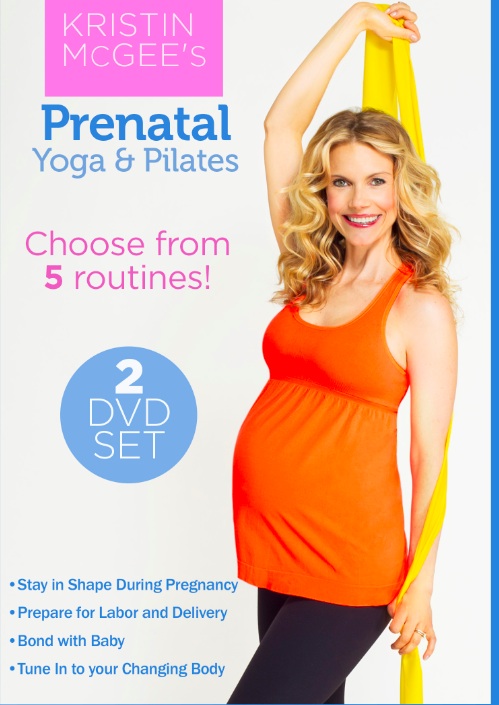
Kristin McGee, celebrity yoga and Pilates instructor, has come out with the bomb-diggity of all prenatal at-home workouts.
This 2-disc DVD couples both yoga and Pilates for something refreshingly fun and appropriately challenging—and both are a welcome change from the average sit-in-the-same-yoga-pose-for-an-hour DVDs that are typically geared towards expectant mothers.
McGee says straight up within her DVD’s introduction that, at times, her primary focus is women who are moving into pregnancy with an already existing yoga practice. Still, in my opinion, her precise instruction and accessible modifications also allow for less experienced moms who want to relax, yet move and stretch.
Here’s a peek at the DVD menu, from McGee’s website description:
“Prenatal Power Flow Yoga — Not for the beginner, but for the pregnant mom who wants to keep her yoga routine during pregnancy. Two segments—do one or both. (43 minutes)
Prenatal Breathing and Meditation — A chance to bond with your baby, your body, and prepare physically and mentally for labor and delivery. (12 minutes)
Prenatal Pilates Tone and Sculpt — Strengthen pelvic floor and abdominals for easier labor, delivery and recovery. The band provides overall toning to keep the body fit and strong during pregnancy. (24 minutes)
Prenatal Peaceful Flow Yoga — Relax, unwind, while lengthening and stretching. (20 minutes)
Prenatal Express Workout — Short on time but need a workout? This Express Workout will challenge the entire body gently and effectively. Do it anywhere. Any time! (9 minutes)”
Again, these DVDs offer something for yogis who want to both break a healthy sweat or simply release tension from tired muscles. (And, if you’re like me, these needs vary day by day, even when not pregnant.)
Perhaps the best part of this DVD, however, is the simple yet unique yellow theraband that comes with this set and its accompanying Pilates workout—my own pregnant body absolutely adores this segment of these DVDs.

First of all, it’s physically invigorating and, for most pregnant yoga mamas—even those of us with Pilates experience—this portion shakes it up and keeps our workouts interesting.
Actually, I found myself regularly gravitating to this particular routine and, with each installment’s relatively short time, it’s impossible not to make time for it in my day.
Additionally, McGee’s light-hearted but approachable personality is inviting and, as my husband puts it, he loves how the video’s studio space makes you feel like you’re practicing with McGee in her living room. And, for us second-time mommies, McGee’s smile is so contagious that my daughter, believe it or not, chooses to put this DVD in. (She’s even tried to get my husband to pop it in and practice along.)
Moreover, one of the things about McGee that has had me looking for her DVDs since my first MTV introduction to her is the eloquent but down-to-earth way she has with words and cues.
For example, McGee—pregnant with her son in the videos—tells us to “hug our baby to our spine” when we need reminders to activate and engage our core muscles—and what a wonderful sensation this evokes when working out with child.
Speaking of McGee’s ability to fuse yoga and Pilates, this is the only area of the DVD that I think might be new or different for some regular yoga practitioners.
Pilates breath and yoga breath are not identical, and there are a few points (such as rounding the spine when on all fours and bringing the knee towards the nose) that she cues breathing inversely from some other yoga styles.
In other words, she tells us to inhale or exhale when our own yoga style might encourage us to do the opposite. However, I think it’s important to remember that neither is incorrect and, for me, I found myself enjoying a little bit of experimentation while, ultimately, breathing how it felt best for my body.
Because easily one of the most wonderful aspects of this DVD is the way that McGee encourages us to listen to our bodies—to not overdo it, to push through one more round when we have it in there and, primarily, to relax into motherhood rather than battling our way through—and what a helpful parental lesson to begin learning early on like this.
Lastly, I can see myself using this set even after I’ve given birth. Many of these strengthening moves are excellent post-natal and the efficient workout modules are perfect for any busy new mom.
I can’t tell you how lucky I feel to have discovered this DVD collection during my pregnancy—I certainly wish I’d had access to it the first time around. That said, if you’re a pregnant yogi, a hoping-to-be pregnant yogi or a new mama, this DVD is definitely for you.
(And, hey, Mother’s Day is right around the corner. Wink, wink.)
Visit Kristin McGee’s website to purchase your copy.
Photos: Courtesy of Kristin McGee.
The post Why Every Pregnant Woman Should Own This DVD. {Review} first appeared on Jennifer S. White.
]]>