The post The Caged Girls: Before She Wakes. first appeared on Jennifer S. White.
]]>
Chapter 33.
I never liked my nose much, until I broke it.
It changed and I realized that it hadn’t been half bad for basically my whole life up until that point, without me even knowing it.
Rather than have the traditional reconstructive surgery after a break (and breakage-related surgeries), I decided that I was going to get used to loving and accepting my new nose, just the way it was.
I look down at her nose.
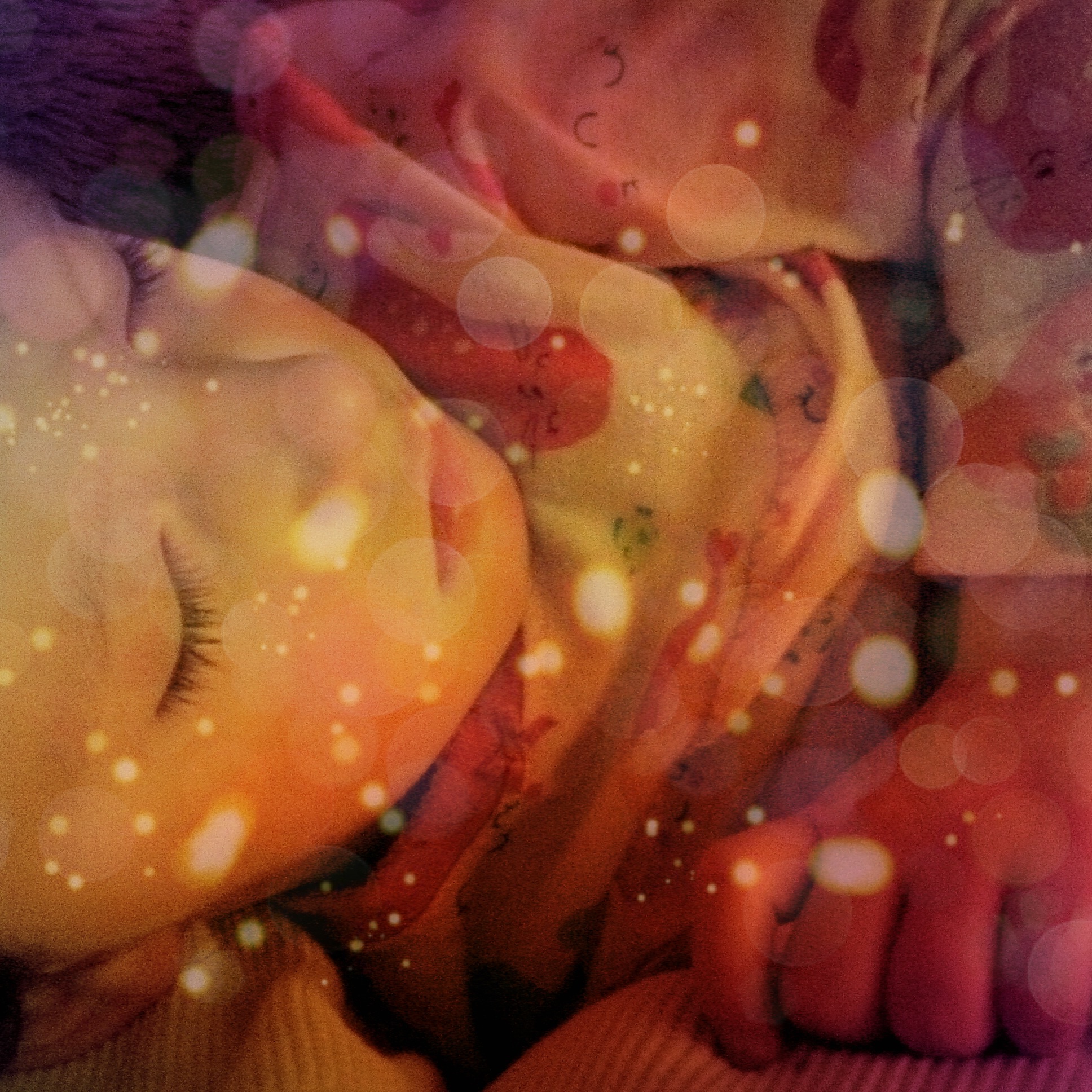 She’s sleeping cradled in my arms, and the tiny bridge of her nose is the sweetest, smoothest, most perfect arch to an equally tiny end, that could have been the model for the term “button.”
Her lips are full and well shaped; her eyes fringed in not only lengthy eyelashes, but deeply curled ones, like her daddy’s.
(She likes to watch me curl my own lashes when I get ready to go out, and I always think how she’ll skip this step when her grown-up routine is born.)
She gently stirs and makes quiet noises of comfort as my ripped-open heart wraps itself around her; with her tired hand on my pajama-covered breast.
I’m leaving her tomorrow.
I never thought that I would be the kind of woman to do this, not in a hundred million years—but I am.
I’ll fly states away and, although I haven’t ever been away from her for a full day, starting tomorrow I’ll be away for a couple.
Because I never thought that I’d be the kind of woman who has a weekend with good friends for no real reason at all besides celebrating their love for one another and their need to spend time—I’ve always wanted to be this sort of woman and even think that I am, but the funny thing about life is that you can never be too sure of who you are until you’re put into particular situations.
And, for me, that situation was being asked to join these wonderful friends for a weekend together—and far away from home.
I wanted to say yes from the start and I practically did. However, my mind told me to say no—and this was one of those times when you don’t listen to your meddlesome mind, but to your true and beating heart.
And maybe for some it wouldn’t take courage to book a round-trip plane ticket.
Possibly no bravery would be required to tell your little girl that you’re leaving for a few days, but that you’ll be back to cuddle and squeeze her and love on her (as you stick your fingertips into her soft, pliable skin and grin widely down into her beaming face).
I sang her to sleep tonight with the refrain from one of her favorite television shows.
Grown-ups come back to you; grown-ups come back they do.
She looked too serious, though—and a lot too pensive—so I brought her close to my chest and held her the way that only a mother can. (I’m 34 and my mom still has a special way that she holds me.)
So goodnight, my princess.
Before you wake, I hope you dream of unicorns and favorite books and painting on your easel—and I hope you sleep tight with the love that I carry for you deeply embedded in your own tender, beating chest.

Chapter 34.
My daughter is quickly growing up.
Everyone says it happens like that; you snap your fingers and—poof!—they’re grown.
I glance over at her as she sits cross-legged on our wooden floor by her stack of favorite books.
She’s pointing at brightly colored drawings while animatedly reading aloud from a treasured selection, and then she’s suddenly running across the room to where I also sit cross-legged. She plops down in my lap, her face inches from mine, her smile beaming up into my face, and I feel a tear leak out of the corner of my eye.
My baby.
Almost three years old and so big—and no longer my baby.
I smile back into her eyes before she turns around, excited for her chance to listen to me read the book out loud—and as we repeat this ritual for the millionth time (of just that morning), I think of the many things I want to teach her.
Of course, I hope she’ll want to practice yoga with me and ride bikes with her daddy. I hope, too, that she’ll study the yamas and niyamas and yearn to go backpacking in the woods.
I’d like her to learn Spanish and to play the piano—yet none of this is my real dream for her.
My real dreams for my daughter are quite simple.
I want her to be kind, to treat people with respect.
The world is often a lonely place filled with anger and frustration, and I want to teach her that much of this pain can be avoided if you don’t fall prey to gossip and lying and hurtful behavior. Rather, if you send love and pleasantness out into the world, I wholly believe you’re more likely to attract it right back to you.
I want her to be confident.
There’s a falseness in arrogance, which stems from an internal well of insecurity instead of self-love. I want to show her that to extend kindness out into our world, it’s important to first extend it inward, to yourself.
I want to help her understand that our flaws and personal struggles have this strange tendency to lead us to understanding and compassion, because these unique imperfections bring with them their own special values. If we can learn to embrace both our light and our shadows, then we’ve moved away from being afraid of the dark.
I want her to be rich.
I hope that she knows that this has nothing to do with money.
I’d like to share with her that having people to love who love you in return makes you wealthy.
I want her to have faith.
I want her to know that faith doesn’t mean believing in a particular God or ideology, but that having faith is knowing that there are things in this world that we cannot easily see and hold in our hands—and that these are the things that matter.
I want her to remain a child.
She should know that you can grow into an adult without losing your curiosity and easy humor. She should also know that inside we’re all still small children, but that some of us just pretend we’re not a little bit better than others.
I want her to believe she’s capable.
I hope that she can see her dreams floating on lofty clouds high above her head and think without a trace of doubt that she can build a long enough ladder to reach them.
I hope she knows that everything she aspires to be, she already is.
I want her to know that I love her.
Sometimes my daughter looks at me with such honest adoration, and I hope that she still looks at me this way once she’s figured out how fully flawed I am.
I want her to know that I’ve never tried so hard in my life to be as good at anything the way that I try to be her loving mom.
~
I return from my thoughts and look down at my tiny lady, her hand reaching up for mine. Ours fit together like puzzle pieces, and the really odd thing is that I wasn’t even aware mine was missing anything until it held hers.
My heart feels like this too.
I bury my face in her soft, curly hair and tears prick the backs of my eyes.
Almost three, I think in shock.
And I know I’ll be sitting here, my wet cheek pressed to her tender head, thinking almost 13 and I’m not quite sure how those years passed by in only minutes.
So as she grows, and I grow more, I remind myself of what it is that really matters.
And it’s not messy kitchens and dirty clothes or even learning to count and read—it’s being in these cherished moments exactly as they happen so that I know, while they may have zoomed by with unfair speed, I didn’t miss a thing.
Photo credits: Author’s own; Moyan Brenn/Flickr.
The post The Caged Girls: Before She Wakes. first appeared on Jennifer S. White.
]]>The post The Caged Girls: Flying Above the Storm. first appeared on Jennifer S. White.
]]>
Visit here for more of The Caged Girls.
Chapter 29.
My pen rolls across the paper—fluidly—and my words come out almost sloppily. (It’s not my usual, preferred ballpoint pen.)
My fingerprint-laden aviator sunglasses—the ones I’ve had for nearly a decade, with gold rims and the lenses that make the world appear brighter—rest in the cup-holder next to me, to my left.
The warmed car seat beneath my thick, off-white winter peacoat helps me to relax.
My rose gold and turquoise ring—a family piece that’s circulated within us for over 100 years—falls slightly to the right as my thumb and first two fingers press into the firm rubber grip of the black pen, gliding smoothly along my decomposition book.
My cheek itches suddenly and I pull down the mirrored visor to look.
Distracted, I notice the way my dark brown hair wisps out of the copper barrettes that pull it back on either side, creating a few haphazard chunks around my temples.
My forehead has maybe three shallow lines running across, broken in the middle and making it, more accurately, six.
My fine eyebrows arch high and I admire the perfection of their shape (thanks to a recent salon visit).
My eyes have light imprints of sleep-deprivation underneath them that appear somewhat like purple-tinted shadows. Above these shadows, I observe that today my eyes are more blue than green. This changes easily, though—due supposedly to my black Irish ancestry—and I trace the yellow that faintly edges my pupils, lending to this color changeability.
I hear the trunk pop open and smile intuitively at the sound of my husband returning to our little silver Jetta.
I feel the soft, grey light hit the surfaces of the car interior and I hear, once again, the sound of my daughter’s music playing through the speakers. I’m no longer alone inside of my mind and, although it takes me a moment to collect myself and shake free from my thought stream, I smile again; knowing that life isn’t meant to be continuously lived inside of ourselves.
He climbs into the driver’s seat and reaches for my hand. After squeezing it between his much larger thumb and forefinger he pulls away from the two, diagonal yellow lines—and towards the pink and peach setting sun.
Chapter 30.
My fluttering heart stopped beating.
At least it felt that way—time standing still and you swear that you can see a humming bird stopped, mid-flight over your shoulder.
And then it ends and time starts up again, but it’s still slower for you—making the speed of the world overwhelming in its unnecessarily rushed and hurried pace.
When something stops you in your tracks—a loss, horrible news, a heart-cutting blow—it doesn’t seem fair that life shouldn’t pause while we grieve and figure out how to collect ourselves in order to stand back up.
These incongruous places in life can feel hollow and desperately alone—and it’s when we feel hollow and alone that anorexia can become an unfortunately welcome friend.
But anorexia is absolutely a frenemy—not a true friend. It doesn’t make hardships easier to deal with—it adds on to them; it becomes a distraction and, if we’re being honest, this is what we’re really seeking.
So, although I’m that rare once-anorexic bird who is completely recovered, I have to pay careful attention to myself—and to my heartbeat—when life deals me merciless challenges—because I know that I’m not immune from turning to an eating disorder to cope—no, I’m much more likely, considering that this is exactly what I did for years.
And there’s another cutesie saying that occasionally floats around the internet and pisses me off: fat is not a feeling. Because fat is absolutely a feeling—with an eating disordered person, that’s a perfect description of what it is.
And when, finally, we are ready to move forward from this night-terror of a coping mechanism—to begin picking up our pieces and moving a tiny bit closer towards our healing—we first need to admit what emotions we’re avoiding by feeling fat instead.
Anxiety?
Depression.
Loneliness?
Fear.
What is it that’s going on within the framework of our lives that we are trying so hard to avoid that it’s easier to abuse our bodies? (Note: this is where therapy can be helpful, within these early stages of the healing process.)
For me, I’m usually avoiding something that’s severely upsetting and that I’m not in control of—a situation with a family member, an illness, a death—and my eating disorder gives me that wonderful, false semblance of control.
More, it gives me something else to focus my mind and emotions on—my caged, needy body.
Chapter 31.
My fingers work clear, thick shampoo through my hair.
I close tear-rimmed eyes as white lather spills down my back.
Warm—almost hot—water runs down the length of my body, to my feet and down the drain near my toes—and I wordlessly beg for it to wash away anything that I don’t want to hold onto anymore.
I don’t want my guilt. The soapy water can have the fragments of my broken heart too.
I’m also ready to leave behind my anal-retentive need for authority—that piece of me that wants every minute, self-created element to fall in line with a cruelly fictitious plan that’s never played out correctly anyways.
Because I’m not in control—not wholly. Rather, I’m in control of the way that I react.
I’m in charge, also, of my actions. (Which reminds me of a few other things that I’d like the hot water to wash down this drain).
My fingers today don’t clickity-clack, clickity-clack. No, they sound more like pitter-patter, pitter-patter—light and not aggressive; softly hesitant.
Because I don’t mind sharing my intimate feelings—I want to explain how I broke out of my cage and how I don’t even keep it on my shelf for rainy days anymore—yet this doesn’t mean that I always love revisiting my past.
And that’s the strangest part about no longer being a caged girl, like my former self—the one who lived, at times, small and contented and, in others, angry and hostile—she doesn’t feel like me anymore. And when I step back in time and put on her fragile glass slippers and wear them around to see how well they fit now, I discover that, like Cinderella, they’re still perfect, and it scares me more than anything—the reality that I really was her and that she’s not just some character in a story.
Pitter-patter, pitter-patter—I want to tell her that she’s no longer welcome in my home with the sunny, open windows, but I know better—she’s more likely to come snooping—peeping—around if I ban her from my heart.
So I content myself, now, with those, thankfully, rare occasions when my heart stops beating and I can count how many times a hummingbird’s wings beat up and down, up and down, and I content myself, too, with my more reckless emotions and my upsetting human struggles, because it’s when I ignore them that she threatens to move back in—and I like my free—albeit humanly imperfect—life.
And I might not be able to stop my churning heart, nor the busied world from stalling, but I can count the pulsing of my own wings—I can feel the pumping of my reality and I can accept it, even when it doesn’t ideally mirror my quietly quaking soul.
Photo credits: tanahelene/Flickr; Geraint Rowland/Flickr.
The post The Caged Girls: Flying Above the Storm. first appeared on Jennifer S. White.
]]>The post The Caged Girls: A Billion Steps Back—How to Trust Enough to Fail. first appeared on Jennifer S. White.
]]>Part Eight of The Caged Girls: A Billion Steps Back—How to Trust Enough to Fail (Chapters 25-28).
Chapter 25.
I decided to overcome my eating disorder once and for all because I wanted to get pregnant, and I had no desire to pass along my terribly unhealthy relationships with food and my body to a child.
This is not to shame, blame or guilt any mother who suffers; this is a reality of our world—living in cold, dark cages and not being able to get out, even when we’re raising children—even when we’re raising daughters.
Still, it wasn’t an entirely unselfish decision, my desire to be rid of my anorexia before expecting a baby.
For one, I longed to cherish, adore, welcome and be admirable of my growing body, not disgusted by it. I’ve known far too many women who were hung up on the pounds gained and where and how their bodies changed rather than focusing on the fact that we’re forming a new life!
And yet the first time around, when I was pregnant with my daughter, I pushed myself to exercise when I didn’t feel like it and I ate like a homegrown picture of perfection—although I did enjoy myself and my garden-produced food—but I didn’t let myself truly relax into my pregnancy.
I don’t regret it either—giving birth is the ultimate exercise. (My abs were sore with lactic acid build up for days afterwards.) I gave birth naturally—never having so much as a Tylenol during my pregnancy or her delivery—and when I see women letting themselves get horribly out of shape and eating like anything but the health warriors that their bodies are calling on them to be, I feel sad and I can’t help but wonder how that labor will go.
But we can’t see the future—complications happen, plain and simple—but what about the ones that we can prevent or help to ease along?
My body is a machine; my body is also my cozy, warm, quiet, safe home—my body is both of these things and I wanted to figure out how to treat it equally in these two regards.
Let me admit, this is not easy. We’re conditioned to think in one way or the other—our physical selves as round, supple, womanly places of worship or as rigid, muscle-rippled, health machines. So what I’m asking—and what I asked of myself—is why can’t we be both?
Why can’t we have our cake and eat it to?
So I set on a long, arduous road of keeping ice cream in the freezer but not eating it—or, more importantly, even wanting it—every evening.
I set out to exercise and keep my body in top shape, but not to the point of obsession or ruthlessness with myself. And this is what I learned: when we go to either of these extremes—shunning our bodies as health machines or accepting them in full as such—we are avoiding who we really are.
We’re avoiding our fear or our hurt or our life in a multitude of ways when we don’t allow ourselves to sit still and eat something for the pure sake of flavor; instead heading to the gym or for a walk outside for the second time that day (or third, or fourth, or fifth).
Simultaneously, we’re avoiding our primal need to be strong and to be able to endure life when we sit around and avoid exercise because sweating in a yoga class might mess up our hair or make us have to shower again.
In short, we can’t be recovered from an eating disorder until we learn to accept these extremes and then to couple them together into softer versions. I know this is a huge claim, but I’m standing fully on it—because it’s true.
Chapter 26.
I see so many women claiming recovery when they’ve basically lapsed and gone the other way.
For example, if bulimic, there’s a sense of pride in being able to portion food with extreme amounts of care—and control.
If anorexic, there’s a sense of intellectual fulfillment in watching the scale tip the other way and in eating things previously deemed “off limits.”
What I’ve also witnessed is how these behaviors then usually go to an unhealthy extreme too, causing a set-back or a full-on relapse.
Because part of the life of a recovering eating disordered person is taking five billion steps back for every step forward—and it’s more frustrating than it sounds, which is why many people just give up.
What I’m telling you is this: don’t give up.
The world is filled with people who want to jump and leap and soar forward without ever going backwards—and this is not success; this is not the path to success.
Every successful person out there will tell you that learning to accept failure and defeat is an absolute must if you plan on being a champion in whatever it is you seek. You have to invite failure, actually.
When I started keeping ice cream in the freezer (in—gasp!—quart-sized containers) I would eat so much that I would feel sick to my stomach, but I knew that I had to continue keeping it there, because if I took it away and vowed to never eat ice cream again—as I had cyclically done for years—then I would never learn how to have only a little; that I would never truly heal because much of healing is trust and much of self-love is self-trust.
We’re animals and we’re programmed for feast or famine. I see this even in my daughter.
If she knows that she can have something tomorrow, she’s more satisfied to have only a little bit today, but if I take it away and ban it, then she wants to hoard it when it’s around. (Not that our kids can always choose their diets and portions, but this type of behavior is learned early on.)
And by this type of behavior I mean, partially, learning what’s a “bad” food or a “good” one, rather than keeping foods as merely what they are and discovering that we simply feel better when we consume more of this and some of that in moderation.
But the anorexic and the bulimic don’t know moderation anymore—they’ve programmed themselves into only an extreme and they inhabit entirely that land of do’s and do not’s and of famished and of bursting.
And we’re using food control or lack of control to equal out our emotional selves—which is why we first need to take emotional attachments and judgments like “bad” and “good” away from food.
Chapter 27.
The first time I publicly acknowledged my eating disorder was in an article for elephant journal titled “How to Overcome an Eating Disorder in 6 Steps.”
In it I detailed and defined six critical steps towards recovery.
What interested me was the amount of positive feedback that I received and how many views it got from readers, but how little it was shared.
It interested me because people don’t want to “share” their eating disorder on Facebook. Nope, they want to share a cutesie photo of desert at a gourmet restaurant or a picture of themselves rocking out a fancy-looking yoga pose, which is definitely understandable. People don’t want to place the ugly and stigmatized parts of themselves in public, to be dissected and possibly discriminated against for it later.
And there’s nothing wrong with this—but we’ve become a culture of either over-sharing or over-sharing phoniness.
And it was after the publication of this particular piece that I decided what my writing genre would officially be: writing about—and then publishing—what people need and want to hear but are too afraid to outright admit and ask for.
Chapter 28.
How to Overcome an Eating Disorder in 6 Steps—yes, this bold title was meant to lure people in, but it’s bold because I believe in this process, not because I’m trying to become clickable in an already click-saturated online sphere.
And here’s what I subtitled that blog:
Or, rather, how I overcame mine.
And my six steps of recovery look like this:
1. See food as medicine. On your quest towards leaving your food-is-the-enemy mentality behind, see food as medicine. After all, food nourishes your body in a way that nothing else can; it is medicinal. As a foodie, I totally get that food is so much more than this; it nourishes so much more of us than just our bodies. Yet someone with a severe eating disorder is likely incapable, at least at first, of understanding this. Trying to get them to see food as love or anything spiritual or special is beyond the scope of reality. Hopefully this will come with time and healing, but focus first on not seeing food as something to fear.
2. Eat when you’re hungry, stop when you’re full. It’s not just the people with eating disorders who have stopped listening to their bodies. Our society as a whole does not prepare us for a life of eating when hungry and stopping when full. I’m not only talking about the clean plate club either. I’m talking about that one hour you have to eat lunch or that window of opportunity to give your kids breakfast before school. I’m talking about the no you can’t have that before dinner rule. Let me tell you, it took literally years to re-learn my body’s hunger queues, and at times I had to quite seriously fight my bosses to eat when I needed to (I won). This reconditioning takes patience and practice—and, trust me, it’s worth it.
3. Stop using the F-word! Fat. It’s become an ordinary part of our lexicon—and this sickens me. I don’t believe in saying never, but I will tell you that I will never call myself fat again—especially in front of my daughter. Please, even if you think it, stop saying it. Not only are you allowing the cycle to continue for your kids, you’re allowing it to continue for yourself. Ever heard the concept that thoughts become words and words become actions? There is something real in this. Sometimes we have to fake it to make it, so I’m begging you to stop using the f-word.
4. You always have the potential to become sick again. I was severely eating disordered for well over a decade, for definitely half of my life thus far. Yet I don’t see myself as eating disordered at all anymore. Ask anyone who knows and loves me; I love food and I eat extremely healthfully, yet I still eat what I want when I want (and I don’t over exercise anymore either). But you know what? Some of my absolute worst periods came after I had mentally declared myself eating disorder free. Then it dawned on me that I’m more like an alcoholic: I can be recovered, but I’ll always have an eating disorder. Maybe you don’t agree with this philosophy, and this might not be true for people that haven’t been severely ill with this disease, but I fully believe that seeing myself as having the potential for a relapse is what’s kept me well for the last decade. Sure, there’s some negativity behind this, but it’s the harsh reality for some.
5. Treat yourself like a beloved friend. In some cases this might not work, because some people don’t know how to treat other people with love and compassion. However, this step really helped me. I first read about this concept—talking to yourself like a dear friend—in a book during college. Would you say some of the things you say to yourself to someone you really loved, or would you treat them with more understanding and forgiveness? Being objective in this loving manner is a huge step towards the ultimate goal of health and self-love. (And this is true for everyone, not just people suffering from an eating disorder.) Remember that thoughts become words and words become actions—so start demanding that your inner voice speaks more gently.
6. Practice yoga. If you already practice yoga, great. If you don’t, start. Granted I had been practicing yoga for years—as a stretching routine after a run or weight lifting session. However, when I finally tuned into a daily yoga practice, I discovered so much health and ease and love for myself and for my body. Practicing yoga has helped me overcome a myriad of physical problems—from chronic low blood pressure to SI joint pain after childbirth—and you know what? I credit it for saving the real me that had to live inside a sick person. So thank you, yoga.
If these steps seem too easy to be true, it’s because they are. Just like anything else, you can be shown how to do something but it takes your own work and practice to be successful.
Recovering from an eating disorder is possible.
For many years, I defined myself as an eating disordered person first, who happened to have other qualities. Now it’s not even part of my vocabulary, much less my self-definition—and it took many years and many setbacks to achieve this.
So how do you overcome an eating disorder? One small step at a time.
Photo credits: Author’s own.
The post The Caged Girls: A Billion Steps Back—How to Trust Enough to Fail. first appeared on Jennifer S. White.
]]>The post The Caged Girls: How to Grow Wings. first appeared on Jennifer S. White.
]]>Part Seven of The Caged Girls: How to Grow Wings (Chapters 20 through 24).
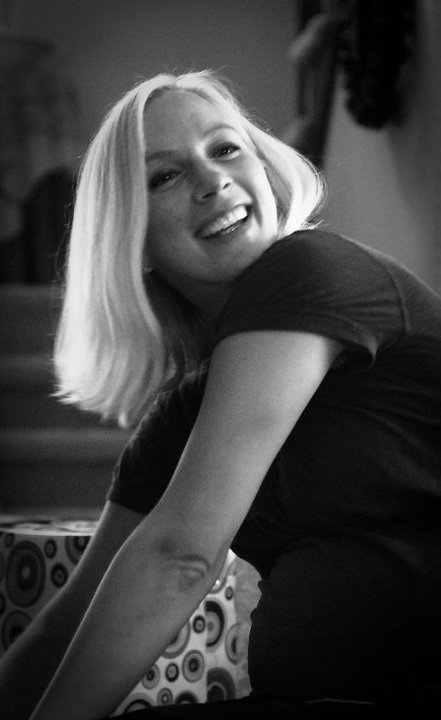
Chapter 20
I’ve never been happier in my life, than when I was pregnant with you.
This doesn’t mean that my life was perfect.
I had difficult people running in and out, under the guise of challenging me to grow. I struggled to earn a reputation as not just a good yoga teacher, but a great one. I wasn’t rolling in money and our bathroom toilet frequently backed up—the only one in the house, mind you.
Yes, I had morning sickness—or, more accurately, all-day sickness—making the frequent joke that this term must have been made up by a man.
I taught classes at six in the morning, went back to teach at noon, sometimes subbed in between and then regularly subbed in the evenings. In short, I worked a lot and life wasn’t faultless—but, still, I know without a shadow of shaky idealistic doubt that I was positively the happiest I’ve ever been, when I was pregnant with you.
But then life doesn’t always happen according to plan.
Struggles that seem like they’ll break you rise and shine and start each new day and you watch the man you love more than anyone in this world—besides you, my dear child—dissolve into fits of anguish.
I had forgotten entirely what it felt like to be a shell of a woman.
I’d let go of that eating disordered girl years before—just turned my back on her and walked away. However, it wasn’t until I’d hit the largest obstacle of my life to date—without resorting to anorexia—that I knew I was truly healed, and I learned another lesson, too: that turning your back on something and letting it go are two entirely different things.
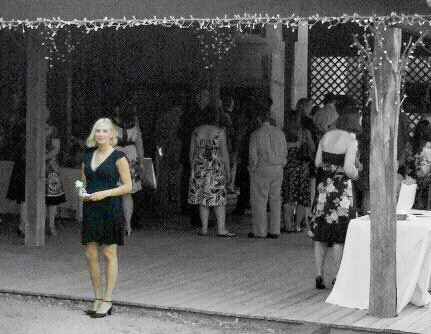
(P.S. That’s me at five months pregnant with you.)
Chapter 21
Hot tears stream down your temples.
They run in a quiet yet small stream that remind you of riverbeds made of black Egyptian kohl eyeliner.
Your hot tears trickle onto your bed where you lie on your right side in the shape of an L, bent at your hip creases.
You tell people that you are not a crier. You know that this only partially true and that we all cry, some of us just more—or less—willingly than others.
Ironically, you also consider yourself a fragile human being, but this fragility has encouraged you to move through your life with a nicely-built, thick shell—a shell that you falsely think is impenetrable to outside attack.
And you know that you are quite vulnerable in reality. Over time, you’ve encouraged yourself to drop your mask—watching it shatter and crack into fragments—only occasionally gluing it haplessly back together to don it once more.
You wear a mask of ego, of confidence and of an easy social butterfly—and sometimes you are these things—it’s not a mask, it’s the real you.
Your eyes are clamped shut and you hear a rustling at the edge of your bed where you still lie sideways in an L.
The soft whisper, whisper of movement is your tiny daughter as she comes in gracefully—delicately—to wave bye-bye to you before Daddy takes her to pre-school. The tears fall harder—now less of a quiet stream and more of a gathering storm.
You hear your husband in the kitchen, moving quickly and capably, to fill your last-minute request of child prep and school drop-off because your headache makes you feel that you cannot face the muted light of the cloudy day, much less the bright faces of other children and their bustling parents.
You’re thankful; thankful for a man who so lovingly steps in and for a daughter who, with your eyes re-closed, you feel gingerly brushing your hair for you—it’s a loving gesture from one female to another, even though one is only a girl of barely three.
You’re grateful for—no, mesmerized by—the old soul that inhabits a body of such miniature proportions.
She hugs you gently, and looks deeply into your wet eyes as she pulls away. She smiles and runs after her Daddy as he opens the front door.
The door shuts and you let your tears fall heavily onto your turquoise quilt.
This is the anatomy of letting go.
You saw your massage therapist yesterday and she released a spot underneath your shoulder-blade that you’re not sure has ever known relaxation—it’s uncomfortably close to your heart.
You drift into such a state of peacefulness that your skilled therapist notes your tranquility out loud. She tells you tostay there, so you do.
You observe later that the release has moved up from your shoulders—from the back of your heart—and into your throat.
Your throat becomes irritated and you lose your voice, much to the disappointment of your duet-loving daughter.
Still, you recognize that release—that letting go—isn’t meant to be comfortable.
You’ve held onto these emotions so forcefully that your muscles have knotted in places and your jaw can’t help but clench in your sleep. You dream of crumbling teeth.
And you slept well last night—much better than usual despite your aggravated throat—and you woke with a headache so fierce that you thought you might throw up.
Your head pounds while the space behind the back of your heart is strangely calm and still relaxed.
Your voice is still gone and there’s an enormous pressure between your ears, but you know that this is simply your clung-too past leaving your aching body.
You clumsily find your phone and call your doctor, making an appointment that gives you just enough time for a hot shower.
You know that she’ll most likely tell you that you have another sinus infection—you’re almost positive—and, yet, it doesn’t matter because you know that this is simply how it feels to let go.
This is the anatomy of liberation.
You pat your dripping hair with a warm blue towel after turning off the shower. You throw on yoga clothes, not because you think you’ll practice in them today as normal, but because they—in their own funny way—are an armor of a different kind—one of health and wellness, of happiness and ease.
You know that your pounding headache won’t last forever, although it worsens when you bend over to tie your jogging shoes. You know that it won’t last forever because you’ve become both too tired and too strong to hold onto your suitcase of burdens anymore.
It’s now your turn to open the front door, and, looking over your shoulder at your daughter’s pint-sized pink and white table and matching chairs, you visualize her waving bye-bye and do the same, and though your hand doesn’t move, you are saying good-bye—and you know that you’ve just made space to carry what lies ahead.
Chapter 22
I sit stiffly at my old dining table.
I feel rigid.
My fingers are pale from the lack of winter sun kissing it and my nails are painted a rich, dark blue. My ruby ring—shaped like a slice of the moon—is large and heavy and it doesn’t turn while my fingers race across my laptop keyboard.
My skin is not only pale, but it’s dry from the lack of humidity in the air. Strangely, however, I’m not ready for the end of winter to come.
Others are counting down days, while we sit patiently or irritably within this Midwestern season of arctic cold and snow accumulation. Yet I feel as if this parched season of chilliness settles perfectly into the stillness—the tiredness—of my bones.
My fingers move more cautiously than normal. The words don’t want to come, because I don’t want to anchor into my beating, churning heart.
This morning my tiny lady and I drove to her music class and I purposefully—and unusually—left my sunglasses off. And it wasn’t just the several inches of white that had fallen and then stuck the night before, but the ironically dry road that reflected the sun so brightly that it reminded me of an ocean—a sea of blinding yellow-peach light that felt like I was driving my little silver Volkswagen into a strange morning dream and not towards a shore of store fronts and rush hour traffic.
What hit me most about that gorgeous wash of early sunlight on the street was that I felt like it was washing me.
A euphoric calm penetrated my depths, as I sat on my heated car seat with my hands at ten and two o’clock. My daughter was quiet in the backseat, looking out the window.
And as I’m driving and this sensation is beginning to approach me on a conscious level, I recognize that the song playing through my car stereo has the refrain “big hard sun.”
I listen, I drive and I feel like everything will be okay, even though mentally and externally it seems that life is not coming together the way I have falsely—rigidly—designed.
We pulled into our destination—a muck and slush-covered parking lot next to the music building—and the tranquility dropped away, but I held onto that indescribable internal stabilizing and settling as the day wore on; as I eventually put on my sunglasses; as I drove home with a different song playing in the background—and as my emotions became more and more turbulent.
Chapter 23.
The family heirloom ring that I wear most days on my right fourth finger twists and turns as I type. The words do not want to come out.
Normally they burst forth with such a wave of passionate explosion that I can’t contain them, even when I sincerely give effort to doing so.
My right hand hovers above the laptop keyboard, moving quite a lot even though I’m willing it to hold it still.
Nerves are a funny thing.
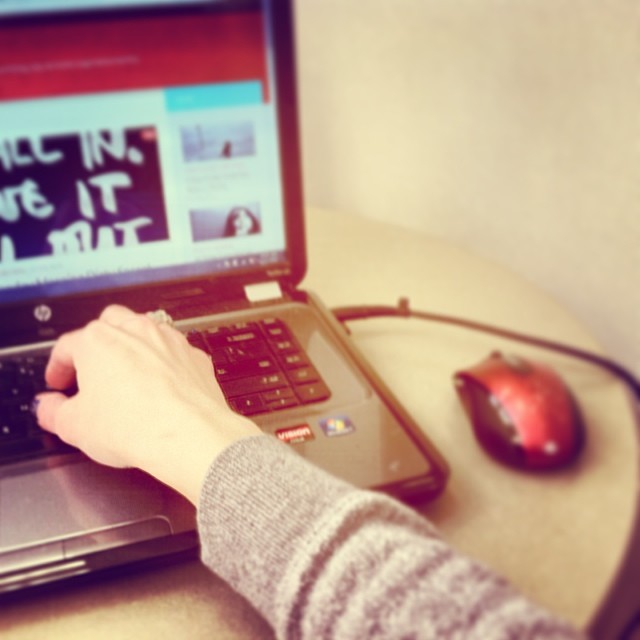
I’ve been up since three a.m.
I awoke next to my daughter in pink princess sheets—her breath softly filling up my inhales; her delicate sleep sighs making me quake with love. I tip toe out of her room; shutting the door quietly but it still creaks into place anyway. I move methodically through making myself coffee; opening up the laptop.
I realize fairly early on that I don’t want to write about feeling this way because how do you describe anxiety as anything besides its unpleasant play of tangled emotions, sitting in the base of your stomach, making you want to vomit before you’ve had anything to eat or drink.
It hits me suddenly that this one person is my home; that this one, fragile human life has been my home base.
And how do you tell someone, in their tender earthbound skin, that they are your gravity; your weight; your lifeblood? How do you make enough homemade chicken soup to soothe an always breaking and repairing human soul? How can words not fail—despite all of their glory and aspiration—to convey something as unlimited, as unquenchable and as indefinable as love when their own shapes have beginning strokes and ends?

We tell people that it will be okay and that all things work out for a reason, but is this really true? Or are we just filling the uncomfortable space of the uncertainty of life with our flat and hollow mortal words?
I will not pour emptiness into the space just to watch it fill up.
But then I find myself shyly whispering it’s going to be okay.
Because, as it turns out, I’m not filling space with shallow words—I’m filling up another’s heart with love from my own.
Chapter 24.
We hold feelings and experiences in the tissues of our bodies—this is another belief and reality of a yoga practitioner.
I don’t doubt this because I observe the way I clench my jaw, my abdomen, and how I grip throughout my hips when I’m stressed or anxious.
Our hearts and our emotional beings are intrinsically connected with our physical selves.
I notice that I can work so hard to mentally get myself out of a bad mood or an intellectual funk and then I get onto my mat and flow and breathe and be and it just disappears all by itself, by working my muscles in and out of yoga poses.
And as an extremely sensitive, empathetic person, my yoga practice has played a crucial role in my self-love and my willingness to want to get out of my cage—to want to grow up into a strong, whole woman instead of living as a broken little girl.
But that’s the strange thing about healing and about love—we don’t always want to get well.
We don’t always want to be whole. It can be much easier living as a hollow, breakable individual because we’re not filled up with the gooey, mushy, penetrable parts of us that are never immune from pain; from hurt.
And the anorexic attempts to break herself first—a preemptive strike; a self-defense.
It doesn’t work.
Instead, she lives in a constantly broken state of pain and every small, inevitable blow of life comes crashing down with full-force blunt trauma that has the speed and power to cripplingly wound rather than temporarily disable.
What begins as self-salvation from a terror too large for her to handle turns into her Achilles’ heel; making everything that comes her way nearly impossible to manage.
She digs herself into her own grave, even though that was never her intention. Rather, her aim was to set herself free—to fly high above her worries and her sorrows—but now she has nowhere to go but down, down, down or up at a nearly vertical angle.
So what does she do?
Does she keep burying herself?
Or does she grow wings, so that she can finally fly, as she’d originally tried to do, but in vain.
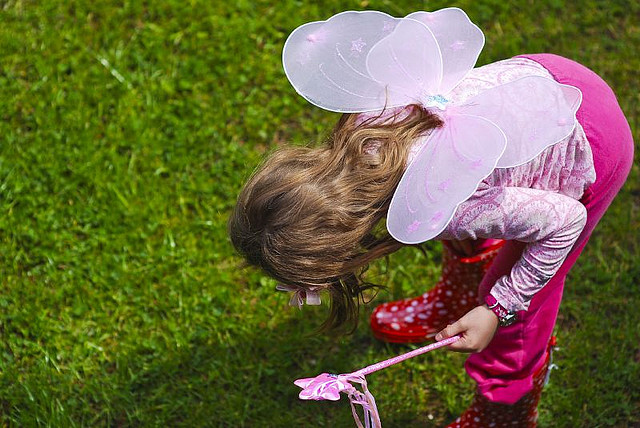
Photo credits: Author’s own; Arwen Abenstern – KWP/Flickr.
The post The Caged Girls: How to Grow Wings. first appeared on Jennifer S. White.
]]>The post The Caged Girls: This I Believe. first appeared on Jennifer S. White.
]]>
Part Six: This I Believe (Chapters 18 & 19).
Chapter 18.
Essentially, practicing yoga is getting in touch with that constantly smooth stream of fluid water that runs like a hidden channel beneath the quaky, shaky surfaces of life.
Although emotions and human suffering and fragility are arguably tangible things, there’s undeniably a piece of us that lies at the core of our being that isn’t tangible in the least; that remains unweathered by a lifetime of tumultuous storms and seasons.
The practicing of yoga—the physical practice that we most closely associate with “yoga”—is merely an attempted tool that’s used to help better access this authentic, still space.
Breathing has factual effects on the body—bringing us out of fight-or-flight reactions and back into our sane, logical, reasoning minds. However, there’s something about the yoga practitioner that cannot truly be placed into words (for those who don’t hop on a mat and experience it for themselves).
Inhale, arms reach high over head.
My distracted mind peers over my right shoulder, out the window, to flurries of snow whispering by.
Exhale, arms drift down slowly, not unlike these miniature white puffs, landing at my heart with palms touching.
I stand and breathe—I stand in the strength and dignity of my presence.
Inhale, I open my eyes and recite these words out loud: today I will believe in magic.
And as I move and breathe and flow through the rest of my practice, I realize that the only true yoga that happened on my mat was that one instance, with hands in prayer position in front of my heart when I acknowledged that, in life, anything is possible—even magic and my dreams.
Chapter 19.
I’m not sure what magic is, but I know what I want it to be.
I want it to mean that I don’t always get my way—I want to experience the gutter of emotional shades that I would never choose, being at least partially sane.
I want my daughter to outlive me and I want to be old and happy and well.
I want to believe in God and heaven and a life everlasting—I want to believe in the power of prayer.
I want my husband to get everything he wants, and I want to be the one who gives it to him if I can.
I want my parents to be fully rewarded for their boundless gifts of love and support and friendship.
I want my daughter to not feel the pain of life, even though I want her to live deeply enough to earn it.
Mostly, I want to believe that I’m a good person who brings light and love and wellness into this world, despite my occasionally wicked temper, horrid words and selfish acts.
So, what is magic?
I scan my aforementioned list and I realize that magic is me believing in me. That’s it. No fancy bow-tied packages with cuddly kitten cards taped to the top.
And I do believe in me—most of the time.
Photo credits: Carol Alejandra Hernández/Flickr.
The post The Caged Girls: This I Believe. first appeared on Jennifer S. White.
]]>The post The Caged Girls: The Key. first appeared on Jennifer S. White.
]]>Part Five: The Key (Chapters 13 through 17).
Chapter 13
She sits typing rhythmically in recycled plastic yoga leggings that are softer than satiny silk.
Unicorns run down the backs of her legs and the vibrant coral of the fabric’s magical desert-sunset backdrop goes completely with her fluorescent pink top.
She knows that she looks ridiculous to probably most people, but she doesn’t care.
Her new good luck charm—a gilded unicorn on a gold chain, adorned with a faceted and meaningful peach gem—rests below her throat and above her quaking heart.
Her fingers feel clumsy today—simultaneously sleepy and too rested. She glances quickly at the clock, notes the time and continues to work; wearing only her new gold necklace and wedding rings, the deep sapphire blue band sparkles as her fingers dance across her laptop keyboard.
The words tumble out freely—the releasing of long-stagnating water—and she contemplates her outright declaration that this will be the year of the unicorn—the year she’ll believe in magic.
Chapter 14
Her daughter now owns a matching pair of recycled plastic, unicorn-backed pants.
She sits on her mother’s lap, so that their thighs can touch and she can point to where their knees are cloaked in the same soft material.
She doesn’t yet understand the magic of the unicorn or what her new clothing symbolizes, but she feels deeply that they are special—if only because they allow her to match her mama.
But she knows that magic is real.
She sees the way that snow drifts down in huge whirls from their rooftop; the way the light catches on an icicle outside her bedroom window; how a person can hold the entire universe inside the palm of her tiny, closed hand—even if that hand is still much bigger than your own.
It intrigues, also, the older woman that people can be so small and inconsequential and yet so correspondingly huge.
She feels the way that she compares her popularity to others on base social network sites and the few friends that she has by how rarely they call when she needs. It disturbs her—these things playing any level of significance in her day’s thoughts—because, as she sets her phone aside, she sees plainly the way the younger girl looks at her—like the world would stop its turning if for one moment her mother’s small star set.
She closes the pieces of plastic that make up her laptop—where her fingers twist stories and her mind enters the tangible—and she sits motionless for a beat or two, so that the buzz of her words might settle and dissipate into the air that she and her daughter breathe.
Chapter 15
I can’t believe that I write about my eating disordered past.
It doesn’t shame me or feel lowly, but that girl feels like a ghost and nothing at all like me.
But then I place myself in time—back when she lived and thrived and flourished—and I recognize how ill I was and how this girl was definitely me, however removed from her I am currently.
And then I walk into the yoga studio and I hear women talking about their backsides as they scan them in the lengthwise mirror or a friend tells me how round she is in the middle or, worse yet, I see small children already noticing how and where their bodies differentiate from their peers.
I know that I can’t keep my daughter from this body assessment, no matter how hard I try—a cage awaits her, and it’s not as far down our road as I often like to think.
I can’t keep her safe from herself forever, but I can tell her my secret—the story of my own disease and how I learned to love myself after a long and arduous, up-hill journey and I can do something that most of us do not: I can let her in.
It’s definitely easier to push people away when life grows difficult, and I’m absolutely guilty of this behavior, even when what I need most is a gentle hug or a word of tender kindness from someone who knows me well; it’s a protective coping skill that’s developed as we learn how much we can tolerate and what makes us want to shut down, and it’s challenging times like these—when we fear we have broken irreparably—that a cage can actually become a welcome home.
Still, having anorexia is an extremely unsuccessful way of reclaiming this comfort of control.
At first, the hunger pangs that go ignored are empowering and the mind conditioning—not unlike a long-distance runner—becomes a source of pride. The inherent flaw with this plan, though, is that the downward spiral of physical weakness and the dependency on the disease itself both negate any semblance of control that the victim can possibly maintain (which usually isn’t much anyways).
There’s a reason, too, that many women never recover.
For one, our society has a horrible way of giving silent props to thin women, even if it took starvation to get there. At the same time, we condemn this unhealthy behavior, and this blatant double-standard does not go unnoticed—and it’s confusing, especially to young, forming girls.
Fashion models, actresses and gorgeous singers are gold-worthy goddesses, and the assumption is often that they are eating disordered in some way—they must be—and then, regardless, we hold them high on (tipsy) pedestals where our little girls look up at them in idol worship.
And how disturbing is that? Essentially, we’re promoting each round of new females to battle their bodies; to live in cages with limited stores of food and copious amounts of self-conscious critiques.
And, yes, we can argue that not every woman becomes anorexic or even eating disordered at all—and, surely, there are small amounts of truth buried there—but we can’t ignore how many of our daughters and sisters and mothers and lovers judge themselves next to unfair and unreachable standards. More, we can’t pretend that somewhere—every day—girls aren’t climbing into cages that they might never be able leave.
Chapter 16.
I would wake up in the morning before school and immediately stand in front of the bathroom mirror.
I would lift my lavender and white striped pajama top and look at my concave navel and the slight protrusion of my ribs.
Later, as I walked through the school corridors, I would look down at white tennis shoes as other girls passed by. I was a good girl who did my homework and didn’t let boys touch her underneath her shirt.
I sat down at the long, faux-wood table in front of a clunky, old computer and the boy next to me remarked that my glasses looked like they didn’t fit me anymore and that my face had shrunk over the summer and was I okay?
It struck me as fascinating that this boy with the slightly naughty reputation would be one of the only people to ever ask that question—to my face, at least.
And then I was sitting on the bench in the women’s locker room of the strip-mall gym that I frequented early in the morning, before my classes began at the university. The sun was barely up and the locker room was dim, bordering on dark.
A woman I didn’t recognize in the least asked me, almost frantically, if I was okay. She wasn’t able to walk past my gaunt frame lifting weights or working in the cardio room, the way that the others could and did.
I stepped on the scale before I left—92 pounds.
I walked down the long, underground school hallway to my mineralogy class and my favorite professor asked how I’d keep warm when it really got cold—I was wearing a thick, scratchy wool sweater and it was barely October.
I walked into the bathroom after class; the one where few girls entered because not many were in the geology building in the first place.
I bent at the waist and looked underneath the two stalls for feet and, seeing none, lifted my ribbed cotton shirt; examining my concave navel and protruding ribs. The girl who looked back at me was empty; hollow. Her eyes didn’t sparkle and her smile wasn’t there either. Her hair wasn’t shiny and her stomach had a thin coating of downy hair.
Who are you? I wanted to ask out loud—I wanted to shout. What have you done with the real me?
I pulled my shirt down and picked up my book-weighted backpack. I pulled with all of my 92 pounds on the metal handle of the heavy bathroom door and returned down the empty corridor to my chemistry class.
I wondered absently if this was the real me, in that bathroom mirror, and a shiver of terror ran from the back of my head to my empty stomach, creating goose-flesh on my almost skeletal arms.
Chapter 17.
My scrawny limbs scratch and the flesh tears as I reach desperately through the metal bars.
I can see white-blinding light streaming in through thin, parallel slats.
I went out to dinner with my boyfriend. He wants desperately for me to just eat; to be well; to not be slowly killing myself while pretending nothing’s happening.
I’m over 21, but I don’t drink. I sit down across from him at the round, alabaster cloth-covered table and order a glass of rosé. My first sip tastes bitter—like slightly tart juice. I decide to swallow it, not because I really care for the alcohol content, but because I hope that the wine will be my spoonful of sugar that helps the medicine go down.
It works and I regularly drink wine with my meals.
We order deep fried pickles served with a homemade, creamy white sauce, the consistency of which disturbs me on a deep level. I ask the waitress to bring the veggie sampler as my meal—it’s a plate of raw vegetables.
We walk home after dinner, to our cozy, we’re-in-love-and-this-is-our-first-ever apartment.
Inside I slip off my jacket and he touches my cheek with his work-toughened fingers. He lightly kisses me and pulls me towards our sparse bedroom, down the long, dark, narrow hallway. I’m needing his body in a way that’s absolutely more than physical—I’m needing him to love me.
We spend innumerable nights alternately studying, watching Seinfeld and, basically, growing up together in our second-floor apartment in a college town plopped down somewhere in a Midwestern cornfield.
We fall in love and we, sometimes, fall out of love to. (I’ve learned that the secret to a relationship’s survival is not falling out of love at the same time.)
Of course, we never truly fall out of love, but we do fall out of accord with each other—especially when I’m riddled with my disease. It affects every aspect of my being and it takes my personality away. The starvation doesn’t just hit my taut-skin-over-bone body, it dissolves the very center of myself to an almost empty state.
I watch acids work in similar fashions from where I sit, perched high on my black leather stool in chemistry class. I also watch liquids change color—periodically transforming completely—with the addition of just one small ingredient.
I begin to believe in magic—and not the kind that leads other college kids to purchase corny metal daggers and velveteen, hooded cloaks—but the kind where anything is possible—where I can be free.
I feel glaring light hitting my face in even, thin slants. I close my eyes and hug my thighs up to my chest—curling into a ball with the smallest surface area imaginable—and when I reopen them, I see a figure standing over me—arms outstretched, work-toughened palms wide and face up.
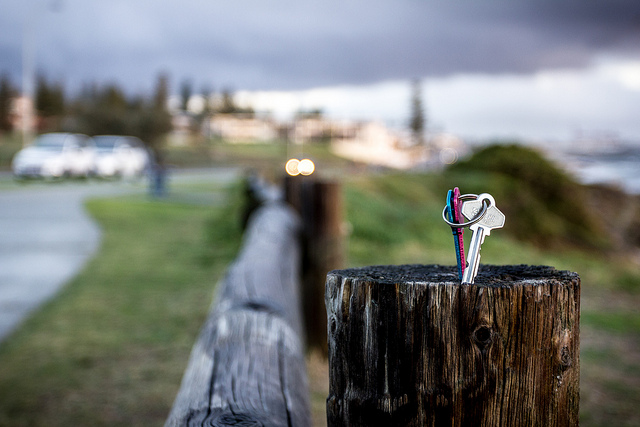
I blink repeatedly—being so unused to bright light and the juxtaposition of his dark shadow with it—and I hear the tinny clink of metal landing hard on metal. When I look over, to where the sound came from, all I see is a worn, thick key.
Photo credits: Daniel Lee/Flickr.
The post The Caged Girls: The Key. first appeared on Jennifer S. White.
]]>The post The Caged Girls: I Heard a Caged Girl Sing (Chapters 11 & 12). first appeared on Jennifer S. White.
]]>
Part Four: I Heard a Caged Girl Sing
Chapter Eleven.
I gingerly placed her sleeping body on the red microfiber sofa.
She twitched slightly, but continued to sleep heavily as long as her beating chest was touching mine. Whether through imagination or actuality, I’m still not sure, but I swear to this hour that I could feel her tiny heart pumping her mighty blood when my breast was pressed to hers.
She never naps and, while I don’t believe in saying never, I will faithfully say that she never naps.
Regardless, I’d transferred her skillfully—after much I-can’t-believe-she-fell-asleep-here practice—from my loving-mother arms within the cocoon of my rickety childhood rocker—the one with the skateboard ball bearings in it, thanks to my inventive husband—and onto the red couch. But then I couldn’t move.
Rather, I didn’t want to.
In that space of my life, I wanted to stay, right there, forever.
Rarely does that happen—I’ll admit I’m rather fidgety. I can’t even handle having both of my hands occupied, because it’s too confining and claustrophobic. I am not claustrophobic. (After all, I’ve spent nearly my entire life inside of a beautifully decorated, exquisitely hand-crafted cage.)
Yet, in that instance, so forbidden from deep breath and any movement at all—for fear of waking my slumbering child—I could not have been overly contained.
I feel vividly my difficult decision to let her rest, alone. I remember, next, walking away and unrolling my mat.

And although all I truly wanted to do was watch her sleep, I knew that I needed to practice.
My yoga practice centers and grounds me—it brings me back out of the life that I perpetually inhabit, inside of the imaginary but imprisoning six walls of my mind.

With my heater pumping—white noise for her and heat right by my chilly purple mat for me—I flowed.
Inhale, arms reach up.
Exhale, arms sweep down and around into prayer position in front of my chest—where I just held her.
Inhale, close my eyes and forget about my breath; set an intention for what lies ahead on my sticky mat—of course, I set an intention of love towards her.
And as I needfully moved my body in and back out of poses, I realized that I had more energy than I thought—and that I had more stamina in my beating (but tired) bosom than I recalled.
Sometimes I feel the weight of life with so much forceful pressure on my fragile bones, that it’s as if someone is trying to keep me from standing back up—and my yoga practice returns me to that place inside that doesn’t fluctuate with moodiness or feel life’s difficulty or even the bliss; that place within that some people might call a soul, and that I know is the only real thing about me, even if it’s the one piece that I can’t see or taste or touch.
Moreover, my practice reconnects me with those daily, tiny amusements that are too often skipped past—correlated incorrectly with a lack of importance instead of being taken in for what they really are: life.
The way that my feet stick and un-stick on my mat when I move.
The sensation of my heart reaching towards the sky when I shine my fingers there and then look up at them.
The miraculous awareness that my body is my home, as much as and as little as a sea-born animal inside of its temporary—but beautiful—shell.
I check on my daughter, still sound asleep on the red microfiber couch. She coughs and moves a little before falling back into dreams. The sun is setting, and her dad will be home from work soon. Quietly I open up the two hard pieces of plastic that make up my laptop and I sit down to write.
She’s immune to my clickity-clack, clickity-clack.
Situated near her, on the other side of the red sofa at our scratched, antique dining table, I let myself be washed over by a deep sense of tranquility—I give myself permission to feel joyful without needing a cause to justify it.
Because while life is undeniably difficult, it’s also an immeasurable well of wonder—and of love.
Chapter Twelve.
Obviously, I can be a serious sort of woman—don’t let this fool you.
I wanted to label the previous chapter “This One Goes to Eleven.” (If you don’t get that, please Google Spinal Tap.)
Also, don’t let my statements of rarely crying misguide either—because I’m starting to think that this might not be the case.
I’ve always said that if we are something, we don’t have the same need to shout it from the rooftops. Announcing ourselves with labels on a regular—and loud—basis primarily serves to prove that we wish we had this particular quality, but since, alas we don’t, we’ll declare it boldly for ourselves instead.
And the truth is that I’ve become significantly mistier in my advanced age. (I believe I’ve told you I’m in my thirties, and, while not an advanced age—that’s a joke—it’s definitely a pivotal place where it becomes wholly too much work to maintain something that we are not—even if this deceit has been hidden from us consciously.)
I’m absolutely determined not to be a water-works factory in front of my child—for many reasons I’ll get into later and a few I’ve already shared—but, simultaneously, I can’t encourage her to roam freely while I stay hidden inside of my own caged heart.
I can’t tell her that grown-ups are wrong when they tell us not to cry or that life isn’t sometimes so breezy that we get swept completely off our feet, when she’s fifteen and had her heart broken for the first time.
I can’t help her live from the depths of her authentic soul if I don’t, correspondingly, live from my own. (Well I can, but she’ll likely see through that before she’s even gotten to middle school.)
So here I am, screaming from the rooftops—or from the front of a purple rubber yoga mat situated near a red couch—that I’m a woman who loves—who needs—to laugh and joke and play and smile and cry and weep and feel.
And sometimes she’ll find her mommy howling at a bright, circular moon or hidden underneath soft blankets on a red sofa—and I’m sharing this sensitive, inquisitive, intense true self with the world because I want her to do the same.
Because I don’t want to someday find her—singing herself to sleep—inside of a dark and lonely cage.
Photo credits: ajari/Flickr; Author’s own.
The post The Caged Girls: I Heard a Caged Girl Sing (Chapters 11 & 12). first appeared on Jennifer S. White.
]]>The post The Caged Girls: Yoga Pants, Sticky Mats & Freedom (Chapters Six Through Ten). first appeared on Jennifer S. White.
]]>Read Part Two of The Caged Girls: A Life in the Mind (Chapters Four & Five).
Part Three: Yoga Pants, Sticky Mats & Freedom.
Chapter Six.
I look down the length of my slim legs, covered in orange and purple, sunset-patterned yoga pants.
I plant my hands shoulder-distance apart and reach my right leg long behind me, hugging my left thigh in tightly. I press up into this hugged-leg variation of handstand and hold it for almost three breaths before coming back down.
My daughter catches me watching her as she prepares to practice her own three-legged downward dog on her scaled-down, matching mat next to mine.
I’m overjoyed in a way that I’ve never felt before—I can’t believe this tiny lady actually wants to practice yoga with Mommy—she asked me—and I’m frequently in awe of the fact that I love this practice, in general, so much.
I was never an athletic kid, like my little girl. I was not a person who relished sweating and panting and team-played sports—I was not this person until I found yoga.
Sure, I swam and I ran and I hiked and I exercised, but I never authentically enjoyed the sensations of physically moving within the structure of my body, the way that I do when I’m in clingy leggings on a sticky mat.
Returning to my practice, I move and breathe and flow and, alternately, observe my mini yogini out of the corner of my eye.
Inhale, arms sweep up—she, too, reaches arms high, only their relative shortness to her head makes her wonder if she’s doing the pose incorrectly, so different is hers from mine.
Exhale, forward fold—she comes down to her knees and looks up at the television screen, where another seasoned yogi is giving us our cues.
Inhale, halfway lift—she takes a break and plops down in front of her primary-colored piano.
Exhale, step back to downward-facing dog—she returns my gaze and hops onto her tiny mat to rejoin me.
After our physical practice is over, I make us three slices of peanut butter-honey toast, cutting gooey bite-sized pieces up for her. I have a coffee in my green ceramic, handle-free mug and she drinks mango juice out of her sippy cup—the one with her name in bubble letters on the side for when she takes it to preschool.
She wanders over to the blinds and shifts the curtains just enough to open and close her small fist—waving and saying hi to her daddy shoveling snow.
The ease with which these two exchange their love leaves me feeling like an outsider.
I move intentionally from my own finished-practice kneeling position to child’s pose; my forehead resting on the firm, waffle-textured rubber mat.
I’ve shifted here because I feel tears welling up from behind my eyes and I don’t want her to see them spill over.
I don’t cry easily—I have luculent day dreams of violent wailing because I know how good it feels to cry. Instead, I’m the woman with red, puffy eyes looking away from the grocery store clerk ringing up my kefir and beer because my body chose to let go in the middle of a day full of errands.
My breath hitches—no longer the smooth, skillful yogi—and she moves swiftly from behind the parted curtains to standing in front of me on my purple mat—our purple mat. She takes my hair in her left fist and tugs. I resist—she’s trying to make me look to her, to see if I’m okay.
Although a toddler, she’s authoritative—I think I’ve mentioned this—and, before I can help it, my wet eyes have met her confident ones.
My breath slows.
Inhale.
Exhale.
Inhale.
Sigh.
I hear clomping foot stomps on the wooden porch on the other side of the large front picture window—those panes of glass the only things separating our purple sticky mat and him.
I inexplicably recall something that he said to me after I’d finished writing my first book.
He’d loved it—truly—but he said that he was disappointed I hadn’t written more about my yoga practice—he thinks it’s a major part of my life, of who I am—and of who I’ve allowed myself to become.
He opens the front door and embraces our just-above-the-knee person, clinging to his snow-covered pant leg.
We talk for a minute, and then I take my green ceramic mug into our bedroom. I close the thin door and open my laptop’s two hard pieces of plastic, resting on our bed’s turquoise quilt.
I look down the length of my slim legs, covered in orange and purple, sunset-patterned yoga pants…
Chapter Seven.
So the reason for my child’s pose, purple mat tears yesterday was that he and I had a fight.
But not just any fight—one that I started.
While I don’t get off on fighting, I also won’t avoid it—it’s a necessary evil of both a strong relationship and one composed of two strong people—which is why we work so well and have for nearly 20 years—because we won’t let ourselves be bulldozed by the other partner, but we’re in love and compassionate and compromising.
Sometimes, though, I feel like I’m not meant to be around others.
I see myself curtained—cocooned—in sheer, white tulle that canopies my beckoning mattress—my siren—in the middle of the forest. My familiar turquoise and brown-textured notebook is there, along with my preferred ballpoint pen. I’m not wearing phony fairy wings, but I’m equally not my same, assumed human form.
It’s quiet here—completely still—except for a light wind ruffling the tree branches high overhead, but not my loose brown hair (because of the translucent curtains). It’s soundless, too, except for a swaying breeze, coupled with a hidden source of falling water (so soft that it’s almost inaudible, but it’s loud because of this relative silence).
And I’m alone—but nestled deeply within my breast is the critical knowledge that I’m loved—and that’s when my sheer, white, gauzy curtains part and I peek out from my self-imposed wilderness to see, on the other side, my light-colored wood floor waiting patiently—and my red microfiber sofa waits too, littered with stuffed animals and soft Disney-themed blankets—and I know that I’m not meant to be by myself after all. I just need some space once in awhile.
To breathe.
Chapter Eight.
I was always slightly terrified to have a baby girl.
Obviously, I was elated and excited—tiny nails to paint, little jewelry items to make especially for her—but there are so many other aspects of womanhood that, put simply, aren’t easy.
I consider myself a strong woman—often obnoxiously so. However, even the most resilient, refined women will encounter discrimination, prejudice and difficulty within the walls of society’s birth-gifted pink and metal cages. I don’t mean to place a lack of importance on how far we’ve come or on how much work and determination it took the women before us to get here. Still, we have a long way to go.
Yet the thing that surprised me most about mothering an infant daughter was that nearly all of my concerns flew out an open window almost immediately after she was born—because she is truly her own tiny lady and, in many ways, she’s nothing like me—and then these previous worries were replaced with new ones. She would have her own, separate battles and I would have to learn to see her and her life through new eyes and not those of my own prior experiences. (Easier said than done.)
For example, when I’m hurt or upset I lash out aggressively. She, on the other hand, holds things in—the epitome of a velvet-gloved fist. Also, I love food, was never a picky eater and had to learn to balance enjoyment and health (and all of the various combinations of these two where diet and my body are concerned). She is, contrarily, a horrifyingly picky eater and she does love food, too, but she—even at age two—never hesitated to leave the last several bites of chocolate cake on her plate—or refrain from eating it entirely if she wasn’t interested. But, don’t be fooled—the strongest differences between us have largely nothing to do with her and everything to do with me.
I spend much of my time as a mother battling my own intricate personality, so that I might spare her from being affected harmfully and unnecessarily from it—from me.
She’s naturally easy-going and charming and I—while, ahem, surely, charming myself—am not such a text-book definition of an ideally placid temperament.
I wrote my first book for her, actually—it was my first birthday gift to her.
I wanted her to have deep insight into my long-term relationship with her father as well as into my complex inner-workings. And yet.
And yet.
One of our most interesting discrepancies is that I’m clearly a word person and she doesn’t seem to need them much. She’s better than my words will ever be—because she’s absolutely, one-hundred percent filled with heart.
I’ve met a lot of different people in my life and none of them, regardless of age or gender or sex, have ever been as appealing soulful, intuitive or filled with some quality that I can’t even find a word for.
Her spirit is just huge—it’s ginormous. She’s gigantic.
She’ll never fit inside of a cage—and it’s my job, as her mother, to repeatedly keep giving her the keys to get out if she happens to ever be placed within the confines of one—either by herself or by another—and it’s my job, equally, to help her remain free—as free as she is right now tugging on my sleeve and handing me her pink coat to head out for a new Mommy and tiny lady adventure.
More, it’s in my best interest to not forget how much she has to teach me—and that sometimes it’s more important to listen than to find the right words to offer in return.
Chapter Nine.
Volcanic glass quakes and churns and boils within the central core of my being.
My eyes want to glaze over, my hands want to dig into hair and tears beg to flow down my bent legs, hugged closely into my chest.
The burning of all the things I want to say eats a dangerous crater near my heart.
The words that I let erupt, though, are all wrong and make everything worse—they make me worse.
Occasionally, a chunk of my volcanic-glass soul breaks off and, in it, I see who I am.
They say that obsidian—true volcanic glass—offers a person insight into her authentic self, even though this glimpse might not be what’s desired.
But my volcanic heart shows me enough.
I tried so hard today to be a good mom.
Today was a day full of special, little things intertwined together in an attempt to make a little girl happy. And yet today was the kind of day when nothing seemed to work. Each little moment was accepted and enjoyed graciously, but every waking second filling the gaps in between—what I like to call life—felt as poisoned as that ill-fated apple—I felt poisoned; polluted.
My chest expands and becomes concave as my breathing settles into normalcy and my fingers dance across my laptop keyboard.
This solitary confinement—in my bedroom with my space heater as white noise—loosens my volcanic core, but my sun—my beloved, occasionally overwhelming child—has begun to set for the evening and my heart now feels brittle and cold as ice.
And that’s the thing about motherhood—we’re not entirely free to be ourselves, because we should be cautious and courteous about what’s best for our baby girls.
Although it’s in her best interest, certainly, to have a mother who expresses her own feelings and who encapsulates a real human being, it’s also more than appropriate to maintain some sort of acting ability, for the sake of her own tender emotions.
Yet I think that’s the other thing: I’ve never exactly been a tender sort of girl.
Yes, I’m tender and fragile and wildly soft in many ways typically feminine, but I—like many young and old girls—am also wildly fierce and strong and capable entirely of masculinity—more so than many men—and why should we be so contained within our girlhood to not explore this…bitch?
Regardless, I feel myself closing down for the night. The entrancement of playing this mothering game has been more than enough for one day; while I need my turn to dance with my alphabet-littered keys, I wouldn’t dance with any other partner so often as I do with her.
Chapter Ten.
She sticks her wriggling arm through the puffy, pink jacket sleeve.
She’s determined to get her coat on all by herself.
She has the wrong arm in the wrong sleeve, but I don’t tell her. Instead, I type a few more words and let her see this puzzle piece for herself.
I tip my head to her again and see that she now has the correct arm inside of the correct coat sleeve. I sportingly hold out the other one so that she’s able to slip her tiny hand inside. She does and now she’s fiddling with the cold metal zipper.
I start the zipper at the bottom for her and listen to her struggle and whine a little in frustration, but then she stops and I can hear her talking herself through it—she has more patience as a rightly frustrated toddler than I do as a thirtysomething woman.
She giggles and I see my two favorite dimples in the world light up the room.
Her zipper—pulled up high enough for her satisfaction, although it’s barely to the middle—has lost it’s appeal; with her coat now completely on, she walks over to her pink and white table to grab her blue fedora-style hat and then struts mindfully over to the rainbow-medley carpet by the front door for her boots.
I hear little spurts of coat-rubbing-against-coat activity and uh’s and umph’s and hhha’s as she plays with getting on her shoes. Then I hear clomp-clomp-clomp as she pitter-patters over to me; lone purple boot in hand.
One shoe on, she’s trying to put a second pair of florescent pink fleece pants over-top her jeans. (Apparently, she thinks we’ll be taking off into the rather arctic Midwestern winter temperatures.)
I clickity clack on my keyboard for one more second before I realize that it’s time to hit save and close my laptop’s hard plastic covers—because words will never be the most important thing in my world, even if I can’t live without them.
And then the searing memory of that debilitating, all-encompassing pain—of when I thought I was going to lose her—moves from my mind to my stomach to my bones. No, there’s only one thing in this world that brings absolute joy, light, healing power and health—and that’s love. (Although yoga pants and sticky mats don’t hurt.)
Photo credits: Dominic Robinson/Flickr; tanahelene/Flickr; Author’s own.
The post The Caged Girls: Yoga Pants, Sticky Mats & Freedom (Chapters Six Through Ten). first appeared on Jennifer S. White.
]]>The post The Caged Girls: A Life in the Mind (Chapters Four & Five). first appeared on Jennifer S. White.
]]>Part Two: A Life in the Mind.
Chapter Four.
Snow flies furiously outside of my bedroom window. My turquoise quilt envelops me like a gentle shroud, allowing me to sink inside.
She sits in bed typing on her laptop.
The noise of her space heater and her clacking fingertips fills the room.
Through the thin door she hears the plastic wheels of her daughter’s miniature plastic car scraping across the kitchen tile.
She hears animated booms and thuds and bangs from the television set, where her husband watches one of the James Bond movies she got him for Christmas.
Her pinkie nail makes a crisp, deliberate click as she hits the p with its recently sculpted white edge.
A green porcelain cup rests next to her on the file-cabinet-turned-bedside table that they’ve moved around with them more than they probably should have.
Her ring is turned upside down on her right fourth finger—revolved from the quickness of her hands as she writes from the recesses of her mind out to her clicking limbs.
She feels more alive than ever—sitting in bed with only her arms moving from below their elbows—aside from the gnawing guilt that haunts her—from separating herself so fully from the two on the other side of that thin door—closed off in her snuggly cage; wintering; hibernating.
She flips her ring gem-side-up and looks at the faceted stone before it rolls over again, and she returns to her cage—to her mind.
I hit save and close the thin, hard pieces of plastic. I shove the laptop across my turquoise quilt and stare longingly out the window at the growing, snowy-white abyss.
Chapter Five.
A life in the mind is both a lonely and joyous space of adventure.
I hear crickets chirp and the crunch, crunch, crunch of hardened pine needles and small stony gravel beneath my shoes as I hike.
I inhale—deeply, richly, completely—and I exhale it all out with a loud and audible sigh.
I figure that he must be near the top of the grueling switchback by now. I picture his bike-perched panoramic view and contemplate my own need to turn around, so that we can be in the parking lot at the same time.
(I have to be at work by four.)
Instead, I stop and sit atop a huge, grey boulder that’s easily three times my sinewy size.
I peer into my canary yellow knapsack; take out and unwrap crinkly parchment paper, unveiling a peanut butter sandwich with purple jelly leaking through the holes of the thin wheat bread. I eat hurriedly—hungrily—and then feel an immediate pang of regret. I uncross my legs and spread them out, looking at ankle-length socks and my slate blue trail sneakers before swinging sun-bronzed, muscle-etched calves over the weathered rock ledge; placing the rubberized soles of my feet back onto the trail.
I already feel nourished by the food.
Once more, I breathe in the thick high-altitude air and my lungs almost burst with clean satisfaction—with the euphoria of momentarily having experienced my cage door opened, although I remained inside—and while I’m imprisoned more than ever, I know that, one day, I’ll fly freely—above this mountain top, above this caged body and beyond the confines of my controlling, crippling disease.
And, although I don’t know this yet, I’ve already found what will become the introduction to my cure—the key to my freedom from the confines of this mental cage.
Photo credits: Flickr: tanahelene.
The post The Caged Girls: A Life in the Mind (Chapters Four & Five). first appeared on Jennifer S. White.
]]>The post The Caged Girls: The Prologue Through Chapter Three. first appeared on Jennifer S. White.
]]>The prologue.
My body used to be a cage.
I used to claw and worm and wriggle and starve myself to fit through its bars.
Because the real me was trapped inside. Desperate. Aching. Lonely. Fearful.
Angry.
I was angry that my huge, bright spirit had to be contained within such a simple, limited form—and I didn’t accept these limitations, so I fought them.
I fought them for years. I fought with everyone around me too—it was their fault after all; their fault that I was too big to belong.
Because not all of us can be small and tiny and delicate, even though society wants women like this. No, some women are bossy and domineering and crude and loud and hilarious and, by default, manly.
And men are expected to be big and bright—actually, men are held within cages when they aren’t big enough—but I was a woman, and I was supposed to play the part. And so I did.
I threw away my careful, mother-packed brown sack lunches in the ugly, grey trash bins in the junior high cafeteria. Or I kept them on the top shelf of my locker until I had a week or two’s worth of rotted lunches and pitched them all at once, somewhere quickly and quietly.
And I needed to be quiet.
Not loud. Not boisterous. Certainly not unstoppable.
So I stopped myself first. (Which gave me a fictitiously dangerous semblance of control.)
I—so out of control, however—would be sent to the school nurse’s office to lie on the cold, hard “bed” with horribly low-count sheets because I was too emaciated to have the energy to sit through class; nearly passing out (so out of control was I).
I went from a cheerful, silly, large girl to a frightened, tiny mouse—not a person at all, much less a girl growing into a lady.
But I was never physically large. Sure, I was chubby enough to be picked on by peers. I loved food enough to not understand the children who got up from the white Formica tables to throw away their mother’s deserts.
I read my mother’s hand-written I love you notes every day; stashed inside those careful brown sacked lunches. I collected the Suzy’s Zoo stickers—inside too—within a photo album, behind clear cellophane.
And I felt loved. But I knew I was too big for people besides my loving mom.
Because I saw the pretty, polished things that I was supposed to be.
I already knew movie starlets with sweet, low voices and coquettish, comely charms.
I knew that I wasn’t a girl, because girls were supposed to be nothing like me.
But then I grew angry. I became livid. Because I was a woman. Suddenly and overnight. The starvation didn’t stop my breasts—entirely. It didn’t stop my hips from widening and my heart from expanding in its need for love that was different than my mother’s.
I hated the boys I went to school with because they were allowed to be big and brash and happy. They were encouraged. They didn’t have to shrivel up and whither in order to fit within another’s deplorable pleas to be better than you when they really weren’t.
So I shouted. I screamed. I grew. And I grew. And I breathed fire breath. Until I met him.
He saw me on the front porch and around him—from that first instance of awareness—I knew, once more, that I was not a man, but a woman with girth.
Around him I was huge—and he let me be. Because he, too, was big enough to not have to squash me underneath his own smallness.
So he slipped me the key, between the bars that had contained me for many, many years. I gingerly opened the door and I wouldn’t come out. He waited patiently on the other side, sticking his hand in to hold my tiny, gaunt one.
He would occasionally crawl inside my bed, and bury himself underneath my coarse, starched covers; sleeping on that cold, hard “bed” with me, so that I might not have to sleep alone anymore.
And he lured me out—with the prospect that I didn’t have to be invisible anymore. He could see me—and that was enough.
We walked through the high school hallways together and I, for awhile, was his muted shadow; the one he laughed with and played with and fed, but that others couldn’t see.
He brought me back to life.
His firm, young man’s hands were electric paddles that restarted my flatlining chest.
His lips were Snow White’s kiss—only I would never have to be a Snow White.
I would never have to be fair and cute. Or quiet. Or tiny. Ever again.
My body used to be my cage. Until I outgrew it.
I held onto that cage for sometime. I would peer inside and want to visit it again and again, for stays of different lengths. Of course, I had to be darling Alice and eat the right things in order to fit back through that tiny door.
But every time, I would hear a knock on the hollow metaled bars and finally one day I couldn’t fit back through the door anymore. No matter how hard I tried—because I didn’t want to anymore. Because I wasn’t angry anymore. And I wasn’t sad either.
No, I was, for the first time, able to understand that being caged wasn’t my place. I didn’t belong there. I never had.
I’d been used. I’d been wronged. I’d been treated reprehensibly—by myself.
And, yes, he’d given me the key to seeing myself through the eyes of love, but I couldn’t live behind his glasses. (He wears a different prescription.)
Instead, I had to accept my limitations. I had to accept that I might never have 20/20 vision. I had to become okay with my largeness. I had to own, in short, my voice. If I didn’t, who would?
He left me. Several times, he left me.
He couldn’t keep crawling into my bed. The sheets scratched his tender skin, and my caged heart—so perfectly quiet; so perfectly cold—froze him.
And he realized he couldn’t free me; that all he could do was be locked up with me—and he didn’t want to live inside of a cage.
Because he was too big and he knew it.
He left, but he came back, for stays of different lengths.
We didn’t know it then, yet inside of that jail cell we had become chained together, and we would throw the keys at each other so hard that we had scars, but, no matter what, we would still wind up chained.
My body is a cage I’ll be locked in forever, until my death.
My body is not my cage, though—it’s my home.
As it turns out, all I needed were some softer sheets, a few mirrors and permission from my jailer to visit the grounds from time to time.
My jailer?
I’m my own jailer; I’m my own master, too.
And, like him, I was too big to fit inside the one that society had placed me, after I was swaddled in pink and handed to my mother.
So I threw it away. (Honestly, I burned it—and I tattooed a blue phoenix on the body that rose from those once-jailed ashes.)
And then he and I were handed a pretty, tiny bundle—wrapped up in pink; while I kept these pink sheets for her, I painted her walls blue.
(Oh and I’m handing you the key. And when you get out, promise me to burn your cage and give this key to the next caged girl, until we are all standing together amongst the burning smell of metal, big loud and free.)
I lie in savasana and I realize something so profoundly life-altering that I begin to feel the intense need to sob—the kind of weeping that’s desperately unattractive.
Eyes swollen.
Eyelashes clumped together through wetness that looks out to the world as though from behind a Vaseline-smeared lens.
Body shaking. Soul pounding. Heart-wrenching. Not-okay-gut-grinding sobs.
But I don’t.
Instead, I lie there, moving just slightly more than usual—a twitch of a finger here, a slight rotation of a wrist there—and it isn’t until my teacher kneels over me and, with the gentle, loving, circular motions of her softly padded thumbs, begins to anoint my temples and forehead with a soothing blend of essential oils, that a slow, quiet trickle slips past my dry-fringed eyes.
And while I’m no longer caged, I’m not free either.
Not yet.
Chapter One.
I look down at the pool of water collecting in my belly button.
The water is see-through but orange—a strange swirl of the red and yellow water-coloring tablets that my daughter had gotten from a friend for her third birthday.
Our legs are intertwined and I observe our identical feet, with hers resting delicately—yet authoritatively—on top.
The orange-and-yellow-swirled water cascades down the front of her head, dripping into the crevices around her eyes and moving fluidly and easily through her loose, brown curls of hair.
She giggles so deeply—so richly—that anything outside of that moment—of her sunny smile and her throaty laugh—is instantly lost to me—all that exists is this one small space of time within this bathtub.
She points to my ankle and makes an “O” shape with her mouth, to indicate her curiosity of its official name.
“Ankle,” I say. “Mommy’s ankle,” I over-pronunciate.
She laughs again—this time at seemingly nothing—just life is worth a good snicker. (Or maybe it was my own smile, directed at her, that is being reflected back—like the smooth, glassy surface moving around our naked bodies in the bathtub.)
I look down at my belly button ring—a faux-diamond studded, miniature disco ball of sorts—and envision myself pregnant.
(I’m not pregnant, but I don’t know this yet.)
I look down and see the gentle rise of my stomach—that obvious, slightly dome-shaped swell of my abdomen—and I’m even happier, if this is actually possible.
And I realize—in this split second within that bathtub with my daughter—that I’m ready for another child; I’m finally ready.
After everything we’ve been through together, I wasn’t sure I’d ever truly be ready—but I am.
And it’s my second chance—I realize this too.
Not at parenthood—the sheer perfection of my gorgeous, darling girl is one reason I felt already completed after her birth and, subsequently, challenged to desire another. Rather, it’s another chance…at me.
I decide to write a book called “A Second Chance.”
I sit down at both my slightly gouged, nicked dark-wood dining table with my laptop and, alternately, in my childhood rocking chair—the one that my husband put skateboard ball bearings in a few years ago—with my turquoise and brown textured notebook and a simple ballpoint pen.
The words are lodged within me like empty, unformed, quaking crying episodes—like all of those tears that I’m too exhausted to shed. I bottle and cork them up, with a hand-written rescue-me note inside, and I seal it within the tomb of my caged heart.
And this profound, life-altering realization came upon me as quickly and wildly as a slap in the face—an emotional sucker punch—I do want a second chance, but with her—the one I already have—and with me.
Chapter Two.

The cold, black infiltrates my bedroom window.
Impatiently I stare at the too-bold moon, creeping inside my turquoise bed like an uninvited stranger; a straggler; a tempestuous outcast that I both despise and feel unfairly—and incorrectly—aligned with.
The family heirloom ring that I religiously wear on my right hand slips and tilts to the left slightly as I clickity-clack, clickity-clack on my laptop keyboard.
The translucent skin of my thin hands is marbled with blue and green veins beneath it, and the chill of this wintry air is felt from their tips, up to the tip of my nose. My rigid spine is lax and droopy, but just at the shoulders—slouched over my work and made unusually small by my wilting heart.
Stiff—I’m made stiff by my caged-girl status.
She sat at the white Formica table, a schoolgirl of barely seven, with her brown sack lunch in front of her, spread out on a thin paper napkin sent from home, along with a sandwich, a juice box and packaged desert.
She unwraps the clear cellophane—tearing open one corner—and peeks over her shoulder at the girl diagonally seated from her, eating kiwi and talking loudly.
She feels loud inside—like the girl seated near her—but she feels small—invisible—here at this white Formica table.
She throws the empty plastic into the grey trash bins perched in the center of the room where an unhappy, middle-aged woman monitors the students’ discarded waste thoroughly—as if these sad trash contents are worth more than the tiny people seated on the matching white Formica benches in front of her.
Quiet footsteps carry the small, invisible girl back to the table—and back to her waiting cage.
I wasn’t always locked up, but I was never really a girl either—I mean, I was never truly a child.
My first memories are from well before the age of one.
I would reach through the bars, trying to touch her, between her own bars.
We would graze fingertips—if we were lucky—but I think that’s only in my imagination, because I don’t think we could actually reach. More, we would stare at one another through those bars; our eyes partially concealed by long, thin planks of white-colored wood.
Growing up a twin isn’t as special as you’d think, in part because I didn’t grow up any other way—there were no other siblings besides us two and we never knew what it was like to not be a twin.
Simultaneously, though, our minds and thoughts and sensitive feelings were always intertwined—much like our fingers through those bars of our cribs (at least in our imaginations) —in a way that we knew most children and siblings couldn’t understand, or didn’t want to.
What? You can’t talk with your sister without hearing her words? You can’t tell that she has a headache unless she tells you? Oh. Hmmm.
Being part of a person has its ups and its downs.
I expect more from relationships and from people in general, and I’m usually disappointed, but more with my own inabilities than with theirs.
Still, I’ve never been as jointly exhilarated and disappointed with my performance than I am with myself as a mother.
One-half of me knows that I’m amazing—that my caring, thorough, thoughtful nature can fully shine from behind mothering’s rosy-pink-tinged shades—and yet that other half can’t help but understand that I’m the same selfish, detached person I was before I had her one unexpected, humid summer morning.
I always thought that having a baby—especially an infant girl—would be what finally sets me free—but it wasn’t. And I’m not.
I’m still caged—and my worst fear is that I will unwittingly build her a matching set of heavy, metal-linked bars, chained completely with mine.
My dreams for her, however, involve more than an untouched ivory tower—we all need to be held captive in order to relish freedom, when it finally does come.
And I don’t believe in heaven, but I don’t believe that life is a waiting-room hell either.
I believe that girls can wear pink, and that they can don blue too. I believe that girls can play popular, televised sports and also stay home on Friday nights, twirling their hair around fine fingertips, snapping bubblegum between their teeth as they speak in low, hushed tones into the telephone.
I believe, also, that when a daughter is born into the world, no matter where she arrives, that she comes with her own miraculously shiny, all-ready-for-her cage.
We are all caged girls, whether we like it or see it or not—and our masters and our jailers are all wearing cloaked masks, so that we might be prevented from intercepting this buried seed: we hold ourselves prisoners.
Each morning we wake and double check that our handcuffs are still locked in place.
Chapter Three.
The sun beats down on my sweat-lined tank top as I hike past the excrement of skinny cows, grazing from the mountain’s green-blue side.
I stare ahead at the orange-red dirt-packed trail and know that, surely, I can walk no further—I’ve reached my edge—my limit; I’m done.
And just when my pounding heart’s rhythm is about to momentarily pause and sink with the lowly finishing of a loser, I plow ahead, past more cow droppings and, soon, I find that I’m at the summit, peering over a steep ledge at the pink and orange setting sun.
The darkness falls across my cold shoulders like a gentleman’s thick, dark navy dinner jacket. The man standing next to me—the one who’s stood by my often grouchy side for the past several years—isn’t wearing such a heavy dinner jacket, but a salt-sweat drenched, faded red t-shirt.
We grin with easy health, but without pride, at one another; through sand-gritted teeth, the wind mussing up our hair, making our overheated bodies shockingly cool.
We set up camp and uncork a bottle of white wine.
We screw our camping wineglasses together—stem to cup—and the hollow sound of plastic fills the expansive mountaintop air as we push them together in cheers.
We sleep well and wake early, making bad coffee that we would never drink at home—in front of our blue-and-green plaid placements at our dining room table, in the middle of nowhere, New Mexico, we only drink press pot and freshly ground.
And then—suddenly—we wake from our hazy mountain dream and we’re packing—but not for another hike on our familiar, rocky hills. No, we’ve packed up to move out—for good (for now).
We stop at descent motels and pour flimsy plastic cups of pre-made waffle batter into minute-timed machines.
At one such breakfast, a seemingly random girl in an ugly fluorescent tie-dyed top pretends that she deserves some sort of tip for not letting us get our own waffle from the machine. Instead, she slips the dimpled pancake onto a Styrofoam plate and hands it to us, smiling, like she’s our special, tie-dyed, God-gifted waitress
We eat quickly and leave the motel, laughing at the absurdity—not just of her, but of life–and of our new destination out east.
Somehow we know that we’ll hate it, but we go through the motions of faking a happily anticipated life, there on the other side of two time zones.
I drink so much bad coffee during our road trip that I’m nauseous, light-headed and even more irritable than normal, although I manage to contain this within my caged-girl walls.
But I feel polluted—and I feel more caged than ever as we head to the other side of the country with our belongings piled behind us like the Beverly Hillbillies.
Keep reading! Click here to read the next two chapters.
Photo credits: Flickr: tanahelene, Author’s own.
The post The Caged Girls: The Prologue Through Chapter Three. first appeared on Jennifer S. White.
]]>