The post This Is Why I Breastfeed My Toddler. first appeared on Jennifer S. White.
]]>
I cuddle and hold her and for this one moment in our entire day she seems like a tiny girl again. She tries so hard to be a big girl, like her big sister. She is a big girl—and then she asks me to nurse.
Hearing an almost-2-year-old ask to nurse is possibly the cutest thing ever. Sure, she doesn’t need my body for food, the way she did when I fed her as an infant. I try to show her also that we can snuggle, and that I can comfort her, without having to breastfeed. But she wants to nurse, and I want her to.
To be fair, she didn’t want to stop nursing during the day, but I forced it. It was sad at first, and upsetting for both of us, but she was showing signs that it was time to give it up, so I led her. Now, however, she still happily breastfeeds in the morning and at night. I know it’s not much, and even this will probably be given up soon, but she likes it and I do, too.
She’s my second child. I breastfed her big sister until she was over 2 as well. People don’t want to talk about breastfeeding toddlers, and I don’t think it’s completely a “taboo” thing, so much as most of the people I try to bring it up with just don’t do it. But I do—we do.
I breastfeed my toddler, in part, because I’m lucky enough to be able to. I’m overjoyed that we both took to nursing in the first place and that it’s something we’ve kept up. This once in the morning and once at night routine of ours is familiar and soothing for both of us, and yet it’s not as straightforward and “easy” to nurse a toddler.
I hold her and she sometimes kicks me in the throat, or she moves and wriggles. Occasionally she tries to sing “Twinkle Twinkle Little Star” while nursing. Last night she insisted on putting a sock on as a glove before we had our nightly session. She has a mind of her own and, because of this, nursing an almost-2-year-old is nothing like nursing a smaller baby.
Nursing a toddler is nothing like nursing an infant. Instead, it’s special and awesome and wonderful in its own way.
More, as I get to the end of our experience—and as I recognize this might be the last time I breastfeed a child—I can’t help but reflect back on why exactly I’ve loved doing this for both of my children so much.
I’ve loved this connection—I’ve loved how special and unique it is with each of my daughters. In many ways their personalities are nothing alike, and nursing them has been completely different. I’ll admit I’ve loved being needed, especially as my toddlers grew and began to assert independence whenever possible–I’ve enjoyed being reminded I’m “Mom,” and I’m a necessary part of their lives.
This isn’t to say other moms who don’t nurse, much less into toddlerhood, are any less of a needed mother. It is to offer that many nursing moms feel excluded when we get in public and everyone’s pulling out bottles and snacks and we know what our babies want, and we either have to become OK with being—what feels like—confrontational, or we have to simply accept that we need to be brave, and loving.
In my house, it means I have a self-imposed curfew when I get invited out, but I need to be home to nurse my child. It means my family’s morning routine is centered around our children; on my oldest having to get to school and my toddler wanting to nurse when she wakes up. But this is my choice. I know I’m not alone in this choice.
It shouldn’t be confrontational or unusual to care for our children in the ways that work best for them and for us as parents. It shouldn’t feel so weird to talk about nursing my not-quite-2-year-old. It shouldn’t be strange, but often it is.
And the reason I breastfeed my toddler is simple—it’s because I love her. It’s because these waning moments in my day, when I hold her warm little body so close to mine, are ones I hope to hold inside of my mother breast long after they’re physically gone.
The post This Is Why I Breastfeed My Toddler. first appeared on Jennifer S. White.
]]>The post I Want to Live in a World Where Breasts Are so Normal They’re Boring. first appeared on Jennifer S. White.
]]>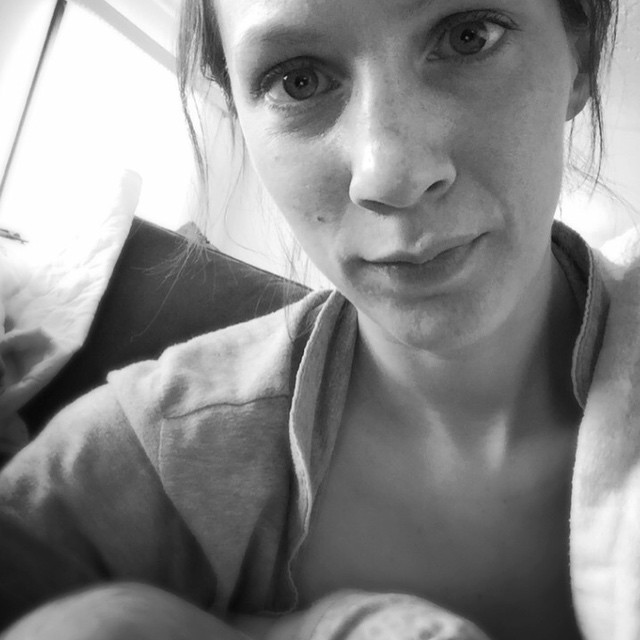
Breasts are utilitarian.
I realized this after giving birth and beginning to breastfeed my baby. This realization was, I can almost guarantee, not a unique experience for a woman…with breasts…who decides to feed her newborn.
And, for a little while, my breasts were more than newly discovered nourishment for life. They were two parts of my body that hurt, and bled, and cracked, and that I hated as much as I felt gratitude for them—until this nursing-mother difficulty subsided and meshed into normalcy; into a part of life that was routine.
I’ve breastfed two children so far. I’m currently within my second round of nursing a toddler, which is an entirely different experience than a smaller baby.
My toddler now, for instance, tells me when she wants to nurse. I no longer have to guess. She also looks around the living room for a toy to bring with her. (These days, I’m typically found breastfeeding a baby that simultaneously looks at a book underneath my armpit.)
I started to wonder, “Is she too old?” But I repeatedly come back to, “No.”
She wants to nurse and, frankly, she’s not even 18 months old, and she really only likes to drink water. (Trust me, I’ve tried everything—she really likes water…and breastfeeding.)
I stopped nursing my oldest child a few months after she turned two, and that was largely a schedule issue. (I was taking a yoga teacher training, and it ran past her bedtime; forcing me to finally give up our still ongoing nightly nursing.)
I don’t know exactly when I’ll stop nursing my youngest because, as parents often find, we can have plans, but plans with kids are meant to change.
While I am a (pro-)nursing mom, I get sick of seeing boobs pop up constantly on my Facebook newsfeed, and on the online websites I read. It’s partly my own doing, since I actively support artists, like photographers, who themselves support breastfeeding. I read parenting sites. In short, I—a breastfeeding, nursing-advocate mother—am the ideal candidate for these types of stories.
Yet they still get old.
Perhaps it’s especially since I see my own breasts several times a day, and since I’ve had friends that breastfeed, and because I do feel that it’s normal and natural (for those that choose to nourish babies this way). Maybe it’s because of this utilitarian, practical experience with my breasts, that these pro-breast posts begin to feel not only unnecessary, but almost counterproductive.
In some way, it has begun to feel slightly exclusionary of women who choose to not breastfeed. We nursing mamas are so ready to defend are rights that I’m noticing a near-equal amount of articles about why it’s okay to choose formula feeding.
It’s kind of like the “post-baby body” campaign. I’ve written on this topic myself, primarily to offer—like many other new mothers—that comparison to our bodies “before” and “after” children isn’t healthy, for ourselves or for our children or for feminist society in general. Still, we need to talk about why it’s important to normalize breastfeeding. We need to address, too, that our bodies change from having children—we change.
My breasts have bounced between sizes I never thought I would see myself in—A to C to DD. Unexpectedly, however, I didn’t care about what size my breasts were, because my focus has consistently been on “simple” things like wearing bras that won’t leak or shirts that I can open up easily.
I’ve also walked around the NICU with pretty much only pants on, and I’ve accidentally given the UPS guy a glimpse of me in just my bra. This is part of life as a nursing mother, and this functional comfort with my body is a lot of why I think it’s such a wonderful experience for a woman to go through.
I fell more in love with my body after each child that I bore. Each cycle of pregnancy, birth and breastfeeding reminded me of how strong, capable and loving my body is for me and for my children. But my boobs are mine. They don’t belong to my husband. They don’t belong to my kids. They—like the rest of me; mind, body and heart—are mine to care for, love and offer to others.
I wish for every mother out there who wants to breastfeed the opportunity to experience it.
I want for each mom the freedom to not feel shamed for properly caring for her children in public.
I hope for every woman–my own daughters one day, too—the ability to feel comfortable in our own skin.
Maybe it’s time we not put the boobs away, but we consider that there’s a point where empowerment and pride shift uncomfortably towards financial branding and—pun intended—over-exposure; when we are potentially, inadvertently creating more of a problem than uncovering one.
The post I Want to Live in a World Where Breasts Are so Normal They’re Boring. first appeared on Jennifer S. White.
]]>The post Debunking 14 Labor, Delivery & Early Parenthood Myths & Fears. first appeared on Jennifer S. White.
]]>
“When the first baby laughed for the first time, the laugh broke into a thousand pieces and they all went skipping about, and that was the beginning of fairies. And now when every new baby is born its first laugh becomes a fairy. So there ought to be one fairy for every boy or girl.”
~J.M. Barrie
From the moment you find out you’re pregnant to the instance that you hold your baby cozily in your arms for the first time, being a new mother is something that’s difficult to place into words.
Still, there are so many (unnecessary) anxiety-inducing myths about the process. Here, we’ll unmask a few.
1. You will be mortified if you poop on the delivery table.
Trust me, when you’re in labor you won’t care…at all. Please don’t spend the amount of time worrying about this that I did the first time around.
2. The pain will be unbearable.
To be fair, we all have different tolerances for pain. However, one thing that helped me get through the discomfort was remembering that it won’t last forever!
Read this for some additional tips.
3. There will be something wrong with your baby.
For one, the probability is high that your baby will be healthy (and all of those prenatal check-ups and screenings help ensure this too), but the simple reality is that if something is wrong with your baby after you give birth, worrying about it beforehand will not help.
4. You won’t be able to nurse.
I actually didn’t think this would be a problem for me—and it was.
My mother-in-law (thankfully a wonderful lactation consultant) and I worked for weeks and weeks to get my daughter to latch on properly and for nursing to be an easy experience, for both my daughter and myself.
And, yes, it took work and, yes, I think I spent the first month or so topless in my house, but it was worth it because she became a breastfeeding pro and we didn’t wean her until two years old.
(Tip: seek professional help, like that of a lactation consultant, if you have any questions and concerns—that’s what they’re there for.)
5. Sleep when the baby sleeps.
To this day, this is hands down the dumbest piece of advice I’ve heard.
The only people who will tell you this are parents who are so far removed from the process that they don’t remember why they didn’t follow it themselves. Because you will be tired and you will want to nap—and I’m not discouraging your own rest—but, for me personally, I found much more relief from fatigue by practicing yoga or exercising while my daughter napped.
6. You will be a horrible mother.
This is my own observation, but moms who worry about how good they’ll be are often the ones who really care about the job. In my opinion, this is a huge plus towards being a stellar parent.
7. Nursing is birth control.
For some, this is true. For others, not so much. Click on the link in red above to learn more about nursing as a birth control option.
8. You will know you’re in labor.
Well, I thought I was in labor the night before I had my child, but I wasn’t positive because it was nothing like the dramatic movie scenes I’d witnessed.
I remember telling my husband things like, I might actually have to cancel my six a.m. yoga class if I still feel like this tomorrow. (A big, big deal for me then.)
Yet I wasn’t sure I was in labor—until my water broke. Honestly, though, I wouldn’t have done anything differently. I put my feet up and drank water. I went to bed early and then took a shower and packed my hospital bag after my water did break.
Point: know the lesser labor symptoms, like upset stomach or diarrhea.
9. You won’t make it to the hospital.
I personally wasn’t afraid of this, but many expectant mothers are.
You are almost guaranteed to make it to the hospital. I actually had a very short labor and delivery and I still made it to the hospital.
Having said that, I wanted to be at home as long as I could. I had no desire to be one of those mothers hanging out in the birthing center before I needed to. One thing that I decided to do in order to help myself relax at home was create a list of things for my hospital bag and then, after my water broke, I slowly packed my bag while checking items off. If you find that you’re overly concerned about making it to the hospital, prepare your luggage in advance and call your doctor at any signs of impending labor.
10. You’ll spend a fortune on maternity clothes.
Okay, maybe you will and maybe you want to. Me? I didn’t want to. Tunic tops, loose dresses and leggings are all great options (and wonderfully comfy clothing choices for after the birth too).
11. You need all the crap on the Babies ‘R’ Us register.
Repeat after me: No. You. Don’t.
Not shockingly, the lists of things you’ll need handed out in baby stores where you can register for gift items are…trying to sell you stuff!
Obviously, you will need new baby items, and these things will vary from mother to mother and from baby to baby as well, but here’s my advice: if you don’t think you’ll need it, skip it. (You can always purchase it later.)
12. Pregnant sex is weird.
I recently read a story about a celebrity saying that her husband thinks pregnancy sex is “weird.” It made me furious! Maybe some men are like this, but surely not all men. Feeling sexy and desirable during pregnancy not only encourages you to love your gorgeous, voluptuous body, but having sex is a natural and positive experience for expecting couples to share. If your spouse does have concerns, talk about them openly.
13. Sex induces labor.
Exercise and walking are commonly thought of as the go-to labor inducing act, but guess what? Sex is better.
This is all thanks to the effects of prostaglandins and Oxytocin, both necessities of labor.
14. Your vagina will permanently change.
Oh, how I wish someone had been blunt with me about this one.
Absolutely expect your vagina to be stretched, sore and just plain weird after a vaginal birth—but also expect these dramatic changes to not last. Remember, your entire body is made to stretch and expand for your baby’s birth.
My personal favorite analogy: are men afraid of having their penises permanently affected by erections?
Regardless, if you want to help ensure your pre-baby vaginal state, then do your Kegels, both before and after having your baby.
So there you have it, a few myths and fears debunked and squelched.
Do you, or did you, have any concerns about your labor, delivery or early parenthood experiences? Share them in the comments section below.
Photo: gabi menashe/Flickr.
This article was first published by elephant journal.
The post Debunking 14 Labor, Delivery & Early Parenthood Myths & Fears. first appeared on Jennifer S. White.
]]>The post Dads Breastfeeding? How These Images Hope to Change Families. {Video} first appeared on Jennifer S. White.
]]>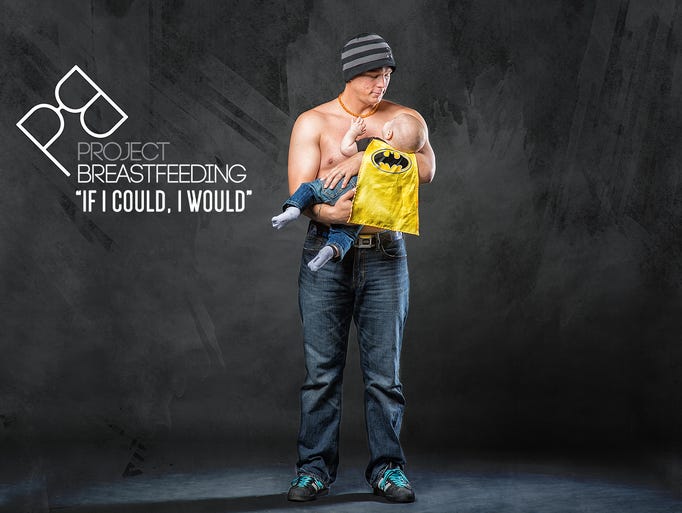
“If I could, I would.”
A dad’s role in breastfeeding a child can be crucial.
Nursing mothers need support and help, especially if there are other children besides the newborn.
Research into the father’s place in a nursing family is relatively new. However, studies are showing that a dad’s positive attitude and helping hands can encourage both the mother’s experience and how long she nurses the baby overall.
Photographer Hector Cruz noticed that his wife was struggling with nursing their new child. He felt helpless and wished so badly that he could just nurse the baby for her. And Project Breastfeeding was born.
Cruz realized quickly when he stepped into help that breastfeeding is a team effort—so he founded Project Breastfeeding, who’s mission is to “destigmatize public breastfeeding, educate men and empower women.”
He also put his photography skills to great use by campaigning with images of men holding their infants in traditional breastfeeding postures.

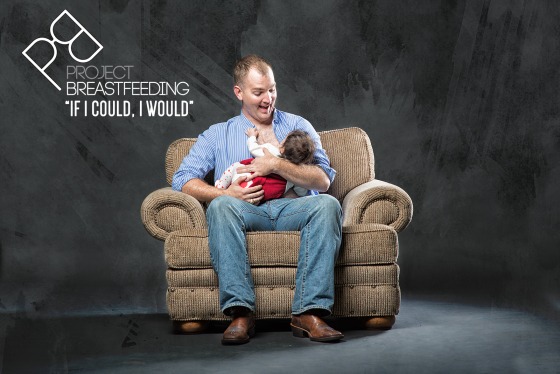
Go here for more inspiring images, and watch this video for more information on both the project and how you can get involved.
Photos: Courtesy of Project Breastfeeding, visit on Facebook.
The post Dads Breastfeeding? How These Images Hope to Change Families. {Video} first appeared on Jennifer S. White.
]]>