The post The Myth of ‘Having It All Together’ first appeared on Jennifer S. White.
]]>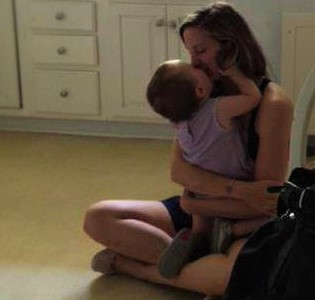
I wanted to “have it all together” before I had kids.
I wanted to overcome my eating disorder (and I did). I wanted to learn how to love myself. I wanted to finish college. I knew some things were out of reach.
My husband was finishing his second Master’s degree when we got pregnant with our first child. We didn’t own a house. We didn’t even know what state we would end up in. I knew my life wasn’t “figured out” or perfect, but I did feel like I had some key elements in place. And then I had kids.
And then I was up late. And up early.
And then I was challenged to my capacity of being overwhelmed, and relatively friendless (these early stages of motherhood, for me, have been lonely), and my go-to stress relievers were now stressful to incorporate into life rather than readily helpful.
Exercise, for instance, became a dance between my husband and me for how we could both workout and also spend time together in this “free” time we have. Meditation and yoga took on entirely new meanings—I often laugh at myself while I’m practicing yoga, thinking “Namaste” as I ask my kids too loudly to please let me do this for a few more minutes.
To further complicate this play of my tangled emotions, of a mother loving her children and also struggling to maintain sanity and healthy individuality, my oldest daughter is on the cusp of entering her first year of full-day school. I don’t want her to be. I want her to be here, with me, forever, even though I obviously don’t.
We raise children to grow and develop into their own selves who, we hope even though we alternately miss them with every space in our bodies, will leave us; they’ll fly away, doing their own dance of becoming the best people they can be.
I’m aware I’m still messing up with my kids with all these same things I tried so earnestly to fix before I had them.
I’m still battling my temper, my cravings for alone time that rarely exists, and my distinct need to inhabit and enjoy this relationship with their dad that they were born from. In short, I’m fighting to keep this person in me alive and well; this person so intertwined with my role as mother while not completely defined by it.
Some days I do it better than others. Some days I’m amazing at it. Some days I’m terrible.
I’m glad I held onto my own personal reasons for making myself into the woman I knew I could be before I had my children. I’m glad I learned how to eat for both pleasure and health, and to breathe through my stress through yoga. I’m glad my husband and I knew each other and our relationship and had already gone through difficulties together. I’m glad, more than anything, that I believed in myself enough to challenge my accepted level of competency, because I needed this faith in myself when I finally had babies. But it turns out there is never the perfect time to have kids.
Many people told me this when they asked what my husband and I were waiting for. Considering we’d dated for over ten years before marrying, and even though we were only 25 when we did, I was often asked if and when we would have kids and then offered this response of, “There’s never a perfect time.”
Sometimes I think the athletic “me” of my twenties would have been physically more suited for active toddlers. Sometimes I’m relieved I had so many experiences before having kids so that I can focus fully on helping them experience their own. More typically, I feel grateful for where I am, at the times that I arrive, and I simply do my best as both a mom and a human being.
I hope I show my kids how much I love being their mother, even as I clearly display, too, how fallible I am. I hope they know there will be choices they’ll face as they grow older, and that there isn’t usually one good answer. Many instances in our lives contain decisions, and we must make them as best and as capably as we can, if only to move forward.
Cliche as it is, the most shocking, upsetting, humbling, and obvious lesson I’ve learned as a mother is that there is no such thing as a perfect one, like I always dreamed I would be. There are only people trying as hard as we can.
And despite my wanting to be seamless as a mom, the reasons we love people are often because of our humanness, and our fragility, not in spite of it. May I remember this on any randomly difficult day with my children, that I’m perfectly filled with love and imperfectly doing my best.
The post The Myth of ‘Having It All Together’ first appeared on Jennifer S. White.
]]>The post Today Might Be the Best Day of My Life. first appeared on Jennifer S. White.
]]>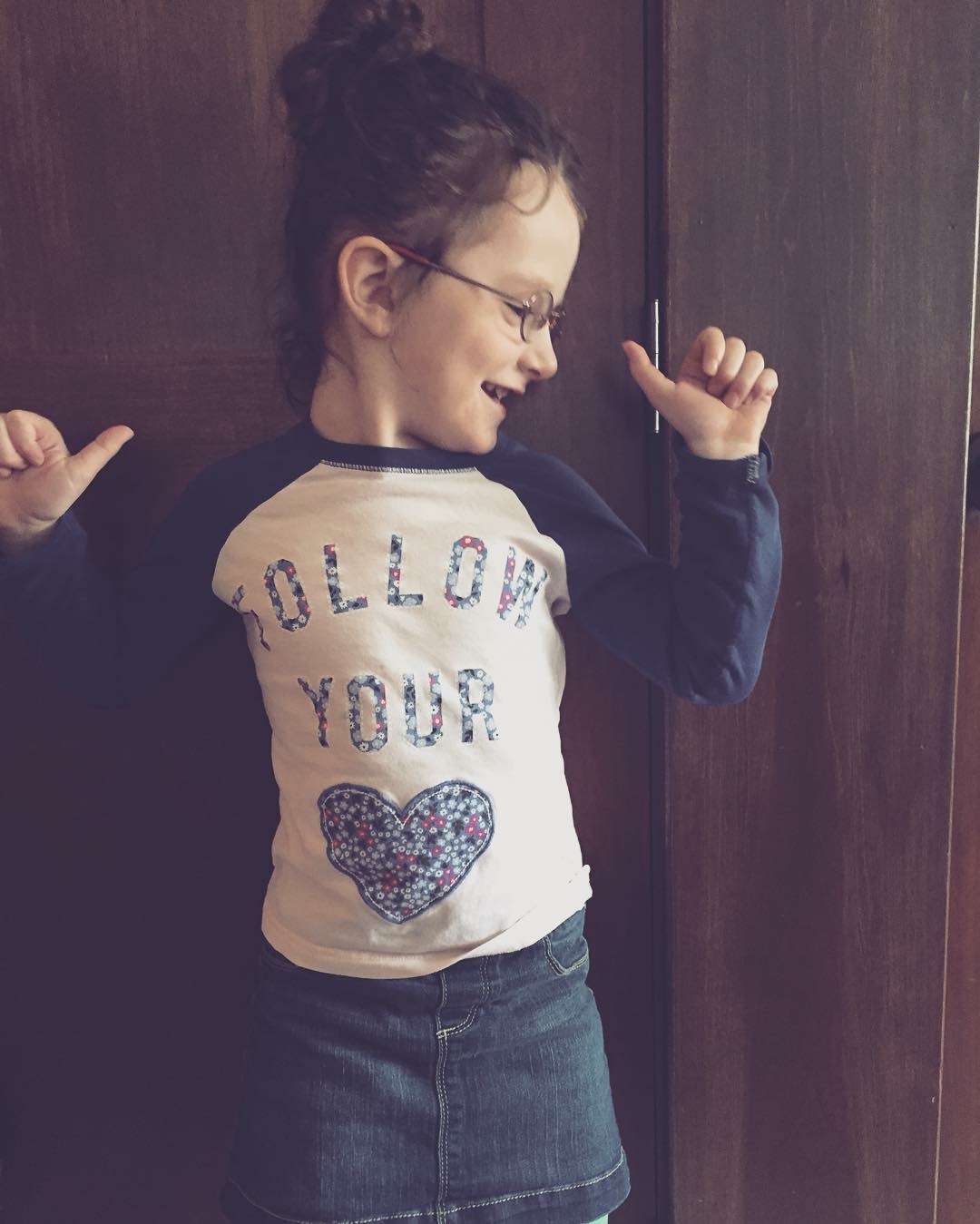
“Mommy,” my oldest daughter whispers to me in the black night.
My eyes reluctantly open, and it’s too dark to make out more than the profile of her little nose, as she presses her face close to mine.
I make her lie down in my bed, handing her a book, and I switch on the lamp that used to be my grandmother’s. I flip on its lowest setting, so that she can probably faintly see the letters and pictures in the story I’ve offered to her.
This dance—of me pretending that I’ll be able to fall back asleep, or that she’ll be happy for longer than a few minutes looking at a book in this semi-blackness—begins to feel absurd as she starts to whimper, and I start to crave coffee.
We get up together.
We tiptoe into the bathroom, using “quiet feet.”
We try to keep baby sister and her daddy asleep.
She sits on the potty while I take a quick, warm shower. After, I pour more hot water into the aeropress coffee maker that I ritualistically use each day, and I get my daughter a cup of kefir and cereal.
I realize, as I finish making my coffee and turn on another Netflix show for her, that this is the kind of morning that will feel like noon at barely 9 o’clock.
I think of my early-rising child, and of all the times she’s woken up well before five-thirty (many, many times).
Three years ago, when she was two or so, we would arrive together at the hot yoga studio that has childcare during its morning class. I would have already eaten, with plenty of hours to digest my food. I would have had two mugs of coffee. Most mornings I would have also taken a bath with my daughter, too—soaking my sore, tired mother-body in the bathwater that we usually colored blue, red, or a purple mix.
I would arrive at this yoga studio, and I would be well into my day—well into an attitude of how my day was going, rather than sleep-fog-eyed like the other students, with days far reaching ahead, and this class to begin their mood, not meld into an already-created one.
And I chose my mood on those mornings, more often than not.
I came to understand that my daughter couldn’t help her early-to-bed, early-to-rise body, and that, truthfully, she was the one doing it right, not the rest of the world staying up until midnight watching shitty television. More than this, I understood that if I entered this dawning day giving myself permission to feel tired, but excited for its brand-new uniqueness, that this colored the rest of how my morning unraveled.
It’s a potentially saccharine-cheesy truth, but it’s genuine.
I could as easily smile at my happy-to-be-awake-and-play-with-Mommy child, and groggily, but gratefully, wake myself up by slowly reading books or sipping coffee, as I could internally bitch about how exhausted I was.
This isn’t to neglect that I was an utterly exhausted human being for a long time, up until very recently. This isn’t to pretend that life doesn’t hand us difficulties, much beyond having to wake up early.
It’s not to suggest that I still don’t daydream about sleeping in until ten—or nine—or eight!
It’s not to pretend that I don’t “need” my coffee, so much as create a soothing morning self-care ritual with it.
It’s just that I’ve come to appreciate how much of my life is a choice, and this realization has helped me feel empowered and in control when I easily could have felt otherwise.
So this morning I kissed the top of my daughter’s curly hair. I whispered to her that I loved her, and I asked her what she was most looking forward to today. (Her response was simple and sweet: “friends.”)
I wondered at my own question, asking myself silently, “What are you most looking forward to today, Jennifer?”
My answer arrived in a fluid wave of gratitude and emotion.
I’m thankful for my two eyes opening this morning, that let me look upon this gentle, loving face of my daughter (and, later, my husband and our baby). I’m looking forward to a day that just might wind up being the best day of my life.
The post Today Might Be the Best Day of My Life. first appeared on Jennifer S. White.
]]>The post I’m Hoping My Kids Remember More of What I Do Right. first appeared on Jennifer S. White.
]]>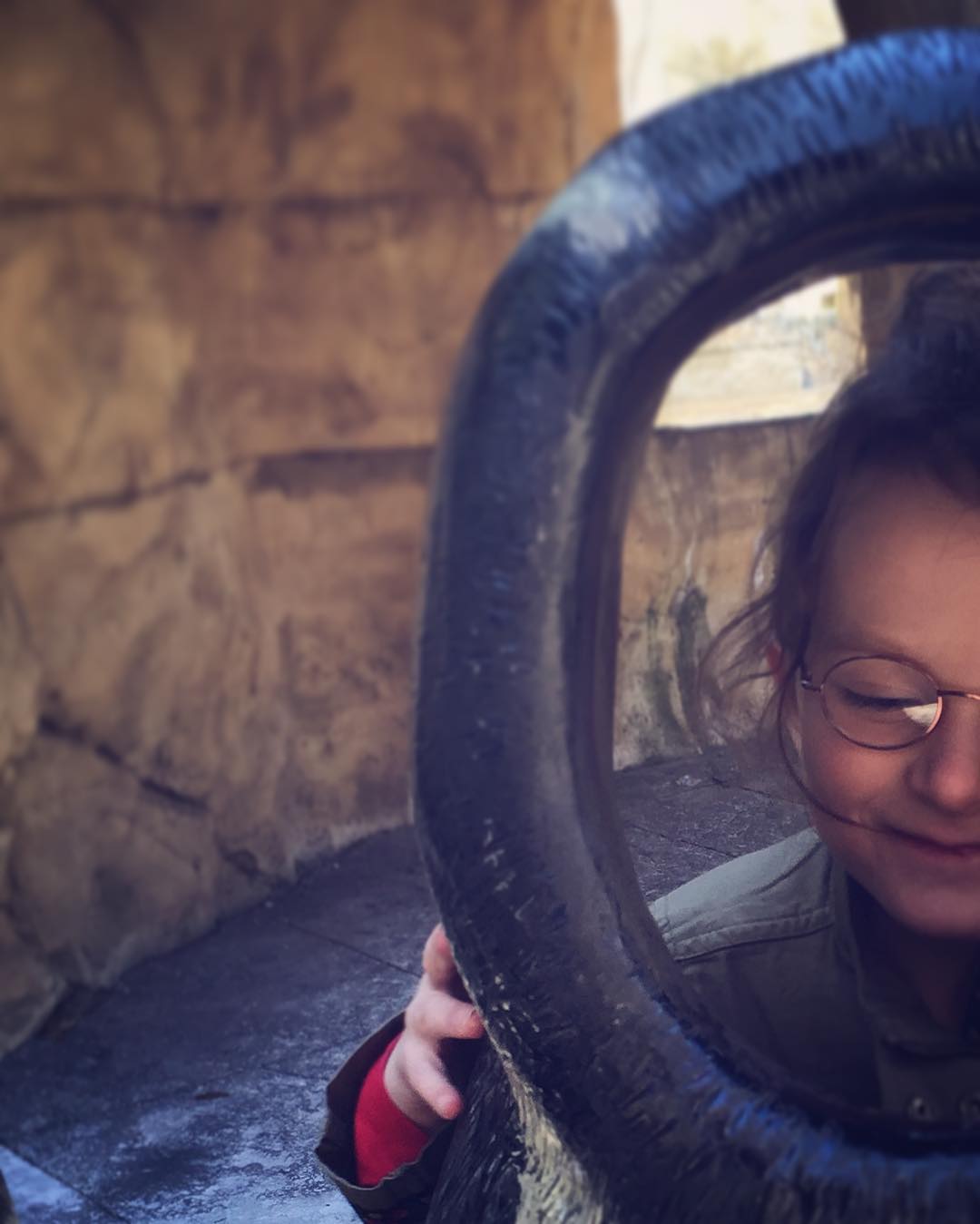
We went to the zoo again, and I think we were there for maybe an hour. Maybe.
We left because I couldn’t handle it.
It was crowded, and I felt thankful for our membership, as the non-member line spread at least an hour’s wait outside the door, and into the beautiful blue-sky, sunny-day air.
The baby whined the entire time to get up from her stroller, and I don’t blame her. Because she’s not a baby anymore. She’s a tiny toddler. And she should be walking around and not sitting still.
But I’m a mom alone, in a sea of human beings, with two kids that don’t easily listen and stay close to me. So I ordered the “baby” a leash.
I always said I wouldn’t be one of those parents who put her kid on a freaking leash, except to hike in nature, like I saw one time three days into our first backpacking trip together, with my husband-then-boyfriend, when we were probably around 21, and kids weren’t really part of my thinking at all.
A leash like that would be okay, but not at the grocery store or inside of the zoo.
Except for now I can’t even go to the grocery store.
The baby refuses to sit in the cart, and she won’t even hold my hand as we walk through the glass-jar covered aisles (which alone is hard enough, pushing the cart and also keeping my eye on my oldest). So I got a leash, and I’m hoping that it’s the miracle I need, because these last few days have made me feel like I’m not cut out for this mothering gig.
I’m already not a great housekeeper, or even that good at staying on top of the dirty laundry. I would make a totally shitty housewife, if I was one, which I’m not, because I adamantly told my husband early on in my stay-at-home motherhood that I am staying home to spend time with my child, not to iron shirts (if I had an ironing board—or an iron).
This isn’t to say that part of my “job” isn’t to teach my girls how to be self-sufficient, or to be self-sufficient myself—how to wash clothes, and do dishes and pick up our messes—because it is, and it’s not because I’m a wife and because they’re girls, but because I want them to be independent when they grow up.
So, I bought a leash, and I’m nearly afraid to use it; to potentially find out that it’s not the sanity-saving device I’m crossing my fingers for it to be.
I tried it on her, and it has these cute little butterfly wings on the back. This was intentional, since she loves playing dress up. Trying it on around the house, however, she tried to hold the little loop at the end of the leash, and, essentially, walk herself—which negates this entire purpose of the leash.
So fingers are crossed and silent prayers are sent up that I’m better at being a mom than I feel like I am right now, on spring break with two pent-up little girls who give Mommy near-panic attacks as we head out into public, and they both misbehave, and my face gets hot, and my armpits sweat, and I feel like everyone is silently looking at me, wondering why I’m the mother of these two kids I can’t always control.
Except for even more important than going to the grocery store for more juice and more milk for my current lifesaver—coffee—or the opinions of strangers that don’t matter, are these little girls’ lives that I’m in charge of guiding, and that I feel like I fail at multiple times a day with my short temper and sometimes-invisible capacity for stress.
I hope they grow older, and laugh together about the baby’s butterfly leash, or they recount that we went to the zoo two days in a row, and completely forget that it was only for an hour both days (and that counts bathroom trips and snacks, too).
I’m not sure we’ll go back to the zoo tomorrow. (After all, we have gymnastics lessons.)
I’m not sure I’m ready either.
My neck still aches despite my trying to yoga-practice it away, from this unbelievable pressure I’m in—of raising two little kids; this overwhelming responsibility that I’m occasionally too busy to truly notice, and often so unshakably aware of.
But today was a better day than yesterday, and sometimes, as a parent, that’s all you really can cross your fingers for— that and that they’ll remember more of what I do right than anything else.
The post I’m Hoping My Kids Remember More of What I Do Right. first appeared on Jennifer S. White.
]]>The post The Hardest Part Of Being A Parent first appeared on Jennifer S. White.
]]>
The rain comes down so heavily that the grass becomes a muddy pond. Rings of water droplets are visible from inside the house, as I look out the window.
My daughter asks for snow and, at one point, excitedly thinks she sees it, but it’s only the rain, become so thick she has mistaken it.
Smells of onion and sounds of sizzling and chopping and a little-girl, sous-chef voice trickle in from the kitchen. The baby carries a book around as big as her own body, and makes small breathless grunts as she heaves it up onto their play table and onto her new bean bag chair that’s too large for her.
The computer is nearly dead from not being plugged in. It’s sat unused and without care during several days of family time. Every day my daughter asks if she can go to school and, like the optimistic being she is, seems okay, if slightly disappointed, that she still has to stay home with me.
I unplug from social media, especially from Facebook, because I find it annoying me and detracting from my emotional well-being, but I don’t make a grand statement about this neglect. Instead, I talk to my husband, about things that have been weighing on me, but I’ve left unaddressed for many reasons. We marvel together over the adorableness of our daughter in her new hat. We wipe drippy noses of a baby with a cold, and we hug, until one of our children comes to pry us apart and pull our attention somewhere else.
The onion scent becomes stronger, but also finer, as it’s sauteed and melds into what will be soup.
The sizzling sound changes too, and I notice the absence of baby grunts. I pop up quickly from my chair at the dining table to see where she’s gone off to, and I find her in the pink-and-white chevron-patterned teepee, playing with a cloth book.
She gets up quickly too, acting as if she’s doing something wrong, but she isn’t, and now her audible efforts to move bigger-than-her objects and climb on top of things, combined with the occasional thud of a book falling, rejoin this post-holiday atmosphere.
My neck hurts terribly from not sleeping well and from not exercising yesterday. My shoulders feel stiff and I know I’ll need to move my body at some point, but I don’t feel ready yet.
The baby whines at my husband’s legs while he stirs milk into coffee. She holds her arms up and he tells her “just a second.” My oldest makes sounds of “helping”—light clangs and small tings and “okay” and “here we go” echo out from where she stands on a chair next to the big bamboo cutting board that we never put away.
This simple morning—of small children with colds, and of recreating holiday leftovers, and making coffee, and writing, and imaginations of little girls—settles into and fills the spaces of my cranky muscles that I hadn’t realized hurt from feeling emotions bigger than they can carry.
I’m grown, but my emotions are sometimes larger than I want to handle, and these moments encourage me to remember how my girls must feel—so small are they; so big are their experiences.
I’m called away again from my internal contemplation by a need to go get new pants for the baby. My husband isn’t sure why her pants were wet, but takes no chances in asking me to stick them in the laundry basket and find a new pair.
And that’s the most challenging part of being a parent, for me at least—it’s not having this space to be fully still for a random five minutes and feel something weighty, or to be lazy, or to watch a movie in one sitting rather than the three or four nights it will usually take.
Being a parent to young children is all-consuming—it’s present in every small crevice of my heart and, more, it is what my life is completely wrapped up in. I am not complaining.
For years we wanted children until we had our first, and our marriage is never secondary, but it’s also not always first anymore either. It’s all a balancing act.
It’s holding one person’s hand, while making room for two others (when we only have two hands); it’s finding time to be an “us,” and to be a “mom” and a “dad,” and an individual too.
We sat on the couch yesterday afternoon, cuddled up together, with children on laps and our hands clasped, and he said he knew if he didn’t get up and go biking now that the rain would stop him for days (at best). But he didn’t move. He clutched my hand more firmly and kissed a baby’s head, and we settled into an imperfect day filled with such perfection that we didn’t want to burst it with sudden movement.
The sudden movement of reaching for a cell phone, instead of taking in a still moment with my daughters; the sudden retraction of my hand so I can take a sip of wine; the sudden letting go of doing nothing, to do something more “productive.”
No, the hardest part of being a parent is when I want so badly for this second to last an hour, but for this day to move forward, and into an easier time of my life.
The post The Hardest Part Of Being A Parent first appeared on Jennifer S. White.
]]>The post Why Yogis Are Better Listeners. first appeared on Jennifer S. White.
]]>
Are you there, yoga? It’s me, Jennifer.
Sometimes I subconsciously, and consciously, avoid my yoga practice—moving my body in a myriad of other ways—simply to not have to look in the magic mirror of my sticky mat.
Because my yoga practice doesn’t lie.
Some days, my practice lets me know that I’m exhausted—depleted and pushing through the day as a stay-at-home yogi with two active children, because I have no choice.
On days like these, I feel grateful for this revelation, but, simultaneously, I feel cheated that I can’t listen to what I genuinely need.
What I need is sitting on the couch poring over a novel. What I need is to eat more than normal or to take a day and nap and not eat much at all.
What I have is two kids who need routine—two extremely mobile little people who can’t have a mommy sitting on the sofa reading and napping and munching on peanuts.
So, instead of unrolling my sage green sticky mat, I bring some weights up from the basement and press out a few sets, to lift the fog of being up with a teething baby all night; to get my heart and blood pumping; to feel alive and alert because there is not enough coffee in the world for some rainy, grey mornings.
This is what I normally would do on a day when I need rest but can’t grant myself permission to take it.
Today, however, I unrolled my sage green mat—I sit here typing this on the carpet next to one child playing and another sleeping in her electrically moving swing—in double pigeon pose—after a juicy yoga practice.
Okay, it was a dehydrated yoga practice.
My body did not feel supple or strong today.
No, I felt the fatigue rippling deeply through my tissues from running and weight training and Pilates and other days’ yoga practices. I felt last night’s lack of sleep and this morning’s rainy haze.
I switch shins, so that my other hip is now opening up in double pigeon.
The soft tissues surrounding my hip joints begin to feel more pliable—more ready to release a difficult last two weeks and, possibly, opening up to prepare for more challenges, more joy and other general life occurrences.
I switch my shins again, so that my tighter right hip has another opportunity to let go of stale, residual tension—and I feel ready to stop fighting.
I feel ready to stop fighting my daughter as she tries my patience.
I feel ready to stop demanding that my husband do things my way.
I feel ready to listen to the reality that my own busy body needs to take it easy—at least for today; at least for a few hours.
My hips suddenly feel deliciously relaxed.
I change the crossing of my legs one more time and notice the adjoining lightness in my chest.
Sometimes, we don’t have the space within our lives to stop and sit, when we have active little children or a job that doesn’t offer a day off when we desperately want it, but we can give ourselves the space to listen to what we need and crave.
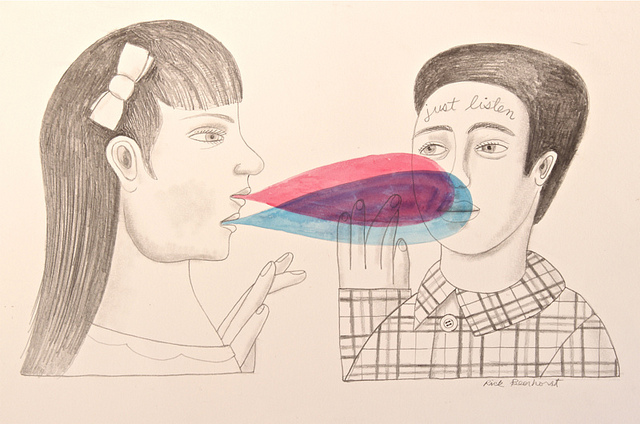
And that’s the thing about being a good listener, both with ourselves and with those around us—often, just being heard is enough.
Photo: Flickr/just listen to her cropped; Flickr/14er Yoga Gurus.
The post Why Yogis Are Better Listeners. first appeared on Jennifer S. White.
]]>The post Why I Make Time to Practice Yoga. first appeared on Jennifer S. White.
]]>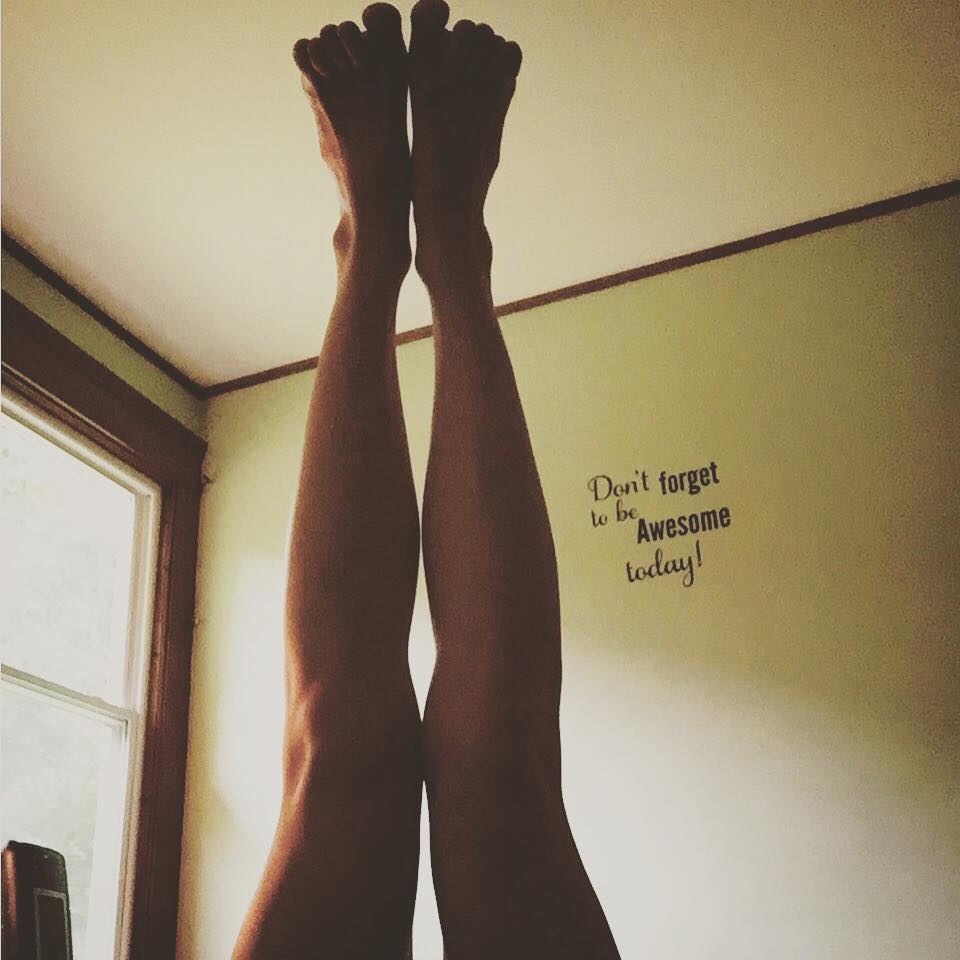
My yoga practice is the single most important thing that I do physically that both rejuvenates me and relaxes me.
On my mat I feel alive.
My hair falls in my face. Sweat drips in little beads onto the sage green rubber beneath me.
I press my hands firmly into my mat, and I feel sensations in my body that I can’t in anything else that I do, even though I regularly enjoy multiple forms of exercise.
On my mat I harness my strength.
On my mat I fall into my exhaustion.
On my mat I fold neatly and feel the release of tension from all along my spine—crown of head to tips of toes.
On my mat I am alone, yet completely connected to everything that exists around me.
My yoga practice is the single most difficult thing for me to commit to right now.
Don’t get me wrong—I have no problem devoting chunks of time to my practice.
I have no problem, either, with motivation—I’m motivated by my sore body, or my tired heart, or my need to simply feel my breath nearly every single day. That said, to me, my practice is so much more than flopping in and out of postures. It’s much more, too, than a specific sequence that opens my hips or stretches my hamstrings.
To me, my yoga practice is a moving mediation—and it’s this mindfulness that I have difficulty accessing as I full-time parent two active young children.
I can lift weights with my kids around—both of my daughters actually almost enjoy watching me do this.
I can do Pilates—yes, I have to focus on breath and musculature, but this type of focus is much less precise and internal than with a yoga practice.
But I make the time, however challenging, to get on my mat and—here’s the thing—I’m never sorry.
I’m always, always grateful I did.
My husband comes home from work and I feel like all I want is a glass of wine and someone else to help me have that ever-vigilant parental eye; but when the day was hard or overwhelming long, and my shoulders are tight from an afternoon of child-frustration, this is precisely when I know that my intention for that glass of wine isn’t ideal.
I don’t want to need a glass of wine—frankly, I don’t really want to need my yoga practice either.
And at times in my life when I had awesome practices essentially every day, I could much more easily get into that space of yoga—where I’m fully present in this moment, and not over there or over there—when I needed to, without hopping on my sage green mat—because it is a practice.
We really can, and do, get better at practicing “real” yoga—this mindfulness and full attention within the space that we currently inhabit—if we practice, often.
It’s also easy to make excuses to not practice when we “only have 30 minutes” or “haven’t for the last few days anyways.” Instead, this is exactly when we need to regroup—and recommit—the most.
So I take out my sage green mat.
I unroll it at the center of the family room, where I can hear baby toys clanking together in tiny hands and cheerful singing and playing.
I do this happily, even if reluctantly, because I know that while I might not be able to crank out more than 20 minutes or finish the sequence that I had in mind or even do more to close it out than sit in simple cross-legged position for 30 seconds, I can be a living example to my children of self-care and, mostly, I know I’ll feel better.
Just this simple act of setting my intention to practice yoga—and, by default, self-love—makes me feel better.
I move through my day with much more ease, both in my joints and in my mind.
And on my mat I remember that my practice is still beautiful—it’s just different.
Different really is good.
Life is not meant to stagnate.
On my mat I flow and move and breathe, and I open to the possibility that I truly am right where I’m meant to be, here in Mommyland—even if there are more yoga detour signs.
Photo: Author’s own.
The post Why I Make Time to Practice Yoga. first appeared on Jennifer S. White.
]]>The post How I Fell Back in Love with Yoga After Falling Out. first appeared on Jennifer S. White.
]]>
It all began years ago, my love of weight lifting.
I used to lift tiny weights for many repetitions and run my butt off, literally—I actually had an eating disorder and, on top of this, used exercise to deal with the stress of college.
It took me years to learn how to accept that I love working out, genuinely do need it to cope with life’s ups and downs, as well as to come to terms with what healthy exercise is.
For me, healthy exercise is something that improves the quality of my life rather than detracts from it.
For example, back when I was in my early 20s and running about 13 miles a day, I received a monthly running magazine. In it, one month, a person was writing about how on weekends she spent hours away from her husband and children to “train,” and that her family had just come to understand that this is how she spends her weekend mornings. She said that, yes, it means missing her kids’ games and activities more often than not, but she was okay with this. Well, the thing is—I wasn’t.
I mean, what another individual wants to do with her Saturday mornings is obviously fine with me, but in that moment I vowed to myself that when I was married with children I would never let exercise become more important than my family.
This said, the recent holiday of Easter had me thinking about this vow.
My children are four years old and nearly six months old and my husband and I were hosting the rest of our families that day. On Saturday, I doubled up my weight routines so that I could leave Sunday open for a total rest day, to focus on my kids and cooking.
Still, when Sunday rolled around, the eggs were all retrieved from their hiding places and my oldest child was happily nestled in Daddy’s lap eating jelly beans, I looked at this cozy threesome and announced that I was heading downstairs to lift. After all, I had only recently gotten back into it, also had a week or better of being sick under my belt and, additionally, felt that this exercise could help me best enjoy the rest of the day and our company. So I worked out.
From what I understand, most people lack motivation, instead of having to continually check in, as a former exercise over-doer, with what is healthy for their bodies and lives.
Friends tell me all the time that they don’t know how I push myself to get on my yoga mat at home, and to workout in general all by my lonesome. I guess what I don’t understand is not wanting to exercise.
When I went to my first yoga class, at my challenging Baptiste-style studio of choice, in months—like eight months—I felt strong. I felt flexible. It felt great. More, I was relieved that my “home work” was really doing it’s job of keeping my body fit.
Yet, the reasons I actually came back to weight lifting are many.
From super cold temperatures making a toasty home practice less practical, and natural means to cope with the post-baby blues, as well as wanting to, frankly, fit into my clothes again and strengthen my body so as to lessen discomfort from my physical ailments, such as scoliosis, I got back into pumping iron.
On top of these reasons was the all-too real reality that my mind was wandering a lot when I did practice yoga or try to meditate and, with weight lifting, I was a beginner again—my mind was entertained with focusing fully on the sensation of my biceps during preacher curls, for instance, or with holding my lower belly in tightly when properly executing bent-over barbell rows.
In other words, I was actually practicing my yoga much more efficiently when downstairs in my home gym and not on my sage green Jade sticky mat.
And then I got the new Israel Nash album. I yearned, the second I heard it, to flow through vinyasas to his jam-band music and Neal Young-esque voice. So I did. And when I finally did, I realized that my heart and mind were in it, for the first time in what felt like forever.
So I got on my sage green yoga mat again the next day. And the next.
This wasn’t different, mind you, as I have always gotten on my mat regularly. What was different, though, was that I had my flow back—I had my yoga back. When I reflected upon what had changed, it hit me like a fifteen-pound weight (ha): in stepping out of my comfort zone of vinyasa yoga and into my old tennis shoes, I had gotten myself out of a rut.
I had moved through my post-baby blues—the world now seemed sunny when I woke up, excited to get downstairs and lift.
I had gained strength—my chair poses, planks and half moons felt glorious.
I felt like a beginner in my yoga practice again, because I had again developed a beginner’s mindset elsewhere.
And the most important change that had occurred? I fell back in love with my yoga practice because I decided it was okay to fall out of love with it in the first place.
Sometimes the best thing we can do for ourselves is question why we do what we do every single day—because just like that our habits become who we are.
And I didn’t want to be monkey-mind, semi-half-ass yogi Jennifer any longer. No, I wanted to be strong, supple, powerful gym bitch Jennifer. What surprised me, however, was my ability to be an entirely unexpected Jennifer simply because I began to question why I was pigeon-holing myself into pigeon pose.
Actually, there are many weight-lifting yogis. Regular practitioners know that our yoga practices can be greatly improved by adding in strength training, especially as we do become more flexible.
So, yes, some days I’m gym bitch Jennifer, pumping out shoulder presses to Rage Against the Machine or The Verve and others, I’m yoga girl flowing through sun salutes to the sound of my breath. Yet, in both places, my downstairs gym and my yoga room, I’m me—I had just forgotten that I could have so many facets sparkling all at once. Or, more accurately, I’d let a few get coated in dust.
And in blowing off the ashes of my self-imagined limitations, and in seeking to find who I actually am, after the kids go to bed, I got acquainted with someone it turns out I honestly like quite a lot; someone who still loves yoga; someone who loves her yoga practice enough to be okay with not loving it all the time.
Who are you? Where are you limiting yourself? What habits of yours could be changed or, at the very least, questioned? Will you have the motivation to step up and step out of your comfort zone?
You know where my self-motivation comes from? Curiosity.
I’m interested to see if I can make the muscles around my spine healthier. I’m curious to see if I would miss my yoga practice if I gave it a tiny rest. My recommendation is that, today, we get back in touch with our curiosity. (This is easy to do when raising children.)
And even though I was afraid I was falling out of love with yoga, it turns out I wasn’t—I was just allowing myself the space to fall in love with a few other things too.
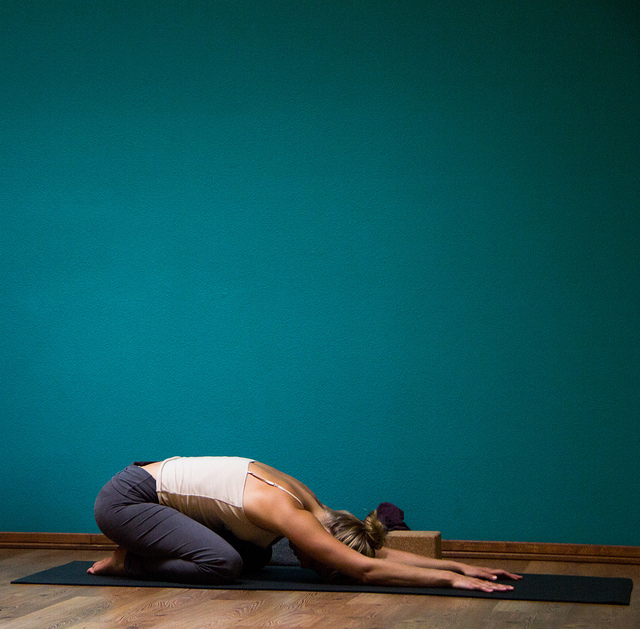
Photo: Flickr/Child’s Pose.
The post How I Fell Back in Love with Yoga After Falling Out. first appeared on Jennifer S. White.
]]>The post How Yoga Helped Me Accept That I’ll Never Have My Pre-Baby Body Back. first appeared on Jennifer S. White.
]]>
Don’t ever Google “post-baby body” and expect to find something uplifting.
Also, I shouldn’t have Googled my weight and height, what’s “normal” weight-loss post-baby or anything else along these lines, like I did.
The reason is simple: I’ll never have my pre-baby body back—thank God.
Right now, I’m 11 weeks postpartum and my linea nigra is fading, but still going strong.
I’m one of the lucky women who have a linea nigra, a dark line, running across my skin from my pubic bone to up between my ribs. I use the word “lucky” with no sarcasm whatsoever.
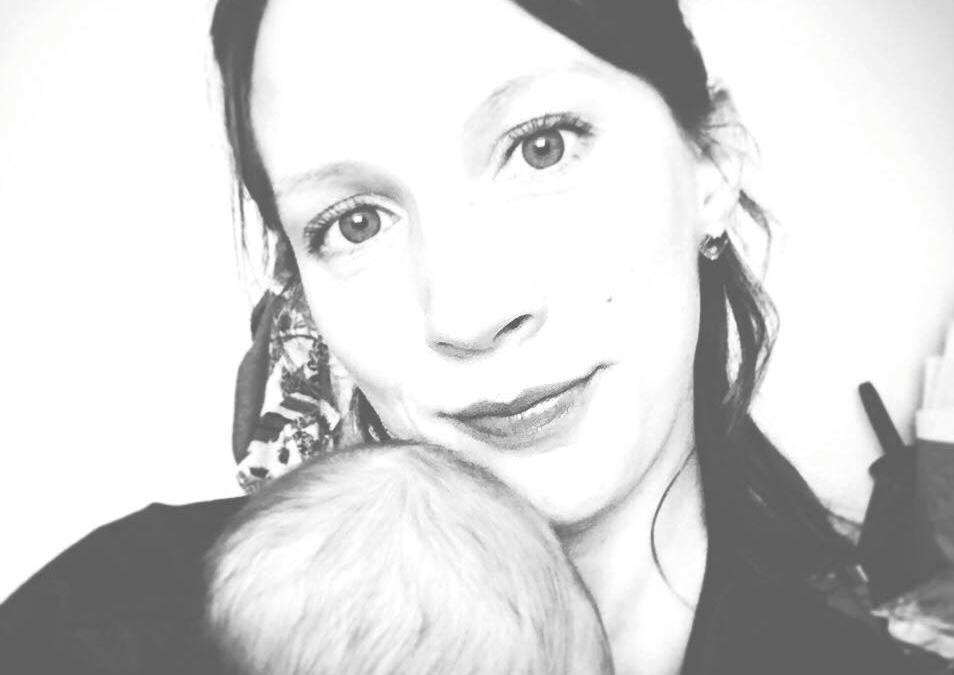
Having this kind-of-thick dark line running along my skin is one of the most beautiful things that happened to my body during pregnancy. My mother’s line faded from my first pregnancy and I do expect it to fade completely after this one too, but it’s a dead giveaway that I just gave birth, no matter how taut or tight my belly appears to people looking at it through clothing.
Yet I can’t say that I’ve been in love with my postnatal body. (I did, after all, honestly Google the things mentioned above.) And I’m not proud of that, but I’m not ashamed either—because many women want their “pre-baby” bodies back, but we feel either guilty for admitting it out loud as we cradle a gorgeous new life within our new-mother arms, or we unhealthily obsess over it.
My yoga practice has actually been pretty amazing since giving birth.
But the first time I attempted crow pose—a posture of strong spinal flexion and abdominal lift that I couldn’t safely perform during pregnancy—I felt “clunky.”
I felt “clunky” and heavy as I tried to shoot my feet back into chaturanga.
Gone was the quiet floating of my pre-pregnancy days and, here, were the new ones of big toes kind of plopping down as I tried to get back in touch with my abdominal muscles.
And I mean that: my yoga practice after having a baby was all about “getting back in touch.” It was like a friend I hadn’t spoken to in months and we were catching up, but instead of talking about work or my kids, I was listening and communicating with my intercostals and my obliques.
And I’ve been getting on my mat every single day since about four or five weeks after I had my baby. I’ve been arriving for at least five minutes of daily core work and, typically, 20 or 30 minutes of some sort of flow sequence.
Yet the reason I’ve been doing these things isn’t related at all to my aforementioned Google searches, but to the simple fact that every time I get on my mat I breathe away not only my life’s stressors, but I realize that I love my body so much, exactly as it is.
I love my linea nigra.
I love my slightly loose skin.
I love the fact that my crow to chaturanga is getting lighter and stronger and I love that I can feel my body as it regains both flexibility and strength. But I don’t love these things every day.
Some days I just feel ten pounds heavier than before I had my baby.
Some days I can’t stand the slightly loose skin.
Some days I feel clunky in general, not just in crow pose.
But that’s the thing: my daily yoga practice has given me the power of getting in touch with where I am, right now, regardless of whether or not that’s where some silly celebrity blog says I should be or whether so-and-so still has ten extra pounds.
Because, when I’m on my mat, there are no arbitrary numbers—only me, Jennifer, new mother, strong-super-woman-who-attempts-crow-pose-after-pushing-out-a-baby.
On my mat, I’m all alone, like on a deserted island, while simultaneously being connected to the larger theme of life that makes anything coming up on a “post-baby-body Google search” a complete waste of time.
So, yes, I’d love to pretend that I’m perfectly content in my postpartum skin. I’d love, too, to imagine a world where women don’t feel some form of pressure to be fit. However, we live in a world where “post-baby body” is a completely normal catchphrase (and Google search).
But that’s not why I get on my mat.
I get on my mat because I want to feel good—and a huge part of feeling good is taking care of my body, because it houses my new-mother soul.
And I’m raising two girls now—I’m raising two little human beings who depend on my teachings for how they will look upon their own bodies some day.
I want them to know they can talk to me about concerns and insecurities, but I also want them to know that our bodies are so much more than numbers on a scale, or how strong or how flexible we are.
So, thank you, yoga practice for reminding me that I’ll never, ever “get my post-baby body back.”
Nope, it’s gone—because, actually, after I had my first daughter, I was healthier than ever before, having a brand-spankin’ new reason to get on my yoga mat every day, and her name was Gemma.
And now, as a new year dawns, my resolutions aren’t anything like, “lose that ten pounds of baby weight,” or “practice yoga every day.”
My new year’s resolutions are more like, “remember to breathe through the hurt and frustration,” and “fall in love with myself all over again every single day.”
And I do fall in love with myself every day.
Every day I fall in love with my willingness to embrace my flaws—especially the flaw of caring so much about my imperfections—and I fall in love with where I am right now.
And right now I’m a writing, blogging, stay-at-home-yoga mama machine who needs her yoga practice—and who is learning to love her body, without labels.
Photos: Author’s own.
This article was first published by elephant journal.
The post How Yoga Helped Me Accept That I’ll Never Have My Pre-Baby Body Back. first appeared on Jennifer S. White.
]]>The post When We Must Be Okay without an Ending. first appeared on Jennifer S. White.
]]>
I didn’t make it to savasana today.
I always finish my yoga practice—even if I clip it short, I still have some form of closure, like child’s pose, savasana or seated meditation.
But today, I just got up. Because it finally settled into my tissues while I was in pigeon pose that sometimes, in life, there is no closure.
The other thing that washed over me in pigeon pose was how much I hate New Year’s Eve. The worst period of my life happened, at one point, during the week in between Christmas and New Year’s, and my body—my physical body—still loathes this time of year.
It doesn’t matter how much emotional or mental healing I’ve tried to do.
It doesn’t matter that, as a yoga practitioner, I’ve also worked at getting this wounded muscle memory far, far away from me; that, regardless, there are still some things that move through us and then stay inside of us forever.
Grief, terror, and tragic human experiences touch us, shake us, and, sometimes, maim us irrevocably.
I was in pigeon pose and I couldn’t see if my left shin was parallel to the top edge of my mat—by this point in my practice, the tears had formed a foggy cloud that altered my vision.
I settled into the pose by feeling my way in; by listening to my leg muscles; by shifting and undulating my spine.
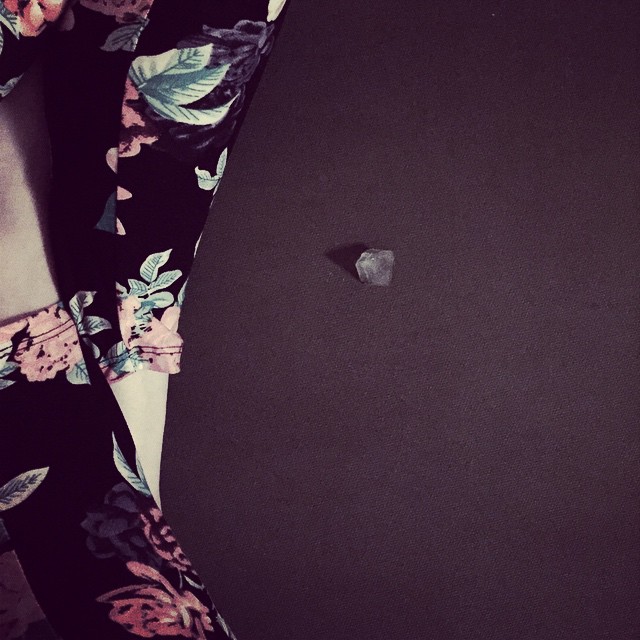
And I let the tears rain down onto my sage green yoga mat.
I let myself release, not only into my yoga posture, but into the internal injury that I carried with me into a new year, despite my best intentions over these last several.
And as I listened to the teacher on the podcast I had been following ask me to lift my heart high in pigeon pose, I ignored him and instead bowed humbly over my leg—spent, tired and broken.
But the funny thing is that as the pools of salty tears collected on the green rubber, and as my heart acknowledged a pain that, seemingly, will never completely go away, I felt honest and I felt fresh for the first time in many months.
I turned off the podcast.
I turned off my little space heater, dutifully heating up the room.
I got up and I walked out, with tears collecting in the smile lines around my lips.
And I let it be okay that my yoga practice just ended, without a thoughtful completion. More, I let it be okay that I still have a knot in the back of my throat made up of un-shed tears and a scar-tissue-covered lump running over my heart.
I’ve decided, too, to be okay with where I am right now—with no real ending; with no perfect savasana.
Photo: Flickr/Felipe Ikehara; Author’s own.
This article was first published by elephant journal.
The post When We Must Be Okay without an Ending. first appeared on Jennifer S. White.
]]>The post Yes, I’m a Serious Yogi, But I Still Do These 6 Things (Too). first appeared on Jennifer S. White.
]]>
A serious yogi is someone who practices yoga every single day, understands fully that practicing yoga is not usually done on a mat and who tries to always better herself (or himself, but, I’m a feminist—so herself).
In short, a serious yogi believes that the purpose of life is self-growth and self-betterment, but knows from personal experience that owning our ubiquitous human-flaws is the only real way to achieve it.
And this—this—is why once upon a time I wrote a slightly infamous article entitled, “Yes, I’m a Serious Yogi, But I Still Do These 6 Things.” (By the way, I’m including this definition for the way too many comments that followed, asking what my definition of a “serious yogi” is.)
I wrote it because I believe that a huge amount of personal responsibility coupled with a ginormous sense of humor is an extremely helpful combination to possess on this “serious yogi” path.
And, for me, this year was one of the craziest I’ve ever had.
This year I birthed a book, a baby and, in general, had more going on than I thought one year could fit.
And you know what? I really needed that sassy sense of humor of mine—I definitely used it to help me come out stronger, happier and all-around better as this year closes (instead of going nuts).
So, in honor of my belief that the yoga community is never too snooty or close-minded (or definitional of what yoga is), I’m creating another list of six more things I do even though I’m a serious yogi.
1. I yell.
This one I’m not proud of—but I’m not ashamed of it either.
I have a temper.
I’m loud—always. (My husband regularly asks me if I could speak more quietly, as he’s getting a headache.)
And, yes, I’ll admit that I do work on not yelling and that, likely, I’ll always have to work on this reaction of mine, but here’s to being open about who I am, stopping shame in its tracks and loving myself wholeheartedly.
2. I hopped on the selfie-crazed bandwagon.
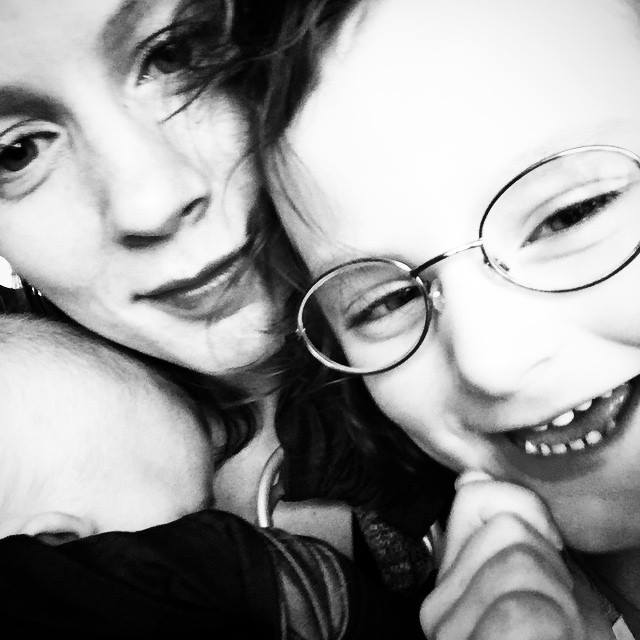
And, no, it’s not because I’m a yoga-narcissist. Rather, it’s because I realized that I have very few pictures of me with my children. (I’m always the one taking the pictures.)
So, I fixed that (by taking a few selfies).
3. I eat quickly.
Yes, I work on eating mindfully. Of course, I consciously try to slow myself down, but speaking of practicing yoga, there’s a little thing called doshas within its sister-science of Ayurveda.
And my prominent dosha types are Vata and Pitta—meaning my nature is to eat fast and then rush off to the next thing. (Which is one major reason I practice yoga in the first place—to appreciate the present moment more fully.)
4. I call myself a yogi.
Another long string of commentary on that aforementioned blog of mine was directed at my calling myself a “yogi.”
Instead of going on and on about what a waste of time/what nonsense/how nit-picky it is to take the time to focus on this aspect of my writing, I’ll simply explain why I call myself a yogi and not a yogini—it’s because I’m a feminist and I personally don’t feel the need or desire to classify myself differently simply because I own a vagina.
5. I dislike people.
This said, I don’t prefer to use the term “hate” and I really don’t hate anyone. However, I absolutely dislike a few people. (I am a human being after all and one with a strong personality on top of that.)
Still, I use my yoga practice to help me understand and accept people and to direct my energy more efficiently (at better things and people).
6. I use the toilet.
I’m throwing this in last, as my closing, because I think it’s extremely helpful to remember that every one of us—even the greatest, most positively influential people who ever lived—still had to go to the loo.
Because we’re all human—we’re all perfectly imperfect—whether or not we’re “serious yogis”—thank God.
Photos: Author’s own; Flickr/Happy Yoga.
This article was first published by elephant journal.
The post Yes, I’m a Serious Yogi, But I Still Do These 6 Things (Too). first appeared on Jennifer S. White.
]]>