The post How I Fell Back in Love with Yoga After Falling Out. first appeared on Jennifer S. White.
]]>
It all began years ago, my love of weight lifting.
I used to lift tiny weights for many repetitions and run my butt off, literally—I actually had an eating disorder and, on top of this, used exercise to deal with the stress of college.
It took me years to learn how to accept that I love working out, genuinely do need it to cope with life’s ups and downs, as well as to come to terms with what healthy exercise is.
For me, healthy exercise is something that improves the quality of my life rather than detracts from it.
For example, back when I was in my early 20s and running about 13 miles a day, I received a monthly running magazine. In it, one month, a person was writing about how on weekends she spent hours away from her husband and children to “train,” and that her family had just come to understand that this is how she spends her weekend mornings. She said that, yes, it means missing her kids’ games and activities more often than not, but she was okay with this. Well, the thing is—I wasn’t.
I mean, what another individual wants to do with her Saturday mornings is obviously fine with me, but in that moment I vowed to myself that when I was married with children I would never let exercise become more important than my family.
This said, the recent holiday of Easter had me thinking about this vow.
My children are four years old and nearly six months old and my husband and I were hosting the rest of our families that day. On Saturday, I doubled up my weight routines so that I could leave Sunday open for a total rest day, to focus on my kids and cooking.
Still, when Sunday rolled around, the eggs were all retrieved from their hiding places and my oldest child was happily nestled in Daddy’s lap eating jelly beans, I looked at this cozy threesome and announced that I was heading downstairs to lift. After all, I had only recently gotten back into it, also had a week or better of being sick under my belt and, additionally, felt that this exercise could help me best enjoy the rest of the day and our company. So I worked out.
From what I understand, most people lack motivation, instead of having to continually check in, as a former exercise over-doer, with what is healthy for their bodies and lives.
Friends tell me all the time that they don’t know how I push myself to get on my yoga mat at home, and to workout in general all by my lonesome. I guess what I don’t understand is not wanting to exercise.
When I went to my first yoga class, at my challenging Baptiste-style studio of choice, in months—like eight months—I felt strong. I felt flexible. It felt great. More, I was relieved that my “home work” was really doing it’s job of keeping my body fit.
Yet, the reasons I actually came back to weight lifting are many.
From super cold temperatures making a toasty home practice less practical, and natural means to cope with the post-baby blues, as well as wanting to, frankly, fit into my clothes again and strengthen my body so as to lessen discomfort from my physical ailments, such as scoliosis, I got back into pumping iron.
On top of these reasons was the all-too real reality that my mind was wandering a lot when I did practice yoga or try to meditate and, with weight lifting, I was a beginner again—my mind was entertained with focusing fully on the sensation of my biceps during preacher curls, for instance, or with holding my lower belly in tightly when properly executing bent-over barbell rows.
In other words, I was actually practicing my yoga much more efficiently when downstairs in my home gym and not on my sage green Jade sticky mat.
And then I got the new Israel Nash album. I yearned, the second I heard it, to flow through vinyasas to his jam-band music and Neal Young-esque voice. So I did. And when I finally did, I realized that my heart and mind were in it, for the first time in what felt like forever.
So I got on my sage green yoga mat again the next day. And the next.
This wasn’t different, mind you, as I have always gotten on my mat regularly. What was different, though, was that I had my flow back—I had my yoga back. When I reflected upon what had changed, it hit me like a fifteen-pound weight (ha): in stepping out of my comfort zone of vinyasa yoga and into my old tennis shoes, I had gotten myself out of a rut.
I had moved through my post-baby blues—the world now seemed sunny when I woke up, excited to get downstairs and lift.
I had gained strength—my chair poses, planks and half moons felt glorious.
I felt like a beginner in my yoga practice again, because I had again developed a beginner’s mindset elsewhere.
And the most important change that had occurred? I fell back in love with my yoga practice because I decided it was okay to fall out of love with it in the first place.
Sometimes the best thing we can do for ourselves is question why we do what we do every single day—because just like that our habits become who we are.
And I didn’t want to be monkey-mind, semi-half-ass yogi Jennifer any longer. No, I wanted to be strong, supple, powerful gym bitch Jennifer. What surprised me, however, was my ability to be an entirely unexpected Jennifer simply because I began to question why I was pigeon-holing myself into pigeon pose.
Actually, there are many weight-lifting yogis. Regular practitioners know that our yoga practices can be greatly improved by adding in strength training, especially as we do become more flexible.
So, yes, some days I’m gym bitch Jennifer, pumping out shoulder presses to Rage Against the Machine or The Verve and others, I’m yoga girl flowing through sun salutes to the sound of my breath. Yet, in both places, my downstairs gym and my yoga room, I’m me—I had just forgotten that I could have so many facets sparkling all at once. Or, more accurately, I’d let a few get coated in dust.
And in blowing off the ashes of my self-imagined limitations, and in seeking to find who I actually am, after the kids go to bed, I got acquainted with someone it turns out I honestly like quite a lot; someone who still loves yoga; someone who loves her yoga practice enough to be okay with not loving it all the time.
Who are you? Where are you limiting yourself? What habits of yours could be changed or, at the very least, questioned? Will you have the motivation to step up and step out of your comfort zone?
You know where my self-motivation comes from? Curiosity.
I’m interested to see if I can make the muscles around my spine healthier. I’m curious to see if I would miss my yoga practice if I gave it a tiny rest. My recommendation is that, today, we get back in touch with our curiosity. (This is easy to do when raising children.)
And even though I was afraid I was falling out of love with yoga, it turns out I wasn’t—I was just allowing myself the space to fall in love with a few other things too.
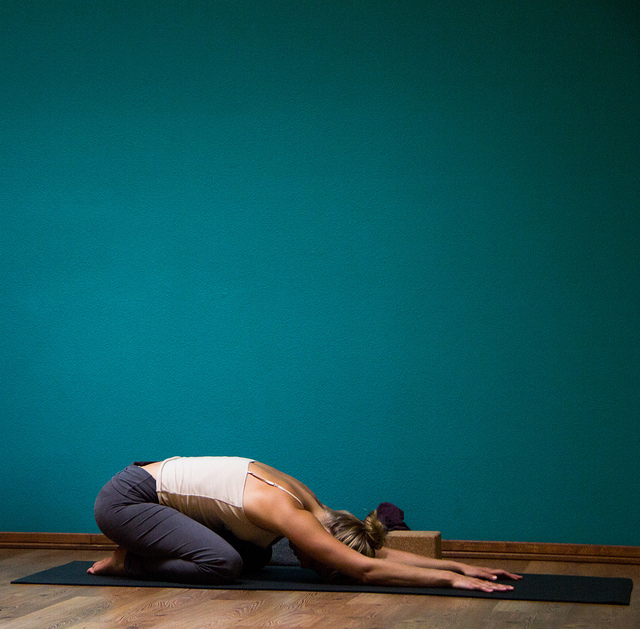
Photo: Flickr/Child’s Pose.
The post How I Fell Back in Love with Yoga After Falling Out. first appeared on Jennifer S. White.
]]>The post How Yoga Helped Me Accept That I’ll Never Have My Pre-Baby Body Back. first appeared on Jennifer S. White.
]]>
Don’t ever Google “post-baby body” and expect to find something uplifting.
Also, I shouldn’t have Googled my weight and height, what’s “normal” weight-loss post-baby or anything else along these lines, like I did.
The reason is simple: I’ll never have my pre-baby body back—thank God.
Right now, I’m 11 weeks postpartum and my linea nigra is fading, but still going strong.
I’m one of the lucky women who have a linea nigra, a dark line, running across my skin from my pubic bone to up between my ribs. I use the word “lucky” with no sarcasm whatsoever.
Having this kind-of-thick dark line running along my skin is one of the most beautiful things that happened to my body during pregnancy. My mother’s line faded from my first pregnancy and I do expect it to fade completely after this one too, but it’s a dead giveaway that I just gave birth, no matter how taut or tight my belly appears to people looking at it through clothing.
Yet I can’t say that I’ve been in love with my postnatal body. (I did, after all, honestly Google the things mentioned above.) And I’m not proud of that, but I’m not ashamed either—because many women want their “pre-baby” bodies back, but we feel either guilty for admitting it out loud as we cradle a gorgeous new life within our new-mother arms, or we unhealthily obsess over it.
My yoga practice has actually been pretty amazing since giving birth.
But the first time I attempted crow pose—a posture of strong spinal flexion and abdominal lift that I couldn’t safely perform during pregnancy—I felt “clunky.”
I felt “clunky” and heavy as I tried to shoot my feet back into chaturanga.
Gone was the quiet floating of my pre-pregnancy days and, here, were the new ones of big toes kind of plopping down as I tried to get back in touch with my abdominal muscles.
And I mean that: my yoga practice after having a baby was all about “getting back in touch.” It was like a friend I hadn’t spoken to in months and we were catching up, but instead of talking about work or my kids, I was listening and communicating with my intercostals and my obliques.
And I’ve been getting on my mat every single day since about four or five weeks after I had my baby. I’ve been arriving for at least five minutes of daily core work and, typically, 20 or 30 minutes of some sort of flow sequence.
Yet the reason I’ve been doing these things isn’t related at all to my aforementioned Google searches, but to the simple fact that every time I get on my mat I breathe away not only my life’s stressors, but I realize that I love my body so much, exactly as it is.
I love my linea nigra.
I love my slightly loose skin.
I love the fact that my crow to chaturanga is getting lighter and stronger and I love that I can feel my body as it regains both flexibility and strength. But I don’t love these things every day.
Some days I just feel ten pounds heavier than before I had my baby.
Some days I can’t stand the slightly loose skin.
Some days I feel clunky in general, not just in crow pose.
But that’s the thing: my daily yoga practice has given me the power of getting in touch with where I am, right now, regardless of whether or not that’s where some silly celebrity blog says I should be or whether so-and-so still has ten extra pounds.
Because, when I’m on my mat, there are no arbitrary numbers—only me, Jennifer, new mother, strong-super-woman-who-attempts-crow-pose-after-pushing-out-a-baby.
On my mat, I’m all alone, like on a deserted island, while simultaneously being connected to the larger theme of life that makes anything coming up on a “post-baby-body Google search” a complete waste of time.
So, yes, I’d love to pretend that I’m perfectly content in my postpartum skin. I’d love, too, to imagine a world where women don’t feel some form of pressure to be fit. However, we live in a world where “post-baby body” is a completely normal catchphrase (and Google search).
But that’s not why I get on my mat.
I get on my mat because I want to feel good—and a huge part of feeling good is taking care of my body, because it houses my new-mother soul.
And I’m raising two girls now—I’m raising two little human beings who depend on my teachings for how they will look upon their own bodies some day.
I want them to know they can talk to me about concerns and insecurities, but I also want them to know that our bodies are so much more than numbers on a scale, or how strong or how flexible we are.
So, thank you, yoga practice for reminding me that I’ll never, ever “get my post-baby body back.”
Nope, it’s gone—because, actually, after I had my first daughter, I was healthier than ever before, having a brand-spankin’ new reason to get on my yoga mat every day, and her name was Gemma.
And now, as a new year dawns, my resolutions aren’t anything like, “lose that ten pounds of baby weight,” or “practice yoga every day.”
My new year’s resolutions are more like, “remember to breathe through the hurt and frustration,” and “fall in love with myself all over again every single day.”
And I do fall in love with myself every day.
Every day I fall in love with my willingness to embrace my flaws—especially the flaw of caring so much about my imperfections—and I fall in love with where I am right now.
And right now I’m a writing, blogging, stay-at-home-yoga mama machine who needs her yoga practice—and who is learning to love her body, without labels.
Photos: Author’s own.
This article was first published by elephant journal.
The post How Yoga Helped Me Accept That I’ll Never Have My Pre-Baby Body Back. first appeared on Jennifer S. White.
]]>The post When We Must Be Okay without an Ending. first appeared on Jennifer S. White.
]]>
I didn’t make it to savasana today.
I always finish my yoga practice—even if I clip it short, I still have some form of closure, like child’s pose, savasana or seated meditation.
But today, I just got up. Because it finally settled into my tissues while I was in pigeon pose that sometimes, in life, there is no closure.
The other thing that washed over me in pigeon pose was how much I hate New Year’s Eve. The worst period of my life happened, at one point, during the week in between Christmas and New Year’s, and my body—my physical body—still loathes this time of year.
It doesn’t matter how much emotional or mental healing I’ve tried to do.
It doesn’t matter that, as a yoga practitioner, I’ve also worked at getting this wounded muscle memory far, far away from me; that, regardless, there are still some things that move through us and then stay inside of us forever.
Grief, terror, and tragic human experiences touch us, shake us, and, sometimes, maim us irrevocably.
I was in pigeon pose and I couldn’t see if my left shin was parallel to the top edge of my mat—by this point in my practice, the tears had formed a foggy cloud that altered my vision.
I settled into the pose by feeling my way in; by listening to my leg muscles; by shifting and undulating my spine.
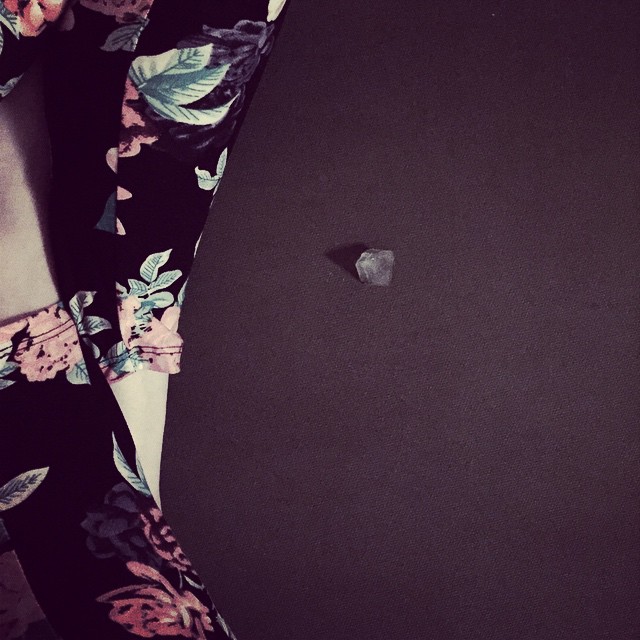
And I let the tears rain down onto my sage green yoga mat.
I let myself release, not only into my yoga posture, but into the internal injury that I carried with me into a new year, despite my best intentions over these last several.
And as I listened to the teacher on the podcast I had been following ask me to lift my heart high in pigeon pose, I ignored him and instead bowed humbly over my leg—spent, tired and broken.
But the funny thing is that as the pools of salty tears collected on the green rubber, and as my heart acknowledged a pain that, seemingly, will never completely go away, I felt honest and I felt fresh for the first time in many months.
I turned off the podcast.
I turned off my little space heater, dutifully heating up the room.
I got up and I walked out, with tears collecting in the smile lines around my lips.
And I let it be okay that my yoga practice just ended, without a thoughtful completion. More, I let it be okay that I still have a knot in the back of my throat made up of un-shed tears and a scar-tissue-covered lump running over my heart.
I’ve decided, too, to be okay with where I am right now—with no real ending; with no perfect savasana.
Photo: Flickr/Felipe Ikehara; Author’s own.
This article was first published by elephant journal.
The post When We Must Be Okay without an Ending. first appeared on Jennifer S. White.
]]>The post What Happened When I Took a Breath Instead of a Drink. first appeared on Jennifer S. White.
]]>
I like a good drink.
It’s in my bio—my love of hoppy beer.
I also love a glass of wine after a long day and a shot of tequila on a Saturday afternoon.
But I’m pregnant. I can’t drink. Truthfully, my husband’s pints of hoppy ales make my stomach turn—and the smell of wine, just forget it.
So, last week when I had a horribly shitty day and my obvious end-of-a-bad-day/beginning-of-a-great-evening solution would have been an extremely generous glass of wine, I was left with, what the hell do I do with myself?
What do I do with my frazzled nerves and my overwhelmed heart and my tear-hair-out monkey mind?
I walked in at 6:15 for the next class that evening and the studio manager sitting at the front desk was absolutely shocked to see me. Because I don’t take night classes.
No, at night I hole up with my family and cook and read books to my child and talk with my husband over stirring pots of yumminess on the stovetop—I do many things, but going to yoga class isn’t one of them.
But I’ve found this whole new me within my pregnant self—within this self who doesn’t drink alcohol—and I like her.
To be fair, I’ve been an emotional mess throughout this pregnancy.
My hormones have not been kind to my sensitive feelings and life didn’t get the memo that it was supposed to go easy on the pregnant lady. Actually, these last few months have been some of the most stressful of my life, and alcohol was not going to be there to help see me through it. Thank God.
Seriously, I just told my husband the other night—when I’m nearly positive that he wished I could drink—that I felt so blessed to have been forced through this intensely troublesome period of time without the convenience of drinking my beloved beer of choice (Hop Devil IPA, from where I used to live, if you really want to know).
It’s reminded me that even though I easily get anxious and even though life isn’t always fair in the amount of stressors it hands out at a time, I’m capable of breathing into and through life—just me, no alcohol necessary.
And I can honestly say that I’m sure I’ll have a beer or two periodically after my baby is born, but that I genuinely do plan on turning down alcohol more often than not.
Because that yoga class I took the other day, at 6:30 at night? It felt awesome—I felt awesome.
And I like me, even on my freaked-out-at-life days and especially when I could use a drink—because that’s the me who has some things to learn, things like patience and acceptance, surrender and how to practice real yoga.
And my real yoga begins when I walk out of that studio door and I get into my car and I’m forced to inhale and exhale and just experience my life.
And sometimes having a few glasses of wine while cooking dinner helps, but, more often, I only wake up thirsty at night and still have the same damn problems in the morning.
So I’m taking a pregnant pause to slow down and breathe into my life instead of glossing over it and, sure, some moments are better than others, but I want to be present for all of it.
Because if I hadn’t had that difficult day yesterday that caused loud tears to spill down my cheeks, then I wouldn’t have had my little girl come up to me and, being extra silly, make me laugh to cheer me up.
In life, we have bad times, but there’s nearly always good right there with it, if we can open our teary eyes enough to witness it.
And maybe for you it’s not alcohol but exercise (I’ve certainly run miles of life’s challenges away in my past too) or sex or something else that temporarily numbs our human experiences.
But what if, for one evening, we all paused before going into auto-pilot and chose a different way to deal with life?
What if for one day we chose to feel it all and breathe into the pain and into the joy and we stayed present, no matter how hard it was?
Well, maybe, we would find ourselves doing that the next night too, because life was actually easier when we dealt head-on with our burdens and emotions and thoughts.
And maybe every day could just be living our lives—loving our lives and ourselves—one breath, one moment at a time.
Photo: Quinn Dombrowski/Flickr.
This article first appeared on elephant journal.
The post What Happened When I Took a Breath Instead of a Drink. first appeared on Jennifer S. White.
]]>The post How I Recharged My Soul. first appeared on Jennifer S. White.
]]>
It’s one of those weekends where my soul feels deeply the need to recharge and replenish.
My skin feels thirsty for the sun’s warm kisses, my face hungry for touches from my husband’s hands, my arms achy for my daughter’s tiny body to be embraced warmly in a hug.
I feel physically my emotional need to slow down, to breathe and simply to be.
So yesterday I went to a hot, sweaty flowing yoga class.
I let my legs hold me up powerfully in my warrior poses, my hips release yesterday’s burdens in restorative hip-openers and my heart be lifted skyward in my backbends.
I sat with my discomfort at the beginning of class, when my bra irritated me and my pants slipped down in just the wrong spot. I honored my need to wipe sweat from my forehead before it went up my nose in downward facing dog. And I worked through my inner tensions and physically-held stresses until I sat cross-legged, spent and bowing forward, humbly speaking the word, “Namaste.”
And today I cuddled my little girl as we watched cartoons in bed on the laptop.
I bent over the top of her head and kissed her reddish brown curls lightly as I whispered the words, “I love you.”
I smoothed my fingertips down the baby-soft skin of her shoulder as she sat sheltered underneath the crook of my protective mommywing.
I snatched my husband as he walked down the hallway to shower off mud from mountain biking.
I ushered his thumbs to my neck as he held me tightly against his chest, and I felt the letting go in the space just between there and my shoulder blades, where my heart has felt a little battered and slightly bruised and injured.
And I realized later as I felt the wind in my hair on a family drive in our recently restored twenty-plus-year-old Toyota truck, that restoration doesn’t have to involve intense steps like sanding, re-polishing and a fresh coat of paint. No, sometimes all it takes is a little attention and the intention to love.
My soul felt tired and needy and empty. I thought, initially, that I might need weeks of recovery and extra-special care.
But, as it turned out, the basic act of paying attention to my weariness—and my cravings for human connections, sensations and love—began to heal me from the inside the moment I took that first step down the seemingly daunting road to rejuvenation.
So, today, as I admitted that my recent hard work and personal devotions have left me feeling slightly overwhelmed, I decided to take a step forward into my neediness instead of retreating into loneliness.
And, sometimes, the sun on our skin, the movement of our bodies with our breath, and the soft kisses from someone we love are all it takes to make us feel invigorated, new and whole.
“We must always change, renew, rejuvenate ourselves; otherwise we harden.” ~ Johann Wolfgang von Goethe
Photo: Lady May Pamintuan/Flickr.
This article was first shared on elephant journal.
The post How I Recharged My Soul. first appeared on Jennifer S. White.
]]>The post The Coolest Yoga Pose Ever. {Photos} first appeared on Jennifer S. White.
]]>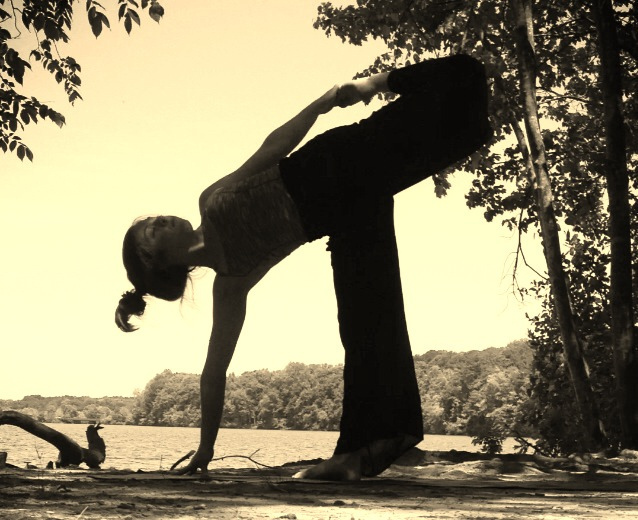
Nope, it’s not that one.
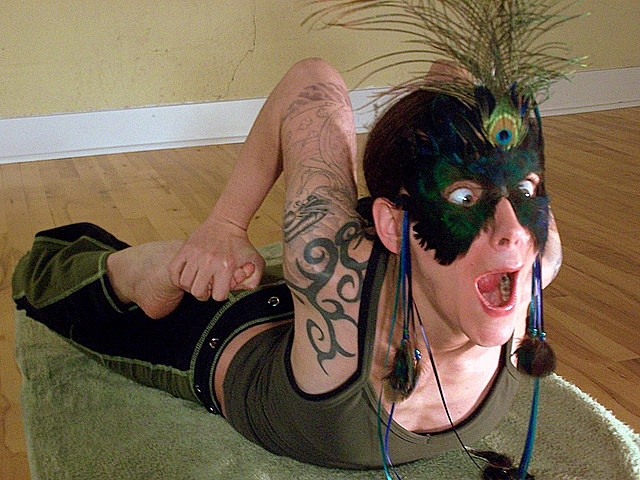
Or this one.
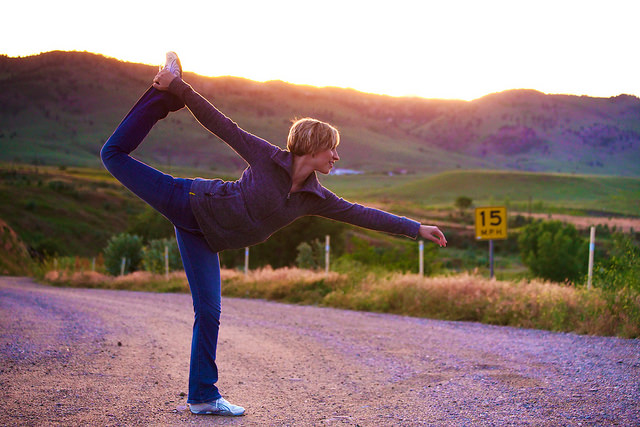
Or even this one.
Actually, it might be this:

Or this:
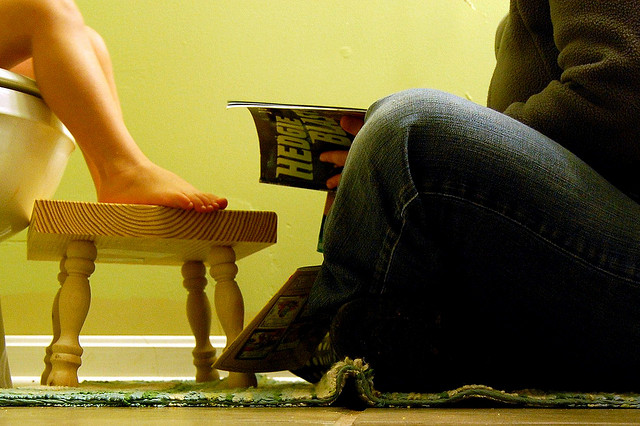
Or maybe even this:
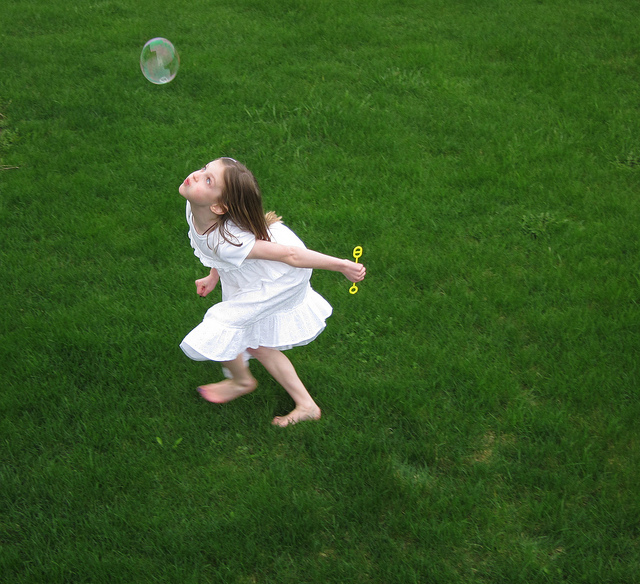
Yoga is the cessation of the fluctuations of the mind.
What does that mean?
It means that we’re only practicing asanas—from “simpler” poses like child’s to trickier ones like headstand—because we’re trying to remain in the moment by working our bodies and our balance, and we’re expending our energy and expanding our flexibility in order to be more fully present during meditation or even at the upcoming staff meeting at work.
Practicing yoga does not have to be on a mat.
You can practice the cessation of the fluctuations of our minds when you’re driving—you’re thinking about driving.
You can practice when you’re riding a bike or merely focusing on the sensations of your breath as it comes in and out of your nostrils. If this sounds easy, I guarantee that you’ve never tried practicing “real” yoga.
Ceasing what many of us call the “monkey mind” (our constantly churning thoughts that are floating through our heads) is absolutely not easy—which is where and why asana does come in.
On the other hand, I don’t know about you, but holding a tiny baby—feeling her warm, soft cheek against your chest; smelling her soft, sweet scent as your nose presses the top of her tender head—this can be practicing yoga. I’ve never experienced yoga so well in my life like when I hold my daughter.
Also, this might not be quite what we’re looking for, but feeling an emotion—really digging in and being with your hurt, frustration, jealousy—this can be practicing yoga in the sense that you aren’t shoving your feelings aside and pretending to feel something “easier” like anger.
“We fear violence less than our own feelings. Personal, private, solitary pain is more terrifying than what anyone else can inflict.”
~ Jim Morrison
So yoga doesn’t have to look like this:
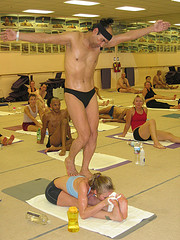
Or this:
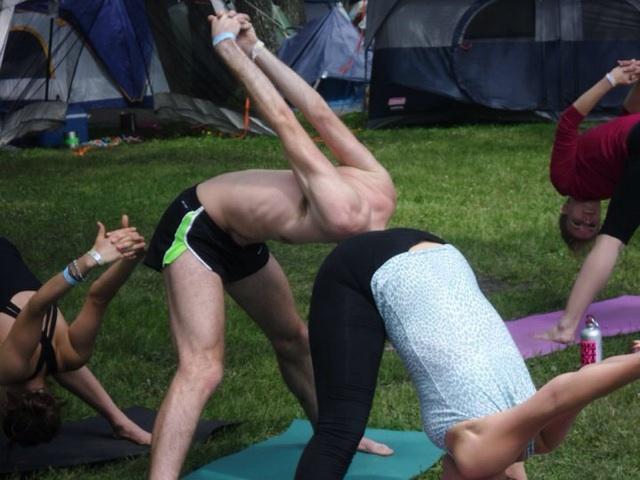
Instead, it can look like this:

(That’s my husband “pond jumping,” by the way—he’s better at practicing yoga than I am and he doesn’t even own a yoga mat, just a few different bikes.)
Because yoga has nothing to do with a sticky mat—that’s merely a tool to help us achieve this mental clarity, peace and restfulness.
For me, I’ll admit, sometimes my yoga resembles this:

More often than not, though, I would describe my perfect yoga practice like this:
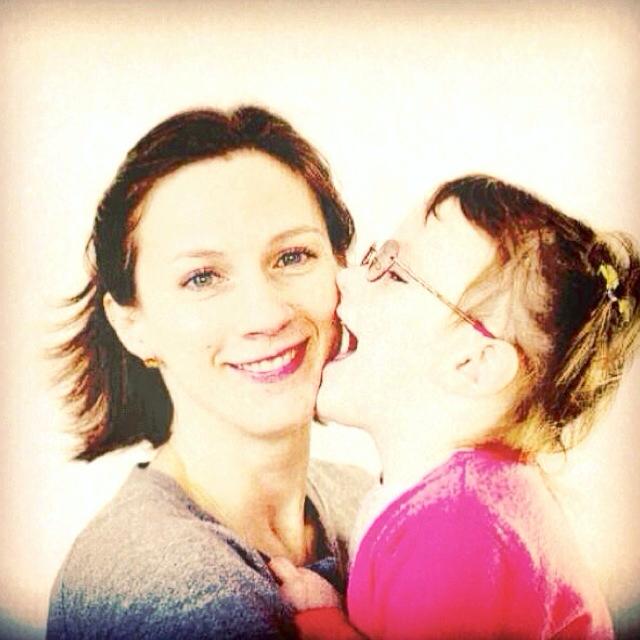
or this:

And I’m certainly not suggesting that motherhood or parenthood is how we all practice yoga—obviously it’s not.
Maybe for you, it’s cuddling your furchild or it could be any number of other things too.
All I’m suggesting is that we keep in mind, when we do finally step onto our yoga mats, that our practice doesn’t call on us to be self-righteous or perfect, “advanced” or anything else besides what we already are—just being with and experiencing this now moment.
And this new now moment.
And this one.
Namaste.
Photos: Author’s own; imgur; Jillian/Flickr; Steven Depolo/Flickr; Kevin Dinkel/Flickr; Premnath Thirumalaisamy/Flickr; eren {sea+prairie}/Flickr; Chris Waits/Flickr.
This article was first published by elephant journal.
The post The Coolest Yoga Pose Ever. {Photos} first appeared on Jennifer S. White.
]]>The post My Beauty-Reflecting, Magic-Mirrored Yoga Mat. first appeared on Jennifer S. White.
]]>
My yoga mat is the one place I come to over and over again to see my truest, clearest reflection.
On my mat, I move and flow and breathe and be. I drip tension and long-held self-beliefs onto my mat along with salty sweat and, occasionally, tears.
I inhale through my nose and I’m able to see in focus in a way that even my contacts can’t reproduce. I exhale and I feel my body drain of yesterday’s concerns and trials.
I remember once, years ago, sitting on top of my favorite mountain in the world, in the middle of New Mexico, when my husband studied me thoughtfully and said that I looked completely serene, fully at peace and in love with myself after hiking for days without a mirror to gaze into.
I never forgot that because, really, what am I looking for when I repeatedly check my hair or my profile or my whatever in a mirror? I’m certainly not looking to see what matters most about me, and I’m definitely not finding answers that I can’t find somewhere else (besides maybe if I have blackberry seeds stuck in my teeth from my post-yoga class smoothie).
And I’ve been in yoga classrooms that have mirrors. I don’t prefer them, although I know some practitioners and some styles do.
I don’t need a mirror surrounding my mat because, if the teacher is paying attention, she can help correct my alignment while I focus on feeling my way into the pose. Most importantly, though, I don’t need these mirrors—with their false, sirenic echos—because yoga is not about the way a posture looks.
Yet I can get so caught up in this; so caught up in my knee stacked over my ankle in Warrior I or my hips stacked just so in my Triangle pose. But, really, these little things are only necessary within a range to keep our physical bodies safe, and, then, true yoga happens on my mat when I get out of my anal-retentive mind and I get into the sensations that are rising up from within me.
They sprout up like seeds of wisdom planted years ago that have stoically weathered a drought, finally gifted with rain. My body-image issues, my grief, my anger, my fears—they all rise up and then, like magic, they’re gone. Sure, they might return—and that’s why I keep returning to my mat.
I don’t revisit my mat for long hamstrings or strong biceps—although these are nice perks; rather, I keep reappearing on my purple sticky mat because each morning that I wake up feeling stagnant or tired or sorry for myself, it’s an opportunity to feel where I’m at within my current life and self, and then to release it.
So, thank you, beauty-reflecting, magic-mirrored yoga mat.
Thank you for bringing self-love up from within the confines of my caged human heart.
Thank you, too, for sharing with me a secret that many other yogis come to also discover: that my magic yoga mat reflects my deepest truths, in all their forms—ugly, scarred, hurt, gorgeous, transcendental—my mat is the place where I can see myself most clearly.
And thank you, most of all, mirrored yoga mat, for helping me fully love and embrace what I see reflected back.
Photo: adifansnet/Flickr.
The post My Beauty-Reflecting, Magic-Mirrored Yoga Mat. first appeared on Jennifer S. White.
]]>The post 5 Tips for Tackling Scary Yoga Poses. first appeared on Jennifer S. White.
]]>
I’ve broken my nose twice—don’t worry, neither time was yoga related (although I do have a funny story from my honeymoon).
I recently told you who I think a yogi is—and a love for recreating hip-looking Instagram photos of asanas has nothing to do with it.
Still, there’s a reason that we want to try challenging postures.
For one, if you’re someone with perpetual monkey mind (an official condition, mind you), then practicing hard-working postures on your mat can help bring you back into your body.
For another, they’re fun.
But what if they’re not?
What if you’re scared, but physically able?
Well, then I’d say consider yourself an average bear—many people are mentally intimated by postures that their bodies could likely access.
Yet, even though you’re feeling frightened, a tiny voice inside of you can’t be quieted. It’s telling you to try. This small, possibly wise, piece of you knows that you can do much more than you’re giving yourself credit for.
In honor of yogis everywhere who really want to rock out, but are afraid to even get on the starting block, here are a few mindful tips.
1. Set up your foundation. If you’d like to, say, try a headstand, then make sure you’re accessing the correct muscles for the pose. In other words, get in touch with the reality that much of headstand’s power comes from your strong core—engagement through your shoulder girdle and engaged transverse abdominals, for example. Another possible area of weakness in regards to headstand is your legs—I swear, the second someone goes upside down, she often forgets she has legs connected to her body.
Learn where you need to strengthen, as well as where you need tostop unnecessarily gripping (like the jaw and upper traps, at the base of your neck) and work asanas that don’t intimidate to help build confidence.
Are noodle legs a weakness once inverted? Then try focusing on reaching your leg long and strong in a familiar pose like three-legged dog.
2. Let go of the final pose. First, let go completely of what you think the pose should look like. Forcing ourselves into a photograph, while not connecting with the sensations in our bodies, leads to injury. Secondly, here’s my main tip: don’t even attempt the final posture. Let me explain, and let’s stick with using headstand for simplicity’s sake.
If you’d really love to try a headstand then make sure, in addition to working with a qualified teacher, that you completely forget about trying the headstand at all.
Instead, experiment with what it feels like to set up your arms (whether in traditional or tripod) and extend through your legs as you would in downward-facing dog. If this feels pretty good (and there’s no dumping through the shoulders) then maybe play with reaching one leg long, a la three-legged dog.
If, however, you’ve found that your core is the less than stellar spot, try staying in headstand prep and hugging your knees into your chest (if in tripod, rest your knees in your triceps, much like that frog thing we did back in elementary school gym class).
In short, stop thinking that yoga postures are all or nothing—they’re not. Even yogis that are comfortable in the full pose that intimates you the most almost definitely have days when they, too, are modifying.
3. Listen to your body. Okay, so you’re ready to try the pose that scares you. What’s your body saying? Our bodies will let us know when we shouldn’t go any farther. Going deeper just for the sake of a mythical end result might not be smart. On the other hand, if you’re able to reach out for more sensation and yet you’re backing away mentally—not letting your body fully engage—then you’re possibly doing yourself a huge disservice.
Personally, I stand by the “better safe than sorry” motto, but I also believe that most of us are far more capable than we think.
Keep playing your edge, pushing it just a little bit more each time, and you might discover that you have more in you than you ever thought possible—and how empowering is it to take that feeling with you when you step off of your mat?
4. And listen to your brain too. We have intellects for a reason. If you’re scared, then consider listening to that. Sure, overcoming self-imposed limitations is honestly the biggest reason that I even give certain postures a shot, but there’s also a point where we have to be authentic.
If you’re scared, that’s okay. Honor that. Don’t nurture it and feed it and always give into, but honor it.
Maybe that means your dream yoga pose won’t happen today—the good news is that there’s tomorrow.
5. Carry your successes, rather than your failures, with you off of your mat. I generally don’t beat myself up on my mat. If a pose isn’t accessible to me, then I really don’t care. Why? Because that’s not why I come to my mat in the first place.
I hop on my mat and work through my asanas to keep my body healthy, alive and supple, so that I’m a better person to work through life’s crappola during the rest of my day. That image might not be as pretty as someone who simply adores the workout and accessing all these insanely cool pretzel poses, but it’s the truth, it’s my truth at least.
If you tend to be someone who rags on yourself on your mat, then my bet is that you’re also doing this out there in the real world.
For one day, offer yourself the opportunity to notice what your body can accomplish on your yoga mat; what you rock out easily and sincerely—and then take that feeling of success out with you into the rest of your day.
If we’re capable on our mats, what are we capable of off of it? This curiosity and excitement to live to our fullest potential—that’s the mentality we want to foster.
If you’re driven to work through a pose that scares you, then congratulations—you’re willing to look adversity in the face and stick up your middle finger.
If, on the other hand, you find yourself consistently obsessed with mastering a pose, and then quickly moving on to the next one, I’m wondering what you’re chasing—or what you’re running away from.
If we’re not enjoying the poses between poses (what I like to call life), then what’s the point?
A pose is just a pose, and destinations are often not what they’re cracked up to be—and I don’t know about you, but most of the time I end up enjoying the unexpected detours a lot more anyways.
“Master your instrument, master the music, and then forget all that… and just play.” ~Charlie Parker
Photo: Author’s own.
This article was first published by elephant journal.
The post 5 Tips for Tackling Scary Yoga Poses. first appeared on Jennifer S. White.
]]>The post Knees Chakra 101: 5 Tips on Learning to Surrender. first appeared on Jennifer S. White.
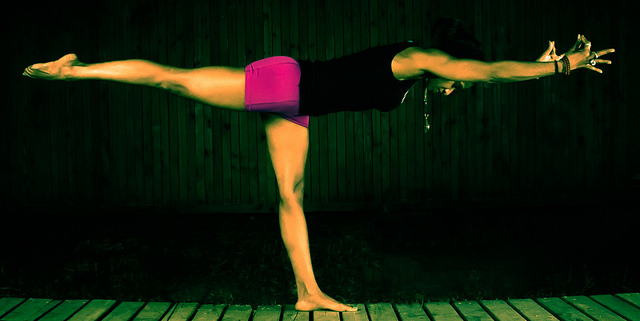
]]>
When I talk about surrender, I’m not necessarily referring to yielding to a higher power.
Surrender often has much to do with learning how to balance effort and ease within our lives and relationships with ourselves as well as with others.
Personally, I don’t believe in an almighty being who watches over us caringly, nor do believe in praying for the outcome of our desire. However, I do absolutely believe in energy, collective energy, and something much more intricate, profound and ubiquitous than we can comprehend.
Why? Because I feel it.
I can feel where energy sticks within my body—where I hold on and grip physically and psychically during a difficult life experience—and, likewise, I can feel its release during my yoga practice.
And many yoga practitioners believe in something that goes along with this notion: chakras.
Yet, while we can find copious amounts of reading material on all of the main chakras, there’s relatively little out there on the lesser—but important—chakra of our knees.
We have minor chakras located in several places of the body, including the knees. Our knees, in general, are physically complex and easily injured. There could be many reasons for knee pain and injury, so do make sure to see a physician if you’re experiencing chronic discomfort; having said that, as a chakra enthusiast, it’s crucial that we bring this lesser known chakra into our understanding.
For me, when my knees are troubling me slightly, I can easily pinpoint places within my life that I’m being overbearing and controlling. My knees—just like other chakra areas—can be used as a tool to notice when and where I need to surrender.
So here are five ways to get in touch with, and heal, your knee chakras.
1. Be flexible. The first and most important thing to do for our knees (as far as chakras and energy are concerned), is to be flexible—mentally and emotionally. When life becomes challenging, one of our first lines of defense can be closing down and becoming rigid—and this internal rigidity affects this area’s energy flow.
If you find yourself frequently feeling the need to take charge of everything then ask yourself why—and try stepping back at least some of the time. Because the simple reality is that we cannot be in control all of the time.
2. Go with the flow. This thought is strongly connected to being flexible, but they’re not entirely the same. There’s being flexible in the sense of allowing yourself to be out of control in situations that you cannot possibly be in charge of—or letting others take the reigns (at least part-time)—and then there’s not always having a plan or an agenda.
As fallible humans we can—and should—make plans and have goals, but then we have to let life take its course. This means trying to allow the day to unfold organically.
3. Surrender. The biggie. The tough one. It’s so important to not let life’s little stresses and worries overwhelm the other wonderful things that we also experience—easier said than done I know. Still, it’s these more minor issues that often take over and destroy our positive sense of self—and, in turn, life. For me, meditation is often the only thing that really brings me back into equilibrium. Try this simple one: imagine water washing over you, cleansing you of all your fears and internal struggles. Then picture this soothing stream of water flowing through your knees, washing away your need to control every minor detail of your life. Feel the suppleness and release that radiate from this inner softening.
4. Reiki. The first time that I recognized the magnitude of this subtle chakra, I was in a reiki session. I won’t even try to explain reiki to you, as I know I wouldn’t do it justice. Trust me, though, if you’ve never experienced this form of healing, check it out. Your knees might thank you too.
5. Genuflect. This particular suggestion really offers insight into the energy of your knees. An online dictionary describes genuflect as “to bend the knee or touch one knee to the floor in reverence or worship” and “to express a servile attitude.”
To me, this word and its definition go hand-in-hand with our knees chakras.
In short, its important to find within ourselves the mindset of servitude and humility—rather than always aggression and domination—over both ourselves and external situations.
Much of success in life is learning how to chase our dreams instead of sitting around praying and waiting for them to happen. To be truly happy and fulfilled we need to couple this with surrendering to what winds up coming our way regardless of our efforts.
Because that’s life: unpredictable, changeable and full of surprises—thank goodness.
“Life is what happens while you are busy making other plans.” ~ John Lennon
Photo credit: ann harkness/Flickr.
This article first appeared on elephant journal.
The post Knees Chakra 101: 5 Tips on Learning to Surrender. first appeared on Jennifer S. White.
]]>The post Learning to Surrender On & Off The Yoga Mat. first appeared on Jennifer S. White.
]]>
I’m outstretched in pigeon pose.
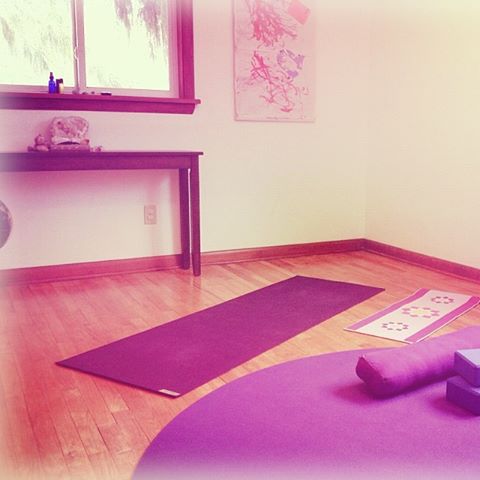
My back leg is long as I curl my toes under and wiggle my knee in, more towards the center of my sticky purple yoga mat.
My front leg is positioned with my shin parallel to the top of my mat; toes curled protectively up towards my knee.
I finally lengthen through my back foot and allow its unpainted-toenail top to rest flat on the purple waffled rubber.
For a moment, I lift my proud pigeon heart towards balmy blue sky, fingertips cupped on the dark, wooden floor alongside my hips; wrists and hands off the floor, lifting energetically skyward too.
I arrange an ordinary white gym towel over the studio’s cushiony blue block before elongating through my arms and torso, reaching them forward towards my imaginary horizon as I press my front-lying shin-bone deeper into the mat.
Resting my forehead on the soft yet stiffly textured towel, I feel my baby kick at my calf muscle as my pregnant belly begins to drape over it.
I feel two more punches and then can’t help but be transported back nearly four years prior when another enclosed child kicked more furiously at my heel. (It was at this point in my practice that I began to work my shin forward, having only ever cautiously tucked my front leg in.)
Yet so much changes in a yoga practice, along with many other things within an expectant mother’s life.
Fanciful daydreams that I almost forgot I was capable of having inadvertently creep into more of my day than not.
Visions of tiny baby fingers, holding a still small big-sister hand, plant knowing smiles across my face while in line at the grocery store.
I peruse the newborn outfits when I shop for my daughter in the adjacent toddler section.
The purpose of life shifts before we even greet our infant’s new face.
My preferred closed-knee child’s pose turns into a wide-legged one, allowing my rounding stomach to fall between my thighs rather than over-top them.
No longer lying flat on my back, I recline slightly lifted onto forearms or rearrange a posture entirely to suit my mother tummy.
So many things change.
I sit typing on tiled bathroom flooring while my daughter plays in a lightly scented bubble bath. I watch her take the green bowl that we keep there, turning it into a ginormous waterfall in her imagination. Just as I write this, she takes her green bowl and dumps the water outside the tub. Tiny foamy splashes hit my bent legs, perched upon a folded tan towel next to her.
So much is shifting for her too.
She’s suddenly decided to start kissing my expanding belly; hugging it gently but firmly. I have no idea where this came from, as she never did it until I became fuller.
I’m outstretched in pigeon pose, and I finally understand the necessity and wisdom of relaxing into a posture, and into my life.
It takes effort and active engagement to properly get into my pigeon pose, but then to fully explore, enjoy and be successful I must surrender, completely.
Photo credits: Author’s own; Leland Francisco/Flickr.
The post Learning to Surrender On & Off The Yoga Mat. first appeared on Jennifer S. White.
]]>