The post How to Raise a Woman. first appeared on Jennifer S. White.
]]>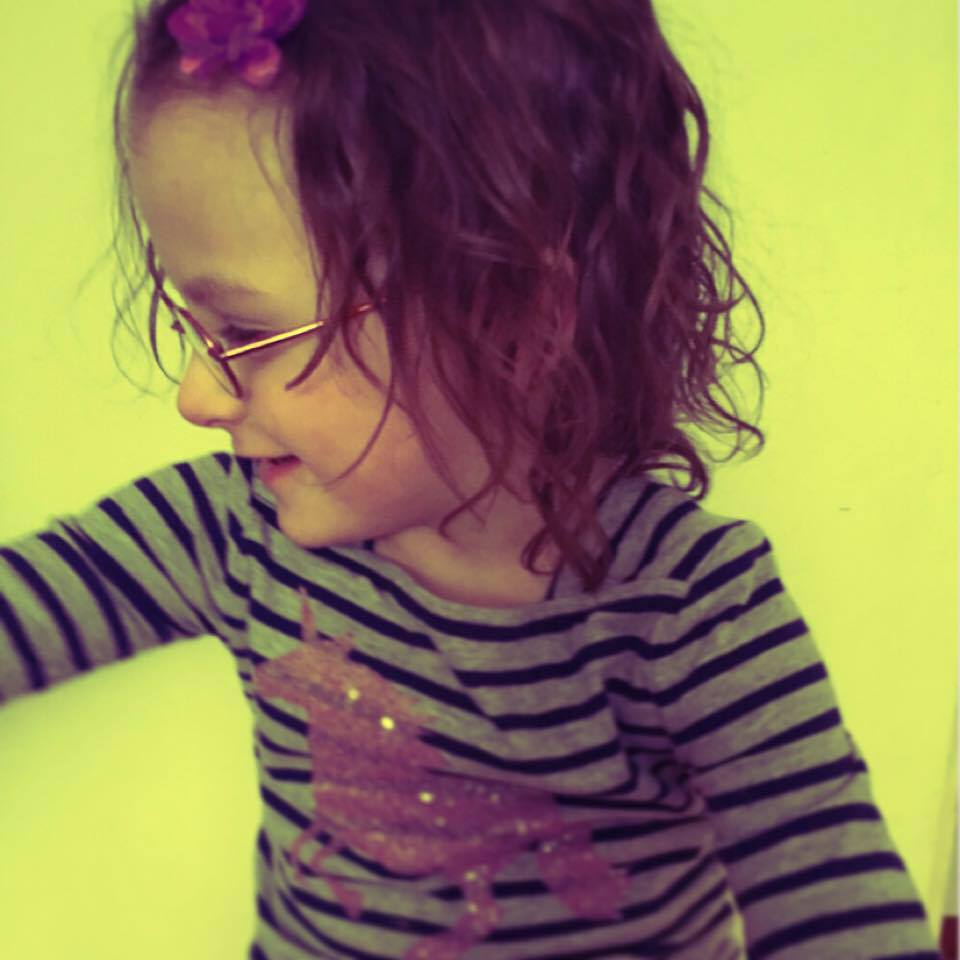
The way her smile falls reminds of how her hair hits her shoulders.
It’s easy and natural, and it meets me with the same curly bounce.
Her eyes twinkle, and I wink at her—something I don’t do—and she smiles with even more careless joy.
I think of the smiles that she gifts to me, and I grow astounded at their variety. Mostly, I’m in awe thinking of how they merge together completely-in-the-moment happiness with, at her tender age of 5, more self-awareness than many have.
I think about how her smile will, inevitably, change.
Self-awareness grows more and more, along with her inches and pounds. Girls, especially, become aware of their changing bodies and, equally, of how these changes are received by those around them, both intimately and publicly.
I am not ready for these changes.
Yet, I feel already on the cusp of her truly being a “girl” and not a tiny toddler lady. She’s definitely a “girl” child, and I specify this because to pretend otherwise would be gorgeously deceitful of the reality of growing up a woman.
As a woman myself, I’ve alternately shunned the role, embraced it, loathed it, loved it, flaunted it, hidden it and, lastly, come to terms with my gender and my sex in a way that, I hope, will one day benefit my own two daughters.
Her smile is luminous. She’s a casual social butterfly who breezily floats and flirts and puts into action that “a stranger is only a friend we haven’t yet met.” I hope she maintains this as she grows, but, frankly, only time will tell.
Right now her curls are cut at the salon, so that she can do her hair without much effort. She’s a person who appreciates style and clothing, but she’s never wanted to spend much time processing her hair. (And anyone who knows and loves people with curly hair knows, too, that it has a mind of its own.)
I chose to embrace her curls. I don’t brush them, or try to tame them, or typically put them up, even for school. Instead, I work with them, with the deepest mother-prayer that she will find other things to fight with in her life besides her hair. (Also, it’s unintentionally beautiful, like she.)
Life, for women, is full of battles. I’ve had my own experiences with quitting over receiving lesser pay for the same job as male co-workers, with being treated inappropriately, as well as, gratefully, advantages like bearing my children and having close sisterhoods with my own twin sister and other friends.
Her smile falls off of her face and it’s replaced by thoughtful introspection.
She’s looking at me and, I think, wondering where I’ve gone off to. This, for me, has been the ultimate challenge of raising children: to stay present and here with them, even and especially during frustration.
I smile at her, but it’s fraudulent and her still-childlike self can tell.
I tell her that I adore her smile, and that I’m taking it in—really taking it in.
Her smile charges the room again and, for now, I’m off the hook. I won’t be off the hook forever, though, and, as I prepare for lengthier, more serious mother-daughter discussions and greater displays of strong-willed emotions, I remind myself—again and again, I remind myself—that maintaining a strong foothold in the place where I currently stand is my most helpful tool for all wars waged. I know this because my own yoga practice, self-awareness and ability to speak my truth where I reside have helped me abundantly in my life.
My truth is that I’m a woman raising girls—and I truly wouldn’t want to be anywhere else.
The post How to Raise a Woman. first appeared on Jennifer S. White.
]]>The post Raising Girls with Healthy Body Images. first appeared on Jennifer S. White.
]]>
Author’s note: This was written and published to honor National Eating Disorders Awareness Week.
I wet my hands in the bathroom sink.
Her hair drips in fluid spirals as soon as I lightly pat it.
Sometimes I look at her during this morning ritual—and the perfection of her little-girl body—and I wonder when she’ll realize that legs are for more than just walking on and that some torsos are long, like hers, and others short, like my own.
I began to question the shape and size of my body as early as first grade. I remember vividly the feelings of comparison and, more importantly, this comparison with me as the “loser” in some sort of perverse contest. I then spent the next majority of my life as an eating disordered individual. (At one point, it was absolutely one of my top three personal characteristics—okay, it came in first.)
Because an eating disorder not only destroyed my life, it destroyed the person who I was. Actually, for many, many years I didn’t think a real recovery was possible—but it is.
I’m not writing today, however, to share how I recovered. What I’d like to offer is that even though I do consider myself recovered, I’ve come to think about it as almost a sort of remission—because, in my humble experience, the largest contributing factor towards wellness is the realization that we could slide back into illness at any moment.
An eating disordered individual always has to be on guard—I say time and time again that we’ve got more in common with alcoholics than is often talked about.
And food is something that we come into contact with every single day—multiple times a day—so are photographs and media images and sexism and trauma and everything else that contributes to turning an ordinary girl into an eating disordered one.
In my current life, though, I am no longer an eating-disordered young girl (although sometimes she comes back to haunt me, like an opaque ghost). Instead, I’m a full-time mom; I write, yes, but I’m a mother first and foremost—and I’m raising two daughters.
I believe that my own wellness speaks volumes to giving them a fighting chance of not becoming eating disordered—and this is exactly why I’ve been tackling this awful “new” phrase: “get your pre-baby body back.”
This string of words is a sinful degradation of the glorious experience that is birth and new motherhood. Rather than celebrating the giving of life to another human being, women are often more focused on how quickly their abdomen looks like it did “before.”
So, lately, I’ve been finding myself drawn to starting a revolution, one dedicated to helping women not only love and accept our bodies, but also one where we are mindful of how this acceptance will help to shape our next generation.
Children really are our future, and we have the power to help our daughters and our sisters’ daughters.
This is my new mission: to try my damnedest to raise healthy girls who appreciate their bodies and those of the women around them, without comparison, without judgment, and with love.
It’s a grand vision, I know, but I’m starting small—I’m starting with the two tiny bodies cuddled around me as I write.
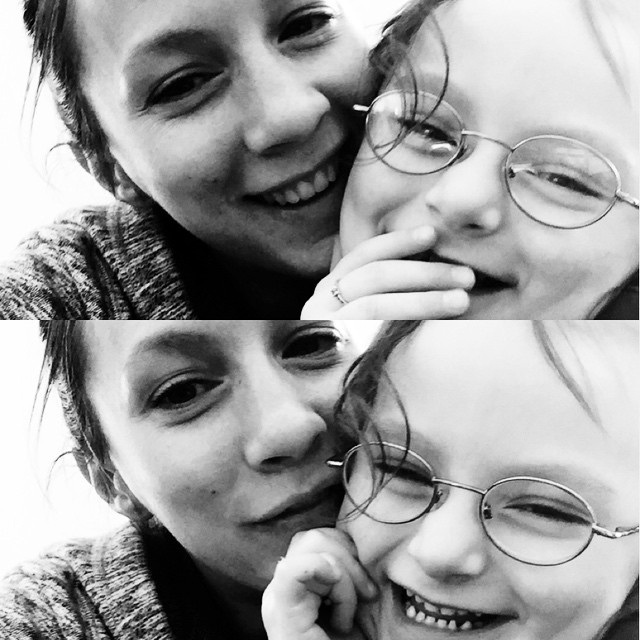
Photo: Author’s own.
The post Raising Girls with Healthy Body Images. first appeared on Jennifer S. White.
]]>