The post The Importance of Taking Care of Mom’s Needs, Too. first appeared on Jennifer S. White.
]]>
The makings of a mommy timeout:
It’s difficult for me to embrace time to myself unless it’s productive.
There are things that I do that I don’t feel as guilty for doing by myself—exercise, a doctor’s appointment, or a much-needed massage for example—and these things I rarely do alone, too.
My workouts are often on my yoga mat, next to two tiny unrolled mats beside mine, where little girls hop on and adorably attempt to do what I’m doing, but, often, they instead march around the space, as I exercise, with books in their hands and a show playing in the background.
Doctors’ appointments are also places I typically take them along. (For a long time I was known—by name—as my daughter’s mom, and she’d never even been a patient there.)
Massages are hugely beneficial, yet infrequent.
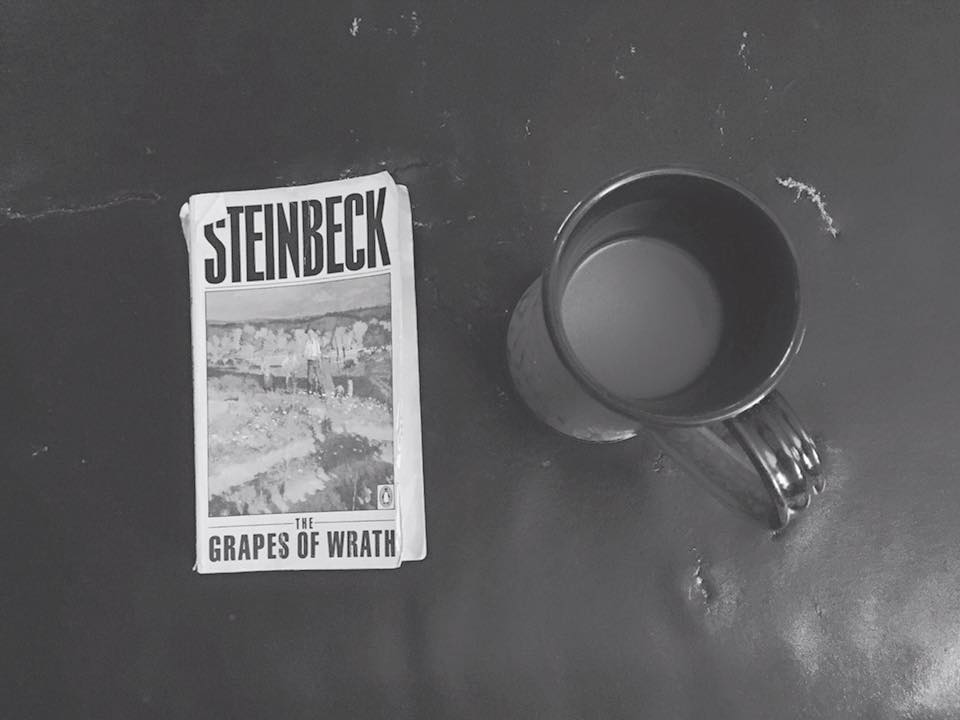
But sitting on the couch, reading a seriously worn, old novel with a mug of coffee and my heating pad nearby? Nah. Never—until I got sick.
Getting sick does something funny to you. I’m not able to just mentally fight through some extreme situations—a few illnesses I’ve had—like I did when I was a runner, or when I gave birth. There are some instances when we need help, whether we want it or not; when we need to admit that we can’t do it alone, even if we aren’t regularly surrounded by a village.
I have, like many people I know, a long-distance village. I’ve moved around, and I’ve made dear friends, and we keep in touch, but they aren’t here sharing my space and my physical life. My family isn’t close by either, and even the friends I do have here don’t have kids, or have older kids, or have kids the same age whose schedules don’t match up.
So intense illness is a reminder, for me at least, of my vulnerability. More than my physical vulnerability, it’s a reminder that I cannot be Superwoman, or Supermom, or whoever I think I am as I typically go about my usually slotted week.
I feel unworthy simply sitting on the sofa and reading while my husband changes all the diapers, and does all the snack getting, and the question answering—as I hear his patience thin the way I feel my own fining through a typical day alone and “in charge” of the kids while he’s at work.
And fathers are daddies and not babysitters, or helpers, but, regardless, it’s still me home during the day while he’s off being a scientist at the nearby hospital—it’s me tightly holding my lips together when I cannot reword an answer any other easy way, and I feel I’m about to burst. It’s me at daily lunchtime, and it’s me waving “hi” as the bus pulls up and the rest of our afternoon lies ahead, together.
So I sit on the couch, and I read my book, and I pretend that I can’t hear this beautiful chaos around me—I pretend I am walled and closed, although I am always transparent—accessible—as “Mom.”
My neck hasn’t been sore for two days since I’ve been resting with mastitis. My body hasn’t hurt, although I usually do simple workouts regularly to relieve cranky muscles. I am not fully relaxed either—since I do care that my husband is thinning in the way that I normally am, and I’m sympathetic—because I know that it’s his weekend to relax from the week, too.
But I take my timeout, and I feel rejuvenated—I am refreshed in a way that is incredibly complicated, and more honest, than the hour I did this morning of HIIT cardio and weight training and yoga. I’m breathing more deeply than even in my most wonderful yoga practices, because I needed a timeout—and I took one.
The post The Importance of Taking Care of Mom’s Needs, Too. first appeared on Jennifer S. White.
]]>The post Throwing Away “I’m Sorry” & Teaching Empathy. first appeared on Jennifer S. White.
]]>
Teaching our kids empathy instead of meaningless “I’m sorries.”
These days, it seems that I meet more and more narcissists.
While I’m not a psychologist, it is commonly believed that a true narcissist doesn’t have the ability to feel empathy for other people and, more, that this personality disorder is largely connected with how a child was raised.
That said, I’m sure all of us have at least one friend who throws around “I’m sorries” for anything and everything. Not only can this be annoying, it also makes these words meaningless when over-used (without even mentioning the self-esteem and mindset of the frequent “I’m sorrier.”)
And, in this day and age of raising my children with social media and selfies galore, as a parent, I’m even more concerned with teaching my children how to really feel emotions—both their own and another’s.
The idea of teaching empathy to my daughter became a reality for me when she was a little over two and a friend, who’s a Montessori teacher, and I were having a playdate with our children. She overheard me tell my daughter to say “I’m sorry” to her playmate. Kindly, my friend intercepted, and encouraged me to instead teach my daughter to ask, “Are you okay?”
Teaching a small child to ask someone, “Are you okay?” reinforces why we say the words, “I’m sorry” in the first place. Eventually, these traditionally apologetic words will come naturally and, when they do, there will be much more understanding of why they’re used at all.
Another reason to stop teaching tiny kids to reactively say “I’m sorry” is because this does actually teach our children something, albeit not what we’re intending to; it teaches a child to feel guilt.
But personal guilt is not the same as empathy. While guilt and remorse certainly do, and sometimes should, occur within a situation that bears the need to apologize, these emotions are not the primary things we should have to teach our children.
It’s easy to think that empathy is unteachable, but I don’t see this as the case. Again, look at personality disorders connected with empathy and often times how a child was brought up is a huge part of the discussion—and underlying problem.
I recently read a thought-provoking article in The Guardian on the merits of talk therapy with trauma, and how various cultures around the world perceive talking about what caused the trauma as alternately helpful and harmful. Yet, in our Western mindset, we are raised to see talk therapy as one of the best (and only) real ways to move past a trauma and into health.
In other words, emotions and experiences do not always translate identically between different cultures.
As someone who studied sociology in college, the idea of ethnocentric thinking is of the utmost importance. We cannot fully understand or appreciate other cultures and people if we are always seeing the world through our own eyes—and this is what empathy is or, more accurately, isn’t.
True empathy is the ability to understand a person’s feelings through their eyes and not our own—the figurative “put yourself in her shoes” situation—and this begins at a very young age.
So, as a mindful parent and a tender human being, it’s crucial to me that I do the best I can to teach my daughter to respect and care for other individuals enough to try to place ourselves in their shoes; to feel what they are feeling through the scope of their own reality. Additionally, it’s important that I teach my daughter to care about her own feelings as well.
Women and girls everywhere are still more susceptible to be taught servitude and placing themselves last. I want my child to know that her feelings matter too, and that casually throwing around an “I’m sorry” both detracts from the value of empathy for other people and it isn’t ideal for her own confidence either.
And I’ve also lately read several articles debating whether or not to teach children to say “I’m sorry,” but I’ve rarely (okay, never) seen a discussion like this brought up: that the most important aspect of this debate is that we can teach children why they are saying “I’m sorry.”
While I’m still in the throes of child-rearing and certainly cannot pretend to be a grand success in this paramount matter, I do think that, as a society, we need to address what we can do to better promote our shared connectedness and concern for one another. After all, a society cannot exist without individuals, just like an individual cannot exist without society.
“He who is unable to live in society, or who has no need because he is sufficient for himself, must be either a beast or a god.” ~Aristotle
Photos: Author’s own.
The post Throwing Away “I’m Sorry” & Teaching Empathy. first appeared on Jennifer S. White.
]]>The post The Blurry Edges of Loss & Guilt. first appeared on Jennifer S. White.
]]>
When Loss Inspires Guilt.
I found out this week about the loss of an old friend.
I haven’t spoken to this friend since high school, and I’m now in my 30s. I was surprised at the amount of sorrow I felt when hearing this news.
This isn’t the first one-time pal I’ve had to say a permanent goodbye to, and this isn’t the first time I’ve felt this feeling—guilt at my grief.
Loss becomes convoluted when you’re an outside party.
I think much of this guilt comes from digging deeply enough to ask myself if I’m sad for this person in the same way that I would be if I heard about an absolute stranger’s passing—in my compassionate connection with humanity rather than from my connection as a one one-time friend. Yet, when I discover that old memories and straggling recollections that I thought were long buried are indeed re-surfacing, I’m perplexed to find that I still feel guilt.
While this isn’t the first time I’ve dealt with this, it’s the first time I’ve dealt with it now, in this body, in this self, at this time. I’m older and in many ways, I know that I’m wiser. Still, this much earned insight takes a distinct backseat to feelings of undeserving.
Do I deserve to mourn when his family is clearly in terrible pain? The kind of pain that can only come from knowing someone well and daily—the kind of pain of the immediate family. My guilt wants me to answer “no,” but emotions are funny things—they have a habit of not listening to your head.
Instead, I find myself feeling the kind of unfortunate elation that accompanies times of tragedy; happiness that’s actually painful when coupled with the blurry edges of something like woundedness. Life becomes sharply in focus during times like this. Everything is so achingly and hauntingly gorgeous when placed beside suffering.
Bereavement highlights life’s delicate graces, but it’s still ugly and undesirable, and I often feel I’d much prefer the kind of average joy that comes from not knowing this partner, this opposite—the discomfort of anguish, but I don’t have a choice—and I do feel grief, even if I shouldn’t.
I swallow the lump in my throat and I release my guilt because it doesn’t help. Rather it makes these feelings that drudge up hard to own and accept—and move forward from.
I’m thankful that I’m on the peripheral of this grief, but I know in my heart that someday I’ll be right in the middle while others stand in my presently awkward situation. How will I feel when the tables are turned like this? I might feel angry. I might feel relief. The simple reality is that I don’t know how I’ll feel, and I don’t really want to think about it.
Because grief is uncomfortable and painful and terrible.
We can say that we find true happiness from pain or that pain is noble, but I know that I’d never choose it and I usually say these things to myself in order to survive falls that seem challenging to get back up from.
What will I do with my feelings? I’ll try to look my husband in the eye and validate him every day. I’ll try to find the good in everyone that I come across, especially when it’s hard. I’ll try to remember that joy isn’t permanent—and neither is misery, and I’ll try to tell myself to not feel guilty over emotions that I can’t easily control.
So goodbye to my old friend. Goodbye to teenagers hanging out and to troubles that are too heavy for young, still-forming souls.
Hello to this palpable reality that life isn’t always easy or clear cut. Hello to my authentic self and to this self’s authentic sensations. I see you. I recognize you. I hope that’s enough.
Photo: Jenna Carver/Flickr.
This article was first published by elephant journal.
The post The Blurry Edges of Loss & Guilt. first appeared on Jennifer S. White.
]]>