The post A Mom’s Response to What Is “Healthy Food?” first appeared on Jennifer S. White.
]]>“They’re not all nastygrams, as we call my bitchy texts when my husband is working a lot. Today is one of those #relationshipgoals days when I’m trying to show my love in the ways I’m able to right now. Like making his favorite mac and cheese. Even if I am drinking his wine.”
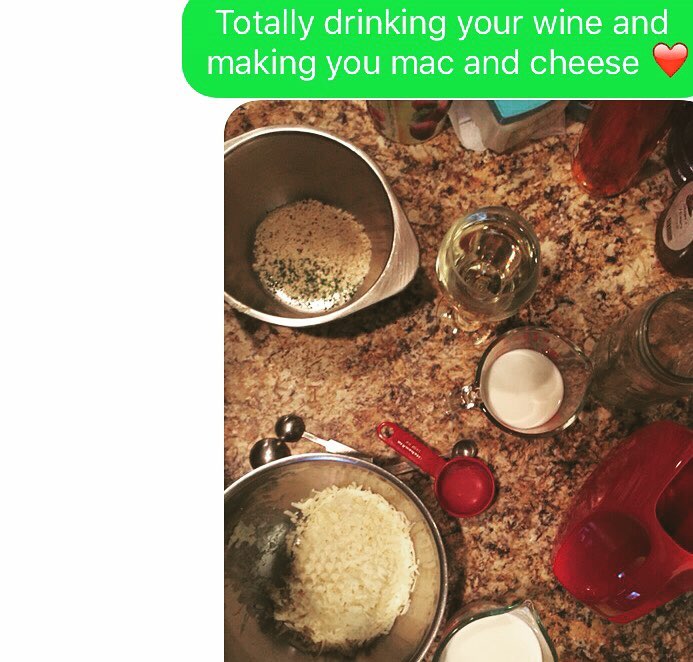
My response to my friend on social media was genuine, not snarky—which I hope came across, but words without vocal inflections don’t always translate well. It was that, no, I really don’t. Unless you count that I made this food with love, and as few processed ingredients as possible.
I’m not a dietitian. I’m not a food expert either. I’m a mom. I’m also a realistic mom that saw many of my pre-kid food dreams fall to the floor with Goldfish crumbs, after having children in real life.
To be fair, I am firm about the food in our household in some ways. For instance, I don’t own a microwave. Well, I do, because it’s attached to the house we live in, but I taped a sign inside that says, “Don’t even think about it”—with so much tape that it would be faster for my husband to make his eggs on the stove.
I was also eating disordered for a decent chunk of my life. It took me years and years to get back in touch with my body—with my hunger cues, with my needs, and, most importantly, with letting food make me feel good.
Food tastes good for a reason—it’s meant to be enjoyed, savored and shared with the people we love. (Just like I showed love to my husband by having his favorite mac and cheese in the oven when he got home from a long work day.)
This all said, my daughters are growing, thriving little people that need nourishment, and, almost as significant as this, is the reality that I want to do everything I can to ensure they grow to love food and their bodies—and to respect and nurture both.
My response to my friend was simple: to me, “healthy mac and cheese” means that I grate my own cheese, and that I try my best to buy organic dairy products, like butter. I’ll admit that I bought these macaroni noodles at Sam’s.
Most importantly to me, this particular recipe is the same one that I grew up eating, and there’s authentic comfort in this for me to be able to cook, share and eat it myself—I’m passing along a tradition of love to them, along with hopefully some protein and calcium.
But “healthy” sometimes means cutting myself slack, too.
It means buying a pizza from Earth Fare for dinner, because making it is out the question if I want to have a stress-free evening—and associating stress with food isn’t something I want to regularly serve up to my kids.
“Healthy,” like many things in life, is relative, and not finite. People from all over the world eat differently, and we’re often lucky to be able to try cuisine from different places, or to have eclectic familial backgrounds that gift us with different comfort foods. (Without even getting into the topics of privilege or money.)
I let my kids eat fruit snacks, and those little bunny-shaped chocolate crackers for their snacks sometimes. I occasionally sprinkle a few chocolate chips on top of their organic, whole-milk Greek yogurt. We also cook a lot in our home, and both my 5-year-old and my 1-year-old love pretending to bake, chop and stir along with cooking shows, or to help me in the kitchen.
Especially as a woman who had the exceedingly difficult task of re-learning how to see food as more than merely medicine that my body needs to function, I want my daughters to know balance.
I want them to eat ice cream at the farm down the street, and I want them to know that we don’t eat it every day, or too much at a time, because it makes us feel bad rather than good. I want them to try a new vegetable, even if they spit it out because they didn’t like it.
I want them to remember how their parents spent much of each night cooking together in our kitchen—talking, laughing, sometimes hollering orders at each other over simmering pots and cutting boards. I want them to understand that our nicked, antique dining table is a safe place to reconnect and hang out, after we spent a lot of our days apart.
Food doesn’t have to be our enemy—it took me probably half of my life to realize this.
Food isn’t “clean” or, conversely, “dirty”—it’s more complex, and special, than that.
Food can be something that brings people together. Food can be fuel for my yoga practice, or my daughter’s gymnastics lesson. Food, these days, is eaten more quickly than I’d prefer, since I’m currently spending most of my time with two demanding eating partners—my glorious, young kids.
My main goal right now—far above being obsessed with idealistically defining or restricting my diet—is to show my kids that I love so much what it feels like to love our bodies, and to love feeding them, too.
It’s showing them through my example that healthy love has nothing to do with fictitious perfection.
The post A Mom’s Response to What Is “Healthy Food?” first appeared on Jennifer S. White.
]]>The post How I Made Friends with Food. first appeared on Jennifer S. White.
]]>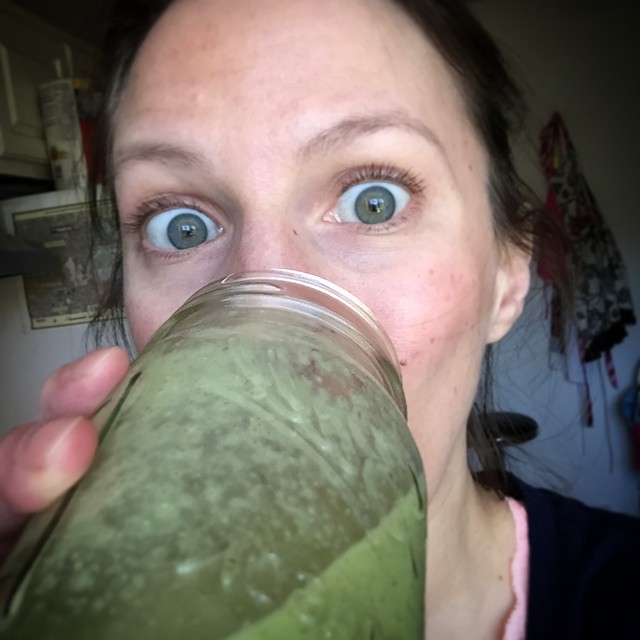
We can’t outrun our diets—for a long time I didn’t want this statement to be true. But it is.
We absolutely cannot outrun our diets.
But what can we do?
I’ve written before about how it’s not fair for celebrity moms to pretend publicly that their workouts consist of chasing children. Come on—we all know this isn’t true.
That said, when a mom friend of mine recently jokingly replied to a post of mine about “skinny moms” that, darn we can’t get “skinny” chasing children? It really got me thinking because, frankly—we can.
Because we cannot outrun what we eat. What we eat, how much we eat, how we eat—these things all catch up to us, eventually at least.
I love to exercise.
I do not get to exercise as much as I would like to during the span of my full-time parenting days, but I do move my body often and regularly.
So while we cannot outrun what we eat, we can move our bodies because it feels good and it makes our bodies healthier.
I move my body every damn day. Every day. Still, I made a commit to myself before becoming a parent that I would not let working out be more important than my family. I’ve found, too, that this is a delicate balance at times, especially because my taking care of myself is a positive thing for my family and for me.
I used to run over 13 miles a day, weight lift, do cardio, Pilates, etc, etc—essentially I completely over-exercised and was full-on eating disordered.
Along my road to recovery, I visited a nutritionist who said my diet was wonderful. And it was, wonderful. What it wasn’t, however, was enough food for how much I was moving myself.
Part of recovering fully from my eating disorder was admitting to myself that I do genuinely love working out and moving, and then learning how to be true to my athletic nature while also not becoming unhealthily obsessed with it. I decided it was unhealthy, for instance, to place a workout above the welfare of my family, but this doesn’t mean not prioritizing exercise either; making excuses or not demanding a little bit of time most days.
I remember sitting around a campfire late one night with my husband-then-boyfriend, when we lived in New Mexico. We got into a discussion with another avid backpacker and exerciser that, essentially, we didn’t think a person could exercise away a bad diet.
My husband-then-boyfriend and I shared our passion for movement and, especially, for outdoor exercise, but, equally, we shared the passion for eating good food and eating what our bodies needed. In short, we practiced moderation.
Moderation was not easy for me to achieve.
For years, as an eating disordered person, I spent time either consuming an entire pint of ice cream or banning it from my diet. It took me awhile to finally admit that these two patterns went hand in hand: when we ban “bad” foods, or foods that we can’t control ourselves around, it fuels this lack of control when we have access to them again, because we know it’s limited.
So what I did was simple, but it wasn’t easy.
I stocked my freezer, at first with pint-sized ice cream containers and insisted on having part of it, in special little bowls, without just ripping into them with a spoon. There were many nights when I overindulged and wanted to once again ban ice cream from my freezer, but I didn’t. I kept trying and doing this, until it registered subconsciously that I would always have ice cream in my freezer, if I wanted it.
I “upgraded” to stocking larger containers of ice cream.
It took trial and error, but it worked—having foods that scared me around my house helped me to not be afraid of food in general.
When we were younger, my husband-then-boyfriend and I loved having Cheetos as a treat. He always bought smaller bags and I, being frugal, always bought the larger. He—this guy who has always had an unusually healthy relationship with food—told me that he didn’t know how I could stop myself from continually reaching my hand into the larger-sized bag. I told him that I had “trained” myself.
He moved to New Mexico a college semester before I did. After he moved, I realized that I still wanted to have Cheetos every now and then—it turned out that my college boyfriend wasn’t the only one I kept them around our apartment for.
But, still not fully recovered from my eating disorder, foods like that scared the bejeezus out of me. So I, having even less money as a poor student who now didn’t have her boyfriend as a roommate, still bought the large-sized bag, but I would come home from the grocery store and immediately divide them into smaller, individual “servings” in Ziploc bags.
However, by the time I moved out to New Mexico, I had already “graduated” and didn’t need to divide them up anymore—I had, again, subconsciously recognized that the Cheetos weren’t going anywhere and that I could have more at another time. Because the following is the biggest, overall nugget of truth that I’ve gleaned on my quest to be an eater of moderation; this is what always helps me to not overindulge.
There is always tomorrow.
Truly.
I don’t need to have a third helping of Cheetos because I can eat more of them tomorrow if I still want them. Spoiler alert: you won’t usually wake up still thinking about one more Cheeto, or that extra spoonful of ice cream.
This also helps during those times when I do eat a little too much: there’s always tomorrow and a healthy diet and, more, a healthy person, is not created by one day of living.
No, our lives are made up of our choices, and our choices become our habits; become our lifestyle, become our days, become our lives, become our stories.
My story sometimes involves ice cream—and sometimes it doesn’t. I’ll be honest, I don’t eat really Cheetos anymore. It’s not that I don’t like them, but I don’t run 13 miles anymore and, even if I did, it’s just not what I typically crave as my indulgence.
Because I’m not a celebrity stay-at-home mom with a nanny or even an extra set of hands on most days, unless you count my five year old, who genuinely loves to help.
This said, I’m glad that I got out of the trap of needing to workout in order to burn off what I ate the day before—that’s an awful cycle to be in. Now, I move my body because I want to, and while I don’t eat everything that I sometimes want to, I found another secret of being a balanced eater: I don’t find my joy in my food.
Not that I don’t love food—I do.
Not that I don’t believe that food is something that is meant to be enjoyed and appreciated—I do. But people who are able to say “no” or, as my twin sister and I did when my dad was pouring us milk as kids—“when”—know that happiness will never be sitting there waiting at the bottom of an empty ice cream container. And that’s the real thing to address: is food something that we are enjoying, or has it become a frenemy?
I made friends with food.
After a long time of being outright enemies, and then frenemies, I made peace with my diet; my diet that I can’t outrun or out-lift or out-Pilates.
Sometimes the simplest answer is the one that works. For me, this was true. Food will always be there tomorrow. So will second chances.
So today was a day of choices you wish you hadn’t made? The great thing about life is that each day is a new beginning; every day is an opportunity to become a new “best.”
It starts with making friends with ourselves.
We can’t outrun ourselves either.
The problems that I carried inside moved with me to New Mexico. I had to address them there, unless I wanted them to move with me again, when we got married and moved to Pennsylvania.
Eating too much, running too much, drinking too much: these are all covers for what is going on underneath our surfaces. Self-discovery isn’t always fun—it’s not always pretty and easy to deal with—but it’s necessary, if we want to ultimately like ourselves.
My food choices reflect my self-love—the self-love that I worked hard for.
I reached a point in my life years ago, where I got tired of hating myself and tired of having a bad relationship with food—so I said “when.”
The funny thing is that when I stopped fighting food, my relationship with it healed almost naturally—that’s why having “scary” foods around the house helped: food wasn’t actually my enemy, I was.
And that’s exactly the piece of knowledge that helped me the most: I had to stop placing my self-love and acceptance into bowls with my ice cream.
The post How I Made Friends with Food. first appeared on Jennifer S. White.
]]>The post What You Didn’t See When You Looked at A “Skinny Mom”: A Response. first appeared on Jennifer S. White.
]]>
This is an open rebuttal to an extremely damaging article currently making its rounds via Scary Mommy.
I’d like to first openly suggest that had this original post been written from a “skinny mom’s” perspective that, for one, it would have been a truly sad and unfortunate eating disordered experience of life and, for another, it would have been less of a completely judgmental, destructively stereotypical post-slash-rant.
Moreover, had this article been written about a “fat” mom, it never would have been published.
However, it’s apparently perfectly okay to perpetuate horribly damaging and un-true stereotypes of “skinny” moms.
Because skinny does not equal eating disorders or body dysmorphia, any more than a slightly overweight mom should be seen as lazy or self-hating.
That last part of my previous sentence was cringe-worthy to read, no?
Yeah—had this article been about “fat moms,” it wouldn’t have been birthed.
Seeing women as dichotomously “skinny” or “fat” is not only terribly and obtusely stereotypical, but it’s a shallow portrayal of the depth of women, and of people in general and, in relation to this particular article, definitively equating “skinny” with “eating disordered” is unfortunately wrong, damaging to understanding and healing true eating disorders—and it’s still body shaming.
I’m a “skinny mom.”
I’m not tan, because I just had a baby and her eldest sister has fair skin, so we often hang out in the shade or with sunscreen slathered on. The rest of this could describe me, though.
I lost my baby weight quickly, after both births.
I do still have signs of this, although I didn’t have C-sections–but I bought a new belly ring yesterday and its little blue gemstones are shining alongside my still-present Linea nigra and my fairly chiseled abs.
I do workout a lot.
I began exercising regularly in high school and I never stopped.
I didn’t stop during either pregnancy and I didn’t stop after having children.
I move my body because it feels good, and for that reason alone.
And, no, you didn’t “see” me.
You, apparently, didn’t see how much I love my body.
You didn’t see that I’m proud of the butt that I’ve toned doing squats in my basement while the baby is in her swing and her older sister is at preschool for a couple of hours.
You didn’t see that I’m teaching these two little girls to love their bodies too—I’m teaching them to not sneer at women and judge the way some women do—the way your article did—and I’m teaching them that just because some people don’t love themselves enough to love others, this doesn’t mean that we should be any less kind ourselves.
I am compassionate with myself.
I’m compassionate with my body, too—and I’ve never loved my body more than after it gave birth to my second child.
I felt proud of what it could do and of how my body worked for both of us during my labor and delivery.
I love, equally, the skin that still hangs loosely from giving birth last October, as well as the arms that someone recently called “Michelle Obama arms.”
I don’t shed tears when I try on bathing suits.
Actually, I just tried on bathing suits with my oldest daughter at a store in the mall two days ago—we had a blast.
I left without buying one, though, because, as it turns out, I’m fine wearing my old Speedo one-piece, that I bought four years ago for my daughter’s first mommy-and-me swim lessons at the Y.
Because when I’m running through the sprinkler with her in the backyard, the last thing that I’m thinking about is how I look in a swimsuit. Instead, I’m focusing on how cute she looks in hers, on the way the water goes into my eye and makes my contact lens blur and on her squeals of delight.
I feel sorry for moms, whether thin or not, who can’t experience their children’s babyhood because they are in the throes of an eating disorder.
I’m not.
I’m a thin mom who loves to move my body, who loves to eat healthy food and have a glass of wine and some dark chocolate every night, who loves to sit on the front porch with my husband after the kids go to bed, who loves to read, who loves my children—who, frankly, is a person beyond my physical exterior, and I recognize this.
So, no—you didn’t see me.
You saw either your own fears and demons or a stereotype, or both.
You didn’t see how much more I am than my body and how happy I am living inside of it.
Because if you had seen me, you surely would have noticed my athletic physique—but you also would have taken in much, much more.
Photo: Flickr/Mother and daughter running through the fountain.
The post What You Didn’t See When You Looked at A “Skinny Mom”: A Response. first appeared on Jennifer S. White.
]]>The post What Our Relationship with Food Says About Our Relationship with Ourselves. first appeared on Jennifer S. White.
]]>
I can often tell how I feel emotionally by the foods and drinks that I consume.
Granted, I’m largely a healthy eater.
When I say healthy eater I mean that I’m a balanced eater.
Because this article is not written from the perspective of a nutritionist or a dietitian or a physician or a psychologist, but from the vantage point of a recovered anorexic, who is overly analytical in general, and who spent an awful lot of my life discovering how my previous food aversions and disorder can actually be a helpful guide for self-discovery.
And I’m here to share a few of the most basic things I’ve learned.
1. Food is our friend and when it’s not, we are not acting as our own friends.
The simplest conclusion that I’ve come to on this journey to be a healthy eater or, rather, a healthy individual for whom food is both nourishment and satisfaction, but not an over-indulgence, is this: that our relationship with food says a ton about our relationship with ourselves.
If we are restricting food, we are restricting self-love.
If we are over-indulging in food, we are craving more self-love.
This is an obviously overly simplified version of this concept, but I find it to be true again and again in my life.
2. Craving crap is part habit and part “I’ve given up.”
There’s absolutely scientific research that shows that, especially, synthetic and sugary foods cause us to crave more of these fillers.
I say filler foods because they are loaded with junk our bodies do not need and distinctly lacking in nutritional density.
When we crave these foods and over-dose on these foods we, for one, are in a negatively spiraling habit-cycle that needs, frankly, will power to stop and, for another, we often have bought into the false notion that we are not worth cooking for, that we can’t afford better food, that we don’t have time to eat better food and, let me tell you, these ideas are as crappy as this fare.
3. Being too “healthy” of an eater is not healthy.
Food tastes good for a reason—it is meant to be enjoyed.
Life is meant to be enjoyed.
Often, when we eat “clean” and always avoid “unhealthy”—usually deemed “unhealthy” either by ourselves or current marketing standards—we are neglecting more than a little indulgence—we are neglecting and depriving ourselves of pleasure.
4. Gluttony and over-indulgence are not pleasurable.
That said, over-indulging on a regular basis, with the excuses of “treating ourselves” or “I deserve this” or any other aspect of “love” involved is not the best way to show our emotions—or our bodies—love.
Over-indulgence is not self-care.
4. On alcohol.
I, personally, have a finicky relationship with alcohol.
I’ve seen it destroy lives, alcoholism runs in my family and, on top of this, I want to display for my children a diet of moderation, including—within this dietetic scheme—alcoholic beverages.
That said, I read a recent post by a friend, and she was letting us know that she has given up alcohol for the time being, as it’s become something not good for her.
She said, too, that it was once shared with her that over-consumption or too-regular consumption of alcohol is often a way that we let ourselves fall apart at a speed and rate that we can handle, when we are, most assuredly, falling apart in some way, be it emotionally, mentally, physically, or a combination of these states.
While I am not the person to declare alcohol dichotomously bad or good, I do continually check in with myself, as a drinker, with my intention—for me this is key.
If I neeeeeeed a drink, I practice yoga first. I don’t want alcohol to be something I need, but, instead, something I enjoy.
Because here’s the larger thing:
5. Our choices become our habits become our lifestyle become our days become our lives become our stories.
I want my story to include fabulous meals and company over food, and it’s okay if my story occasionally involves disordered eating in some way, because, for me, I’ve found that I can use my honest relationship with food as a completely healthy, helpful tool for self-care.
I don’t expect to be perfect.
Sometimes I expect my diet to be perfect—and that’s when I check in with why.
Where do I feel a lacking in my life or myself that I find a need to create a pretend-controlled environment.
Life cannot be controlled.
It can be experienced and appreciated, like good food.
It can be regimented, like our diets can be.
But life, whether we like it or not, will never be wholly within our control, and thank goodness—some of the best things in my life have happened because fate took a detour, even with all of my hard work to be on a neatly specific path.
That said, I believe in effort, in both life and in my relationship with food.
Wonderful dinners for both myself and my family will not make themselves.
Writing a book will not happen unless I work on it.
My relationship with my husband also at times takes my effort to feel good because relationships, even when filled with the most soulful of love, will have challenges.
So here’s what I’m offering up today. I’m suggesting that we spend less time judging ourselves and judging others for their food choices and more time learning about ourselves and other people through them.
Because that old saying just might be true: food is—or can be—a display of love.
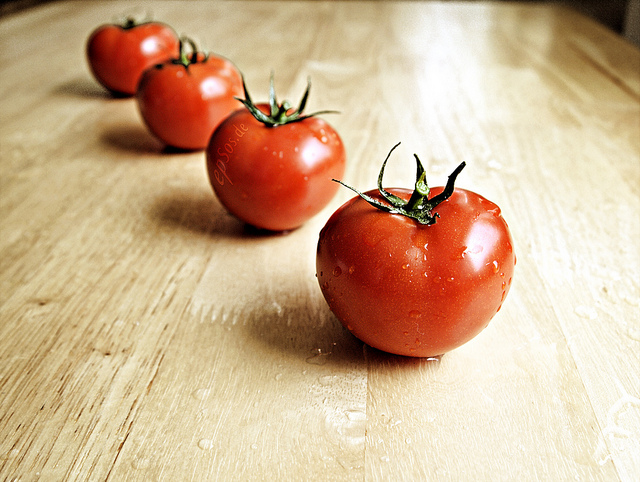
Photo: Flickr/Healthy Red Tomatoes…
The post What Our Relationship with Food Says About Our Relationship with Ourselves. first appeared on Jennifer S. White.
]]>The post Raising Girls with Healthy Body Images. first appeared on Jennifer S. White.
]]>
Author’s note: This was written and published to honor National Eating Disorders Awareness Week.
I wet my hands in the bathroom sink.
Her hair drips in fluid spirals as soon as I lightly pat it.
Sometimes I look at her during this morning ritual—and the perfection of her little-girl body—and I wonder when she’ll realize that legs are for more than just walking on and that some torsos are long, like hers, and others short, like my own.
I began to question the shape and size of my body as early as first grade. I remember vividly the feelings of comparison and, more importantly, this comparison with me as the “loser” in some sort of perverse contest. I then spent the next majority of my life as an eating disordered individual. (At one point, it was absolutely one of my top three personal characteristics—okay, it came in first.)
Because an eating disorder not only destroyed my life, it destroyed the person who I was. Actually, for many, many years I didn’t think a real recovery was possible—but it is.
I’m not writing today, however, to share how I recovered. What I’d like to offer is that even though I do consider myself recovered, I’ve come to think about it as almost a sort of remission—because, in my humble experience, the largest contributing factor towards wellness is the realization that we could slide back into illness at any moment.
An eating disordered individual always has to be on guard—I say time and time again that we’ve got more in common with alcoholics than is often talked about.
And food is something that we come into contact with every single day—multiple times a day—so are photographs and media images and sexism and trauma and everything else that contributes to turning an ordinary girl into an eating disordered one.
In my current life, though, I am no longer an eating-disordered young girl (although sometimes she comes back to haunt me, like an opaque ghost). Instead, I’m a full-time mom; I write, yes, but I’m a mother first and foremost—and I’m raising two daughters.
I believe that my own wellness speaks volumes to giving them a fighting chance of not becoming eating disordered—and this is exactly why I’ve been tackling this awful “new” phrase: “get your pre-baby body back.”
This string of words is a sinful degradation of the glorious experience that is birth and new motherhood. Rather than celebrating the giving of life to another human being, women are often more focused on how quickly their abdomen looks like it did “before.”
So, lately, I’ve been finding myself drawn to starting a revolution, one dedicated to helping women not only love and accept our bodies, but also one where we are mindful of how this acceptance will help to shape our next generation.
Children really are our future, and we have the power to help our daughters and our sisters’ daughters.
This is my new mission: to try my damnedest to raise healthy girls who appreciate their bodies and those of the women around them, without comparison, without judgment, and with love.
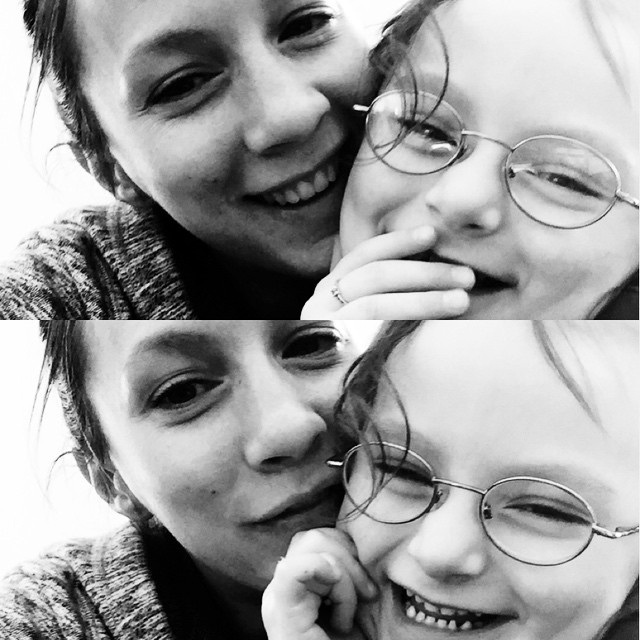
It’s a grand vision, I know, but I’m starting small—I’m starting with the two tiny bodies cuddled around me as I write.
Photo: Author’s own.
The post Raising Girls with Healthy Body Images. first appeared on Jennifer S. White.
]]>The post There is Strength in Our Scars: 4 Tips For Self-Love & Acceptance. first appeared on Jennifer S. White.
]]>
“Out of suffering have emerged the strongest souls; the most massive characters are seared with scars.” ~ Khalil Gibran
I don’t identify myself as being anorexic.
At all.
That said, I was severely anorexic for quite a lot of my life. There were many, many years when I was more than defined by my eating disorder, I was trapped by it.
And a lot of people have body image disorders. Frankly, we keep getting farther and farther removed from being healthy human animals—the time we spend on computers and not outdoors, the processed foods that are sold in our grocery stores and the ways that we praise both being overweight and overly fit—and this disease of human kind is a breeding ground for festering, poor relationships between bodies and spirits and minds.
Still, there’s something completely different about the truly and severely eating disordered and having body-image problems (not to diminish the latter). And one thing that I’ve found to be very true about the predominant personality to most likely suffer from an eating disorder—aside from other contributing social factors, genetics, etc—is that many are women who have strong personalities.
Yet being a strong woman in many of today’s cultures is still completely frowned upon.
We can say that we love aggressive, passionate women who easily shine and radiate large personalities, but, in reality, we still expect them to fit into certain boxes.
Boxes that look like this:
Wear a certain size. (Be thin, but not too thin.)
Be pretty but not too pretty.
Eat healthfully but not obsessively healthfully.
Don’t be loud.
Don’t be funnier than the men around you.
And this list goes on and on.
Because women are still contained within walls and by barriers, and these constraints leak from societal expectations into self-expectations and self-beliefs.
It wasn’t until I learned how to set myself free that I was able to see the most important thing about recovering from this emotionally and physically life-destroying disease: that the strongest people are the ones who can fully embrace their fragility.
Learning to love myself enough to not care about what the world around me wishes me to be meant loving myself enough to drop my own expectations of what strength looks like too.
And strength is something that is absolutely personally defined, but, for me, the most healing realization was coming to terms with those qualities about myself that are hardest to stare at in the looking glass. So hard, in fact, that I pretended that the problem with my mirror was something physical, because it was easier.
It was easier than owning my craving for acceptance by peers.
It was easier, too, than honoring my demanding, independent and dominating nature—my more “mannish” personality.
More, it was much simpler to admit my physical imperfections than to recognize how broken I was—how broken I had become—in order for me to fully become whole.
Becoming whole is something that all of us should put effort in to.
All of us, man or woman, eating disordered or not, have areas of our lives and of ourselves that are difficult to welcome. It’s often much easier to place our unhappiness and our unfulfillment onto other areas of life—challenged early lives, relationships, children—than it is to admit that the fault lies somewhere inside of us.
Yes, we crave love and partnerships and, like I said, acceptance from others, but if we spend our entire lives not realizing how empowering it is to first accept and love ourselves, then none of these subsequent relationships or successes will matter.
So how do we love ourselves? How do we become strong enough to feel safe being vulnerable—strong enough to show our scars? Like this:
We speak lovingly to ourselves.
We think of our inner child and we let our inner voice speak to ourselves like we would a small, beloved toddler.
I’m patient with my daughter because she’s young and still learning (and, really, we all are). I speak with words of comfort and kindness to her because she deserves it (and so do we). Begin this journey of self-love by speaking to yourself with love. Stop speaking hateful words inside of your head and then expecting to be happy with yourself (or with other people).
And then we begin to verbalize this new loving self-speech outwardly.
The first step is talking with a gentler inner voice, and then the next step is to speak these same types of words externally.
Completely cut negatively perceived words from your dialogue. (Words like “fat.”) We are much more easily defined by the way that we label ourselves than we understand consciously. Begin to shape a new self-perception by using your words positively.
Learn patience.
I’m perhaps the most impatient person in the world. Okay, maybe not, but I’m not necessarily a patient person. That said, it’s imperative to find patience with what we see as our flaws.
For example, I try to find patience with my impatience. I try, also, to give myself a break when I say something out of anger. In short, I’ve learned that in order to be a healthy, whole person I need to understand that I’ll always have flaws and, further, that these flaws are not diminished by my highlighting them in self-judgment and loathing. (Actually, this feeds the fire and strengthens these qualities.)
We embrace our emotions, completely.
For me, embracing my fragility—and my strength—came hand in hand with owning my more negative emotions, like jealousy for instance.
Being a human being, however evolved we are, means having primal emotions that we need to allow ourselves to experience, especially if we want to move forward from them in a healthy manner.
The main purpose that an eating disorder (or being an alcoholic or chronically self-deprecating or…) serves is as a coping mechanism for uncomfortable emotions. If we want to learn to love our bodies and our minds, and treat ourselves well, then we need to be in touch with what we’re feeling.
And being a strong person doesn’t mean that we’re impenetrable to attack. I’d argue that a gigantic part of true strength is durability—the ability to bend and stay malleable throughout life’s ups and downs—and that this can only occur when we stay open and exposed to both joy and pain.
So, yeah, I don’t consider myself to be eating disordered anymore. But I wouldn’t give up those tortured years for anything.
Through my illness I learned that my imperfections are where my real beauty lies; I learned that who I am is someone much more powerful than society’s current definition of who I should be; I learned that my own self-love is enough–and I finally understand that I’m strongest when I don’t try to cover up my scars.
” A really strong woman accepts the war she went through and is ennobled by her scars.” ~ Carly Simon
Photo: Jenavieve/Flickr.
The post There is Strength in Our Scars: 4 Tips For Self-Love & Acceptance. first appeared on Jennifer S. White.
]]>