The post 20 Things Every Daughter Should Know. first appeared on Jennifer S. White.
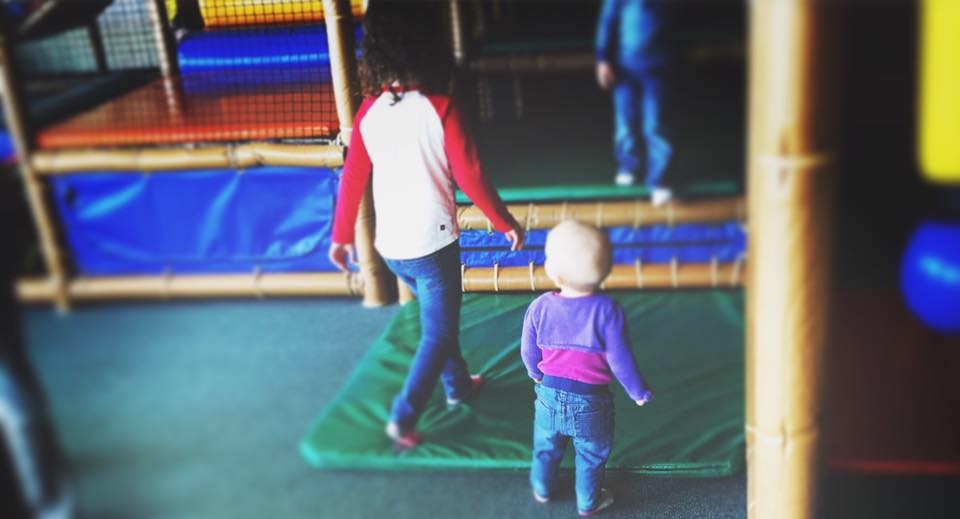
]]>
I want my daughters to know these things, always:
1. I don’t care if you date a man or a woman. Mutual love and respect are what matter in relationships.
2. Ignore the advice “love what you do, and you’ll never work a day in your life.” While it is important to choose a career that we’re good at and that we can find daily satisfaction from, sometimes work is work.
3. Stay in school. College isn’t for everyone and educational experiences, like trade schools and apprenticeships, are more valuable than we, as a society, give enough credit to. Regardless, school is a foundation for more than just jobs. It’s a learning experience about how to handle pressure and how to work with others.
4. Love yourself. When the world feels lonely, we have a real advantage when we are friends with ourselves.
5. Believe in magic. Find something intangible that makes your heart skip a beat from time to time. Wonder about the stars. Look up at the moon. Ask questions that don’t have obvious answers.
6. Wear jewelry. Tokens with meaning and trinkets given to us in love can have a powerful way of reminding us to keep our chins up when we want to fall down and stay there.
7. Buy jewelry for yourself. Don’t wait for someone else to give you something special.
8. Drink water. Because I said so, and I’m still your mom.
9. Question authority but respect rules. You don’t like the rules? Try to change them and make the world better.
10. Exercise. Move your body in some way that you enjoy every day.
11. Cook and eat with the people you love. This makes almost every day feel special, manageable and worthwhile.
12. Feed yourself. Feed yourself and your soul with good books, songs that make your hips sway, and conversations that leave you tilting your head back and roaring with throaty laughter.
13. Feed others. Find joy in freely offering things like compliments, hugs and shared tears.
14. Cry if you want to.
15. Don’t fight your hair. It’s not worth it. There are too many other things in life worth battling over, but hair is not one of them. Embrace what you have and work with it rather than against it. Here, I’ll help you. Because I’m mom. And that’s what I do.
16. Don’t over pluck your eyebrows. Trust me.
17. Say “I don’t know” when you don’t. It makes the times when you do that much more believable.
18. Eat cake on birthdays. Always.
19. Don’t own a scale.
20. Remember I love you, even when I’m no longer there to tell you. Because I do. Because I’m mom. Always.
The post 20 Things Every Daughter Should Know. first appeared on Jennifer S. White.
]]>The post For at Least One More Summer: A Love Note from Mother to Daughter. first appeared on Jennifer S. White.
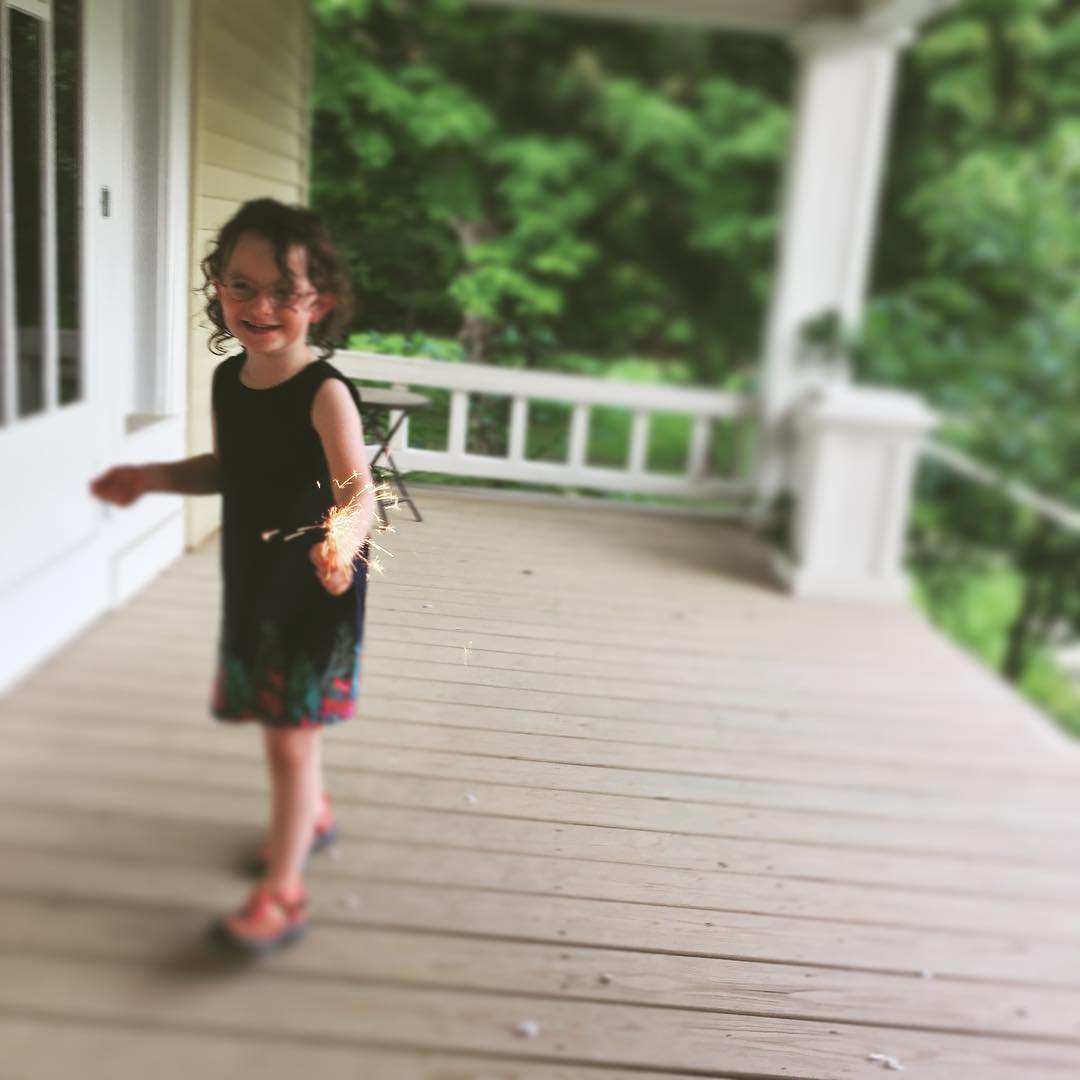
]]>
The feel of tender, young grass between her squeezed-tightly fingertips was primal.
The tug, uprooting them, connected her with a fiery anger that she didn’t know her belly housed.
Then, momentarily afterward, she’d feel regret that these vivid, green shoots, with blackened, dirty ends, were now clenched inside her small fists.
Many years later, she watched this collection of emotions play out on another youthful face—her four-year-old daughter—as this new set of miniature hands sunk into the lush green surrounding their pale thighs, touching at the knees.
I ask her not to pull the grass out, and her face falls instantly.
I mentally slap myself and softly ask, “It feels good to pull on the grass, doesn’t it?” She nods silently, and I verbally take back my earlier reprimand.
So much of my life has been a similar pattern, I’ll think later after an argument with my husband.
So much of my life has been this space between managing my reactions with the authenticity of internal need and awareness of this reaction upon others; coupled with the guilt after—the guilt of either not reacting firmly enough for my own needs or, more often, being too harsh. (And then stifling this guilt later, too, when it’s more destructive than productive—more another unnecessary reaction.)
I wonder, as I sit in the backyard underneath the open sky and a canopy of trees with my daughter, what it would feel like to sink my hands into the grass and yank without abandon, but I can’t actually do it—I’m grown.
And I tuck inside the flesh of my delicate mommyheart the secreted hope that the pale, milky thigh gently touching mine stays exactly as she is—for at least one more summer.
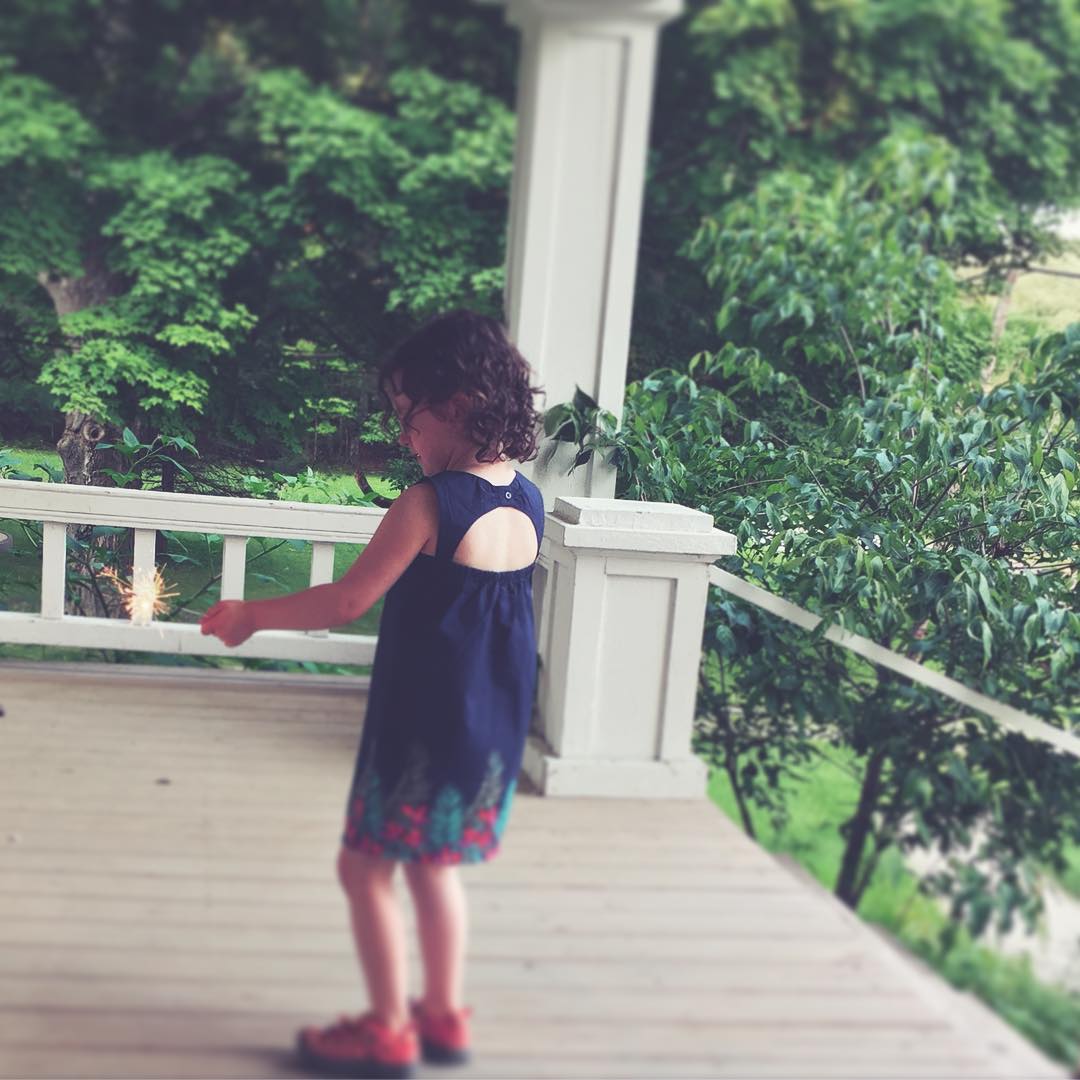
Photos: Author’s own.
The post For at Least One More Summer: A Love Note from Mother to Daughter. first appeared on Jennifer S. White.
]]>The post Raising Girls with Healthy Body Images. first appeared on Jennifer S. White.
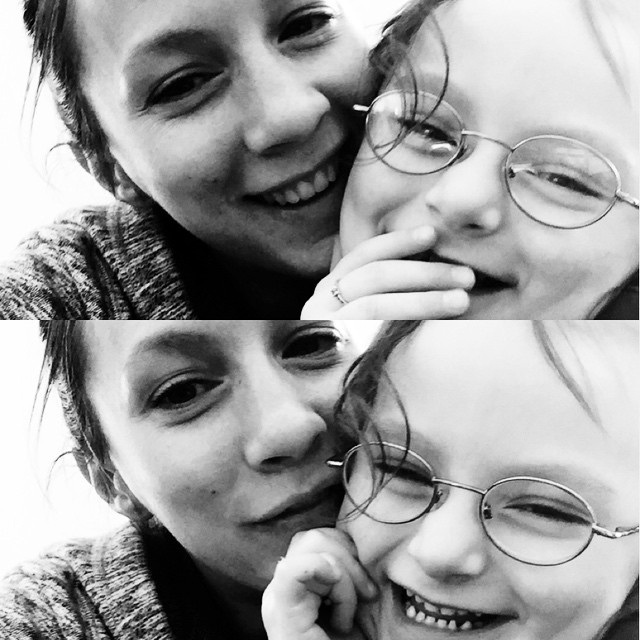
]]>
Author’s note: This was written and published to honor National Eating Disorders Awareness Week.
I wet my hands in the bathroom sink.
Her hair drips in fluid spirals as soon as I lightly pat it.
Sometimes I look at her during this morning ritual—and the perfection of her little-girl body—and I wonder when she’ll realize that legs are for more than just walking on and that some torsos are long, like hers, and others short, like my own.
I began to question the shape and size of my body as early as first grade. I remember vividly the feelings of comparison and, more importantly, this comparison with me as the “loser” in some sort of perverse contest. I then spent the next majority of my life as an eating disordered individual. (At one point, it was absolutely one of my top three personal characteristics—okay, it came in first.)
Because an eating disorder not only destroyed my life, it destroyed the person who I was. Actually, for many, many years I didn’t think a real recovery was possible—but it is.
I’m not writing today, however, to share how I recovered. What I’d like to offer is that even though I do consider myself recovered, I’ve come to think about it as almost a sort of remission—because, in my humble experience, the largest contributing factor towards wellness is the realization that we could slide back into illness at any moment.
An eating disordered individual always has to be on guard—I say time and time again that we’ve got more in common with alcoholics than is often talked about.
And food is something that we come into contact with every single day—multiple times a day—so are photographs and media images and sexism and trauma and everything else that contributes to turning an ordinary girl into an eating disordered one.
In my current life, though, I am no longer an eating-disordered young girl (although sometimes she comes back to haunt me, like an opaque ghost). Instead, I’m a full-time mom; I write, yes, but I’m a mother first and foremost—and I’m raising two daughters.
I believe that my own wellness speaks volumes to giving them a fighting chance of not becoming eating disordered—and this is exactly why I’ve been tackling this awful “new” phrase: “get your pre-baby body back.”
This string of words is a sinful degradation of the glorious experience that is birth and new motherhood. Rather than celebrating the giving of life to another human being, women are often more focused on how quickly their abdomen looks like it did “before.”
So, lately, I’ve been finding myself drawn to starting a revolution, one dedicated to helping women not only love and accept our bodies, but also one where we are mindful of how this acceptance will help to shape our next generation.
Children really are our future, and we have the power to help our daughters and our sisters’ daughters.
This is my new mission: to try my damnedest to raise healthy girls who appreciate their bodies and those of the women around them, without comparison, without judgment, and with love.
It’s a grand vision, I know, but I’m starting small—I’m starting with the two tiny bodies cuddled around me as I write.
Photo: Author’s own.
The post Raising Girls with Healthy Body Images. first appeared on Jennifer S. White.
]]>The post Throwing Away “I’m Sorry” & Teaching Empathy. first appeared on Jennifer S. White.
]]>
Teaching our kids empathy instead of meaningless “I’m sorries.”
These days, it seems that I meet more and more narcissists.
While I’m not a psychologist, it is commonly believed that a true narcissist doesn’t have the ability to feel empathy for other people and, more, that this personality disorder is largely connected with how a child was raised.
That said, I’m sure all of us have at least one friend who throws around “I’m sorries” for anything and everything. Not only can this be annoying, it also makes these words meaningless when over-used (without even mentioning the self-esteem and mindset of the frequent “I’m sorrier.”)
And, in this day and age of raising my children with social media and selfies galore, as a parent, I’m even more concerned with teaching my children how to really feel emotions—both their own and another’s.
The idea of teaching empathy to my daughter became a reality for me when she was a little over two and a friend, who’s a Montessori teacher, and I were having a playdate with our children. She overheard me tell my daughter to say “I’m sorry” to her playmate. Kindly, my friend intercepted, and encouraged me to instead teach my daughter to ask, “Are you okay?”
Teaching a small child to ask someone, “Are you okay?” reinforces why we say the words, “I’m sorry” in the first place. Eventually, these traditionally apologetic words will come naturally and, when they do, there will be much more understanding of why they’re used at all.
Another reason to stop teaching tiny kids to reactively say “I’m sorry” is because this does actually teach our children something, albeit not what we’re intending to; it teaches a child to feel guilt.
But personal guilt is not the same as empathy. While guilt and remorse certainly do, and sometimes should, occur within a situation that bears the need to apologize, these emotions are not the primary things we should have to teach our children.
It’s easy to think that empathy is unteachable, but I don’t see this as the case. Again, look at personality disorders connected with empathy and often times how a child was brought up is a huge part of the discussion—and underlying problem.
I recently read a thought-provoking article in The Guardian on the merits of talk therapy with trauma, and how various cultures around the world perceive talking about what caused the trauma as alternately helpful and harmful. Yet, in our Western mindset, we are raised to see talk therapy as one of the best (and only) real ways to move past a trauma and into health.
In other words, emotions and experiences do not always translate identically between different cultures.
As someone who studied sociology in college, the idea of ethnocentric thinking is of the utmost importance. We cannot fully understand or appreciate other cultures and people if we are always seeing the world through our own eyes—and this is what empathy is or, more accurately, isn’t.
True empathy is the ability to understand a person’s feelings through their eyes and not our own—the figurative “put yourself in her shoes” situation—and this begins at a very young age.
So, as a mindful parent and a tender human being, it’s crucial to me that I do the best I can to teach my daughter to respect and care for other individuals enough to try to place ourselves in their shoes; to feel what they are feeling through the scope of their own reality. Additionally, it’s important that I teach my daughter to care about her own feelings as well.
Women and girls everywhere are still more susceptible to be taught servitude and placing themselves last. I want my child to know that her feelings matter too, and that casually throwing around an “I’m sorry” both detracts from the value of empathy for other people and it isn’t ideal for her own confidence either.
And I’ve also lately read several articles debating whether or not to teach children to say “I’m sorry,” but I’ve rarely (okay, never) seen a discussion like this brought up: that the most important aspect of this debate is that we can teach children why they are saying “I’m sorry.”
While I’m still in the throes of child-rearing and certainly cannot pretend to be a grand success in this paramount matter, I do think that, as a society, we need to address what we can do to better promote our shared connectedness and concern for one another. After all, a society cannot exist without individuals, just like an individual cannot exist without society.
“He who is unable to live in society, or who has no need because he is sufficient for himself, must be either a beast or a god.” ~Aristotle
Photos: Author’s own.
The post Throwing Away “I’m Sorry” & Teaching Empathy. first appeared on Jennifer S. White.
]]>The post How to Raise a Girl. first appeared on Jennifer S. White.
]]>
I’m about to have two little ladies running around my house instead of just one. (I’m expecting a girl.)
And raising a girl is nothing short of a blessing.
But sugar and spice and everything nice? Nah.
I’ll take a sprinkle of naughty and a hint of “likes to roughhouse.”
I’ll throw in a pinch of burn-your-mouth spicy and maybe an occasionally sour too.
Because I’ve been thinking a lot about raising girls and about being one too.
I’ve been thinking about my own experiences, hardships and hard-won lessons, and what exactly being a woman means to me.
So, here we go: a compilation of my memories, self-experiments, personal gender studies, stories and teachings.
How to raise a girl:
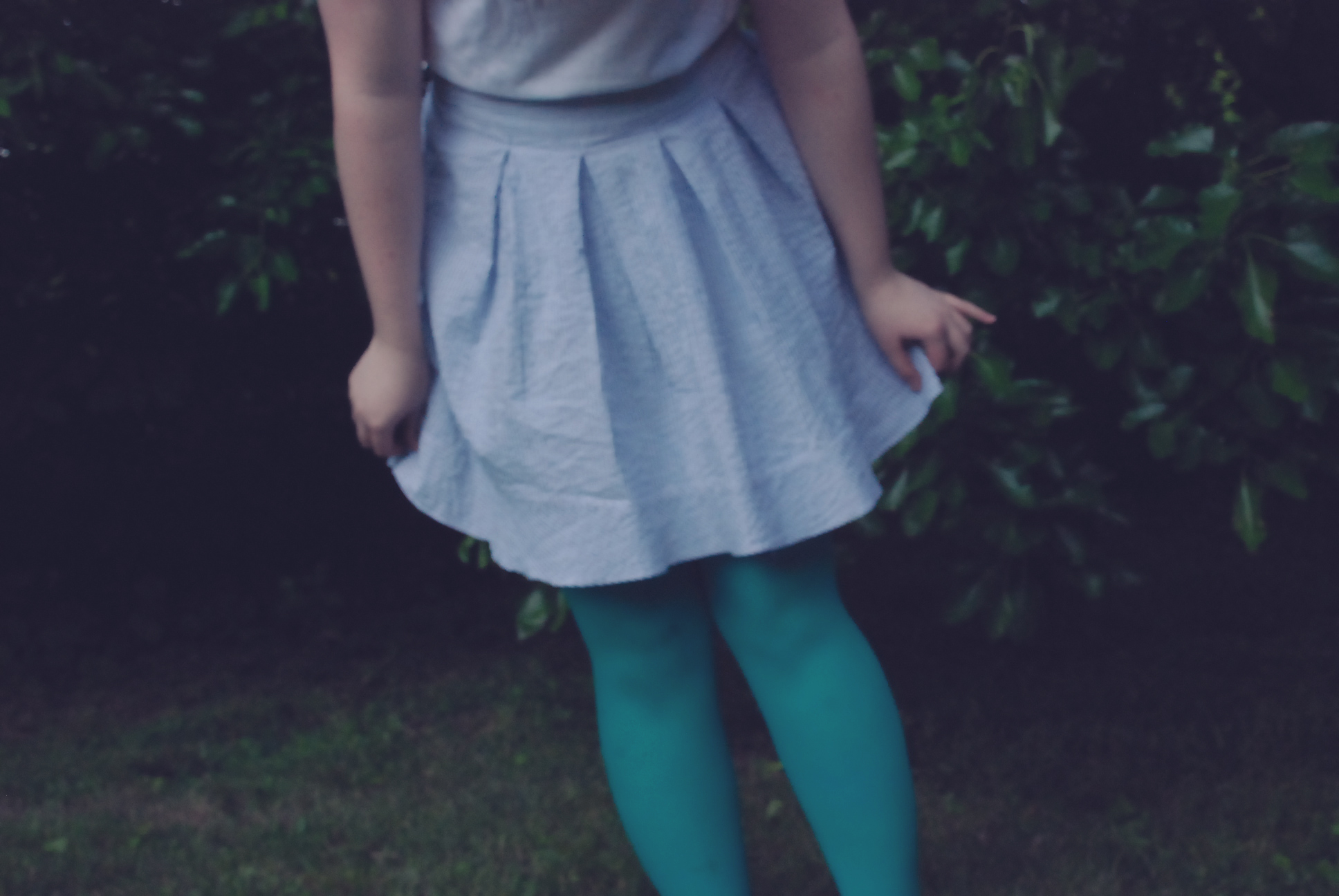
Let her pick out pink, frilly dresses—and wear them outside to play.
Throw the baseball with her in the backyard so that she can break in her new baseball mitt.
Be comfortable with her nudity and with your own, so that she can grow to be comfortable in her skin.
Let her take off her teenage bra and not wear it for a year. Don’t freak out if she stops shaving her armpits. Let her disown her girlhood because she’s rebelling against—and mourning—leaving it behind.
Let her cover her breasts and wear baggy clothes—but make sure that she’s not covering more than her body from the world.
Let her eat, but teach her that self-indulgence is not self-care either.
Hold her when she’s fallen down and then help her learn how to get back up, for when you’re not there to grasp her hand.
Make sure she knows that she can date whatever gender she wants. Teach her that nice guys and girls do win, and teach her, preferably through example, to choose partners based on qualities that matter and not what’s between the legs, inside wallets or behind “mysterious” demeanors.
Teach her that she is whole alone.
Help her to be proud of her femininity when (and if) she discovers it, and teach her to appropriately equate this word with strength.
Remember, if you’re also a woman, that she is not you and that just because she’s a girl, this doesn’t mean you will share experiences, perceptions or personalities.
Share your heart and your experiences with her, though, so that she becomes familiar with intimacy.
Kiss her and hold her and hug her for no reason. Let her know that she owes no one any of these things.
Toss her giggling, toddler body into the air. Wrestle with her and don’t tell her to “be careful” when she shows signs of being a daredevil.
Show her how to cook, do laundry and clean—not because she’s a girl, but because it will help her be self-sufficient.
Make sure she understands that “being good” doesn’t mean putting herself last or being small. Rather, it means being authentic and kind (and to herself too).
Dry her tears with your love and willingness to witness her pain, but don’t tell her that her crying should be stopped or that it’s a weakness. Show her that it takes courage to wear an occasionally tattered heart on her sleeve.
Tell her she’s beautiful. Tell her she’s beautiful when she’s just woken up, when she’s sweaty and not only when she’s all dressed up. Tell her she’s beautiful when she’s laughing and sharing her ideas and baring her soul.
Allow her to wear bright red lipstick when she’s old enough, but help her develop self-confidence without it.
And, most importantly, raise her not as a girl, but as the individual who she already is—and love her for it.
Photo: Danielle Moler/Flickr.
The post How to Raise a Girl. first appeared on Jennifer S. White.
]]>The post What Our Daughters Want Us to Know. first appeared on Jennifer S. White.
]]>
His hand moves down the back of my neck.
I feel his caress linger in places that make my skin jump as his palm trails down my side.
Momentarily, I’m more inside of my body—feeling the rhythm of my heartbeat and breath—than I’m typically capable of during even my best days on my yoga mat.
I feel my breath catch when he takes his hand away from me—so that he can catch her as she’s about to fall.
I watch the steadiness come back into her own breath once she realizes that her daddy is there—by her side—making her feel safe again.
I let out the slow exhale that has temporarily stalled, both at my instant reaction to her near thud and to my own disappointment at our brief—but warm—touching.
I’m moved by his dedication to her.
I’m also reminded of when it was me who housed the majority of this attention, and I recognize that the difficulty of such a critical transition is most likely what leads to mother-daughter jealousy and unnecessary but bitter—and often subconscious—mother-daughter battles.
I’m glad that I’m not envious of my daughter.
Surely, I admire her.
I admire her easy charm and her winning smiles. I admire, too, the assertiveness with which she reminds me that I have to share this man I’ve married, and then generously gifted to her.
She lets me know that we do, indeed share him, when she comes up and wraps her arms around his neck while I’m hugging his waist.
She suggests this, also, when she climbs in between us on the couch—or, rather, up onto his lap where my head had been resting.
More, she tells me—sometimes subtly and sometimes not so subtly—that part of this bargain of the joys of motherhood—especially when mothering a female child—is to never insist on being number one or, at the very least, his only number one, when you’re parenting a daughter with a man.
A daughter whispers—albeit silently—things like this:
Dear Mom,
Yes, don’t forget that you’re his wife.
Please continue wearing pretty clothing for him and, for the love of God, change out of your yoga pants before he comes home from work.
Please kiss him, tenderly, lovingly—brazenly—but be mindful that I’m watching too.
Hold his hand when you’re walking with him or driving side-by-side in the car—but turn and smile back at me or hold my hand as well.
Be kind to him so that I know you love him—and so that I see what love should look like and what I can aim for myself.
Go out with him—be a couple—but come home to me and always kiss me goodnight.
Encourage him to be patient with me and to talk with me, even if it’s an uncomfortable subject for him to address. This helps me learn how to open up and share my thoughts and needs with others.
Be sexy and womanly. Wear things that make you feel special and sassy, but don’t degrade yourself and do things that make you uncomfortable in order to please someone else. I want to know that sex is a positive experience and something meant for me to enjoy too.
Don’t treat me like I’m your equal when I’m young. I’m not. I’m your child and I need a mommy. However, remind daddy as I grow older that I might always be his little girl, but that it’s okay for me to also be a woman. This will help me be proud of—and comfortable with—my developing body and, further, this shows me that I can lean on you when I need to (because I will).
Remember these things and, above all else, don’t forget, Mommy, that I am not you. Please try your hardest to avoid caring for me through the experiences of your own youth. I’m an individual and I want to grow intomy best self, not yours or your ideal version of me.
On the other hand, sharing your own experiences with me let’s me know that I can share mine with you as my life unfolds.
So, Mom, help my daddy understand my wants and wishes because I need you to be on my side—but that doesn’t mean that you shouldn’t also be on his. Because that’s another thing.
It’s alright for you two to argue, as long as it’s civil and courteous and as long as I see you resolve it healthfully—this helps me see that I can expect bumps on a relationship’s road, but that this doesn’t mean things won’t and can’t work out. Still, I don’t want to see you fight—I’ll think it’s my fault and this hurts me more than you know. (Remember that some things should be done behind closed doors, when I can’t see.)
Thanks, Mom.
Oh—and one more thing—I love you.
Love, Your Daughter

Photo credits: Steven Depolo/Flickr; Author’s own.
This article was first published by elephant journal.
The post What Our Daughters Want Us to Know. first appeared on Jennifer S. White.
]]>The post The Caged Girls: Yoga Pants, Sticky Mats & Freedom (Chapters Six Through Ten). first appeared on Jennifer S. White.
]]>Read Part Two of The Caged Girls: A Life in the Mind (Chapters Four & Five).
Part Three: Yoga Pants, Sticky Mats & Freedom.
Chapter Six.
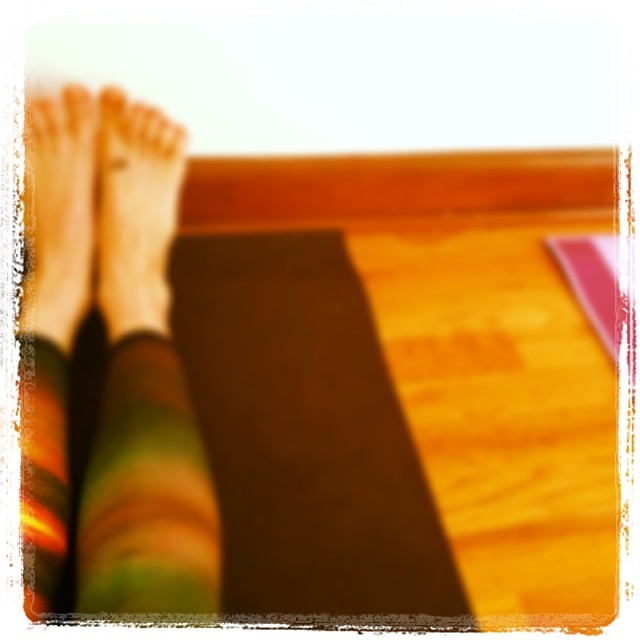
I look down the length of my slim legs, covered in orange and purple, sunset-patterned yoga pants.
I plant my hands shoulder-distance apart and reach my right leg long behind me, hugging my left thigh in tightly. I press up into this hugged-leg variation of handstand and hold it for almost three breaths before coming back down.
My daughter catches me watching her as she prepares to practice her own three-legged downward dog on her scaled-down, matching mat next to mine.
I’m overjoyed in a way that I’ve never felt before—I can’t believe this tiny lady actually wants to practice yoga with Mommy—she asked me—and I’m frequently in awe of the fact that I love this practice, in general, so much.
I was never an athletic kid, like my little girl. I was not a person who relished sweating and panting and team-played sports—I was not this person until I found yoga.
Sure, I swam and I ran and I hiked and I exercised, but I never authentically enjoyed the sensations of physically moving within the structure of my body, the way that I do when I’m in clingy leggings on a sticky mat.
Returning to my practice, I move and breathe and flow and, alternately, observe my mini yogini out of the corner of my eye.
Inhale, arms sweep up—she, too, reaches arms high, only their relative shortness to her head makes her wonder if she’s doing the pose incorrectly, so different is hers from mine.
Exhale, forward fold—she comes down to her knees and looks up at the television screen, where another seasoned yogi is giving us our cues.
Inhale, halfway lift—she takes a break and plops down in front of her primary-colored piano.
Exhale, step back to downward-facing dog—she returns my gaze and hops onto her tiny mat to rejoin me.
After our physical practice is over, I make us three slices of peanut butter-honey toast, cutting gooey bite-sized pieces up for her. I have a coffee in my green ceramic, handle-free mug and she drinks mango juice out of her sippy cup—the one with her name in bubble letters on the side for when she takes it to preschool.
She wanders over to the blinds and shifts the curtains just enough to open and close her small fist—waving and saying hi to her daddy shoveling snow.
The ease with which these two exchange their love leaves me feeling like an outsider.
I move intentionally from my own finished-practice kneeling position to child’s pose; my forehead resting on the firm, waffle-textured rubber mat.
I’ve shifted here because I feel tears welling up from behind my eyes and I don’t want her to see them spill over.
I don’t cry easily—I have luculent day dreams of violent wailing because I know how good it feels to cry. Instead, I’m the woman with red, puffy eyes looking away from the grocery store clerk ringing up my kefir and beer because my body chose to let go in the middle of a day full of errands.
My breath hitches—no longer the smooth, skillful yogi—and she moves swiftly from behind the parted curtains to standing in front of me on my purple mat—our purple mat. She takes my hair in her left fist and tugs. I resist—she’s trying to make me look to her, to see if I’m okay.
Although a toddler, she’s authoritative—I think I’ve mentioned this—and, before I can help it, my wet eyes have met her confident ones.
My breath slows.
Inhale.
Exhale.
Inhale.
Sigh.
I hear clomping foot stomps on the wooden porch on the other side of the large front picture window—those panes of glass the only things separating our purple sticky mat and him.
I inexplicably recall something that he said to me after I’d finished writing my first book.
He’d loved it—truly—but he said that he was disappointed I hadn’t written more about my yoga practice—he thinks it’s a major part of my life, of who I am—and of who I’ve allowed myself to become.
He opens the front door and embraces our just-above-the-knee person, clinging to his snow-covered pant leg.
We talk for a minute, and then I take my green ceramic mug into our bedroom. I close the thin door and open my laptop’s two hard pieces of plastic, resting on our bed’s turquoise quilt.
I look down the length of my slim legs, covered in orange and purple, sunset-patterned yoga pants…
Chapter Seven.
So the reason for my child’s pose, purple mat tears yesterday was that he and I had a fight.
But not just any fight—one that I started.
While I don’t get off on fighting, I also won’t avoid it—it’s a necessary evil of both a strong relationship and one composed of two strong people—which is why we work so well and have for nearly 20 years—because we won’t let ourselves be bulldozed by the other partner, but we’re in love and compassionate and compromising.
Sometimes, though, I feel like I’m not meant to be around others.
I see myself curtained—cocooned—in sheer, white tulle that canopies my beckoning mattress—my siren—in the middle of the forest. My familiar turquoise and brown-textured notebook is there, along with my preferred ballpoint pen. I’m not wearing phony fairy wings, but I’m equally not my same, assumed human form.
It’s quiet here—completely still—except for a light wind ruffling the tree branches high overhead, but not my loose brown hair (because of the translucent curtains). It’s soundless, too, except for a swaying breeze, coupled with a hidden source of falling water (so soft that it’s almost inaudible, but it’s loud because of this relative silence).
And I’m alone—but nestled deeply within my breast is the critical knowledge that I’m loved—and that’s when my sheer, white, gauzy curtains part and I peek out from my self-imposed wilderness to see, on the other side, my light-colored wood floor waiting patiently—and my red microfiber sofa waits too, littered with stuffed animals and soft Disney-themed blankets—and I know that I’m not meant to be by myself after all. I just need some space once in awhile.
To breathe.
Chapter Eight.
I was always slightly terrified to have a baby girl.
Obviously, I was elated and excited—tiny nails to paint, little jewelry items to make especially for her—but there are so many other aspects of womanhood that, put simply, aren’t easy.
I consider myself a strong woman—often obnoxiously so. However, even the most resilient, refined women will encounter discrimination, prejudice and difficulty within the walls of society’s birth-gifted pink and metal cages. I don’t mean to place a lack of importance on how far we’ve come or on how much work and determination it took the women before us to get here. Still, we have a long way to go.
Yet the thing that surprised me most about mothering an infant daughter was that nearly all of my concerns flew out an open window almost immediately after she was born—because she is truly her own tiny lady and, in many ways, she’s nothing like me—and then these previous worries were replaced with new ones. She would have her own, separate battles and I would have to learn to see her and her life through new eyes and not those of my own prior experiences. (Easier said than done.)
For example, when I’m hurt or upset I lash out aggressively. She, on the other hand, holds things in—the epitome of a velvet-gloved fist. Also, I love food, was never a picky eater and had to learn to balance enjoyment and health (and all of the various combinations of these two where diet and my body are concerned). She is, contrarily, a horrifyingly picky eater and she does love food, too, but she—even at age two—never hesitated to leave the last several bites of chocolate cake on her plate—or refrain from eating it entirely if she wasn’t interested. But, don’t be fooled—the strongest differences between us have largely nothing to do with her and everything to do with me.
I spend much of my time as a mother battling my own intricate personality, so that I might spare her from being affected harmfully and unnecessarily from it—from me.
She’s naturally easy-going and charming and I—while, ahem, surely, charming myself—am not such a text-book definition of an ideally placid temperament.
I wrote my first book for her, actually—it was my first birthday gift to her.
I wanted her to have deep insight into my long-term relationship with her father as well as into my complex inner-workings. And yet.
And yet.
One of our most interesting discrepancies is that I’m clearly a word person and she doesn’t seem to need them much. She’s better than my words will ever be—because she’s absolutely, one-hundred percent filled with heart.
I’ve met a lot of different people in my life and none of them, regardless of age or gender or sex, have ever been as appealing soulful, intuitive or filled with some quality that I can’t even find a word for.
Her spirit is just huge—it’s ginormous. She’s gigantic.
She’ll never fit inside of a cage—and it’s my job, as her mother, to repeatedly keep giving her the keys to get out if she happens to ever be placed within the confines of one—either by herself or by another—and it’s my job, equally, to help her remain free—as free as she is right now tugging on my sleeve and handing me her pink coat to head out for a new Mommy and tiny lady adventure.
More, it’s in my best interest to not forget how much she has to teach me—and that sometimes it’s more important to listen than to find the right words to offer in return.
Chapter Nine.
Volcanic glass quakes and churns and boils within the central core of my being.
My eyes want to glaze over, my hands want to dig into hair and tears beg to flow down my bent legs, hugged closely into my chest.
The burning of all the things I want to say eats a dangerous crater near my heart.
The words that I let erupt, though, are all wrong and make everything worse—they make me worse.
Occasionally, a chunk of my volcanic-glass soul breaks off and, in it, I see who I am.
They say that obsidian—true volcanic glass—offers a person insight into her authentic self, even though this glimpse might not be what’s desired.
But my volcanic heart shows me enough.
I tried so hard today to be a good mom.
Today was a day full of special, little things intertwined together in an attempt to make a little girl happy. And yet today was the kind of day when nothing seemed to work. Each little moment was accepted and enjoyed graciously, but every waking second filling the gaps in between—what I like to call life—felt as poisoned as that ill-fated apple—I felt poisoned; polluted.
My chest expands and becomes concave as my breathing settles into normalcy and my fingers dance across my laptop keyboard.
This solitary confinement—in my bedroom with my space heater as white noise—loosens my volcanic core, but my sun—my beloved, occasionally overwhelming child—has begun to set for the evening and my heart now feels brittle and cold as ice.
And that’s the thing about motherhood—we’re not entirely free to be ourselves, because we should be cautious and courteous about what’s best for our baby girls.
Although it’s in her best interest, certainly, to have a mother who expresses her own feelings and who encapsulates a real human being, it’s also more than appropriate to maintain some sort of acting ability, for the sake of her own tender emotions.
Yet I think that’s the other thing: I’ve never exactly been a tender sort of girl.
Yes, I’m tender and fragile and wildly soft in many ways typically feminine, but I—like many young and old girls—am also wildly fierce and strong and capable entirely of masculinity—more so than many men—and why should we be so contained within our girlhood to not explore this…bitch?
Regardless, I feel myself closing down for the night. The entrancement of playing this mothering game has been more than enough for one day; while I need my turn to dance with my alphabet-littered keys, I wouldn’t dance with any other partner so often as I do with her.
Chapter Ten.
She sticks her wriggling arm through the puffy, pink jacket sleeve.
She’s determined to get her coat on all by herself.
She has the wrong arm in the wrong sleeve, but I don’t tell her. Instead, I type a few more words and let her see this puzzle piece for herself.
I tip my head to her again and see that she now has the correct arm inside of the correct coat sleeve. I sportingly hold out the other one so that she’s able to slip her tiny hand inside. She does and now she’s fiddling with the cold metal zipper.
I start the zipper at the bottom for her and listen to her struggle and whine a little in frustration, but then she stops and I can hear her talking herself through it—she has more patience as a rightly frustrated toddler than I do as a thirtysomething woman.
She giggles and I see my two favorite dimples in the world light up the room.
Her zipper—pulled up high enough for her satisfaction, although it’s barely to the middle—has lost it’s appeal; with her coat now completely on, she walks over to her pink and white table to grab her blue fedora-style hat and then struts mindfully over to the rainbow-medley carpet by the front door for her boots.
I hear little spurts of coat-rubbing-against-coat activity and uh’s and umph’s and hhha’s as she plays with getting on her shoes. Then I hear clomp-clomp-clomp as she pitter-patters over to me; lone purple boot in hand.
One shoe on, she’s trying to put a second pair of florescent pink fleece pants over-top her jeans. (Apparently, she thinks we’ll be taking off into the rather arctic Midwestern winter temperatures.)
I clickity clack on my keyboard for one more second before I realize that it’s time to hit save and close my laptop’s hard plastic covers—because words will never be the most important thing in my world, even if I can’t live without them.
And then the searing memory of that debilitating, all-encompassing pain—of when I thought I was going to lose her—moves from my mind to my stomach to my bones. No, there’s only one thing in this world that brings absolute joy, light, healing power and health—and that’s love. (Although yoga pants and sticky mats don’t hurt.)
Photo credits: Dominic Robinson/Flickr; tanahelene/Flickr; Author’s own.
The post The Caged Girls: Yoga Pants, Sticky Mats & Freedom (Chapters Six Through Ten). first appeared on Jennifer S. White.
]]>