The post We Can’t Expect More from Someone than They Can Give. first appeared on Jennifer S. White.
]]>
It all began with my four year old, really; this lesson that we cannot expect more from someone than they can give.
The thing is, that sometimes I forget she’s four.
She’s kind and she’s beautiful, and these two things are much beyond the measure of her lifespan.
This said, I can’t expect more from her than she’s capable of giving—and this goes for all people.
We all have people who challenge us.
Sometimes it’s childish temper tantrums, sometimes it’s spouses and sometimes it’s co-workers. Regardless of the nature of our relationships, we need to regularly consider that it’s not possible to expect a person to be someone who they are not—with a favorable outcome at least.
I re-learn this lesson over and over. Partly this is because I married a man my opposite; in every way that’s incredible, he’s nothing like me.
I’m horridly anal retentive and, “Put the wine glass over there; on that table; more than two inches in; where the children can’t get it…No! Not near that corner where my clumsy elbow will knock it.” You know…that kind of anal.
He’s adorably slow at making coffee in the morning.
It’s a running joke.
But the kind that’s not entirely funny because it’s too true. That kind of running joke. Anyways, I make coffee at lightening speed (given that I don’t believe in drip pots or microwaves) because I need it that badly. (I seriously mentally envision two fingers tapping a vein in the morning while simultaneously hearing Barney from The Simpsons’ voice, “Hook it to my veins!”)
So he’s slow at making coffee and Every. Single. Stinkin.’ Morning. I, like, expect him to make coffee quickly. Only he doesn’t. So I make it, but then I’m internally angry that I make the coffee every morning—only I make it because he’s “too slow.”
While I’m aware that this is easily becoming the longest example ever, I think the point is relatively simple: expecting a person to be someone who they are not is upsetting to all involved.
On the other hand, people will surprise you.
My husband’s grandpa once said this and, for me, it’s proved entirely true.
The “best” friend that I thought, through everything, would be there for me…wasn’t.
Likewise, other friends have unexpectedly come through.
Isn’t life funny?
Isn’t it strange how people can surprise us, again and again?
Sometimes, too, I have this thought that I want my parents to live forever and that it’s not okay they’re getting older.
I try to picture losing my mom the way she’s already gone through losing hers and…I can’t. I see the way she envelops my children—as if she bore them herself—and I then try to picture my children losing her, the way that I already did my own grandmother and…I can’t.
Yet life has a system.
We are not meant to last forever. We are not meant to be there for every single friend who needs us. We are not meant to be perfect.
And the way my husband makes coffee, ultimately, doesn’t matter—it has no bearing on how he is as a person and says nothing of how wonderful he’s been as a partner.
Still, this cyclical experience of his consistently slow coffee making reminds me of when we lived apart and how I missed the way he always left his pants lying on the carpet in our family room after coming home from a long day—where I tripped over them every time I came home, wondering why on earth he couldn’t put his pants in the bedroom instead.
Because, fundamentally, our flaws are what make us lovable (to the right people), and, sometimes, we need to extend this kindness even more and recognize that we cannot expect more than we can give either.
Every single morning I have peanut butter toast.
I smear two slices of toasted bread with nearly an inch of natural peanut butter. This and two coffees make me not despise the world again. I am not pretty, or even able to speak in full sentences, until these items are inside of my stomach. But my husband knows this, he lets me eat my toast and drink my coffee and he doesn’t pass unkind judgment on me in the middle.
He’s a happier person than I am.
He’s a happier person in general because he knows that I need messy toast and hot, brown water to be my best Jennifer. Every day I wake up and I want to be more like him.
I want to be more like someone who understands who a person is, what a person needs and then lets them be that.
This said, there are times when we can see the people we know and love with more clarity than they can see themselves.
Life, as I’ve lived it at least, has ups and downs and there have been several times when my husband, for instance, was my reminder of what I’m capable of—because I had lost sight. This isn’t the same, though, as holding someone to unfair standards.
Additionally, just because we accept an individual for who he or she is—limitations and all—this doesn’t mean that we have to settle for these qualities when they don’t mesh with our own needs.
Learning to see a person for what they are capable of, rather than for what we wish they were capable of, is not the same as lowering our own needs to meet another person’s abilities.
This is a fancy way to say that sometimes we need to accept what someone can offer us—and then turn it down.
And this is exactly what would make me happier: to accept where I am in my own life and then go from there.
Because how can I move forward and into my best me if I don’t clearly see where my feet stand, now?
Further, to surround ourselves with people who hold us to what we can do, to ask us to achieve more greatly when they know we are able and, more, to understand that love also includes not using our flaws against us—this is who we should be taking into our lives and into our hearts.
This is what would truly make us all happier: to see a world as it is, to accept it, to find where we can better it, to understand where we cannot—and to wake up every single stinkin’ morning not expecting fast coffee from a slower pourer; to remember we are human and to celebrate this, mourn it and then help one another be the best versions of ourselves.
Photo: Flickr/A.M.
The post We Can’t Expect More from Someone than They Can Give. first appeared on Jennifer S. White.
]]>The post How Yoga Helped Me Accept That I’ll Never Have My Pre-Baby Body Back. first appeared on Jennifer S. White.
]]>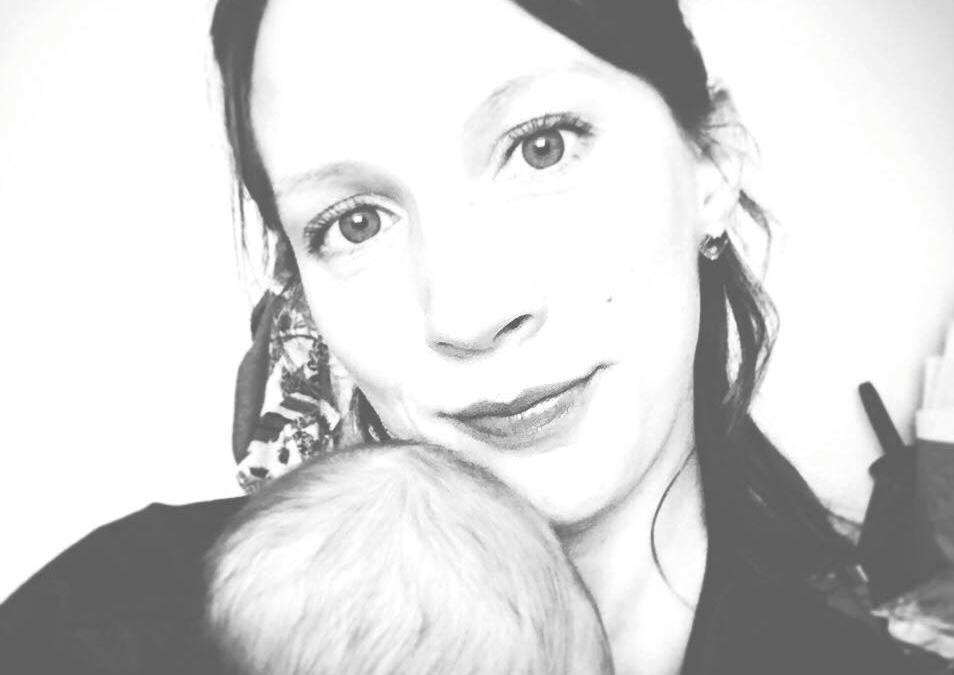
Don’t ever Google “post-baby body” and expect to find something uplifting.
Also, I shouldn’t have Googled my weight and height, what’s “normal” weight-loss post-baby or anything else along these lines, like I did.
The reason is simple: I’ll never have my pre-baby body back—thank God.
Right now, I’m 11 weeks postpartum and my linea nigra is fading, but still going strong.
I’m one of the lucky women who have a linea nigra, a dark line, running across my skin from my pubic bone to up between my ribs. I use the word “lucky” with no sarcasm whatsoever.
Having this kind-of-thick dark line running along my skin is one of the most beautiful things that happened to my body during pregnancy. My mother’s line faded from my first pregnancy and I do expect it to fade completely after this one too, but it’s a dead giveaway that I just gave birth, no matter how taut or tight my belly appears to people looking at it through clothing.
Yet I can’t say that I’ve been in love with my postnatal body. (I did, after all, honestly Google the things mentioned above.) And I’m not proud of that, but I’m not ashamed either—because many women want their “pre-baby” bodies back, but we feel either guilty for admitting it out loud as we cradle a gorgeous new life within our new-mother arms, or we unhealthily obsess over it.
My yoga practice has actually been pretty amazing since giving birth.
But the first time I attempted crow pose—a posture of strong spinal flexion and abdominal lift that I couldn’t safely perform during pregnancy—I felt “clunky.”
I felt “clunky” and heavy as I tried to shoot my feet back into chaturanga.
Gone was the quiet floating of my pre-pregnancy days and, here, were the new ones of big toes kind of plopping down as I tried to get back in touch with my abdominal muscles.
And I mean that: my yoga practice after having a baby was all about “getting back in touch.” It was like a friend I hadn’t spoken to in months and we were catching up, but instead of talking about work or my kids, I was listening and communicating with my intercostals and my obliques.
And I’ve been getting on my mat every single day since about four or five weeks after I had my baby. I’ve been arriving for at least five minutes of daily core work and, typically, 20 or 30 minutes of some sort of flow sequence.
Yet the reason I’ve been doing these things isn’t related at all to my aforementioned Google searches, but to the simple fact that every time I get on my mat I breathe away not only my life’s stressors, but I realize that I love my body so much, exactly as it is.
I love my linea nigra.
I love my slightly loose skin.
I love the fact that my crow to chaturanga is getting lighter and stronger and I love that I can feel my body as it regains both flexibility and strength. But I don’t love these things every day.
Some days I just feel ten pounds heavier than before I had my baby.
Some days I can’t stand the slightly loose skin.
Some days I feel clunky in general, not just in crow pose.
But that’s the thing: my daily yoga practice has given me the power of getting in touch with where I am, right now, regardless of whether or not that’s where some silly celebrity blog says I should be or whether so-and-so still has ten extra pounds.
Because, when I’m on my mat, there are no arbitrary numbers—only me, Jennifer, new mother, strong-super-woman-who-attempts-crow-pose-after-pushing-out-a-baby.
On my mat, I’m all alone, like on a deserted island, while simultaneously being connected to the larger theme of life that makes anything coming up on a “post-baby-body Google search” a complete waste of time.
So, yes, I’d love to pretend that I’m perfectly content in my postpartum skin. I’d love, too, to imagine a world where women don’t feel some form of pressure to be fit. However, we live in a world where “post-baby body” is a completely normal catchphrase (and Google search).
But that’s not why I get on my mat.
I get on my mat because I want to feel good—and a huge part of feeling good is taking care of my body, because it houses my new-mother soul.
And I’m raising two girls now—I’m raising two little human beings who depend on my teachings for how they will look upon their own bodies some day.
I want them to know they can talk to me about concerns and insecurities, but I also want them to know that our bodies are so much more than numbers on a scale, or how strong or how flexible we are.
So, thank you, yoga practice for reminding me that I’ll never, ever “get my post-baby body back.”
Nope, it’s gone—because, actually, after I had my first daughter, I was healthier than ever before, having a brand-spankin’ new reason to get on my yoga mat every day, and her name was Gemma.
And now, as a new year dawns, my resolutions aren’t anything like, “lose that ten pounds of baby weight,” or “practice yoga every day.”
My new year’s resolutions are more like, “remember to breathe through the hurt and frustration,” and “fall in love with myself all over again every single day.”
And I do fall in love with myself every day.
Every day I fall in love with my willingness to embrace my flaws—especially the flaw of caring so much about my imperfections—and I fall in love with where I am right now.
And right now I’m a writing, blogging, stay-at-home-yoga mama machine who needs her yoga practice—and who is learning to love her body, without labels.
Photos: Author’s own.
This article was first published by elephant journal.
The post How Yoga Helped Me Accept That I’ll Never Have My Pre-Baby Body Back. first appeared on Jennifer S. White.
]]>The post When We Must Be Okay without an Ending. first appeared on Jennifer S. White.
]]>
I didn’t make it to savasana today.
I always finish my yoga practice—even if I clip it short, I still have some form of closure, like child’s pose, savasana or seated meditation.
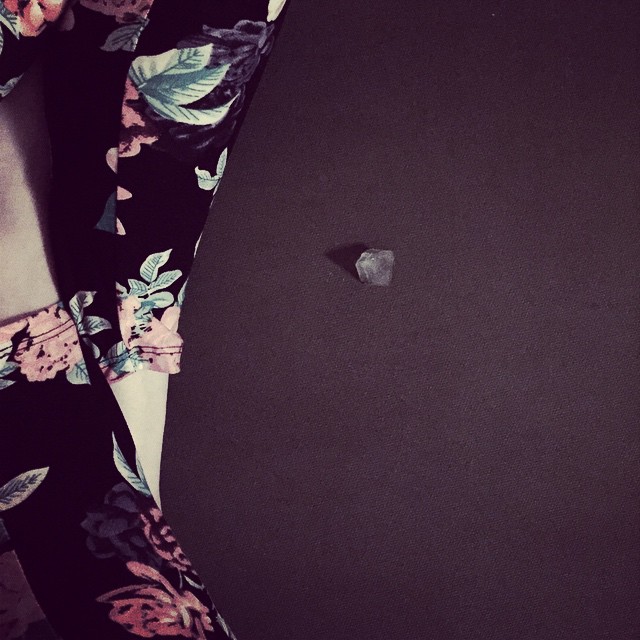
But today, I just got up. Because it finally settled into my tissues while I was in pigeon pose that sometimes, in life, there is no closure.
The other thing that washed over me in pigeon pose was how much I hate New Year’s Eve. The worst period of my life happened, at one point, during the week in between Christmas and New Year’s, and my body—my physical body—still loathes this time of year.
It doesn’t matter how much emotional or mental healing I’ve tried to do.
It doesn’t matter that, as a yoga practitioner, I’ve also worked at getting this wounded muscle memory far, far away from me; that, regardless, there are still some things that move through us and then stay inside of us forever.
Grief, terror, and tragic human experiences touch us, shake us, and, sometimes, maim us irrevocably.
I was in pigeon pose and I couldn’t see if my left shin was parallel to the top edge of my mat—by this point in my practice, the tears had formed a foggy cloud that altered my vision.
I settled into the pose by feeling my way in; by listening to my leg muscles; by shifting and undulating my spine.
And I let the tears rain down onto my sage green yoga mat.
I let myself release, not only into my yoga posture, but into the internal injury that I carried with me into a new year, despite my best intentions over these last several.
And as I listened to the teacher on the podcast I had been following ask me to lift my heart high in pigeon pose, I ignored him and instead bowed humbly over my leg—spent, tired and broken.
But the funny thing is that as the pools of salty tears collected on the green rubber, and as my heart acknowledged a pain that, seemingly, will never completely go away, I felt honest and I felt fresh for the first time in many months.
I turned off the podcast.
I turned off my little space heater, dutifully heating up the room.
I got up and I walked out, with tears collecting in the smile lines around my lips.
And I let it be okay that my yoga practice just ended, without a thoughtful completion. More, I let it be okay that I still have a knot in the back of my throat made up of un-shed tears and a scar-tissue-covered lump running over my heart.
I’ve decided, too, to be okay with where I am right now—with no real ending; with no perfect savasana.
Photo: Flickr/Felipe Ikehara; Author’s own.
This article was first published by elephant journal.
The post When We Must Be Okay without an Ending. first appeared on Jennifer S. White.
]]>The post Peace, Comfort & Joy: How to Stop Being a Victim Once and for All. first appeared on Jennifer S. White.
]]>
I’m about to admit something extremely uncomfortable; something that I honestly barely admit to myself.
I can sometimes have a victim mentality. Let me explain.
I don’t see the world as black and white; I used to—but then I grew up.
I realized that there are many shades of grey and splashes of color, and that pretty much everything in life isn’t “right” or “wrong” or “this” or “that.” Instead, our world is made up of emotions (which, by the way, are never wrong, even if they aren’t desirable) and people (who are, obviously, complicated) and situations (which, as the saying goes, always have more than two sides—your version, my version and the truth).
This said, I find myself grouping people into two categories: those who choose to live their lives as victims—and those who don’t.
Yet here’s what’s so uncomfortable about my earlier statement: I don’t want to be a victim—and this, I believe, is step one into moving towards empowerment.
In order to change and grow and, essentially, evolve as people we have to, well, want to evolve and grow and change. To do this, we must—must—be open to seeing our flaws.
So I choose to recognize that I’m prone to having a victim mentality.
A victim mentality belongs to someone who blames others and sees how situations and people affect their lives and personalities rather than taking responsibility—and power.
Example: a victim would say, “You make me so mad,” whereas a non-victim would say, “I feel mad.”
And once I accept that, yes, my temper is brought on by another person, but only I have the power of choice in between the event and my reaction, I then give myself the ability to change my reaction.
Because it’s self-sabotaging to live our lives as victims.
It’s nearly impossible to stop reacting angrily—to continue this example—if I’m always blaming others for making me mad.
However, if I’m able to see that I was the sole person in charge of my reaction—regardless of how I was treated by others—then I retain the ability to move in a different direction. In short, I become capable of empowerment.
But this is also where the real difficulty is introduced: in changing our reactions.
In my experience this takes real work effort and, sometimes, professional counseling (I am, after all, only writing this from personal experience and observation, not as a licensed therapist). Still, I’m fairly certain that no one would argue the challenge of learning to change our reactions.
It doesn’t matter if we learned to display anger from our parents or if it’s inborn within us (that old nature-versus-nurture debate) because, at the end of the day, it’s still hard to change.
Yet one thing that I keep coming back to—one thing that I continually check-in with—after a situation that disturbed me, like an argument or having hurt feelings, is this: did I act as the victim—or no?
And, if the answer isn’t no, then I reign it in and apologize and try, again and again, to be powerful—to take full responsibility for my actions.
Taking responsibility for the things that we think, do and say gives us the absolute capability of making ourselves better—and it gives us the capacity to feel better too.
We can say, “This person always instigates a response of anger in me and I continually allow myself to act badly in their presence—maybe I should choose to not spend time with this person, or maybe I can look at what it is that tends to trigger this response.”
Because people really are mirrors for what we do and don’t want to see about ourselves, and when we give ourselves permission to look at the ugly and not label it as “bad,” we also give ourselves the intelligence that facilitates self-acceptance.
But, as a friend recently reminded me, self-acceptance is not self-love.
No, self-acceptance is the start of self-love because we’re beginning to see ourselves for who we are, and to accept who we are, rather than to judge and critique—but it’s not the same as love.
Love is something that’s less analytical—even if the analysis is not passing judgment.
Nevertheless, offering ourselves the freedom to move away from this despairing victim mentality—and towards empowerment and acceptance for our choices and our reactions—is the dawn of living our lives as the people we want to be; it’s the birth of self-love.
And I do want to accept myself, even when I’m angry or hurt.
I do want to grant myself forgiveness when I react in a way that hurts another person or myself.
More, these qualities—forgiveness and acceptance—are some of the key components of love.
So when we’re able to see, as uncomfortable as the admission is, that we are living our lives as victims and martyrs, we become prepared to welcome a life without suffering.
But suffering isn’t entirely bad—some, including myself, would argue that it’s necessary in order to fully recognize and feel things like joy and contentment.
Still, suffering unnecessarily and at our own hands is problematic because it feeds a cycle of illness within our being and our life.
So, as I decide to own—and honor—my tendency towards self-created injury, I move closer and closer towards the outcomes that I actually prefer: peace, comfort and joy.
I move away from being a victim—and closer to love.
Photo: Flickr/Exit.
The post Peace, Comfort & Joy: How to Stop Being a Victim Once and for All. first appeared on Jennifer S. White.
]]>The post 5 Ways to Be More Beautiful (Almost) Instantly. first appeared on Jennifer S. White.
]]>
Beauty is not only skin deep—beauty radiates from the inside out.
Don’t believe me? Think of the people that you’re drawn to or find attractive, and likely there’s something beyond physical beauty drawing you in.
Charisma, happiness and a warm personality absolutely help boost physical attractiveness. So here are five ways to feel more beautiful—and look more beautiful—(almost) instantly.
1. Exercise. Exercise has physical benefits for your body that show up and help you shine. Working out helps your skin—and inner light—glow (thank all those mood-boosting chemicals). It also helps with weight management and improves self-esteem. Sounds like a good beauty fix to me.
2. Smile. This one is instant. Your heart lightens and it shows on the outside the second you turn up the corners of your lips. Give it a try.
3. Cleanse from the inside. I’m reading a wonderful book about the Yamas and Niyamas in my yoga training. One of the important beauty-related lessons here is that our society is obsessed with outer cleanliness and sadly pays little attention to what’s going into our bodies to keep us clean and pure. Pay attention not only to what you eat and drink but to what you read and who you listen to—and then pay close attention to what you’re saying to others in return. There’s a deep inner peace that comes from living a life of cleanliness—and I’m not talking about stocking up on expensive skin care products.
4. Dress well. I know it probably seems shallow to move from the last tip to this one, but it’s true no matter how you want to count it. Dressing well helps you look and, more importantly, feel better. I remember my twin telling me in high school that on days I was feeling less than stellar I shouldn’t throw on a baggy old t-shirt, I should put on my favorite, form-fitting dress and rock it—and she was absolutely right.
5. Confidence. Wow, this one’s extremely hard to tell you how to accomplish. Still, if you’re confident in yourself (and in more than just your outer appearance), it will show and it will make you more attractive. Again, think of someone you find attractive. I guarantee that physical perfection isn’t part of it, because none of us is perfect. Yet, these quirks, these individual little traits that make you you, actually make you more endearing.
Step 1 in boosting confidence (let’s start one step at a time): stop saying nasty things to yourself. Trust me on this one. Thoughts become words and words become actions. Talk to yourself the way that you would a child—with patience, kindness and love. Developing this sort of soft inner voice will help your outer voice resonate more beautifully—and your outer appearance too.
Don’t get frustrated if you wake up and roll out of bed, and don’t feel at the top of your game. We all have down days. Instead look in the mirror and focus on what you love. Spending time focusing on the positive reinforces these attributes and helps them radiate out into the world. You are beautiful.
So go ahead and hop on your yoga mat to get those endorphins flowing—and give yourself permission to share your beauty with the world today and every day.
Photo: Nikos Koutoulas/Flickr.
This article was first published by elephant journal.
The post 5 Ways to Be More Beautiful (Almost) Instantly. first appeared on Jennifer S. White.
]]>The post 8 Tips: How to be an Aggressive B*tch That People Actually Like. first appeared on Jennifer S. White.
]]>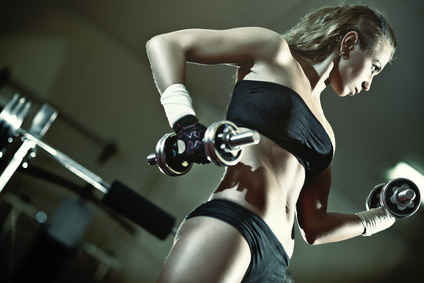
There’s a falsehood that repeatedly circulates and that fallacy is that people (be it man or woman) don’t like aggressive women—and I wholeheartedly disagree.
And it’s not about being a tactful bitch or even a pretty, smiley one—no, it’s more direct than that.
Here, without mincing words, is how to be a strong, independent, go-getting woman that others will still want to be around.
1. Like yourself.
The way that we treat people comes from within.
When we like who we are and accept everything about ourselves—like our aggressive nature, if we have one—then we’re so much more likely to accept others for who they are—and it shows.
2. Don’t fight.
Yoga practitioners strive to reign in their churning, swirling thoughts by training the mind to be still—but this is not the same as fighting who you truly are.
Some of us are born easy-going, for instance, and some are not. (I can especially vouch for this as a loving mother.) It’s imperative that we own up to our more innate qualities so that we can fully develop them and then let them shine.
3. We are not Gods.
Yes, you can be an aggressive individual who has the confidence to assert yourself easily, but please remember that your way isn’t the only way or always the best way either.
Again, as a mama, my daughter is much less obvious than I am in the way that she shares her opinions and thoughts, but just because she’s a tad quieter and calmer about her delivery doesn’t mean that I shouldn’t pause and appreciate her perspective.
In short, yes, be your aggressive self, but let’s not forget that we are not better simply because we’re louder.
4. Be strong enough to back off.
It takes a lot of personal discovery and, often, experience to learn when a situation calls for boldness and when the boldest action is silence and patience. Continue searching and practicing.
5. Be kind.
An aggressive woman is still a kind one.
Self-confidence is easily mistaken for self-centeredness, although these two don’t have to go hand in hand.
Part of the reason for this faulty bias is that emphatic, self-confident people are not afraid to be big and bold and shiny—and this can be intimidating. Consider that it’s not our job to make others feel comfortable with our own radiance, but, equally, that we can be empathetic and understanding.
6. Own it.
I’ve been writing a book on being a recovered anorexic and a huge part of anorexia is trying to make yourself smaller—and I don’t mean physically.
Everyone is done a disservice when we try to cram our vibrancy into tiny packages to make others more comfortable with our presence.
7. The root of it all.
Get in touch with the why of your fearlessness, because it’s when we act out strongly from a place of fear, intimidation and, basically, ego that we are not being strong—we’re being jerks.
8. Don’t live your life to be liked.
I know that the title of this article involves being liked, but the bottom line is that people will like you while others do not. Living our lives from a place of neediness is not only unhealthy but unattractive.
Be okay with who you are—and be alright with less than perfect appraisals.
The deceptive story that aggressive women are bitches in a negative sense only borders on true when that aggression comes from a personal belief of self-deficiency and a reaction of bullying; driven by a demand to justify and prove our worth.
However, when we connect with our biggest, brightest inner selves and then shine out to the world from this place of love, we’re radiating love and light—and, well, what’s not to like?
“Our deepest fear is not that we are inadequate. Our deepest fear is that we are powerful beyond measure. It is our light, not our darkness that most frightens us. We ask ourselves, ‘Who am I to be brilliant, gorgeous, talented, fabulous?’ Actually, who are you not to be? You are a child of God. Your playing small does not serve the world. There is nothing enlightened about shrinking so that other people won’t feel insecure around you. We are all meant to shine, as children do. We were born to make manifest the glory of God that is within us. It’s not just in some of us; it’s in everyone. And as we let our own light shine, we unconsciously give other people permission to do the same. As we are liberated from our own fear, our presence automatically liberates others.”
~ Marianne Williamson
Photo: Richard foster/Flickr.
This article was first published by elephant journal.
The post 8 Tips: How to be an Aggressive B*tch That People Actually Like. first appeared on Jennifer S. White.
]]>The post 8 Tips How to Love a Woman, From A Woman. first appeared on Jennifer S. White.
]]>
I hope this isn’t a disappointment, but this particular article is about one of the most sacred relationships that’s ever existed: the friendship between women.
From Ruth and Naomi to the Ya-Yas, some of the best stories ever written have been about the power and depth of the connection between female friends, and for a valid reason—women who have amazing friends can’t imagine life without one another.
And I’ve been thinking a lot about the special ladies in my life because I’m in a spot that makes my friendships exceedingly difficult to spend time on.
My family’s needs—and my own—leave almost no room for phone conversations, much less frequent girls’ nights out. Plus, many of my besties live far away and, well, friendship is something that needs tending to in order to continually blossom, much like a romantic relationship.
So here’s a short list I’ve compiled about how to love another woman—and how to offer ourselves as best friends.
1. Judge less, listen more.
Placing our own life’s experiences and personality traits onto a friend’s situation is not ideal.
Yes, it’s often nearly impossible to not take mental notes about how we would do things differently, but my suggestion is this: don’t only verbally judge a friend less, offer yourself the freedom to listen without needing to assess the information.
This is different than a friend hurting herself or someone else, and this is also taking into consideration that a friend is a healthy, positive influence in my life. Having these crucial requirements met—people are not the same.
Sure, I might never have said that out loud to my mother-in-law, but we choose the friends we do because they compliment us, not because they mirror us.
Enjoy these differences and try to really listen to her more and talk back—and even think critically and responsively—less often.
2. Have fun together.
Just like romantic partners need to go out and have fun together from time to time—in order to be reminded of why they like spending time with each other in the first place—it’s equally important for girlfriends to have fun together.
Not everything in a friendship has to be serious and soul-baring, and it also doesn’t have to be elaborate, expensive or overly time-consuming. (Seeing that many of my friends are young moms, we don’t have that as an option anyways.)
For example, one of my favorite things to do is meet my best friend for a yoga class. We both get to practice our yoga, and if we have time we’ll grab a coffee together.
Speaking of coffee, I often meet my other best friend for coffee before getting our kids from school. We usually have only 15 minutes to interact, but this time is hugely important in my life (I realize this when I have to skip out).
3. Look at her.
We get used to barely looking at the people that are part of our daily lives.
Make sure to take time to pause and look into a friend’s eyes when talking with her. Notice how she’s standing. Typically these little things can inform us about what a friend might not be saying.
4. Touch her.
People need physical touch. Especially when a friend is single or her partner works a lot—frankly, many of us need more human touch than we get.
Don’t be afraid to hug and kiss a friend on her cheek.
5. Be perceptive.
A good friend is not necessarily someone who makes over-the-top gestures. A good friend is the one who knows how I like my coffee.
She knows that when I haven’t been answering texts this means that I’m either upset or busy, so she checks in on me—possibly making “too many” calls and sending several messages (and she knows that it’s not “too many” for me).
And a good friend understands that it’s these little things that make you special to her and vice versa—and you celebrate these quirks together.
6. She can stand up to me.
An ideal friend is someone who, absolutely, doesn’t critique me unnecessarily. On the other hand, my dearest friends can tell me if they think I’m making a mistake or they can offer a piece of wisdom that they think would help me.
For example, I was finally having to deal with teaching my daughter to apologize awhile back and my friend chimed in, letting me know that a much healthier way to do this is to show young kids to ask others “are you okay?” rather than say “I’m sorry.” This teaches empathy instead of reinforcing guilt. Good to know!
And the best friendships? When I can reciprocate this. We’re on equal ground and we respect each other enough to be honest when necessary and no one is regularly feeling bull-dozed by the stronger personality.
7. Forgive her.
She will make mistakes.
I will make mistakes.
Everyone on God’s green earth will make mistakes.
If a friend is wonderful enough to be in my life, then I need to know to forgive her and, better yet, help her forgive herself too.
8. Stay out of her other relationships.
It’s fine and dandy to have friends in common—some amazing friendship circles work this way.
Still, I need to keep in mind that just because I don’t happen to like Suzie Q, she’s allowed to. I should stay out of her other friendships when they don’t involve me, and if I respect her, then I can respect the people she chooses to bring into her life, other than me.
Honestly—I don’t know how some women make it through life without girlfriends. I know that life, for me, would not be worth living.
“Shared joy is a double joy; shared sorrow is half a sorrow.” ~ Swedish Proverb
Photo credits: Valerie Everett/Flickr.
This article was first published by elephant journal.
The post 8 Tips How to Love a Woman, From A Woman. first appeared on Jennifer S. White.
]]>