The post 3 Everyday Ways Anyone Can Choose Happiness. first appeared on Jennifer S. White.
]]>
Today, I feel grateful and ready to enjoy my day, and it’s not a special one.
It’s not an anniversary, or a holiday, or a birthday, or even a day when I’ve had enough sleep or coffee. To be honest, this past week has been emotionally trying, but I’m giving myself permission to choose my positive attitude this morning.
Here are three everyday ways we are in charge of our own happiness:
1. Self-love.
We can choose to look in the mirror, literally and figuratively, and take in what we don’t like—or we can choose to focus on what we do.
While there are tons of things I could want to change about myself, I value the person I’ve worked hard to become, and the person I am innately. I’m not suggesting that we put up blinders to our flaws, or that we can’t work on becoming better people, but there comes a point where if we want to love ourselves, then we need to embrace who we are completely—right here as we stand in this present moment.
2. Perspective.
Nobody escapes this life without challenges or difficulty. However, how we perceive these difficult moments and spaces within our lives is what sets us–and our attitudes and our levels of overall fulfillment—apart.
There will assuredly be periods of heavy sorrow, and grief, and even a little wallowing from time to time—for all of us. Yet choosing to see these people and situations that challenge us as opportunities for growth, as well as temporary setbacks, is paramount for generally enjoying our lives.
3. Imperfection.
Expecting perfection sets us up for not being able to enjoy life.
People will never be perfect, so this means that our marriages won’t look like romance novels, our jobs will always have days when we greatly wish that we were somewhere else, and those we love will have their own needs, challenges and struggles, too.
Expecting bumps in the road, and flaws, helps us to equally choose to witness life’s natural beauty that’s always simultaneously right there along with them.
I’ll give you a nerdy science example from my geologist’s heart:
An emerald, for instance, is a variety of the mineral beryl, and trace amounts of chromium and occasionally vanadium are what give it its rich, green color. Essentially, emeralds are desired because a colorless beryl is “flawed” by the inclusion of these metals, but we don’t look at an emerald as flawed.
A flaw, much like beauty and happiness, lies in how we choose to perceive it.
Our days are like this.
Ultimately, our lives can be seen as a direct result of an accumulation of our chosen attitudes.
The post 3 Everyday Ways Anyone Can Choose Happiness. first appeared on Jennifer S. White.
]]>The post I Want to Live in a World Where Breasts Are so Normal They’re Boring. first appeared on Jennifer S. White.
]]>
Breasts are utilitarian.
I realized this after giving birth and beginning to breastfeed my baby. This realization was, I can almost guarantee, not a unique experience for a woman…with breasts…who decides to feed her newborn.
And, for a little while, my breasts were more than newly discovered nourishment for life. They were two parts of my body that hurt, and bled, and cracked, and that I hated as much as I felt gratitude for them—until this nursing-mother difficulty subsided and meshed into normalcy; into a part of life that was routine.
I’ve breastfed two children so far. I’m currently within my second round of nursing a toddler, which is an entirely different experience than a smaller baby.
My toddler now, for instance, tells me when she wants to nurse. I no longer have to guess. She also looks around the living room for a toy to bring with her. (These days, I’m typically found breastfeeding a baby that simultaneously looks at a book underneath my armpit.)
I started to wonder, “Is she too old?” But I repeatedly come back to, “No.”
She wants to nurse and, frankly, she’s not even 18 months old, and she really only likes to drink water. (Trust me, I’ve tried everything—she really likes water…and breastfeeding.)
I stopped nursing my oldest child a few months after she turned two, and that was largely a schedule issue. (I was taking a yoga teacher training, and it ran past her bedtime; forcing me to finally give up our still ongoing nightly nursing.)
I don’t know exactly when I’ll stop nursing my youngest because, as parents often find, we can have plans, but plans with kids are meant to change.
While I am a (pro-)nursing mom, I get sick of seeing boobs pop up constantly on my Facebook newsfeed, and on the online websites I read. It’s partly my own doing, since I actively support artists, like photographers, who themselves support breastfeeding. I read parenting sites. In short, I—a breastfeeding, nursing-advocate mother—am the ideal candidate for these types of stories.
Yet they still get old.
Perhaps it’s especially since I see my own breasts several times a day, and since I’ve had friends that breastfeed, and because I do feel that it’s normal and natural (for those that choose to nourish babies this way). Maybe it’s because of this utilitarian, practical experience with my breasts, that these pro-breast posts begin to feel not only unnecessary, but almost counterproductive.
In some way, it has begun to feel slightly exclusionary of women who choose to not breastfeed. We nursing mamas are so ready to defend are rights that I’m noticing a near-equal amount of articles about why it’s okay to choose formula feeding.
It’s kind of like the “post-baby body” campaign. I’ve written on this topic myself, primarily to offer—like many other new mothers—that comparison to our bodies “before” and “after” children isn’t healthy, for ourselves or for our children or for feminist society in general. Still, we need to talk about why it’s important to normalize breastfeeding. We need to address, too, that our bodies change from having children—we change.
My breasts have bounced between sizes I never thought I would see myself in—A to C to DD. Unexpectedly, however, I didn’t care about what size my breasts were, because my focus has consistently been on “simple” things like wearing bras that won’t leak or shirts that I can open up easily.
I’ve also walked around the NICU with pretty much only pants on, and I’ve accidentally given the UPS guy a glimpse of me in just my bra. This is part of life as a nursing mother, and this functional comfort with my body is a lot of why I think it’s such a wonderful experience for a woman to go through.
I fell more in love with my body after each child that I bore. Each cycle of pregnancy, birth and breastfeeding reminded me of how strong, capable and loving my body is for me and for my children. But my boobs are mine. They don’t belong to my husband. They don’t belong to my kids. They—like the rest of me; mind, body and heart—are mine to care for, love and offer to others.
I wish for every mother out there who wants to breastfeed the opportunity to experience it.
I want for each mom the freedom to not feel shamed for properly caring for her children in public.
I hope for every woman–my own daughters one day, too—the ability to feel comfortable in our own skin.
Maybe it’s time we not put the boobs away, but we consider that there’s a point where empowerment and pride shift uncomfortably towards financial branding and—pun intended—over-exposure; when we are potentially, inadvertently creating more of a problem than uncovering one.
The post I Want to Live in a World Where Breasts Are so Normal They’re Boring. first appeared on Jennifer S. White.
]]>The post A Reminder That It’s a Phase. first appeared on Jennifer S. White.
]]>
I am not a child psychologist, or even a mother who thinks my behavior and parenting skills are so amazing that they should be globally emulated.
I am, however, a loving mom of two.
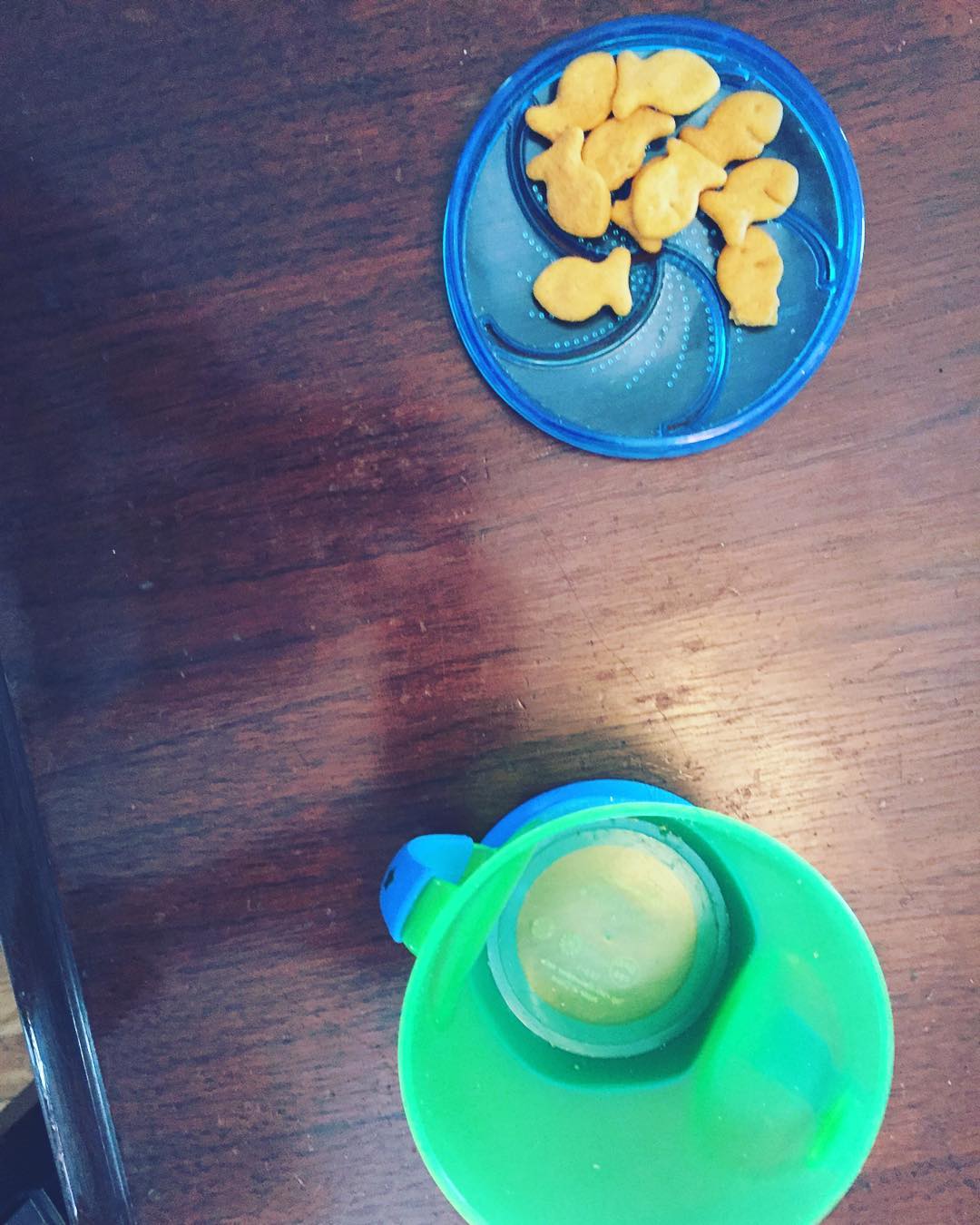
I’ve been the mom who bragged that her baby ate everything. Everything. I’ve been the mom of the kid who would only eat crackers for two years. I’ve been the mom of the baby who breastfed for comfort, as well as the baby who didn’t even want to see my breast unless she was hungry.
I’ve been the mom who spent a ridiculous amount of time preparing a lunch that I know my picky kid will love, only to have her fight me—and request crackers.
I’ve been the mom of the child who finally loves a variety of foods again, including actual green vegetables.
I’ve been the mom who discovered that her new-to-foods baby does like food—she just wants garlic-laden savory dishes, and items like beets.
And the thing is, we all go through phases. Right now I eat pretty much the same thing for breakfast (peanut butter toast), and I do this regularly—eat this same thing, until it switches up into something else. I do this, and I’m not five-years-old and one.
I was recently told of another mother stressing out over her toddler son—who, go figure, loved all foods as a baby!—eating a strict diet of, you’ve guessed it—crackers. I sighed and thought how familiar this particular worry feels, even though we’re thankfully past it. All I offered was that I hope she keeps introducing new foods to him, but that she doesn’t flip out over it, the way I did, and the way so many other mamas I know do.
I can largely guarantee that most children will not become 30-something-year-olds that will only eat yellow, fish-shaped crackers. This isn’t to say that trying different feeding styles, or even seeking a professional’s help, is not worthwhile, because it can be. What this is, is a reminder that it’s a phase. It’s all a phase, really—in the grand scheme of things.
I wish I could go back and tell newer-mom-me that I should focus more of my worried-mother energy on simply embracing the way her downy-baby hair was turning slowly into lush curls. I wish I could tell myself to pay better attention, too, to when her legs lengthened from little-baby thighs and calves and into a little girl’s. I wish I could remind myself to enjoy these phases that I love being immersed in, even if it doesn’t completely take away the other responsibilities and stress that comes with helping a tiny person grow up.
Because, ultimately, it’s all a phase, and one day I won’t have these same worries, but I will have different ones. (I’m not convinced at all, for instance, that my girls won’t have other food aversions ahead.)
Yet sometimes, we need to remember to worry just a tiny bit less, and to take in this sheer love, that being a parent brings, a whole lot more.
The post A Reminder That It’s a Phase. first appeared on Jennifer S. White.
]]>The post There Is No Rehearsal for Parenthood. first appeared on Jennifer S. White.
]]>
Loving ourselves enough to find room for failure:
I watch her grip the chunky crayon, moving it strategically to form the letters of her name, the ones that I’ve outlined in dash letters with a black marker.
She takes the tiger stuffed animal that we got from the zoo during one of our summer trips, and makes him give me a kiss.
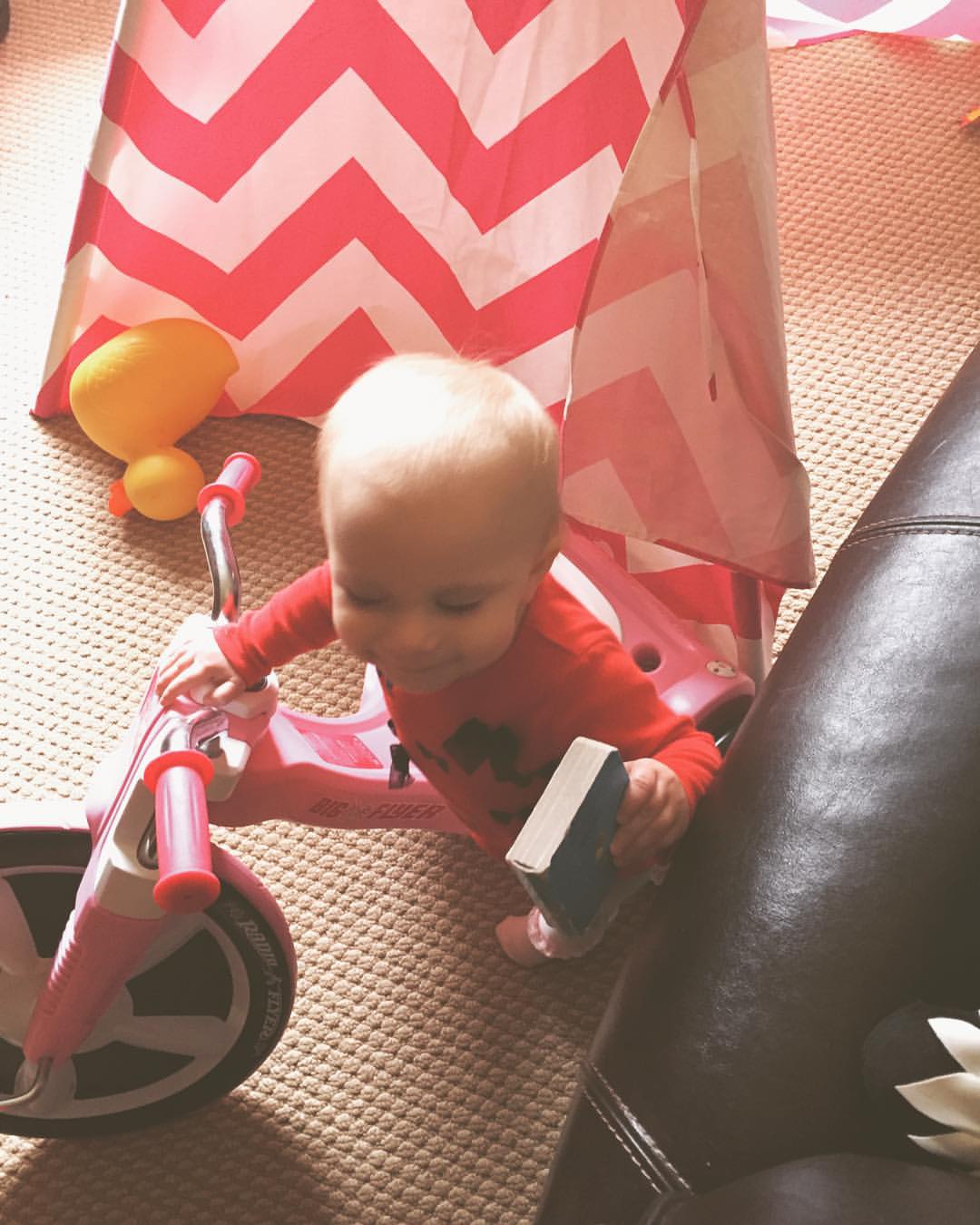
The baby takes a board book into the pink-and-white chevron patterned teepee. She goes there for privacy, falsely thinking I can’t see her, when she feels safely cocooned inside.
I watch my two girls play, and I find myself wondering how they’ll look back on this lazy weekend morning when they’re much older.
There is no trial run of motherhood. There are no practice days. This is all the real thing.
My daughters have just one year where they will be five and one years old. They have only one Saturday on this date and only one childhood, and I have only one chance.
Yet everything is practice when you’re a parent—everything is trial and—for me—seemingly error.
The first time that I held my newborn daughter was one of the only times that I’d ever held a baby. Everything was new to me, and everything still is.
I try to strike a balance between helicopter parent who gives my children no space and hands-off mom. Selfishly, I want to play with my kids.
I want to sit inside of a pink-and-white teepee and hold thick crayons, and drag them along rough construction paper. I don’t want to relive childhood, because I had a good one, but I do want to hang out with my kids.
I want them to remember reading with me and dancing and coloring and going to the zoo. I also want them to think that I’m not watching them, even when I’m peeking around the wall at nearly everything they do.
I want them to learn to fall down and get back up.
Yesterday my daughter had a spill on the carpet and she got up and I could tell it had hurt, but she didn’t act like it. I had a flash of a moment in my head where I silently heard myself whisper, “This is what makes her special—she falls and she always, always gets up, ready to get back in the game.”
I had a “mom-fail” the other day. I did something that I never do—I shared it on Facebook, with the hopes of reminding other parents that we all mess up and, more, that we’re all doing okay.
A friend commented that it’s how we deal with failure that is the sign of true success. I carried this thought with me all last week.
We will mess up—we will yell when we should have momentarily left the room, or we will be there to catch our child two seconds too late, or we will forget our kid has a teacher in-service, and we’ll stand at the edge of our stone driveway waiting for a bus that won’t be showing up (ahem, “mom-fail”)—but we will learn from this and we—and our children—will be better for our failures and mishaps, as much as for everything that we’ll do correctly.
We are good enough. In a world that tells us that we’re “too” this or “not enough” that, we are good enough and we deserve the freedom to fail.
I don’t want to circle around my kids, waiting to catch them, but I want to hover just enough that they know I’m there.
The biggest and best thing that we can do for our children is to love ourselves enough to find grace when we mess up; to show up, even when we don’t feel like we know what we’re doing.
Our kids don’t ask perfection from us. Instead, they ask for our presence—ready to fail, and ready to return to standing, with loving arms braced for another unavoidable fall.
The post There Is No Rehearsal for Parenthood. first appeared on Jennifer S. White.
]]>The post 20 Things Every Daughter Should Know. first appeared on Jennifer S. White.
]]>
I want my daughters to know these things, always:
1. I don’t care if you date a man or a woman. Mutual love and respect are what matter in relationships.
2. Ignore the advice “love what you do, and you’ll never work a day in your life.” While it is important to choose a career that we’re good at and that we can find daily satisfaction from, sometimes work is work.
3. Stay in school. College isn’t for everyone and educational experiences, like trade schools and apprenticeships, are more valuable than we, as a society, give enough credit to. Regardless, school is a foundation for more than just jobs. It’s a learning experience about how to handle pressure and how to work with others.
4. Love yourself. When the world feels lonely, we have a real advantage when we are friends with ourselves.
5. Believe in magic. Find something intangible that makes your heart skip a beat from time to time. Wonder about the stars. Look up at the moon. Ask questions that don’t have obvious answers.
6. Wear jewelry. Tokens with meaning and trinkets given to us in love can have a powerful way of reminding us to keep our chins up when we want to fall down and stay there.
7. Buy jewelry for yourself. Don’t wait for someone else to give you something special.
8. Drink water. Because I said so, and I’m still your mom.
9. Question authority but respect rules. You don’t like the rules? Try to change them and make the world better.
10. Exercise. Move your body in some way that you enjoy every day.
11. Cook and eat with the people you love. This makes almost every day feel special, manageable and worthwhile.
12. Feed yourself. Feed yourself and your soul with good books, songs that make your hips sway, and conversations that leave you tilting your head back and roaring with throaty laughter.
13. Feed others. Find joy in freely offering things like compliments, hugs and shared tears.
14. Cry if you want to.
15. Don’t fight your hair. It’s not worth it. There are too many other things in life worth battling over, but hair is not one of them. Embrace what you have and work with it rather than against it. Here, I’ll help you. Because I’m mom. And that’s what I do.
16. Don’t over pluck your eyebrows. Trust me.
17. Say “I don’t know” when you don’t. It makes the times when you do that much more believable.
18. Eat cake on birthdays. Always.
19. Don’t own a scale.
20. Remember I love you, even when I’m no longer there to tell you. Because I do. Because I’m mom. Always.
The post 20 Things Every Daughter Should Know. first appeared on Jennifer S. White.
]]>The post I’m the Feminist Who Wears Makeup. first appeared on Jennifer S. White.
]]>
My mom used to tell me about watching her own mother put on makeup before going dancing with my papa.
She remembers watching her in girlish awe, marveling at my grandmother’s beauty.
I put on makeup in front of my own daughter nearly every day. Not all days, and sometimes not until 2 in the afternoon, but she very typically watches me put on mascara.
I don’t wear a lot of makeup, just a few key pieces. It’s not because I want to cover myself up either, or because I think I’m boring. (Ironically, as I curl my lashes, I often consider that the stick-straight shape of them more properly suits my face.)
From a “beauty” standpoint, I feel I look my best after a workout, with nothing on my face at all but a blush coming from the inside, and some glistening sweat across my cheekbones.
Yet as I’m wiping the mascara from my face tonight, I find myself suddenly telling my daughter something that I think about all the time, but never actually say. It just blurts out to her.
I offer up, as I remove the day’s colors from my eyes, that I enjoy putting it on because—through makeup—I’m able to draw and paint, but just on my face.
I’m able to find some creativity in a mundane morning, by swiping a touch of blue mascara across my outer eyelashes. I can precisely add gold to the inner corners of my eyes, and a hint of bronze shimmer across my cheeks. While, surely, these things brighten up my often tired mother’s features—making me appear much more rested and calm than I sometimes feel—this is not why I put them on. (I rarely even spend time with people above waist-height.)
I’ve also been the girl who didn’t shave her armpits or legs.
I’ve been the girl, too, who hates wearing dresses, as well as the girl who loves them.
The older I get, and the more I grow into my individual self outside of and within being a woman, the more eager I am to embrace these aspects of my femininity that I choose.
Frankly, this feminine embodiment shifts and changes and is somewhat moody, like I am.
Some days, my version of sexy is leopard yoga tights and sweat-dripping during weight lifting. I feel raw and charged as a human being, and as a woman, by owning my power. Other days, I put on my favorite blue flowy dress and a pair of slightly heeled shoes—that I can comfortably walk and chase my small children in—but that make me feel tall and feminine the instant I slip them onto my feet.
I’d like to teach my daughters, when they’re older, that makeup is something that can be fun, but, conversely, I want to make sure they know that they are beautiful without it. I want them to know that makeup is playful, but not necessary.
I welcome calling myself a feminist. To me, being a feminist means honoring my innate equality with all others walking across this Earth’s landscape. It also means I feel free to make my own choices.
I am no less of a feminist and no more feminine of a woman because I occasionally have neon fuschia lips and golden eyelids.
I am no more of a feminist and no less feminine because I can regularly be found tilting my head back, roaring with laughter and talking loudly.
I want to teach my girls that being a woman is wonderful, but that there are many kinds of women. There are many kinds of people.
There are those of us who pretend we’re Picasso as we break out our makeup bags in our bathrobes—but putting on a dress and makeup isn’t what makes me a woman, and it’s not what defines me as one either.
I’m a cackle laughing, occasional dress wearing, regular fuschia-lipped feminist, and I’m thankful for being able to express myself as an individual. I’m equally hopeful that my daughters will find comfort in self-expression, but never feel compelled to be labeled by it.
The post I’m the Feminist Who Wears Makeup. first appeared on Jennifer S. White.
]]>The post 7 Things I Learned About Life from Being a Twin. first appeared on Jennifer S. White.
]]>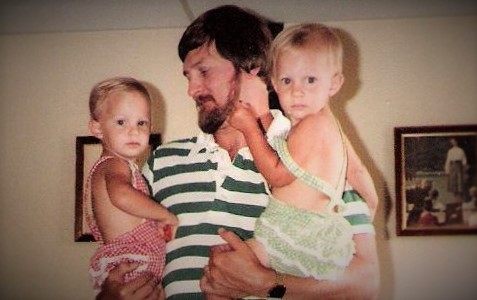
Lessons from growing up as an identical twin:
This isn’t a statistical fact, but just a general perception: twins seem a lot more “normal” today than when I was growing up, as a twin.
My identical twin sister and I were little girls in the 80’s. I knew other twins and grew up closely with another set of twins, but we still got lots of looks and questions, especially when little and truly cookie-cutter images of each other—aside from the fact that my parents, thank God, never dressed us alike.
The most common question was always, “What’s it like to grow up as a twin?”
My answer was, and has been, the same, “I don’t know what it’s like to not grow up as a twin.”
However, as my life has journeyed on, I’ve realized just how lucky I am to be a twin. I have learned and experienced a lot from having this perspective that, as I age, I attribute directly to my sister and to our us.
Here are a few:
1. Close relationships are the most meaningful things in life.
I’m guessing that I might get some who disagree, but, for me, my life is only full and thriving if I have people who genuinely know me inside and out and love and accept me exactly as I am. I’m also guessing that not every twin is as lucky as I am to have such an amazing sister-relationship, but I did learn this directly from being a twin.
To this day, I feel thankful that she’s the one person I don’t have to filter any of my thoughts and feelings for—if I say something and it comes out wrong, she doesn’t take it personally. If I share a dark thought with her she knows I’m still a good person. I’ve learned, through her, to recognize that close relationships can only be forged through being vulnerable; through letting someone in.
This also relates directly to self-love.
2. Dressing alike is over-rated.
We are identical, but we are extremely different people. I’m grateful that my parents wanted to encourage our individuality, thus refusing to dress us alike.
Yes, we wore the matching outfits others had gotten us when we visited with them. Yes, we sometimes chose the same thing at the store. Still, the point is that, as an adult twin, I can’t help but cringe when I see cute matchy-matchy kid twin pictures. (I hope this is just for photos.)
3. Everyone is different.
Truly, no two people are alike. How cool is that?
More, it’s a reminder to me as I move through life and, especially as I parent two daughters, that I can only understand someone else’s feelings and thoughts if I try to experience their vantage point as much as possible. In other words, my feelings and experiences—even with other girls and women—are not always shared and, further, imposing my thoughts and feelings onto others is not the same as empathy or understanding.
4. It really is fun to switch places.
We did get a few laughs switching classrooms. (Another prerequisite twin question.) Ah, good times.
5. Happiness is best when shared.
I will always be the sort of woman who celebrates success with other women. I will never fully comprehend those who want to compete with other women and cattiness in general. Happiness and the joys of living really are best when shared with the people around us.
6. There is always enough love.
One thing that I was told repeatedly when pregnant with my second child was not to worry, that I would love this second child as much as my first.
I’m aware that this was supposed to be comforting, but it always pissed me off. I never worried once about being able to love another child and (see number 3), it’s not true kindness or empathy to assume we know how others are feeling.
The reason I never thought twice about this, apparently, common concern is because growing up as a twin my parents made it clear that we were both loved a lot.
Which leads me to…
7. There are different kinds of love, but they don’t have to compete.
One of my best friends growing up—who is still one of my best friends—told me once, when she began hanging out with another girl in high school more than with me, that it was because she felt she would never be as close to me as my sister.
I appreciated her honesty and, in retrospect, wondered how many other friends had felt this way, but here’s the primary piece of wisdom that I’ve learned by being a twin: There is room for multiple forms of love in our hearts and they might not be identical, like my sister and I are, but love is love is love is love.
Not to be cheesy, but it’s true.
I love my sister. I love my friends. I love my husband. I love my daughters.
This word—love—does not adequately describe—because it’s too sweeping to properly articulate—how I feel, for example, about my husband or kids. That said, growing up as a twin taught me how to have close relationships and, equally, to appreciate the differences that exist rather than use them in competition (see also number 5).
I’ve gained so much from being a twin, that I think I’ll have to stop here for now, or my list would become another book. If you grew up as a twin and have something special you’ve learned, I’d love to hear from you in the comments.
The post 7 Things I Learned About Life from Being a Twin. first appeared on Jennifer S. White.
]]>The post The Importance of Routine. first appeared on Jennifer S. White.
]]>
The place of silent rituals in our daily lives:
Her backpack is too heavy and keeps sliding down off her shoulders.
It’s nearly the length of her entire body, or it seems this way as I perch it on her each morning.
We stand at the edge of our stone driveway, waiting for the bus. She doesn’t need to ride the bus, but wants to, and so I let her.
She takes my hand in her small, warm palm and swings my arm—silently asking me to sing our usual medley.
I didn’t even know how well she actually knew the words to many of the songs that we listen to in the car, until we started this new-yet-already-familiar routine.
Each morning, she takes our joined hands and dances her tiny body around me. Often, the baby is in the carrier, strapped to my chest, with her little feet thumping against the creases of my hips, where her legs dangle, as she also animatedly moves herself to the rhythm of our singing voices.
We make our arms go in circles for “Wheels On The Bus.” We pretend hammer for “I’ve Been Working on the Railroad.” We sing other songs, too—like those from our car rides to the grocery store and to get water for our small, country home. Trucks and vans and sports cars whirl by on our winding, pretty road, near the edge of our stone driveway, where we wait.
This morning, the leaves were distinctively yellowing; fall perching precariously on their branches, much like her big backpack on narrow shoulders.
The air was damp and the dirt between the stones was wet. Mist fell ever so slightly, but she asked me to get an umbrella.
We danced underneath a large golf umbrella that I’ve had since walking from my apartment to classes in college. Over our heads, white and maroon add additional color to the golden leaves of the trees.
It’s not really raining enough for an umbrella, but the baby is delighted by the maroon and white triangles above her, as I swirl it and sing along with her big sister. Her dancing feet kick my lower abdomen so hard that it almost hurts; she squeals happily as her sister sings.
Cars zoom by, and we stay back from the road. People are rushing to work and our road, being pretty, attracts drivers in general, as it parallels a much busier one.
Some notice our little spectacle; our private showcase of songs and dancing and hand gestures. My daughter doesn’t notice them at all, however, and I don’t care—so engrossed are we in our morning ritual.
The bus was hard for me to get used to—truthfully, I’m still not used to seeing my five-year-old get on it.
I so look forward to this pre-bus time, though, and I know both she and her baby sister do too—especially because the two times so far this dawning autumn, when it was too cold to take the baby out, and I left her inside with my husband as he got ready for work, she cried and whimpered at our front door.
These little routines of our personal lives—the kinds that are normal to us, but special in that not everyone’s life goes precisely this way—are healthy; making us able to properly invite crisp, new daily details around smudged, muted normalcy.
My sister visited this weekend and outwardly observed that I like to do things a particular way. I shrugged my shoulders and silently agreed because, really, why shouldn’t I?
Routine, especially for small children, is important.
In the mornings, it makes the day go more smoothly—more effectively—and, for kids primarily, these little things that stay the same help when life creates bigger changes—like baby sisters and new school buses.
The bus comes up from behind a yellowing tree, and its gold flashing lights begin to flicker. Typically, my daughter jumps up and down ecstatically when she sees it, but this morning its appearance seems to have also taken her by surprise—neither of us are ready to stop singing and dancing in this morning’s foggy drizzle.
I smile a little too boldly and guide her further up the stone driveway, to the waiting bus. It’s filled with kids she knows, and a driver and an assistant—in short, it’s a waiting world of something familiar to her that would be completely foreign to me or to anyone else.
She buckles into her reserved seat and waves good-bye, and the baby and I walk back up the wet stone to the front porch. I pause and gently squeeze the baby’s feet and nuzzle the top of her head with my chin and lips.
I go inside to perform more of my morning rituals, like making another cup of coffee, kissing my husband as he heads out the back door, and putting the baby down for a nap.
I’m not sure what the rest of our day will look like—I hadn’t expected rain this morning—but I know that I’m ready—thanks to cloudy day singing, patiently coloring leaves, and the waiting smile of my daughter as she’ll climb back down the bus’s steps, and into my ever-open arms.
The post The Importance of Routine. first appeared on Jennifer S. White.
]]>The post 10 Realistic Tips: Parenting with ADHD. first appeared on Jennifer S. White.
]]>
One of the most prominent ways that my ADHD surfaces as an adult is feeling easily overwhelmed.
When I say overwhelmed, I mean at simple, everyday life-things, like a serious pile of dirty dishes, or too many errands that need to be done in one day. This is precisely why parenting with ADHD is a challenge, but one that I don’t often own up to—because these are regular aspects of my ordinary life.
In a moment when everyone seems to be talking about—and accepting—the “introvert” parent, for example, no one seems to fully embrace or even discuss the ADHD parent. Perhaps it’s because we can’t sit still long enough to address it. (Ha!) Seriously, though, my ADHD is frequently the single most important factor in my parenting.
Don’t get me wrong, though—it’s not the limiting factor. Parenting with ADHD is difficult, sure—but it’s also rewarding for both me and my children.
However, the following are what help me overcome this feeling of fear and frustration, and also help me to be real-life productive.
1. Do one thing.
What’s most difficult, as someone with ADHD, is that we logically know that chores need to be done one step at a time, but the awareness of multiple steps can be so daunting that we don’t start any at all, much less finish the task at hand.
Forcing myself to find one small way to tackle the issue head on helps—and doing this tiny, initial start, for me, often leads to completion.
For instance—the dishes. I tell myself—when the entire kitchen looks like every dish in my house is dirty and there’s food everywhere—that I’ll just empty the dishwasher. Easy, right? But then, before I know it, my mess is entirely cleaned up.
This is also why parenting with ADHD is unusually rough—parenting, and stay-at-home mothering, asks us to focus on many things at one time. Stereotypically in our nature? Why, yes. In actuality, though, it’s detrimental to our state of mind. I have no easy solution, but I will offer that I find, again and again, that focusing on—and then forcing ourselves to do—that one small step is critical to overall success.
2. Acknowledge feeling overwhelmed, but don’t become consumed by it.
This is essentially the same thing as my frequent saying of wallow briefly—and then pull your head out of your ass.
3. Sleep.
Oh, God, this one sucks for me right now.
I quite seriously went to an ADHD therapist who specialized in, essentially, my brain, in part so that he could explain to my husband how huge sleep is to me and to how I function. (This three-way discussion helped tremendously.)
Because sleep is ginormous for ADHD people and, as parents, our sleep often stinks. Regardless, we need it. Even if this means going to bed earlier than preferred or asking our partner to help out when the kids wake up at night.
4. Stop freaking texting and calling everyone back.
I’m a horrid friend. I’ve lost touch with many of my friends because, at one point, I realized my scattered parental energy was scattering even further because of things like texting and social media. So I stopped.
I became—somewhat—okay with being that asshole who doesn’t always text back, and I learned that someone has to have that last text, but it doesn’t have to be me.
I am also decently alright with not talking on the phone unless it’s pretty much an emergency.
Do I like it? No. It makes me feel like a reclusive extrovert. Still, when I ceased feeling like I needed to text and call and email—especially as an extrovert—the whole world, my life became so much more chill just like that.
Side note: Your real friends will still be there. More, they will understand this need during this, ultimately, one small space within your life as a parent.
5. Exercise in small amounts.
Exercise is absolutely crucial for ADHD individuals, much less moms and dads.
I’m, frankly, the type of person who could workout for hours, but I can’t because, you know, I have small children and I’m home with them all day. So! I’ve learned to work out incrementally.
I do yoga sun salutes and a few other postures for maybe 15 or 20 minutes. I have small weights that I use while the kids are watching a television show. I might do 10 minutes of Pilates in the afternoon and 20 more a little bit later.
This doesn’t mean that I don’t exercise for real (i.e. with my husband watching the kids), but it does mean accepting that, for me and my body and brain, a little bit is typically all I need to boost my mood and feel grounded and centered.
6. I accepted that I am the Tasmanian Devil.
Okay, maybe you aren’t, but I am.
I am a whirlwind of, sometimes, chaotic energy and a ball of excitement. Every time I go “normal” places, like to the grocery store with my children or even to our local optometrist, I feel like the Tasmanian Devil—we whirl in, my kids and I—and ferociously blurt. (Or, this is how it feels internally sometimes.)
I blurt verbally or even energetically—not to sound foo-foo weird, but we do often have high energy levels—and I’ve slowly become alright with this.
I am the Tasmanian Devil.
Hear me roar—or snort.
7. I feel like the loudest, least popular kid on the playground.
Perhaps relevant to my previous share, while irrelevant to you personally—I’ve found my own slogan recently: I am the loudest yet least popular kid on the playground.
As an actual child, I always got “talks too much” on my report card. As an adult—well, probably nothing has changed. And I am loud—I have no inside voice. As a parent, I accept societal norms and try to teach my (particularly, my youngest) child to have an inside voice, but, honestly, as a female with female children, I refuse to shame them for being loud the exact same way I was. Be loud. Roar and snort on.
8. Take potty breaks.
All jokes aside, I find that I repeatedly am down on myself for ADHD-related parenting qualities—like that burst of temper or just generally not being able to relax into parenting—so I take pee breaks. Or mommy-timeouts if you are wanting to be more graceful.
Sincerely, asking my husband or my parents when they visit to watch the children so I can pee alone can, unexpectedly, be a make-it-or-break it point in my day.
We need to give ourselves more breaks. (Yes, I’m also speaking figuratively.)
Which is why I’d like to add on a few reasons why ADHD parents are the best.
9. I haven’t forgotten my child-like wonder.
I enjoy the feel of the tickle of grass on my skin and understand why my kids are obsessed with this when we go outside to grill in the backyard.
I love the sensation of bubbles up my nose from a drink and the burning fire of putting too much sriracha on my food.
In short, I am in touch with my senses as an adult—which kind of makes me a rad parent.
10. We are good enough.
For years society has told us we are not good enough. Primarily as women, just admitting that we have ADHD is difficult.
I’ll admit something else: I can be overwhelmed by myself.
I can be overcome by my emotions and by my driving thoughts—like how I have to finish this article before my husband comes home from taking the kids to the store—but I’ve learned to love myself, exactly the way I am. Learning to love myself is a skill that I hope to pass on to my children, whether they turn out to have ADHD like I do, or not.
If you have found a “secret to success,” I’d love to hear from you in the comments.
The post 10 Realistic Tips: Parenting with ADHD. first appeared on Jennifer S. White.
]]>The post My Five Year Old Experienced Peer Pressure and This Was My Take-Away. first appeared on Jennifer S. White.
]]>
I asked my five year old yesterday why she didn’t eat her snack at school.
The “none” box was highlighted next to how much she had eaten.
She told me because of the other kids. I probed a little more and got “because of the other kids” and “eww.” This didn’t completely make sense, so I emailed her teacher to inquire further and, boy, am I glad I did.
It turns out that the offered snack was a food that she loves (hummus), but a few of the other kids had distinctly groaned and made grossed out “eww” responses, so my child followed suit and did not eat it. Ironically, she thoroughly enjoyed the hummus that she shared with her ten-month-old baby sister for lunch after getting off of the school bus; me having no idea what had earlier transpired.
My husband was upset.
He was disturbed at the peer pressure and, more, at the simple revelation that, even this early in the game of growing up, a few kids can impact an entire group so strongly.
I wasn’t as upset, although I did find his thoughts more than valid.
Instead, I offered my daughter the story of when I was a couple of years older than she is now, and I brought yogurt to school in my lunch.
Apparently I hadn’t gotten the memo that only geeks ate yogurt, one of my favorite foods. I pretended to not like what my mom had lovingly packed. Down at the end of the table, however, was a friend eating half of a kiwi with the spoon that her own mom had packed for her. The other kids were also shaming her food choice and she told them it was delicious and that she felt sorry for them that they didn’t have any. I related this latter story to my husband and told him that most kids are not like she was, especially when as young as five years old.
By the time I got to high school, people had figured out that yogurt was indeed delicious. Similarly, my husband, was confused as to how kids in this day and age had not already been exposed to hummus. Yet the thing is, I bet many kids were like my own child: loving this food and pretending not to because of one or, perhaps, two vocal peers.
I challenged my daughter that she could have been a better example at the snack table by showing them how good hummus and carrots are. She looked at me like I was an alien and said, “Noooo.” I said, “Yeah, you’re right—I probably wouldn’t have eaten it either.”
Of course, now I would—I’ve grown into myself with confidence and a lack of concern for some things, but, as a kid, this is in the process of being shaped and developed.
And the reason I wasn’t upset, like my husband was, is simple: I saw this as a potentially positive experience for our family.
The fact that my daughter had the awareness to understand that she hadn’t eaten this food because of peer pressure—and then to relate this story directly to me—presented great potential for my helping her to navigate these kinds of experiences in general.
How many parents from her classroom knew that their child didn’t eat the snack that day because of peer pressure? (Because her teacher also told me that basically no one had because of these “ewww’s.”)
So I secreted away the knowledge that I might be able to help my daughter to better learn confidence because of our communication but, on top of this, I gleaned something even more important from this occurrence.
I learned that my daughter feels comfortable enough with me, and feels a lack of judgment from me, so that she can share her feelings and growing-up experiences. Isn’t that the most important thing, especially in kids this young?
I want my children, more than anything in this world, to share with me who they are, how they feel, what they think and what happens to them as they navigate life. My five year old did that yesterday.
So I decided not to overly assess the situation and her reaction to it, like my husband began to. Rather, I dog-eared this day as one that my daughter had chosen to let me in; laughing with me over something that she doesn’t even completely understand yet how important what happened is.
The first time my daughter ever ate hummus and carrots was a peer-pressure situation too.
We were at a friend’s house and four other kids were eating it, so she did. Peer pressure isn’t always bad and, equally, what happened yesterday at school was just as much about how she can come home and talk to her mommy about her day.
Since she’s only five and we have a long, long way to go in this intricate mother-daughter dance, I’ll temporarily pause here and appreciate our communication.
After all, I think one of the best ways to develop confidence is to be able to fully express our feelings, perceptions and concerns with the people who make up our world.
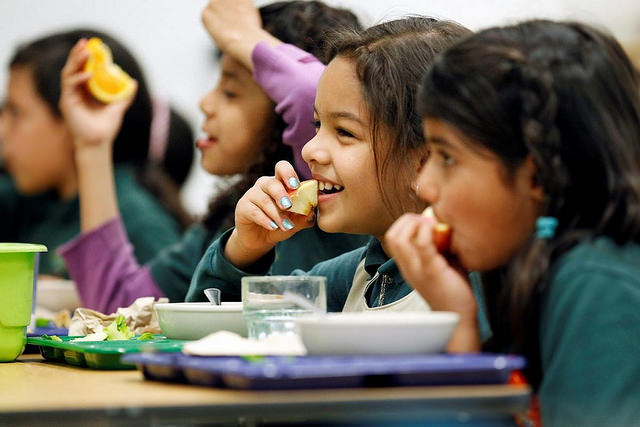
Photo: Flickr/AGC Photo Girls Enjoy Lunch.
The post My Five Year Old Experienced Peer Pressure and This Was My Take-Away. first appeared on Jennifer S. White.
]]>