The post The Caged Girls: Flying Above the Storm. first appeared on Jennifer S. White.
]]>
Visit here for more of The Caged Girls.
Chapter 29.
My pen rolls across the paper—fluidly—and my words come out almost sloppily. (It’s not my usual, preferred ballpoint pen.)
My fingerprint-laden aviator sunglasses—the ones I’ve had for nearly a decade, with gold rims and the lenses that make the world appear brighter—rest in the cup-holder next to me, to my left.
The warmed car seat beneath my thick, off-white winter peacoat helps me to relax.
My rose gold and turquoise ring—a family piece that’s circulated within us for over 100 years—falls slightly to the right as my thumb and first two fingers press into the firm rubber grip of the black pen, gliding smoothly along my decomposition book.
My cheek itches suddenly and I pull down the mirrored visor to look.
Distracted, I notice the way my dark brown hair wisps out of the copper barrettes that pull it back on either side, creating a few haphazard chunks around my temples.
My forehead has maybe three shallow lines running across, broken in the middle and making it, more accurately, six.
My fine eyebrows arch high and I admire the perfection of their shape (thanks to a recent salon visit).
My eyes have light imprints of sleep-deprivation underneath them that appear somewhat like purple-tinted shadows. Above these shadows, I observe that today my eyes are more blue than green. This changes easily, though—due supposedly to my black Irish ancestry—and I trace the yellow that faintly edges my pupils, lending to this color changeability.
I hear the trunk pop open and smile intuitively at the sound of my husband returning to our little silver Jetta.
I feel the soft, grey light hit the surfaces of the car interior and I hear, once again, the sound of my daughter’s music playing through the speakers. I’m no longer alone inside of my mind and, although it takes me a moment to collect myself and shake free from my thought stream, I smile again; knowing that life isn’t meant to be continuously lived inside of ourselves.
He climbs into the driver’s seat and reaches for my hand. After squeezing it between his much larger thumb and forefinger he pulls away from the two, diagonal yellow lines—and towards the pink and peach setting sun.
Chapter 30.
My fluttering heart stopped beating.
At least it felt that way—time standing still and you swear that you can see a humming bird stopped, mid-flight over your shoulder.
And then it ends and time starts up again, but it’s still slower for you—making the speed of the world overwhelming in its unnecessarily rushed and hurried pace.
When something stops you in your tracks—a loss, horrible news, a heart-cutting blow—it doesn’t seem fair that life shouldn’t pause while we grieve and figure out how to collect ourselves in order to stand back up.
These incongruous places in life can feel hollow and desperately alone—and it’s when we feel hollow and alone that anorexia can become an unfortunately welcome friend.
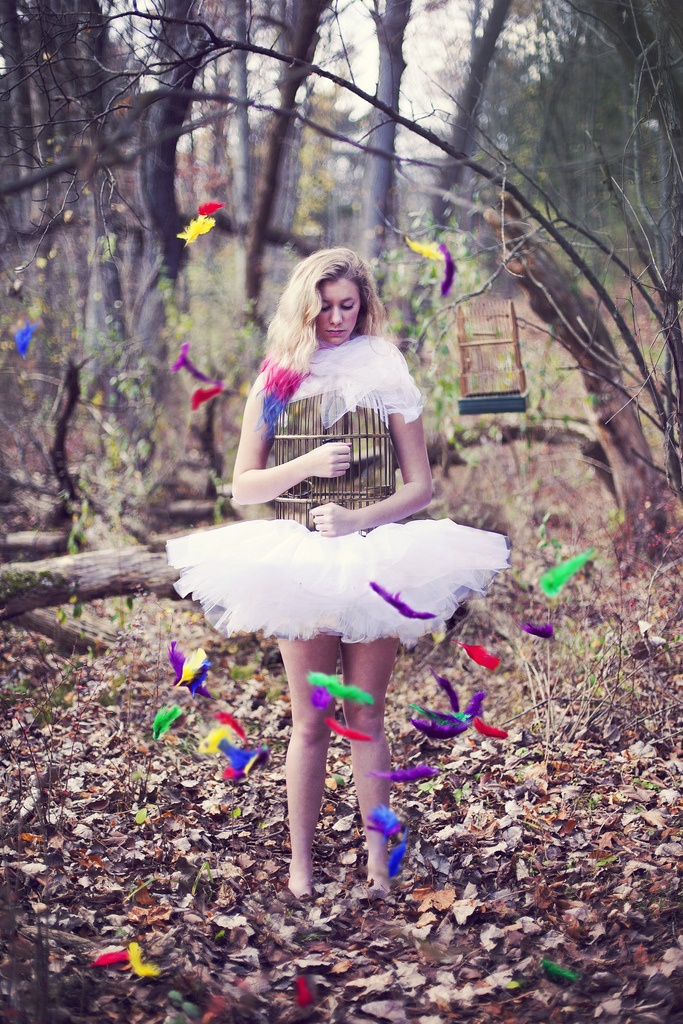
But anorexia is absolutely a frenemy—not a true friend. It doesn’t make hardships easier to deal with—it adds on to them; it becomes a distraction and, if we’re being honest, this is what we’re really seeking.
So, although I’m that rare once-anorexic bird who is completely recovered, I have to pay careful attention to myself—and to my heartbeat—when life deals me merciless challenges—because I know that I’m not immune from turning to an eating disorder to cope—no, I’m much more likely, considering that this is exactly what I did for years.
And there’s another cutesie saying that occasionally floats around the internet and pisses me off: fat is not a feeling. Because fat is absolutely a feeling—with an eating disordered person, that’s a perfect description of what it is.
And when, finally, we are ready to move forward from this night-terror of a coping mechanism—to begin picking up our pieces and moving a tiny bit closer towards our healing—we first need to admit what emotions we’re avoiding by feeling fat instead.
Anxiety?
Depression.
Loneliness?
Fear.
What is it that’s going on within the framework of our lives that we are trying so hard to avoid that it’s easier to abuse our bodies? (Note: this is where therapy can be helpful, within these early stages of the healing process.)
For me, I’m usually avoiding something that’s severely upsetting and that I’m not in control of—a situation with a family member, an illness, a death—and my eating disorder gives me that wonderful, false semblance of control.
More, it gives me something else to focus my mind and emotions on—my caged, needy body.
Chapter 31.
My fingers work clear, thick shampoo through my hair.
I close tear-rimmed eyes as white lather spills down my back.
Warm—almost hot—water runs down the length of my body, to my feet and down the drain near my toes—and I wordlessly beg for it to wash away anything that I don’t want to hold onto anymore.
I don’t want my guilt. The soapy water can have the fragments of my broken heart too.
I’m also ready to leave behind my anal-retentive need for authority—that piece of me that wants every minute, self-created element to fall in line with a cruelly fictitious plan that’s never played out correctly anyways.
Because I’m not in control—not wholly. Rather, I’m in control of the way that I react.
I’m in charge, also, of my actions. (Which reminds me of a few other things that I’d like the hot water to wash down this drain).
My fingers today don’t clickity-clack, clickity-clack. No, they sound more like pitter-patter, pitter-patter—light and not aggressive; softly hesitant.
Because I don’t mind sharing my intimate feelings—I want to explain how I broke out of my cage and how I don’t even keep it on my shelf for rainy days anymore—yet this doesn’t mean that I always love revisiting my past.
And that’s the strangest part about no longer being a caged girl, like my former self—the one who lived, at times, small and contented and, in others, angry and hostile—she doesn’t feel like me anymore. And when I step back in time and put on her fragile glass slippers and wear them around to see how well they fit now, I discover that, like Cinderella, they’re still perfect, and it scares me more than anything—the reality that I really was her and that she’s not just some character in a story.
Pitter-patter, pitter-patter—I want to tell her that she’s no longer welcome in my home with the sunny, open windows, but I know better—she’s more likely to come snooping—peeping—around if I ban her from my heart.
So I content myself, now, with those, thankfully, rare occasions when my heart stops beating and I can count how many times a hummingbird’s wings beat up and down, up and down, and I content myself, too, with my more reckless emotions and my upsetting human struggles, because it’s when I ignore them that she threatens to move back in—and I like my free—albeit humanly imperfect—life.
And I might not be able to stop my churning heart, nor the busied world from stalling, but I can count the pulsing of my own wings—I can feel the pumping of my reality and I can accept it, even when it doesn’t ideally mirror my quietly quaking soul.
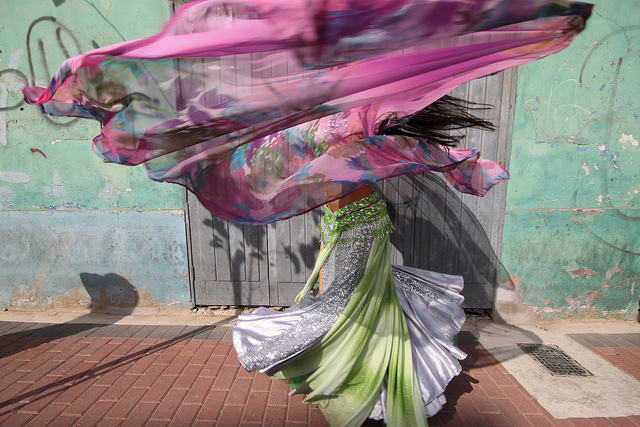
Photo credits: tanahelene/Flickr; Geraint Rowland/Flickr.
The post The Caged Girls: Flying Above the Storm. first appeared on Jennifer S. White.
]]>The post The Caged Girls: How to Grow Wings. first appeared on Jennifer S. White.
]]>Part Seven of The Caged Girls: How to Grow Wings (Chapters 20 through 24).
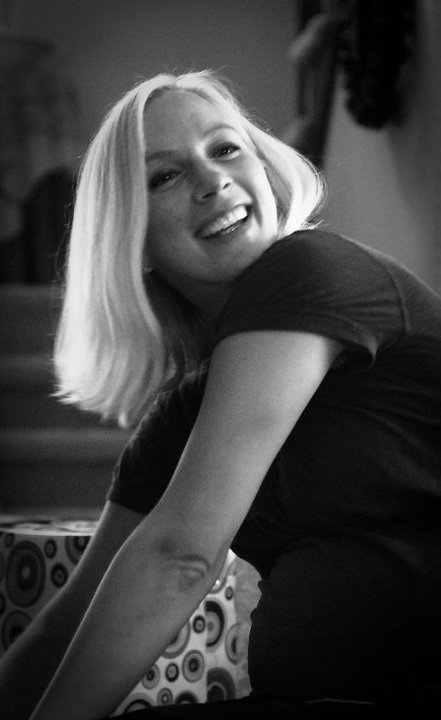
Chapter 20
I’ve never been happier in my life, than when I was pregnant with you.
This doesn’t mean that my life was perfect.
I had difficult people running in and out, under the guise of challenging me to grow. I struggled to earn a reputation as not just a good yoga teacher, but a great one. I wasn’t rolling in money and our bathroom toilet frequently backed up—the only one in the house, mind you.
Yes, I had morning sickness—or, more accurately, all-day sickness—making the frequent joke that this term must have been made up by a man.
I taught classes at six in the morning, went back to teach at noon, sometimes subbed in between and then regularly subbed in the evenings. In short, I worked a lot and life wasn’t faultless—but, still, I know without a shadow of shaky idealistic doubt that I was positively the happiest I’ve ever been, when I was pregnant with you.
But then life doesn’t always happen according to plan.
Struggles that seem like they’ll break you rise and shine and start each new day and you watch the man you love more than anyone in this world—besides you, my dear child—dissolve into fits of anguish.
I had forgotten entirely what it felt like to be a shell of a woman.
I’d let go of that eating disordered girl years before—just turned my back on her and walked away. However, it wasn’t until I’d hit the largest obstacle of my life to date—without resorting to anorexia—that I knew I was truly healed, and I learned another lesson, too: that turning your back on something and letting it go are two entirely different things.
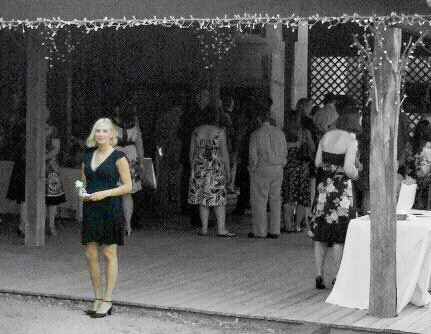
(P.S. That’s me at five months pregnant with you.)
Chapter 21
Hot tears stream down your temples.
They run in a quiet yet small stream that remind you of riverbeds made of black Egyptian kohl eyeliner.
Your hot tears trickle onto your bed where you lie on your right side in the shape of an L, bent at your hip creases.
You tell people that you are not a crier. You know that this only partially true and that we all cry, some of us just more—or less—willingly than others.
Ironically, you also consider yourself a fragile human being, but this fragility has encouraged you to move through your life with a nicely-built, thick shell—a shell that you falsely think is impenetrable to outside attack.
And you know that you are quite vulnerable in reality. Over time, you’ve encouraged yourself to drop your mask—watching it shatter and crack into fragments—only occasionally gluing it haplessly back together to don it once more.
You wear a mask of ego, of confidence and of an easy social butterfly—and sometimes you are these things—it’s not a mask, it’s the real you.
Your eyes are clamped shut and you hear a rustling at the edge of your bed where you still lie sideways in an L.
The soft whisper, whisper of movement is your tiny daughter as she comes in gracefully—delicately—to wave bye-bye to you before Daddy takes her to pre-school. The tears fall harder—now less of a quiet stream and more of a gathering storm.
You hear your husband in the kitchen, moving quickly and capably, to fill your last-minute request of child prep and school drop-off because your headache makes you feel that you cannot face the muted light of the cloudy day, much less the bright faces of other children and their bustling parents.
You’re thankful; thankful for a man who so lovingly steps in and for a daughter who, with your eyes re-closed, you feel gingerly brushing your hair for you—it’s a loving gesture from one female to another, even though one is only a girl of barely three.
You’re grateful for—no, mesmerized by—the old soul that inhabits a body of such miniature proportions.
She hugs you gently, and looks deeply into your wet eyes as she pulls away. She smiles and runs after her Daddy as he opens the front door.
The door shuts and you let your tears fall heavily onto your turquoise quilt.
This is the anatomy of letting go.
You saw your massage therapist yesterday and she released a spot underneath your shoulder-blade that you’re not sure has ever known relaxation—it’s uncomfortably close to your heart.
You drift into such a state of peacefulness that your skilled therapist notes your tranquility out loud. She tells you tostay there, so you do.
You observe later that the release has moved up from your shoulders—from the back of your heart—and into your throat.
Your throat becomes irritated and you lose your voice, much to the disappointment of your duet-loving daughter.
Still, you recognize that release—that letting go—isn’t meant to be comfortable.
You’ve held onto these emotions so forcefully that your muscles have knotted in places and your jaw can’t help but clench in your sleep. You dream of crumbling teeth.
And you slept well last night—much better than usual despite your aggravated throat—and you woke with a headache so fierce that you thought you might throw up.
Your head pounds while the space behind the back of your heart is strangely calm and still relaxed.
Your voice is still gone and there’s an enormous pressure between your ears, but you know that this is simply your clung-too past leaving your aching body.
You clumsily find your phone and call your doctor, making an appointment that gives you just enough time for a hot shower.
You know that she’ll most likely tell you that you have another sinus infection—you’re almost positive—and, yet, it doesn’t matter because you know that this is simply how it feels to let go.
This is the anatomy of liberation.
You pat your dripping hair with a warm blue towel after turning off the shower. You throw on yoga clothes, not because you think you’ll practice in them today as normal, but because they—in their own funny way—are an armor of a different kind—one of health and wellness, of happiness and ease.
You know that your pounding headache won’t last forever, although it worsens when you bend over to tie your jogging shoes. You know that it won’t last forever because you’ve become both too tired and too strong to hold onto your suitcase of burdens anymore.
It’s now your turn to open the front door, and, looking over your shoulder at your daughter’s pint-sized pink and white table and matching chairs, you visualize her waving bye-bye and do the same, and though your hand doesn’t move, you are saying good-bye—and you know that you’ve just made space to carry what lies ahead.
Chapter 22
I sit stiffly at my old dining table.
I feel rigid.
My fingers are pale from the lack of winter sun kissing it and my nails are painted a rich, dark blue. My ruby ring—shaped like a slice of the moon—is large and heavy and it doesn’t turn while my fingers race across my laptop keyboard.
My skin is not only pale, but it’s dry from the lack of humidity in the air. Strangely, however, I’m not ready for the end of winter to come.
Others are counting down days, while we sit patiently or irritably within this Midwestern season of arctic cold and snow accumulation. Yet I feel as if this parched season of chilliness settles perfectly into the stillness—the tiredness—of my bones.
My fingers move more cautiously than normal. The words don’t want to come, because I don’t want to anchor into my beating, churning heart.
This morning my tiny lady and I drove to her music class and I purposefully—and unusually—left my sunglasses off. And it wasn’t just the several inches of white that had fallen and then stuck the night before, but the ironically dry road that reflected the sun so brightly that it reminded me of an ocean—a sea of blinding yellow-peach light that felt like I was driving my little silver Volkswagen into a strange morning dream and not towards a shore of store fronts and rush hour traffic.
What hit me most about that gorgeous wash of early sunlight on the street was that I felt like it was washing me.
A euphoric calm penetrated my depths, as I sat on my heated car seat with my hands at ten and two o’clock. My daughter was quiet in the backseat, looking out the window.
And as I’m driving and this sensation is beginning to approach me on a conscious level, I recognize that the song playing through my car stereo has the refrain “big hard sun.”
I listen, I drive and I feel like everything will be okay, even though mentally and externally it seems that life is not coming together the way I have falsely—rigidly—designed.
We pulled into our destination—a muck and slush-covered parking lot next to the music building—and the tranquility dropped away, but I held onto that indescribable internal stabilizing and settling as the day wore on; as I eventually put on my sunglasses; as I drove home with a different song playing in the background—and as my emotions became more and more turbulent.
Chapter 23.
The family heirloom ring that I wear most days on my right fourth finger twists and turns as I type. The words do not want to come out.
Normally they burst forth with such a wave of passionate explosion that I can’t contain them, even when I sincerely give effort to doing so.
My right hand hovers above the laptop keyboard, moving quite a lot even though I’m willing it to hold it still.
Nerves are a funny thing.
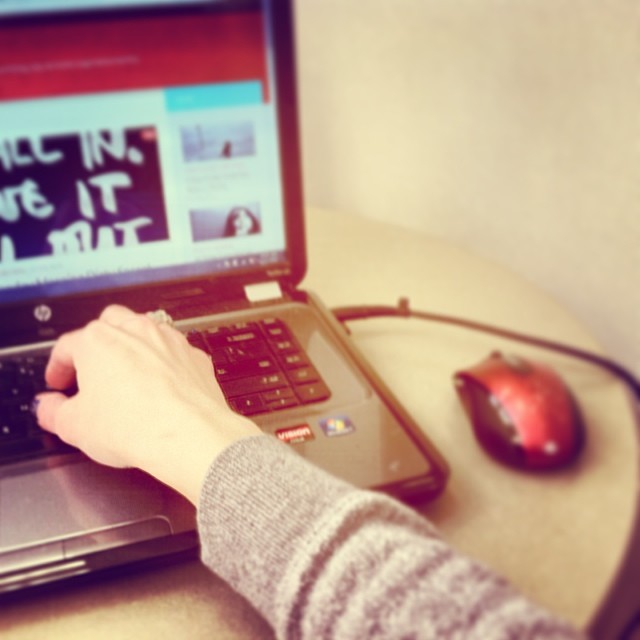
I’ve been up since three a.m.
I awoke next to my daughter in pink princess sheets—her breath softly filling up my inhales; her delicate sleep sighs making me quake with love. I tip toe out of her room; shutting the door quietly but it still creaks into place anyway. I move methodically through making myself coffee; opening up the laptop.
I realize fairly early on that I don’t want to write about feeling this way because how do you describe anxiety as anything besides its unpleasant play of tangled emotions, sitting in the base of your stomach, making you want to vomit before you’ve had anything to eat or drink.
It hits me suddenly that this one person is my home; that this one, fragile human life has been my home base.
And how do you tell someone, in their tender earthbound skin, that they are your gravity; your weight; your lifeblood? How do you make enough homemade chicken soup to soothe an always breaking and repairing human soul? How can words not fail—despite all of their glory and aspiration—to convey something as unlimited, as unquenchable and as indefinable as love when their own shapes have beginning strokes and ends?

We tell people that it will be okay and that all things work out for a reason, but is this really true? Or are we just filling the uncomfortable space of the uncertainty of life with our flat and hollow mortal words?
I will not pour emptiness into the space just to watch it fill up.
But then I find myself shyly whispering it’s going to be okay.
Because, as it turns out, I’m not filling space with shallow words—I’m filling up another’s heart with love from my own.
Chapter 24.
We hold feelings and experiences in the tissues of our bodies—this is another belief and reality of a yoga practitioner.
I don’t doubt this because I observe the way I clench my jaw, my abdomen, and how I grip throughout my hips when I’m stressed or anxious.
Our hearts and our emotional beings are intrinsically connected with our physical selves.
I notice that I can work so hard to mentally get myself out of a bad mood or an intellectual funk and then I get onto my mat and flow and breathe and be and it just disappears all by itself, by working my muscles in and out of yoga poses.
And as an extremely sensitive, empathetic person, my yoga practice has played a crucial role in my self-love and my willingness to want to get out of my cage—to want to grow up into a strong, whole woman instead of living as a broken little girl.
But that’s the strange thing about healing and about love—we don’t always want to get well.
We don’t always want to be whole. It can be much easier living as a hollow, breakable individual because we’re not filled up with the gooey, mushy, penetrable parts of us that are never immune from pain; from hurt.
And the anorexic attempts to break herself first—a preemptive strike; a self-defense.
It doesn’t work.
Instead, she lives in a constantly broken state of pain and every small, inevitable blow of life comes crashing down with full-force blunt trauma that has the speed and power to cripplingly wound rather than temporarily disable.
What begins as self-salvation from a terror too large for her to handle turns into her Achilles’ heel; making everything that comes her way nearly impossible to manage.
She digs herself into her own grave, even though that was never her intention. Rather, her aim was to set herself free—to fly high above her worries and her sorrows—but now she has nowhere to go but down, down, down or up at a nearly vertical angle.
So what does she do?
Does she keep burying herself?
Or does she grow wings, so that she can finally fly, as she’d originally tried to do, but in vain.
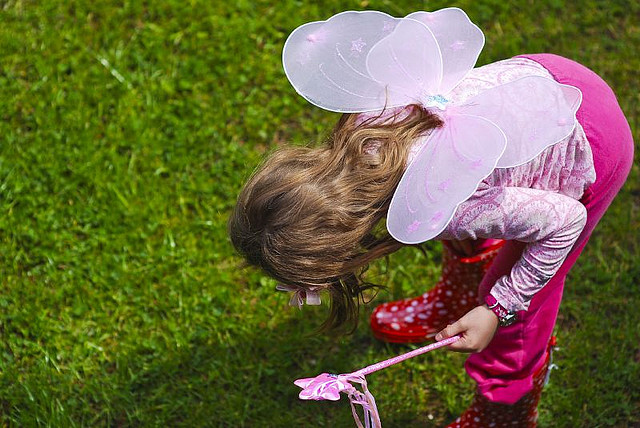
Photo credits: Author’s own; Arwen Abenstern – KWP/Flickr.
The post The Caged Girls: How to Grow Wings. first appeared on Jennifer S. White.
]]>The post The Caged Girls: I Heard a Caged Girl Sing (Chapters 11 & 12). first appeared on Jennifer S. White.
]]>
Part Four: I Heard a Caged Girl Sing
Chapter Eleven.
I gingerly placed her sleeping body on the red microfiber sofa.
She twitched slightly, but continued to sleep heavily as long as her beating chest was touching mine. Whether through imagination or actuality, I’m still not sure, but I swear to this hour that I could feel her tiny heart pumping her mighty blood when my breast was pressed to hers.
She never naps and, while I don’t believe in saying never, I will faithfully say that she never naps.
Regardless, I’d transferred her skillfully—after much I-can’t-believe-she-fell-asleep-here practice—from my loving-mother arms within the cocoon of my rickety childhood rocker—the one with the skateboard ball bearings in it, thanks to my inventive husband—and onto the red couch. But then I couldn’t move.
Rather, I didn’t want to.
In that space of my life, I wanted to stay, right there, forever.
Rarely does that happen—I’ll admit I’m rather fidgety. I can’t even handle having both of my hands occupied, because it’s too confining and claustrophobic. I am not claustrophobic. (After all, I’ve spent nearly my entire life inside of a beautifully decorated, exquisitely hand-crafted cage.)
Yet, in that instance, so forbidden from deep breath and any movement at all—for fear of waking my slumbering child—I could not have been overly contained.
I feel vividly my difficult decision to let her rest, alone. I remember, next, walking away and unrolling my mat.

And although all I truly wanted to do was watch her sleep, I knew that I needed to practice.
My yoga practice centers and grounds me—it brings me back out of the life that I perpetually inhabit, inside of the imaginary but imprisoning six walls of my mind.

With my heater pumping—white noise for her and heat right by my chilly purple mat for me—I flowed.
Inhale, arms reach up.
Exhale, arms sweep down and around into prayer position in front of my chest—where I just held her.
Inhale, close my eyes and forget about my breath; set an intention for what lies ahead on my sticky mat—of course, I set an intention of love towards her.
And as I needfully moved my body in and back out of poses, I realized that I had more energy than I thought—and that I had more stamina in my beating (but tired) bosom than I recalled.
Sometimes I feel the weight of life with so much forceful pressure on my fragile bones, that it’s as if someone is trying to keep me from standing back up—and my yoga practice returns me to that place inside that doesn’t fluctuate with moodiness or feel life’s difficulty or even the bliss; that place within that some people might call a soul, and that I know is the only real thing about me, even if it’s the one piece that I can’t see or taste or touch.
Moreover, my practice reconnects me with those daily, tiny amusements that are too often skipped past—correlated incorrectly with a lack of importance instead of being taken in for what they really are: life.
The way that my feet stick and un-stick on my mat when I move.
The sensation of my heart reaching towards the sky when I shine my fingers there and then look up at them.
The miraculous awareness that my body is my home, as much as and as little as a sea-born animal inside of its temporary—but beautiful—shell.
I check on my daughter, still sound asleep on the red microfiber couch. She coughs and moves a little before falling back into dreams. The sun is setting, and her dad will be home from work soon. Quietly I open up the two hard pieces of plastic that make up my laptop and I sit down to write.
She’s immune to my clickity-clack, clickity-clack.
Situated near her, on the other side of the red sofa at our scratched, antique dining table, I let myself be washed over by a deep sense of tranquility—I give myself permission to feel joyful without needing a cause to justify it.
Because while life is undeniably difficult, it’s also an immeasurable well of wonder—and of love.
Chapter Twelve.
Obviously, I can be a serious sort of woman—don’t let this fool you.
I wanted to label the previous chapter “This One Goes to Eleven.” (If you don’t get that, please Google Spinal Tap.)
Also, don’t let my statements of rarely crying misguide either—because I’m starting to think that this might not be the case.
I’ve always said that if we are something, we don’t have the same need to shout it from the rooftops. Announcing ourselves with labels on a regular—and loud—basis primarily serves to prove that we wish we had this particular quality, but since, alas we don’t, we’ll declare it boldly for ourselves instead.
And the truth is that I’ve become significantly mistier in my advanced age. (I believe I’ve told you I’m in my thirties, and, while not an advanced age—that’s a joke—it’s definitely a pivotal place where it becomes wholly too much work to maintain something that we are not—even if this deceit has been hidden from us consciously.)
I’m absolutely determined not to be a water-works factory in front of my child—for many reasons I’ll get into later and a few I’ve already shared—but, simultaneously, I can’t encourage her to roam freely while I stay hidden inside of my own caged heart.
I can’t tell her that grown-ups are wrong when they tell us not to cry or that life isn’t sometimes so breezy that we get swept completely off our feet, when she’s fifteen and had her heart broken for the first time.
I can’t help her live from the depths of her authentic soul if I don’t, correspondingly, live from my own. (Well I can, but she’ll likely see through that before she’s even gotten to middle school.)
So here I am, screaming from the rooftops—or from the front of a purple rubber yoga mat situated near a red couch—that I’m a woman who loves—who needs—to laugh and joke and play and smile and cry and weep and feel.
And sometimes she’ll find her mommy howling at a bright, circular moon or hidden underneath soft blankets on a red sofa—and I’m sharing this sensitive, inquisitive, intense true self with the world because I want her to do the same.
Because I don’t want to someday find her—singing herself to sleep—inside of a dark and lonely cage.
Photo credits: ajari/Flickr; Author’s own.
The post The Caged Girls: I Heard a Caged Girl Sing (Chapters 11 & 12). first appeared on Jennifer S. White.
]]>The post 15 Songs: Music to Hold a Tired Heart. {Videos} first appeared on Jennifer S. White.
]]>
My shoulders ache.
My neck is tight.
They’re sore from holding up my tired and aching heart.
The world isn’t always an easy place to inhabit.
It can rub a sensitive soul the wrong way, causing abrasions that don’t easily heal and scars that eventually roughen up—toughen up—but it makes my spirit ultimately more vulnerable—more raw—than before.
Yet this is where the beauty of life lies too—within these tender moments that we can simply ignore and drink through or exercise over or pretend, in whatever way we choose, that they don’t exist—that they’re not happening—or we can nurture and tend to our fatigue—tilling the soils of our spirits—so that we don’t dry and whither, but bloom and rise, with new, green shoots aiming for the sunny, blue heavens.
And I do this as follows:
I cry. A lot.
I mope. From time to time.
I anger. I become agitated. I yoga my shit out.
I move through asanas and sweat inside of my fleece-lined leggings and bright yellow sports bra—until I realize that it didn’t work.
Because it’s impossible to move past discomfort without experiencing it in full.
It’s improbable, also, that we’ll loosen the grip on our problems without first picking them up and growing more than just accustomed to their weight—in order for us to find this burden light enough that it’s nothing now—we can bench press more.
So while I believe in erasing old emotional damage from my muscles through poses on my yoga mat, I also know that there are, equally, days that require my yoga mat to be the mirror of my own stillness; my own idleness; my own fragility. And nothing more.
And here’s something I believe in too: music.
I can dig inside of my exhausted heart and muster the fortitude to wade through murky, churning feelings—through the vibrational sharing of another’s own.
Without further ado, here’s music to hold up a tired heart (and a playlist for days when you’re taking time off from your yoga mat):
http://www.youtube.com/watch?v=Y0jirlfhyz4
http://vimeo.com/13210965
http://www.youtube.com/watch?v=pjqre-8igAQ
http://www.youtube.com/watch?v=EqP3wT5lpa4
You’ll likely notice that these songs aren’t all feely-good-pick-me-up-and-rainbow-smile anthems.
No, these are melodies that will hold you, though—right where you are. They will cradle you inside of the current feeling where your heart resides.
Because what’s truly burdensome is pretending to be someone—or somewhere—we’re not.
“The moment that you feel, just possibly, you are walking down the street naked, exposing too much of your heart and your mind, and what exists on the inside, showing too much of yourself…That is the moment, you might be starting to get it right.”
~ Neil Gaiman
Photo: photosteve101/Flickr.
This article was first published by elephant journal.
The post 15 Songs: Music to Hold a Tired Heart. {Videos} first appeared on Jennifer S. White.
]]>