The post The Real Reason I Dyed My Hair Blue at Age 36. first appeared on Jennifer S. White.
]]>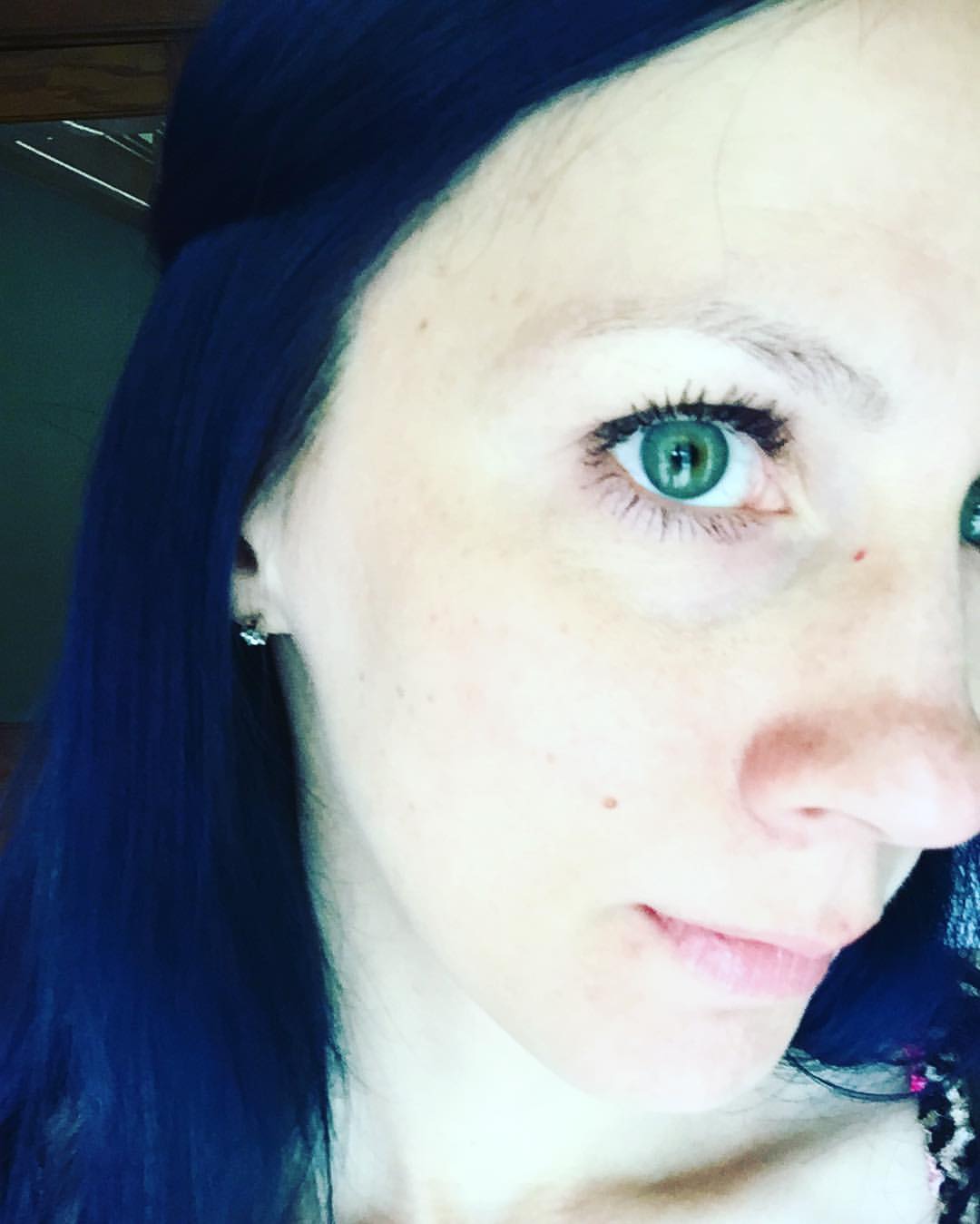
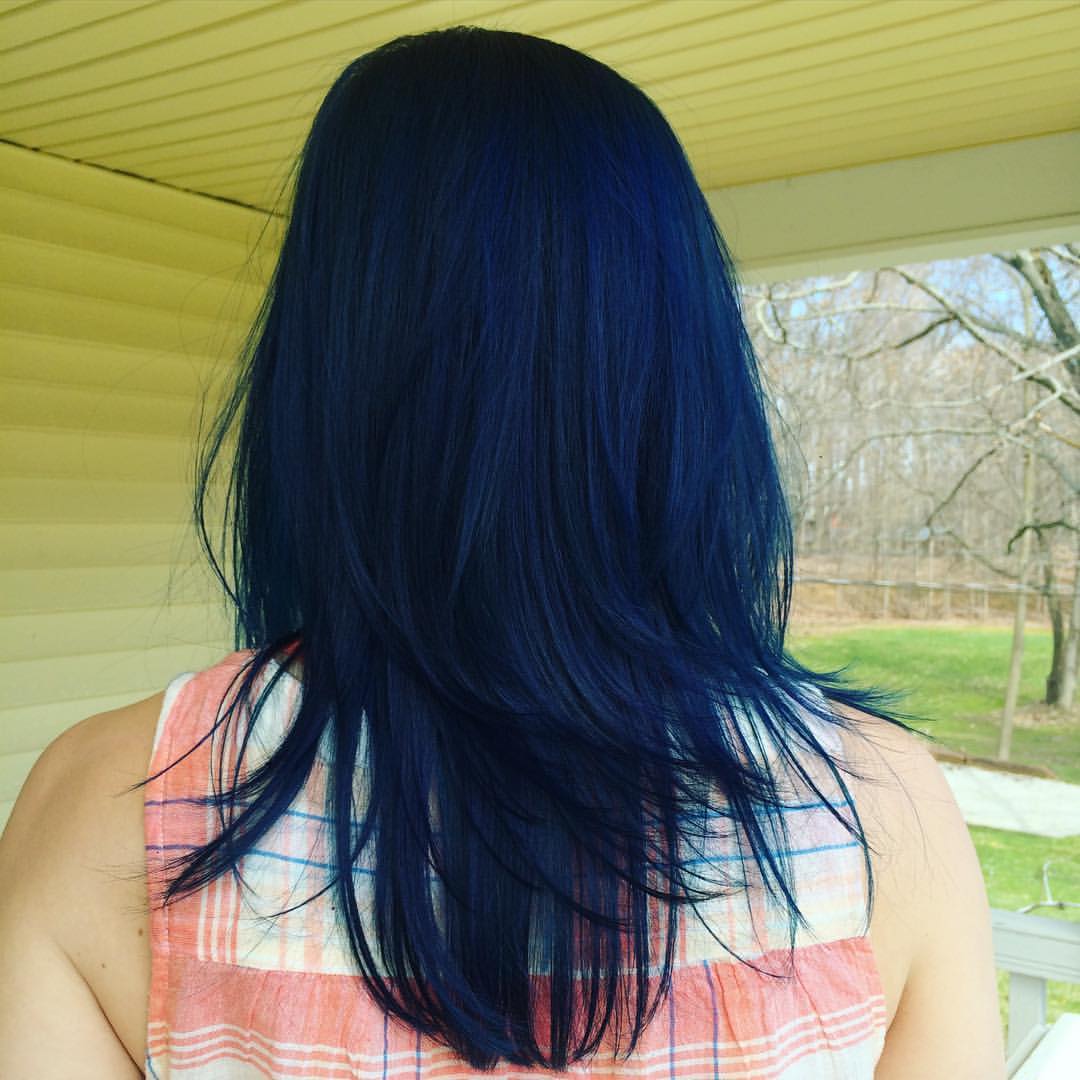
The real reason I dyed my hair blue at age 36 isn’t what many people assumed.
It wasn’t because rainbow hair colors are in. (I’m such a big dork that I hadn’t realized blue was the newest hair trend until after I’d already made the plunge.)
It wasn’t because I’m having a momlife crisis. (While I do sometimes feel like running away from home, I have a lot of freedom in my life as a mother and writer and a wife.)
I dyed my hair blue for one reason, besides the simple reality that I felt like it, and because it’s fun–my kids.
How am I supposed to teach these fragile, resilient children they are perfection just as they are if I don’t also display to them my love for my own individuality? Dying my hair neon blue is such a clear, visual example to my daughters that beauty doesn’t have to look like a magazine cover, or even an idea of what they slowly become molded to think women should be, or look like.
My kids are only 5 and 1. To be fair, I don’t have teenagers that would be mortified. Rather, my girls match their clothes to my blue hair, and my oldest is completely obsessed with having everything blue now.
One day my kids were…not being easy. I’d dealt with a lot of poopy diapers, and whining, and my normally pretty cool children were driving me up the wall.
I went into my daughter’s room to grab yet another diaper, and while closing the closet door, I got a glimpse of bright blue hair in the mirror. I grinned. My shoulders relaxed. This tiny appearance of my blue hair reminded me in a brief second that I’m a unique person outside of changing diapers and loving two tiny people; outside of my marriage and my family and my normal, daily life.
It reminded me to smile–of the freedom in lightening up a little. It reminded me that we are all extraordinary people living extraordinary lives, at least in some small way–we are all special, and our lives are purposeful–and they should have glimmers of fun, even on the most ordinary of days.
I’m not saying we all dye our hair vivid colors, or, equally, that we forget our individuality shouldn’t come at the expense of other people–and coloring my hair was an admittedly louder fashion statement than I originally intended.
Yet dying my hair blue was a quiet way to remind my kids that they can do “crazy” things and I’ll always love them.
I might not want them to think they have to do obvious physical changes to be seen or heard by me, or by anyone, but I do want them to know their mother loves and celebrates the people who make up this family–that their dad and I honor and welcome diversity.
I hope one day when they’re 36 that they love and accept themselves exactly where they stand in that moment.
At the very least, I won’t blink if they come home with blue hair.
The post The Real Reason I Dyed My Hair Blue at Age 36. first appeared on Jennifer S. White.
]]>The post There Is No Rehearsal for Parenthood. first appeared on Jennifer S. White.
]]>
Loving ourselves enough to find room for failure:
I watch her grip the chunky crayon, moving it strategically to form the letters of her name, the ones that I’ve outlined in dash letters with a black marker.
She takes the tiger stuffed animal that we got from the zoo during one of our summer trips, and makes him give me a kiss.
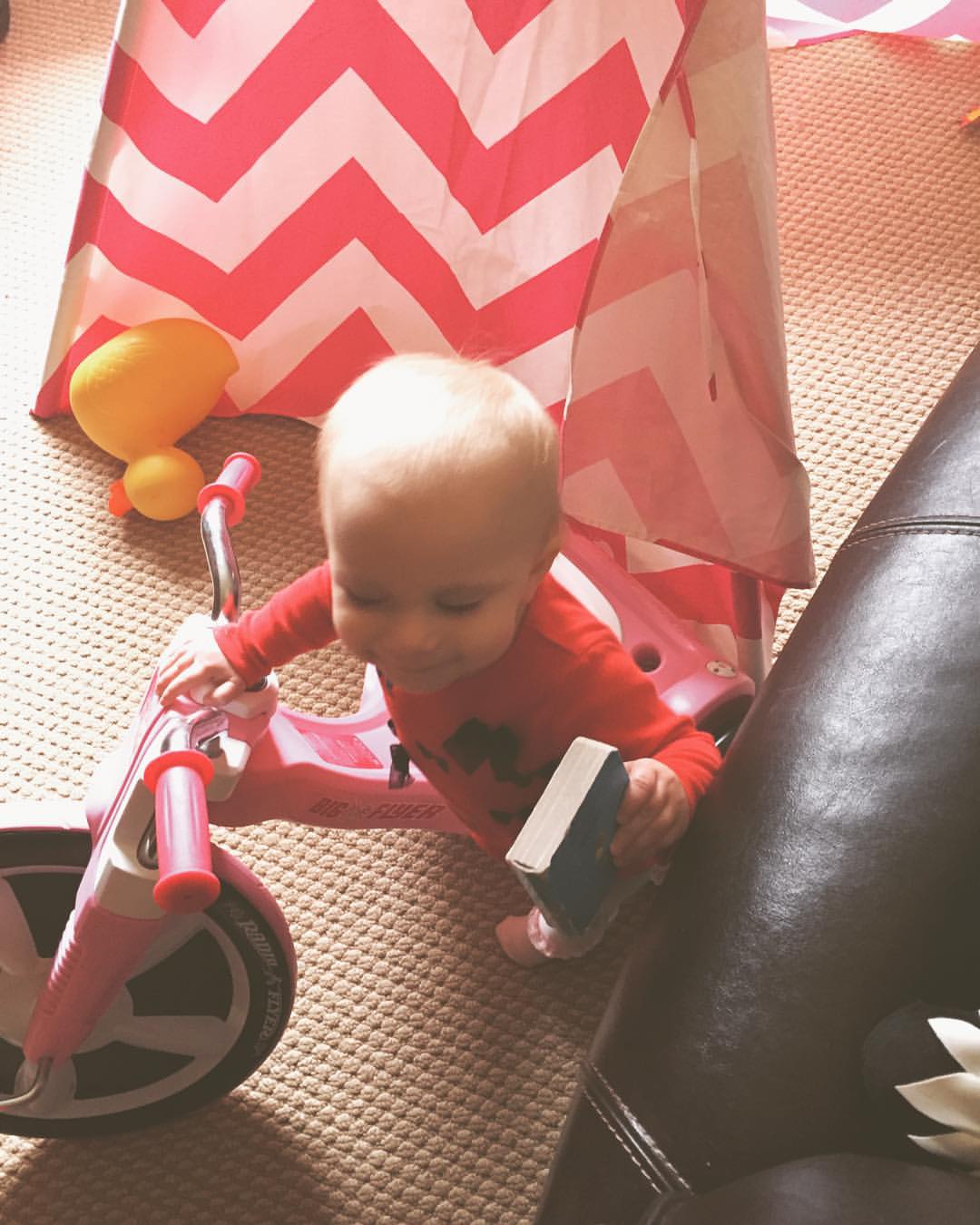
The baby takes a board book into the pink-and-white chevron patterned teepee. She goes there for privacy, falsely thinking I can’t see her, when she feels safely cocooned inside.
I watch my two girls play, and I find myself wondering how they’ll look back on this lazy weekend morning when they’re much older.
There is no trial run of motherhood. There are no practice days. This is all the real thing.
My daughters have just one year where they will be five and one years old. They have only one Saturday on this date and only one childhood, and I have only one chance.
Yet everything is practice when you’re a parent—everything is trial and—for me—seemingly error.
The first time that I held my newborn daughter was one of the only times that I’d ever held a baby. Everything was new to me, and everything still is.
I try to strike a balance between helicopter parent who gives my children no space and hands-off mom. Selfishly, I want to play with my kids.
I want to sit inside of a pink-and-white teepee and hold thick crayons, and drag them along rough construction paper. I don’t want to relive childhood, because I had a good one, but I do want to hang out with my kids.
I want them to remember reading with me and dancing and coloring and going to the zoo. I also want them to think that I’m not watching them, even when I’m peeking around the wall at nearly everything they do.
I want them to learn to fall down and get back up.
Yesterday my daughter had a spill on the carpet and she got up and I could tell it had hurt, but she didn’t act like it. I had a flash of a moment in my head where I silently heard myself whisper, “This is what makes her special—she falls and she always, always gets up, ready to get back in the game.”
I had a “mom-fail” the other day. I did something that I never do—I shared it on Facebook, with the hopes of reminding other parents that we all mess up and, more, that we’re all doing okay.
A friend commented that it’s how we deal with failure that is the sign of true success. I carried this thought with me all last week.
We will mess up—we will yell when we should have momentarily left the room, or we will be there to catch our child two seconds too late, or we will forget our kid has a teacher in-service, and we’ll stand at the edge of our stone driveway waiting for a bus that won’t be showing up (ahem, “mom-fail”)—but we will learn from this and we—and our children—will be better for our failures and mishaps, as much as for everything that we’ll do correctly.
We are good enough. In a world that tells us that we’re “too” this or “not enough” that, we are good enough and we deserve the freedom to fail.
I don’t want to circle around my kids, waiting to catch them, but I want to hover just enough that they know I’m there.
The biggest and best thing that we can do for our children is to love ourselves enough to find grace when we mess up; to show up, even when we don’t feel like we know what we’re doing.
Our kids don’t ask perfection from us. Instead, they ask for our presence—ready to fail, and ready to return to standing, with loving arms braced for another unavoidable fall.
The post There Is No Rehearsal for Parenthood. first appeared on Jennifer S. White.
]]>The post I Would Rather My Daughters Use the Word F*ck than Fat. first appeared on Jennifer S. White.
]]>
F*ck feeling fat:
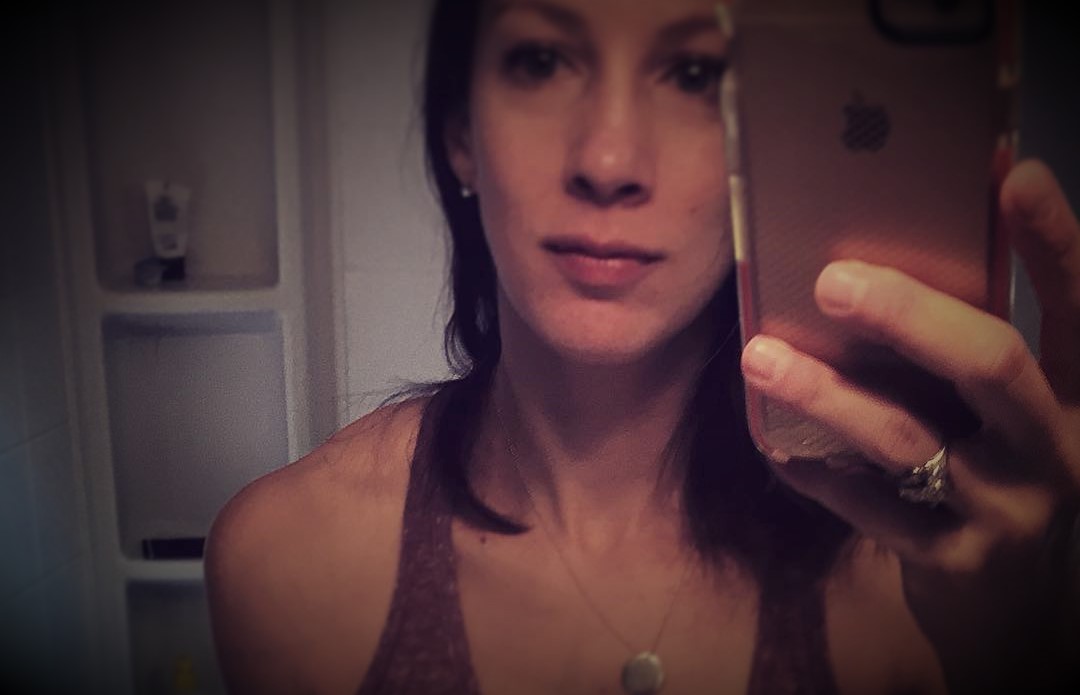
My 5-year-old grabbed my hip the other day while we were in the kitchen cooking.
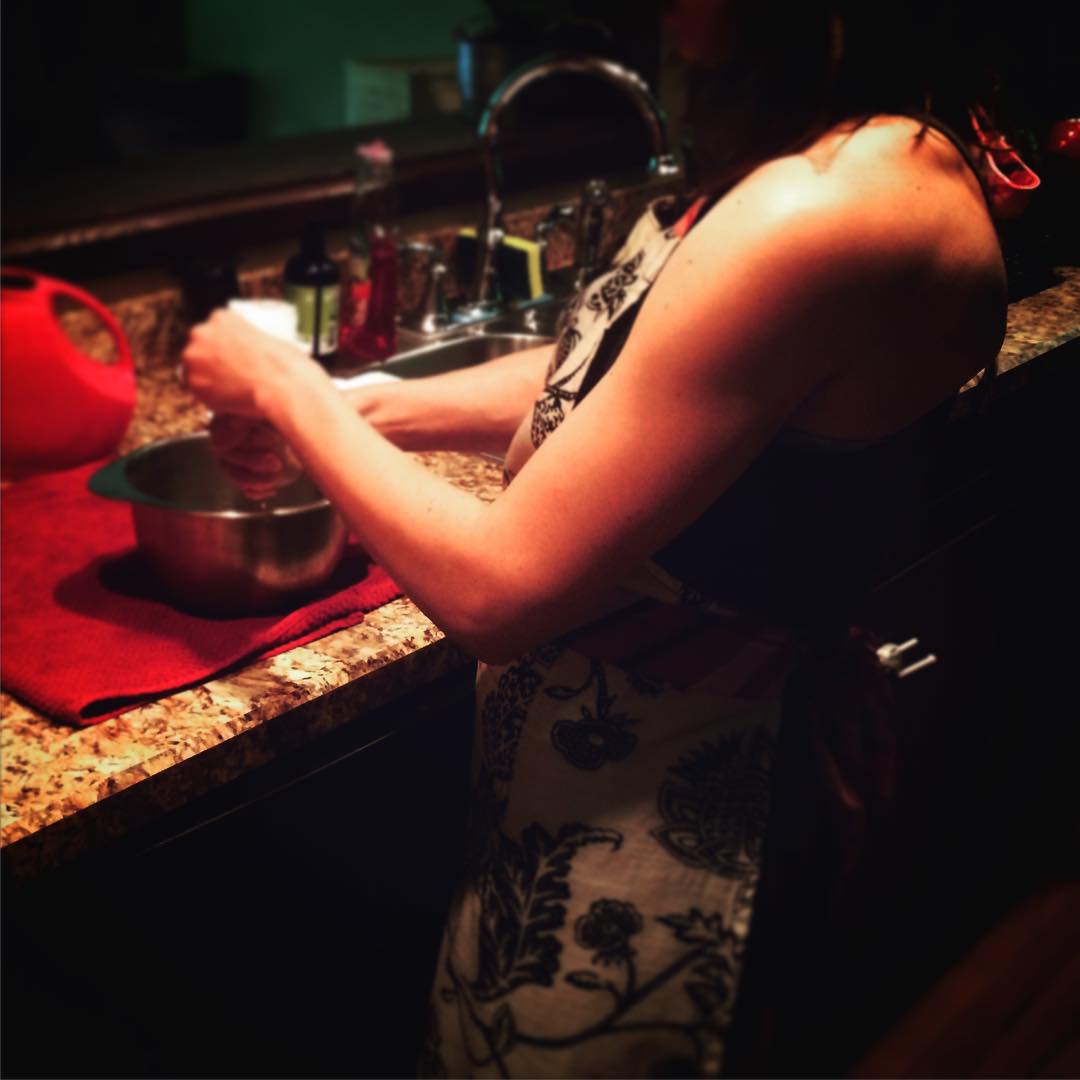
She kind of wrapped her tiny fingers around my hip bone and gave me a sort-of-gentle squeeze.
She said, “It’s hard!” I asked, “What, my body is hard?” She said, “Yes, it’s really hard.”
Considering I had just done leg, glute and back day of my weight lifting regimen earlier that morning, one of my first reactions was to think, “Hmm, cool!” However, I did not respond this way out loud.
Instead, what I said was something like this: “Oh, my body feels hard. That’s interesting.” And then we had fun talking about “hard” versus “soft” things; I intentionally chose to make this a lesson on comparisons for a pre-school age child rather than a lesson on body shaming for a young girl.
What struck me later, as I relayed this experience to my husband, was the profound importance of not attaching any positive or negative connotations with either the words “hard” or “soft” in relation to a female’s body, especially to a young female child.
We learn a lot about our bodies by how the world responds to them.
For women, what the people around us are saying about bodies—both our own and those around us—is imparted at an early age by the adults we are surrounded with, particularly parents. Fat shaming the world, through actual verbal words and even subtle gestures, is easily picked up by intuitive, sponge-like kids. This judgment and, conversely, praise for an arbitrary standard of beauty of fictitious perfection, are turned inward as girls grow into young women.
In short, how I choose to talk about my body, and the bodies of people in general, will later impact how my daughters perceive their own bodies.
I struggled with an eating disorder for most of my life. While my oldest daughter is only 5, I’m still hypersensitive to raising two girls; to what I should be saying, as well as to what I shouldn’t.
I do not allow the word “fat” to be used in my house. More, I never “feel fat,” or in any way associate the word fat with any form of negativity.
This isn’t to say that I don’t, on occasion, feel hormonally bloated, or even better all around after I exercise, as compared to when I’m sick and skipping days of working out. The difference is that when I internally “feel fat” I check back in with my emotions and my lifestyle and use rational thinking to assess where this “feeling” is coming from.
Further, I never, ever express “feeling fat” out loud, even without my kids present.
I would rather my girls use the word fuck than fat.
Curse words aren’t the purpose for this article, but, still, I would find it less offensive and intensely less damaging if my girls thought the “f-word” was fat and not what it actually is.
Life is hard enough for women. It really is. And yet I love being a woman. I love how, in my case, I chose to be a mother, and I embrace female friendships and sisterhood.
Women are definitively a minority and we are, by default, everything that goes along with that label: belittlement, discrimination, treated with hostility covertly and overtly. However, women are beautiful. All women are beautiful.
Being a woman, for me, is something I’m thankful for, and I’m even more grateful for the opportunity to be raising two female children. I want them to know what a privilege and honor it is to be a woman, even if we also need to own and acknowledge the adversity we’ll face too.
My daughter used a curse word the other day. I have no doubt she learned it from me.
We had a talk about why she shouldn’t use this word yet and, also, I’ll be honest, I told her that she shouldn’t say it if she can’t even use it in the right context. I suggested a temporary, supplemental phrase, more appropriate for her age: “Oh, sugar!”
I would have been much more upset if the word she started using was “fat,” and it makes my normally-dry tear-ducts well up just considering her using this word as a derogatory descriptor for her body.
I can’t tell if I’ll be successful in my mission to raise girls with healthy body images. They are so young, and there are far too many factors outside of my control.
Things like peers, difficult to process emotions, and life experiences outside of our little home will help tip the invisible, but all-too-real scale, towards my daughters loving the bodies that they inhabit, or not.
I will try my damnedest to make sure they know that they’re beautiful and, more, that they are loved, regardless of clothing size, body shape, curves, lack of curves, and any other fill-in-the-blank criterion they might be offered from society.
I would rather my daughters feel overwhelmed, scared, heart-broken, or a myriad of true, if unwelcome, emotions, as opposed to “feeling fat.”
Feeling fat is ultimately a cover for these types of actual feelings anyways.
So fuck that.
The post I Would Rather My Daughters Use the Word F*ck than Fat. first appeared on Jennifer S. White.
]]>The post 5 Ways I Finally Learned to Love Myself. first appeared on Jennifer S. White.
]]>
Daily practices for self-love:
I spent a large portion of my life caring what other people thought. Much of my childhood was spent trying to fit in, which is probably normal.
But then, suddenly, I didn’t want to fit in.
More than rebelling against feeling unaccepted, after trying so hard to be like everyone else, I stopped wanting to care what other people thought of me—and I started embracing who I am instead.
The desire to love ourselves, regardless of other people’s apparent perceptions, is a crucial first step to learning self-love. Here are a five more of my hard-earned tips.
1. We can’t read minds.
When we pretend that we know what other people are thinking of us, we are fooling ourselves.
Aside from verbal communication and possibly body language, when we attempt to get inside of someone else’s head, we are wasting our time. Rather than actually understanding another person’s thoughts of us, we are more often reflecting our own thoughts back to ourselves—this person just got in the way of that mirror.
Which leads me to…
2. Stop looking in the mirror.
I remember sitting on a mountaintop with my husband-then-boyfriend as a young woman in my early 20’s. He told me that I was so much happier and peaceful—and able to enjoy myself and my life—when we were backpacking for days and not at home, and he said he believed it was because I couldn’t look in a mirror.
Whoa. For a 20-something-year-old woman, this was a big revelation.
Unknowingly, I was finally on my way to learning that loving ourselves comes from loving our insides and being present within our lives, and not at all from what a mirror dictates.
Try not looking in a mirror—yes, selfies on a phone count—for one whole day, and observe how you feel.
3. Treat our physical bodies with love.
Yet, our bodies are our homes.
I will not lecture on exercise or diet advice. However, I will offer this lesson that, for me, was another insight leading to a huge internal shift towards self-love.
Treat yourself as you would treat a small child you care for. In other words, what language would you use? How would this differ from the way we silently talk to ourselves at times?
Again, for one whole day, try softening your internal voice to match the behavior that would be used with children. Cultivating habits like kindness, compassion and forgiveness are important for learning self-love.
4. Accept that not everyone will like us.
One of the biggest freedoms that I gifted to myself was becoming OK with not everyone liking me.
Partly, this came hand-in-hand with accepting that I can be loud and strong-willed and that, generally, I’m a social person who loves people, but I’m also authentic and I don’t paint on a false “me” to blend in with the crowd. In short, I became alright with who I am—a passionate, fiery, powerful person—and I also became fine with the reality that not everyone will get along with me or share my enthusiasm on certain subjects, etc.
While it’s healthy to want to be likable, it’s not practicing self-love to care more about what someone else thinks of us than what we think of ourselves.
5. Self-love is a practice.
Much like my yoga practice, I’ve found that consistency is key to success. Because learning to love ourselves takes practice.
It takes practice to refocus our thoughts when we our inner critic surfaces. It takes effort and daily reinforcement to transform the way we speak to ourselves. Understanding that learning to love ourselves is a practice—and something that takes work and, frankly, time—helps us to find the patience we need to persevere and the forgiveness we’ll need when we mess up.
Even in my relationship with my family, I mess up.
I sometimes get angry and I don’t act the way I want to towards my husband, for instance. Because love isn’t always patient or kind or anything Hallmark-card pretty to write about. Instead, love—and self-love—aims to be these things, while simultaneously dropping the judgment towards our imperfections.
We are all perfectly imperfect, and it really is true that our individual quirks and idiosyncrasies are what make us special—and easy to love.
The post 5 Ways I Finally Learned to Love Myself. first appeared on Jennifer S. White.
]]>The post You Know What? Yes, I Am a Stay-At-Home Mom—And Damn Proud. first appeared on Jennifer S. White.
]]>
I am not a housewife.
I made this clear one angry evening after my husband unhappily came home from work to a messy house, with dirty dishes cluttering the kitchen counter tops, and a pile of clothes that still needed washing.
This doesn’t mean that I don’t try to perform these household tasks when I’m home and able, but, make no mistake, I am no one’s maid.
I am, however, a stay-at-home mom.
This might not seem like a grand declaration to many people, but it is for me. It took me many, many years to actually be okay with calling myself this. More, it took me even longer to be proud to say this, which is pretty sad, really.
Here I am living out the world’s most important job, and I’m ashamed to say this is what I do.
I told myself for a long time that I had a semi-valid reason to not use the phrase “stay-at-home mom” to describe who I am and what I do every day. Partially, I was also a yoga teacher and a writer and, even after I stopped teaching because my “mommy” job became too elaborate to perform both careers well, I still mentally used this as an excuse to not call myself what I really was, every single day: a full-time mom.
This isn’t to say that women with jobs outside of their homes are not full-time mothers.
I firmly believe that a mother carries her children within her tender breast wherever she goes and wherever they are, when away from her. Regardless, when it’s lunch time, I’m not unpacking my tupperware container like my husband or meeting in a lunchroom with other teachers like my own mom did. Instead, I’m sitting down with a baby in a high chair and a little girl nibbling on cheese and hummus over a Disney-themed plate.
And when I dug deeply and got in touch with why I wasn’t using the phrase “stay-at-home mother” when people asked me what I do, I realized it was two parts: I am a writer, and a woman who still has other interests and functions, but the second part was something that was unsettling to acknowledge—pride.
I am a writer—I use this, as well as the phrase “self-employed” when filling out paperwork. Still, when I began verbalizing and also using my mother role in conjunction with it, I gained a sense of freedom that surprised me.
I did not feel pigeonholed, embarrassed or dishonest, the way that I thought I would, when calling myself a “stay-at-home mom.”
No, I felt transparent in the best way possible—authentic, genuine and open about who I am in my life, right now, where I stand.
And where I stand is, occasionally, hovering over an open laptop to blurt out a new blog while also watching my kids play. Where I stand is, sometimes, over a sink filling up with soapy water to wash out coffee mugs and sippy cups.
Where I stand, equally, is next to two tiny children who, so far, think I’m pretty amazing at what I do. This job, in all its frustration and with its appropriately serious level of responsibility, has garnered the most rewards, perks and kudos I’ve ever gotten from employment.
Yet I don’t work for my kids—in a strange way, we’re partners, although I recognize that I’m in charge; we are collaborators in this intricate puzzle of family, motherhood and child-rearing.
So, you know what? I am a stay-at-home mom—and damn proud.
The reason that I felt joy in finally owning this label is because I realized that any stigma that full-time mothers feel is only going to diminish if people like me begin to find the honor and pride in our daily work.
Because at the end of the day, it doesn’t matter what the outside world thinks of me—what matters is how my children see me, and how I see myself.
Photos: Author’s own; Flickr/Laura.
The post You Know What? Yes, I Am a Stay-At-Home Mom—And Damn Proud. first appeared on Jennifer S. White.
]]>The post Why Self-Love Is Not Narcissism. first appeared on Jennifer S. White.
]]>
I have to declare something loudly: loving oneself is not the same as being a narcissist.
We’ve gotten so used, especially as women, to being expected to either be full of self-loathing or arrogant boasting that we can seemingly forget one of the most simple truths of the self, and of life: sometimes self-love is just love.
I didn’t always love myself. Actually, for most of my life I haven’t felt at home within my body, much less in love with it.
But this post isn’t about eating disorders (although I’ve written extensively about my past with one) or how to love ourselves (I’ve written a lot about that too). Instead, this is a simple out-loud, fierce acknowledgment to the world that it’s okay to love ourselves.
It’s okay to give ourselves permission to love ourselves.
It’s not selfish, or shallow or narcissistic to love—it’s love, plain and easy.
To be fair, love takes work—I’ve learned this in my over-20-years relationship with my husband; that love, frankly, can be work.
Sometimes love is easy—like it should be.
Sometimes love is glasses of wine on the front porch at sunset or holding hands on a country-road drive. Sometimes, though, it’s dealing with student loans and differing opinions and essential human flaws.
I am filled with flaws. (One of the first things that I had to do in order to love myself was to own up to these flaws, because we can’t begin to either accept or transform something without first acknowledging it.)
I am perfectly flawed.
It’s often said that love is finding a perfectly imperfect match; that love is accepting someone in full, exactly as he or she is, standing in front of us with beating red heart—and self-love is this too.
Self-love is honoring who we already are, who we wish we could be and, also, sometimes it’s winging it—just like it is in romantic love.
Sometimes you wing it.
I wake up, I look in the mirror and, often, the eyes looking back at me are tired.
I don’t just see my face in the mirror—I see a reflection of my inner-self because I know her, I live with her, and I know that she’s stayed up late with the baby a few too many nights.
I know that her husband had to go to work early a few days in a row. (This is precisely why there is the potential for body dysmorphia, and why so many eating disorders have underlying mental and emotional suffering as triggers.)
But self-love, I’ve learned and re-learn regularly, is equal parts not taking what I observe in the mirror as the most important aspect of myself and honoring what I see in the mirror too.
I was putting concealer on underneath my eyes yesterday morning.
My daughter loves to pretend that she’s doing my morning routines along with me—things like the oil I put on my hair, she pretends to pat on her head, or she pretends to apply moisturizer on her face.
I told her bluntly that when mommy doesn’t get enough sleep, that she easily gets bruises underneath her eyes and that I cover them up because it makes me feel better.
Why do I cover them up?
It’s a minor thing, really, but it is a part of my daily rituals, as of late.
I’ve discovered that I conceal them so that the first thing people see—so that the first thing I see—is not my lack of sleep, but the bouncy step in my eyes, or the smile on my face.
Many days I’m sure covering up under-eye circles does not conceal my fatigue.
I’m sure it’s still made obvious by the way that I have to stiffly control the volume of my voice when I feel frustrated with my daughter, or even in the slight curl of my shoulders.
Yet part of my self-care-filled morning involves this particular routine.
It also involves moving my body, eating foods I like that make me feel good, drinking a cup of coffee made exactly as I enjoy it; and breastfeeding; and cuddling children; and running children from here to there.
And much like our lives are a collection of the way that we spend the hours of our days, our self-love is equally a cumulative, sum-total of how much, or how little, we accept who we are—where we are right now and, yes, things like what we look like.
It’s also a product of what we choose to focus on.
Do I occasionally wish I had springy, curly hair like my daughter? Sometimes. Not really. I love her hair, but I’ve learned to accept who I am, and I hope that, one day, my own self-acceptance helps her with hers.
Because looking in the mirror, smiling at my reflection, noting that, yep, I’ve got a couple of dark circles under my eyes this morning, but—oh my goodness—what a pretty shade of blue-green my eyes are too, is not narcissistic—it’s love.
Let’s not necessarily go overboard flaunting our exteriors or over-estimating how wonderfully we perform some activities, but let’s not forget that it’s okay to appreciate who we are and our capabilities and strengths—as much as it’s okay to recognize our potential weaknesses.
The opposite of love is not hate.
The opposite of love is indifference.
It’s cold. It’s unfeeling.
I celebrate 21 years of dating my husband this Saturday.
I can, most assuredly, offer that love is wonderful—if not always easy—and that it has periods of waning and waxing, and moments where we must demand change, as well as opportunities to relax into the way things already are.
I do this with myself.
This is love.
And the reason why it’s a basic human craving to seek out love is because, while it does, from time to time, take labor and patience and maturity—it feels good.
It feels good to be in love.
And maybe this is exactly why we as a society can sometimes be uncomfortable with someone who practices self-love—because we are more uncomfortable with the idea of enjoyment than anything else.
So let me offer one last thought: It’s okay to enjoy ourselves.
It’s okay to enjoy life.
And one of the best things about self-love is that we need no one’s permission—or acceptance, or patience, or care—besides our own.
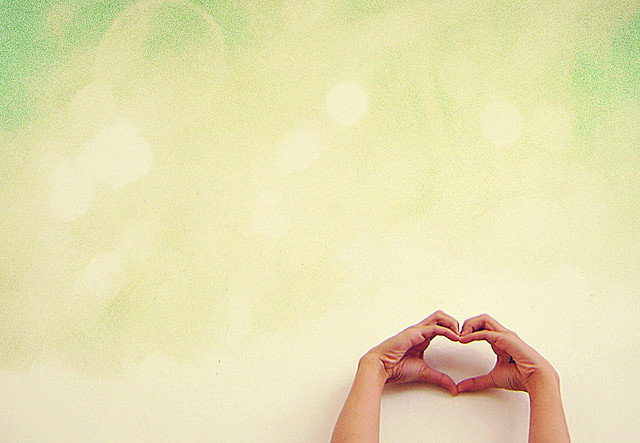
Photo: Flickr/Hold My Heart; Flickr/The Bull Pen.
The post Why Self-Love Is Not Narcissism. first appeared on Jennifer S. White.
]]>The post What You Didn’t See When You Looked at A “Skinny Mom”: A Response. first appeared on Jennifer S. White.
]]>
This is an open rebuttal to an extremely damaging article currently making its rounds via Scary Mommy.
I’d like to first openly suggest that had this original post been written from a “skinny mom’s” perspective that, for one, it would have been a truly sad and unfortunate eating disordered experience of life and, for another, it would have been less of a completely judgmental, destructively stereotypical post-slash-rant.
Moreover, had this article been written about a “fat” mom, it never would have been published.
However, it’s apparently perfectly okay to perpetuate horribly damaging and un-true stereotypes of “skinny” moms.
Because skinny does not equal eating disorders or body dysmorphia, any more than a slightly overweight mom should be seen as lazy or self-hating.
That last part of my previous sentence was cringe-worthy to read, no?
Yeah—had this article been about “fat moms,” it wouldn’t have been birthed.
Seeing women as dichotomously “skinny” or “fat” is not only terribly and obtusely stereotypical, but it’s a shallow portrayal of the depth of women, and of people in general and, in relation to this particular article, definitively equating “skinny” with “eating disordered” is unfortunately wrong, damaging to understanding and healing true eating disorders—and it’s still body shaming.
I’m a “skinny mom.”
I’m not tan, because I just had a baby and her eldest sister has fair skin, so we often hang out in the shade or with sunscreen slathered on. The rest of this could describe me, though.
I lost my baby weight quickly, after both births.
I do still have signs of this, although I didn’t have C-sections–but I bought a new belly ring yesterday and its little blue gemstones are shining alongside my still-present Linea nigra and my fairly chiseled abs.
I do workout a lot.
I began exercising regularly in high school and I never stopped.
I didn’t stop during either pregnancy and I didn’t stop after having children.
I move my body because it feels good, and for that reason alone.
And, no, you didn’t “see” me.
You, apparently, didn’t see how much I love my body.
You didn’t see that I’m proud of the butt that I’ve toned doing squats in my basement while the baby is in her swing and her older sister is at preschool for a couple of hours.
You didn’t see that I’m teaching these two little girls to love their bodies too—I’m teaching them to not sneer at women and judge the way some women do—the way your article did—and I’m teaching them that just because some people don’t love themselves enough to love others, this doesn’t mean that we should be any less kind ourselves.
I am compassionate with myself.
I’m compassionate with my body, too—and I’ve never loved my body more than after it gave birth to my second child.
I felt proud of what it could do and of how my body worked for both of us during my labor and delivery.
I love, equally, the skin that still hangs loosely from giving birth last October, as well as the arms that someone recently called “Michelle Obama arms.”
I don’t shed tears when I try on bathing suits.
Actually, I just tried on bathing suits with my oldest daughter at a store in the mall two days ago—we had a blast.
I left without buying one, though, because, as it turns out, I’m fine wearing my old Speedo one-piece, that I bought four years ago for my daughter’s first mommy-and-me swim lessons at the Y.
Because when I’m running through the sprinkler with her in the backyard, the last thing that I’m thinking about is how I look in a swimsuit. Instead, I’m focusing on how cute she looks in hers, on the way the water goes into my eye and makes my contact lens blur and on her squeals of delight.
I feel sorry for moms, whether thin or not, who can’t experience their children’s babyhood because they are in the throes of an eating disorder.
I’m not.
I’m a thin mom who loves to move my body, who loves to eat healthy food and have a glass of wine and some dark chocolate every night, who loves to sit on the front porch with my husband after the kids go to bed, who loves to read, who loves my children—who, frankly, is a person beyond my physical exterior, and I recognize this.
So, no—you didn’t see me.
You saw either your own fears and demons or a stereotype, or both.
You didn’t see how much more I am than my body and how happy I am living inside of it.
Because if you had seen me, you surely would have noticed my athletic physique—but you also would have taken in much, much more.
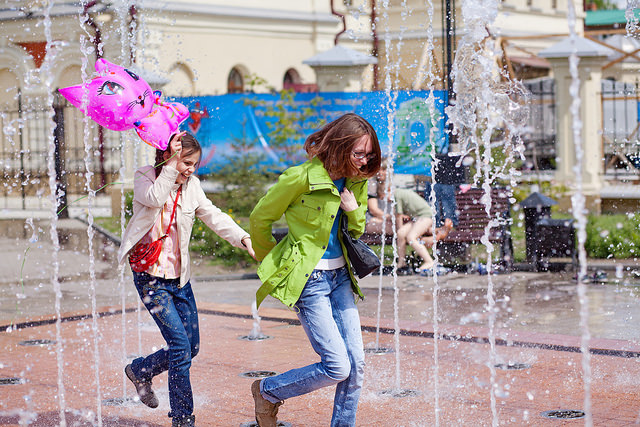
Photo: Flickr/Mother and daughter running through the fountain.
The post What You Didn’t See When You Looked at A “Skinny Mom”: A Response. first appeared on Jennifer S. White.
]]>The post What Our Relationship with Food Says About Our Relationship with Ourselves. first appeared on Jennifer S. White.
]]>
I can often tell how I feel emotionally by the foods and drinks that I consume.
Granted, I’m largely a healthy eater.
When I say healthy eater I mean that I’m a balanced eater.
Because this article is not written from the perspective of a nutritionist or a dietitian or a physician or a psychologist, but from the vantage point of a recovered anorexic, who is overly analytical in general, and who spent an awful lot of my life discovering how my previous food aversions and disorder can actually be a helpful guide for self-discovery.
And I’m here to share a few of the most basic things I’ve learned.
1. Food is our friend and when it’s not, we are not acting as our own friends.
The simplest conclusion that I’ve come to on this journey to be a healthy eater or, rather, a healthy individual for whom food is both nourishment and satisfaction, but not an over-indulgence, is this: that our relationship with food says a ton about our relationship with ourselves.
If we are restricting food, we are restricting self-love.
If we are over-indulging in food, we are craving more self-love.
This is an obviously overly simplified version of this concept, but I find it to be true again and again in my life.
2. Craving crap is part habit and part “I’ve given up.”
There’s absolutely scientific research that shows that, especially, synthetic and sugary foods cause us to crave more of these fillers.
I say filler foods because they are loaded with junk our bodies do not need and distinctly lacking in nutritional density.
When we crave these foods and over-dose on these foods we, for one, are in a negatively spiraling habit-cycle that needs, frankly, will power to stop and, for another, we often have bought into the false notion that we are not worth cooking for, that we can’t afford better food, that we don’t have time to eat better food and, let me tell you, these ideas are as crappy as this fare.
3. Being too “healthy” of an eater is not healthy.
Food tastes good for a reason—it is meant to be enjoyed.
Life is meant to be enjoyed.
Often, when we eat “clean” and always avoid “unhealthy”—usually deemed “unhealthy” either by ourselves or current marketing standards—we are neglecting more than a little indulgence—we are neglecting and depriving ourselves of pleasure.
4. Gluttony and over-indulgence are not pleasurable.
That said, over-indulging on a regular basis, with the excuses of “treating ourselves” or “I deserve this” or any other aspect of “love” involved is not the best way to show our emotions—or our bodies—love.
Over-indulgence is not self-care.
4. On alcohol.
I, personally, have a finicky relationship with alcohol.
I’ve seen it destroy lives, alcoholism runs in my family and, on top of this, I want to display for my children a diet of moderation, including—within this dietetic scheme—alcoholic beverages.
That said, I read a recent post by a friend, and she was letting us know that she has given up alcohol for the time being, as it’s become something not good for her.
She said, too, that it was once shared with her that over-consumption or too-regular consumption of alcohol is often a way that we let ourselves fall apart at a speed and rate that we can handle, when we are, most assuredly, falling apart in some way, be it emotionally, mentally, physically, or a combination of these states.
While I am not the person to declare alcohol dichotomously bad or good, I do continually check in with myself, as a drinker, with my intention—for me this is key.
If I neeeeeeed a drink, I practice yoga first. I don’t want alcohol to be something I need, but, instead, something I enjoy.
Because here’s the larger thing:
5. Our choices become our habits become our lifestyle become our days become our lives become our stories.
I want my story to include fabulous meals and company over food, and it’s okay if my story occasionally involves disordered eating in some way, because, for me, I’ve found that I can use my honest relationship with food as a completely healthy, helpful tool for self-care.
I don’t expect to be perfect.
Sometimes I expect my diet to be perfect—and that’s when I check in with why.
Where do I feel a lacking in my life or myself that I find a need to create a pretend-controlled environment.
Life cannot be controlled.
It can be experienced and appreciated, like good food.
It can be regimented, like our diets can be.
But life, whether we like it or not, will never be wholly within our control, and thank goodness—some of the best things in my life have happened because fate took a detour, even with all of my hard work to be on a neatly specific path.
That said, I believe in effort, in both life and in my relationship with food.
Wonderful dinners for both myself and my family will not make themselves.
Writing a book will not happen unless I work on it.
My relationship with my husband also at times takes my effort to feel good because relationships, even when filled with the most soulful of love, will have challenges.
So here’s what I’m offering up today. I’m suggesting that we spend less time judging ourselves and judging others for their food choices and more time learning about ourselves and other people through them.
Because that old saying just might be true: food is—or can be—a display of love.
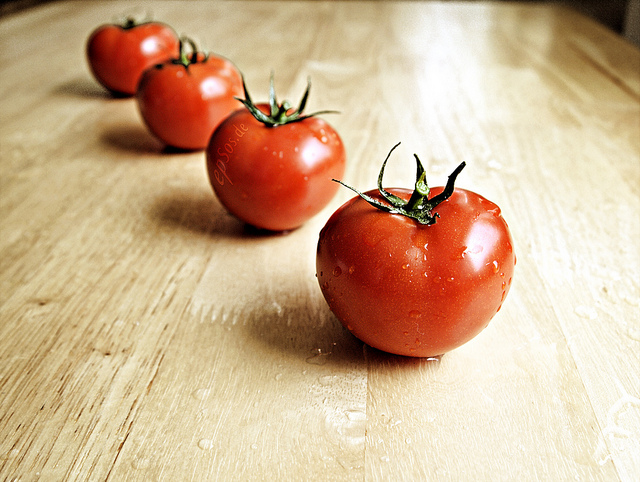
Photo: Flickr/Healthy Red Tomatoes…
The post What Our Relationship with Food Says About Our Relationship with Ourselves. first appeared on Jennifer S. White.
]]>The post For at Least One More Summer: A Love Note from Mother to Daughter. first appeared on Jennifer S. White.
]]>
The feel of tender, young grass between her squeezed-tightly fingertips was primal.
The tug, uprooting them, connected her with a fiery anger that she didn’t know her belly housed.
Then, momentarily afterward, she’d feel regret that these vivid, green shoots, with blackened, dirty ends, were now clenched inside her small fists.
Many years later, she watched this collection of emotions play out on another youthful face—her four-year-old daughter—as this new set of miniature hands sunk into the lush green surrounding their pale thighs, touching at the knees.
I ask her not to pull the grass out, and her face falls instantly.
I mentally slap myself and softly ask, “It feels good to pull on the grass, doesn’t it?” She nods silently, and I verbally take back my earlier reprimand.
So much of my life has been a similar pattern, I’ll think later after an argument with my husband.
So much of my life has been this space between managing my reactions with the authenticity of internal need and awareness of this reaction upon others; coupled with the guilt after—the guilt of either not reacting firmly enough for my own needs or, more often, being too harsh. (And then stifling this guilt later, too, when it’s more destructive than productive—more another unnecessary reaction.)
I wonder, as I sit in the backyard underneath the open sky and a canopy of trees with my daughter, what it would feel like to sink my hands into the grass and yank without abandon, but I can’t actually do it—I’m grown.
And I tuck inside the flesh of my delicate mommyheart the secreted hope that the pale, milky thigh gently touching mine stays exactly as she is—for at least one more summer.
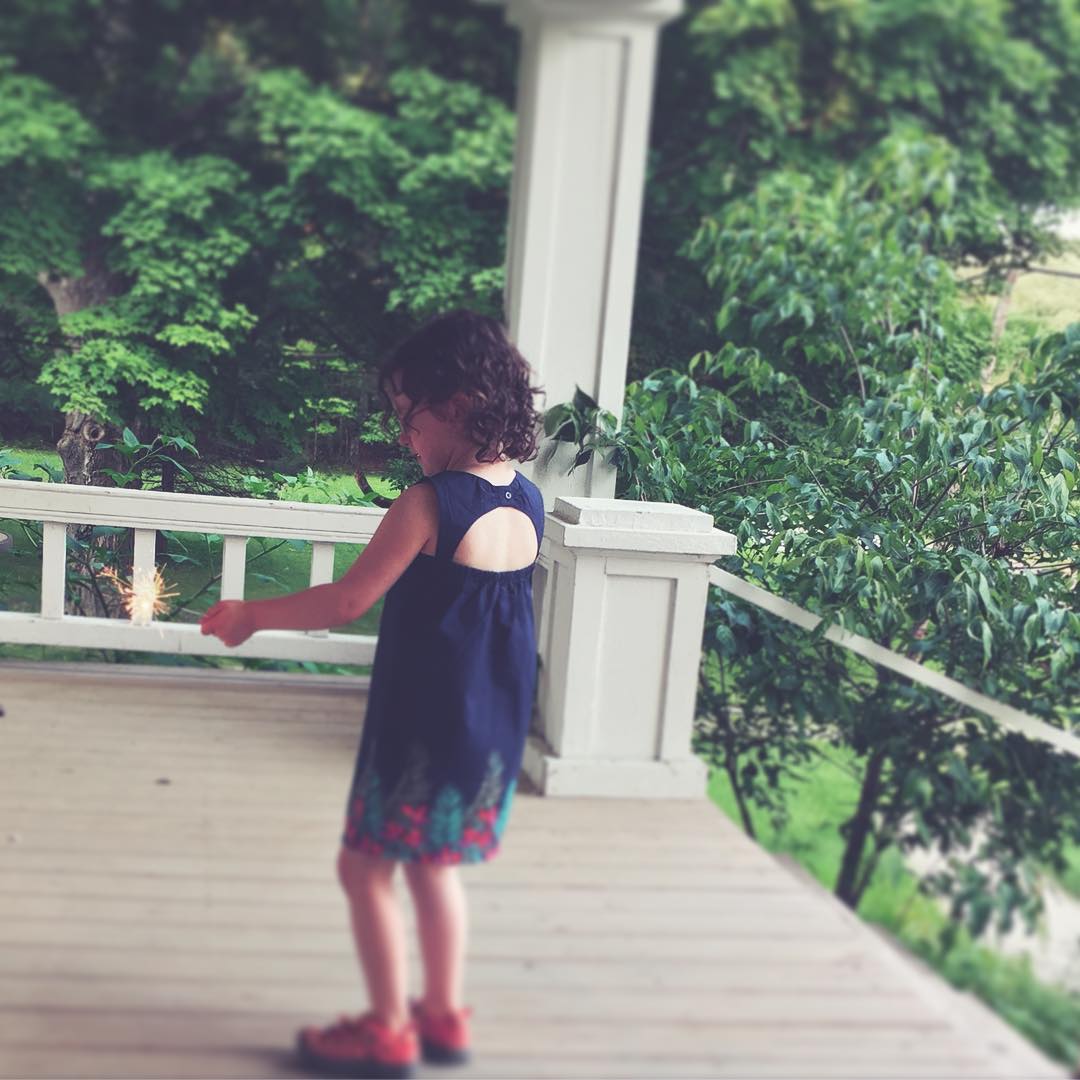
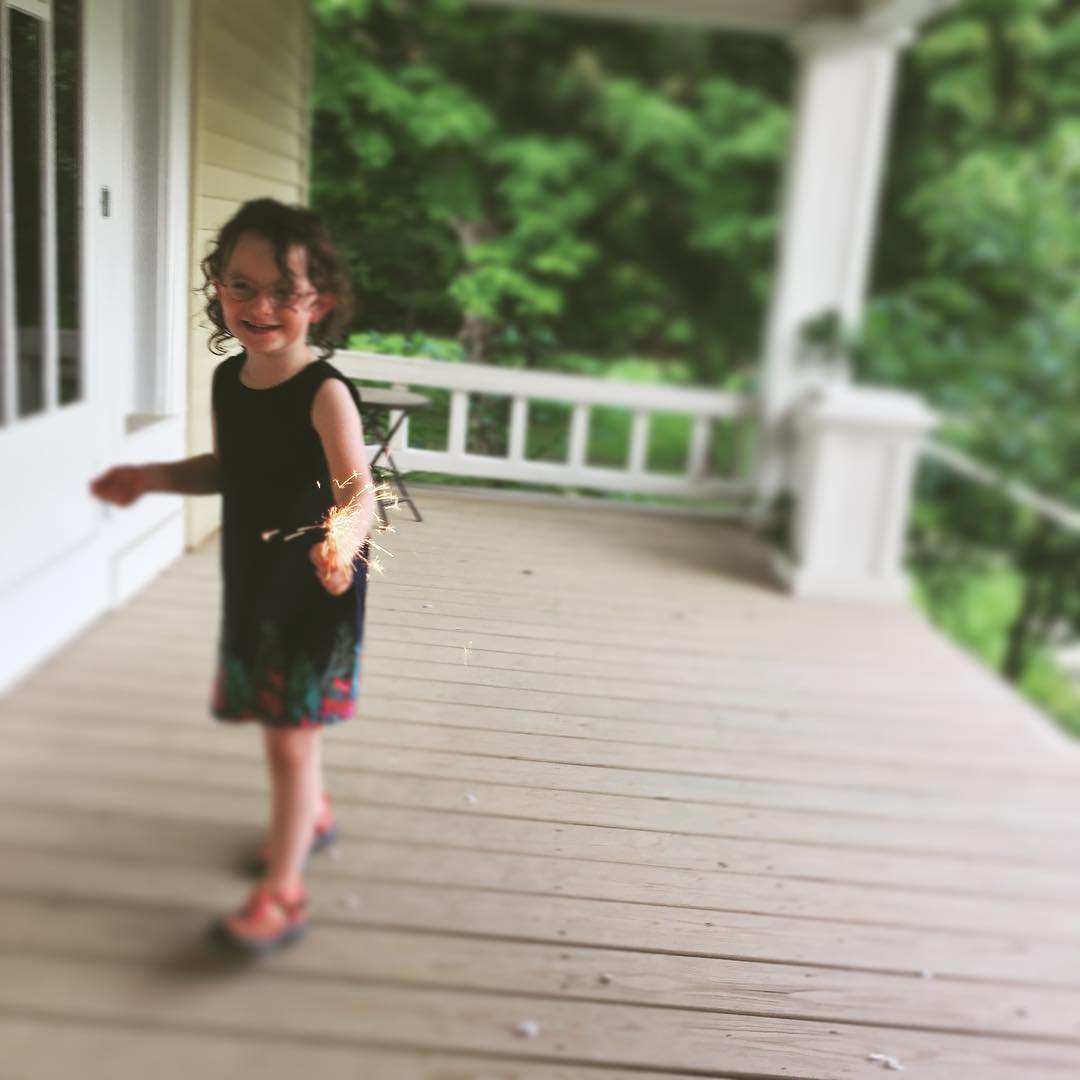
Photos: Author’s own.
The post For at Least One More Summer: A Love Note from Mother to Daughter. first appeared on Jennifer S. White.
]]>The post A Picture Perfect Motherhood. first appeared on Jennifer S. White.
]]>
There are days when staying present with my children is not what I want to do.
Instead, I want to check out.
I want to peruse Facebook or read the news or break out my yoga mat for thirty minutes of Pilates in the middle of the day.
These are the days when my inner critic yells loudly.
She screams that I am not a good mother. She tells me to turn off my phone. She demands that I look at the time I wasted reading news headlines and only finishing one article.
Because, as a mother to young children, it’s impossible to check out completely; actually, that’s why I often practice Pilates on my yoga mat—because a true yoga practice, to me, is more than randomly throwing my body into positions, and I have to stop and move a baby away from a too-tiny object her sister left on the carpet or take notice of something this older sister wants to say to me.
In short, I can only check out enough to be a half-assed mom and a half-assed fill-in-the-blank (news reader, exerciser, writer).
But there are days when being a fully present mom is enough to make me feel like I could go crazy.
These are the days when my inner child delicately pokes at my heart and asks softly that I be gentle with myself.
She asks that I remember I’m doing my best. She reminds me that thirty minutes of Pilates put me in a better mood for the rest of the afternoon. She lets me know that taking three minutes to read NPR’s website isn’t the worst thing in the world.
Last night, I told my husband that I don’t want to be perfect—I want to be me. I meant that.
I like “me,” most of the time. It’s just that the mother I have in my head isn’t the mother who usually lives my life.
There is no perfect mother. There is no perfect, one-size-fits-all love.
I remember reading a long time ago, before I ever had my own children, that people love the idea of mother. They love the Madonna cradling a serene baby Jesus. They love a statue mother.
People don’t want to have to witness the time when the baby cried uncontrollably or when the mother wanted to tear her hair out in frustration.
It doesn’t get more real than motherhood, though.
It doesn’t get more real than sleepless nights that are not going to be solved by some crappy online article about “ten things to do for a great night sleep!”
It doesn’t get more real than feeding issues and milestone markers and endless laundry and never getting to go to the bathroom alone.
We idealize motherhood so much that even actual mothers forget that there is no such thing as this.
This doesn’t mean we can’t try.
This doesn’t mean I won’t bite my tongue or consciously take deep breaths when I feel my own frustration level rising.
This doesn’t mean we can’t love our children perfectly, despite our lack of perfection.
I never thought I could love a human being as much as I do my children. I look at them and they are enough—my life has real meaning because I bore them. This is not the same as feeling fulfilled as a person because I’m a mom.
And this is why some days I want to go on vacation—I want just one day off.
There are no days off from motherhood.
There is an hour and a half at the yoga studio; there is that weekend I actually flew out to Connecticut to spend time with friends—but there is never a moment of my life when I am not a mother, and I’m sure that this will be true when my children are much older than I am as I write this now.
So I clickity-clack on my laptop for ten minutes while I attempt one more time to nap the restless baby.
I hit “save” and check on the oldest as she relaxes with a book.
And I look over at the baby monitor and see that she’s finally drifting off to sleep, and I again feel ready to do puzzles with my big kid for the billionth time.
Most importantly, I choose to stifle that inner critic and nurture the inner child—I choose kindness over fearful judgment because if there’s one thing I want to do perfectly with my kids, it’s make them feel safe by my love.
Love feels safe when there is acceptance—and I accept that I might never be the perfect Madonna-like mom, but I can be the perfect me.
Photo: Flickr/Mary.
The post A Picture Perfect Motherhood. first appeared on Jennifer S. White.
]]>