The post When We Must Be Okay without an Ending. first appeared on Jennifer S. White.
]]>
I didn’t make it to savasana today.
I always finish my yoga practice—even if I clip it short, I still have some form of closure, like child’s pose, savasana or seated meditation.
But today, I just got up. Because it finally settled into my tissues while I was in pigeon pose that sometimes, in life, there is no closure.
The other thing that washed over me in pigeon pose was how much I hate New Year’s Eve. The worst period of my life happened, at one point, during the week in between Christmas and New Year’s, and my body—my physical body—still loathes this time of year.
It doesn’t matter how much emotional or mental healing I’ve tried to do.
It doesn’t matter that, as a yoga practitioner, I’ve also worked at getting this wounded muscle memory far, far away from me; that, regardless, there are still some things that move through us and then stay inside of us forever.
Grief, terror, and tragic human experiences touch us, shake us, and, sometimes, maim us irrevocably.
I was in pigeon pose and I couldn’t see if my left shin was parallel to the top edge of my mat—by this point in my practice, the tears had formed a foggy cloud that altered my vision.
I settled into the pose by feeling my way in; by listening to my leg muscles; by shifting and undulating my spine.
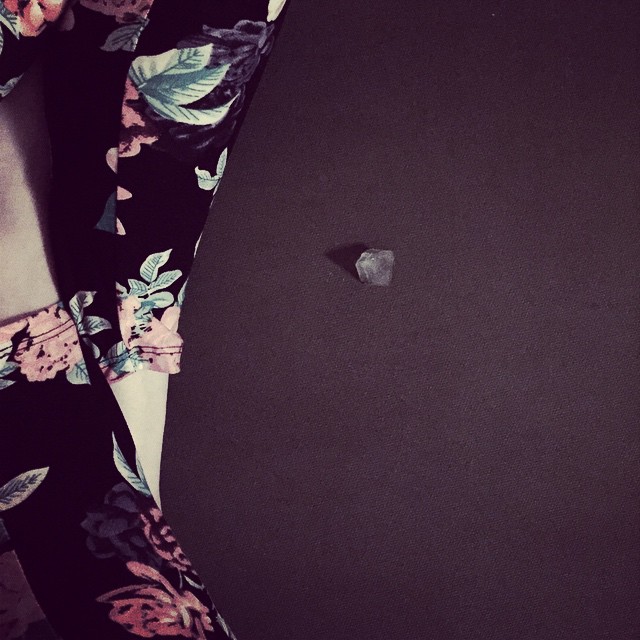
And I let the tears rain down onto my sage green yoga mat.
I let myself release, not only into my yoga posture, but into the internal injury that I carried with me into a new year, despite my best intentions over these last several.
And as I listened to the teacher on the podcast I had been following ask me to lift my heart high in pigeon pose, I ignored him and instead bowed humbly over my leg—spent, tired and broken.
But the funny thing is that as the pools of salty tears collected on the green rubber, and as my heart acknowledged a pain that, seemingly, will never completely go away, I felt honest and I felt fresh for the first time in many months.
I turned off the podcast.
I turned off my little space heater, dutifully heating up the room.
I got up and I walked out, with tears collecting in the smile lines around my lips.
And I let it be okay that my yoga practice just ended, without a thoughtful completion. More, I let it be okay that I still have a knot in the back of my throat made up of un-shed tears and a scar-tissue-covered lump running over my heart.
I’ve decided, too, to be okay with where I am right now—with no real ending; with no perfect savasana.
Photo: Flickr/Felipe Ikehara; Author’s own.
This article was first published by elephant journal.
The post When We Must Be Okay without an Ending. first appeared on Jennifer S. White.
]]>The post The Importance of Holding Space with Another’s Grief. first appeared on Jennifer S. White.
]]>
Sitting with someone else’s pain is awful.
It’s hard enough to sit with our own grief, much less that of someone we love, when there’s really nothing we can do or say.
But that’s just it—we shouldn’t have to do or say anything.
Just being present and holding the space of a loved one as they process and move through difficulty is enough—and when we feel the need to talk or hug, it’s often our own discomfort that we’re feeding and nurturing, rather than the other person.
I often have to remind myself of this.
It’s difficult because many of the people I love are a phone-call away and not down the street, so when sadness in life hits, I can’t just sit with them and physically hold their space.
Instead, I’m in the even more uncomfortable position of knowing that my words are not what should be used, but finding it a challenge to hold them back.
Still, even in this long-distance situation, it is possible to hold our tongues and listen; really listen to what the person on the other end of the line is saying.
And, usually, I find that what’s being said is, “I’m hurting. I need you and you’re too far away, but your being here—even on the phone in silence for a minute—is my comfort.” (Although, typically, this is unsaid.)
Because when we open our hearts to another’s wounds, we also expose ourselves to their damage. On the other hand, in true relationships—deep, meaningful connections—we cannot expect to receive and hold space with only the good.
Simultaneously, we are better able to comfort and support if we can find that balance between putting up walls to another’s sorrow and letting it consume us.
One way I’m able to feel genuine empathy while not letting an emotion envelop me, is to envision myself as a rock with water flowing over it. I’m the rock, whether in trouble or in joy, and the flowing water is life’s circumstances. Sure, I might weather from the water, but this weathering is actually a smoothing—a rounding—that serves to make me softer; gentler.
And here’s a little tidbit from that nerdy geologist who will always live inside of me: when a rock weathers from water, it’s called mechanical weathering, and the materials that erode away can go on to create soil—soil that will eventually help new life flourish.
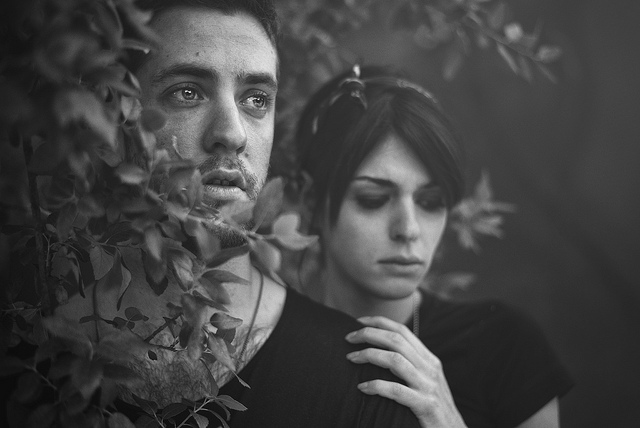
So as I attempt to put my words and thoughts to the side and simply be there, holding heart-space with someone I love, my ability to give love is more than challenged—it’s allowed to grow and shine.
Photo: Daniel Zedda/Flickr.
The post The Importance of Holding Space with Another’s Grief. first appeared on Jennifer S. White.
]]>The post The Blurry Edges of Loss & Guilt. first appeared on Jennifer S. White.
]]>
When Loss Inspires Guilt.
I found out this week about the loss of an old friend.
I haven’t spoken to this friend since high school, and I’m now in my 30s. I was surprised at the amount of sorrow I felt when hearing this news.
This isn’t the first one-time pal I’ve had to say a permanent goodbye to, and this isn’t the first time I’ve felt this feeling—guilt at my grief.
Loss becomes convoluted when you’re an outside party.
I think much of this guilt comes from digging deeply enough to ask myself if I’m sad for this person in the same way that I would be if I heard about an absolute stranger’s passing—in my compassionate connection with humanity rather than from my connection as a one one-time friend. Yet, when I discover that old memories and straggling recollections that I thought were long buried are indeed re-surfacing, I’m perplexed to find that I still feel guilt.
While this isn’t the first time I’ve dealt with this, it’s the first time I’ve dealt with it now, in this body, in this self, at this time. I’m older and in many ways, I know that I’m wiser. Still, this much earned insight takes a distinct backseat to feelings of undeserving.
Do I deserve to mourn when his family is clearly in terrible pain? The kind of pain that can only come from knowing someone well and daily—the kind of pain of the immediate family. My guilt wants me to answer “no,” but emotions are funny things—they have a habit of not listening to your head.
Instead, I find myself feeling the kind of unfortunate elation that accompanies times of tragedy; happiness that’s actually painful when coupled with the blurry edges of something like woundedness. Life becomes sharply in focus during times like this. Everything is so achingly and hauntingly gorgeous when placed beside suffering.
Bereavement highlights life’s delicate graces, but it’s still ugly and undesirable, and I often feel I’d much prefer the kind of average joy that comes from not knowing this partner, this opposite—the discomfort of anguish, but I don’t have a choice—and I do feel grief, even if I shouldn’t.
I swallow the lump in my throat and I release my guilt because it doesn’t help. Rather it makes these feelings that drudge up hard to own and accept—and move forward from.
I’m thankful that I’m on the peripheral of this grief, but I know in my heart that someday I’ll be right in the middle while others stand in my presently awkward situation. How will I feel when the tables are turned like this? I might feel angry. I might feel relief. The simple reality is that I don’t know how I’ll feel, and I don’t really want to think about it.
Because grief is uncomfortable and painful and terrible.
We can say that we find true happiness from pain or that pain is noble, but I know that I’d never choose it and I usually say these things to myself in order to survive falls that seem challenging to get back up from.
What will I do with my feelings? I’ll try to look my husband in the eye and validate him every day. I’ll try to find the good in everyone that I come across, especially when it’s hard. I’ll try to remember that joy isn’t permanent—and neither is misery, and I’ll try to tell myself to not feel guilty over emotions that I can’t easily control.
So goodbye to my old friend. Goodbye to teenagers hanging out and to troubles that are too heavy for young, still-forming souls.
Hello to this palpable reality that life isn’t always easy or clear cut. Hello to my authentic self and to this self’s authentic sensations. I see you. I recognize you. I hope that’s enough.
Photo: Jenna Carver/Flickr.
This article was first published by elephant journal.
The post The Blurry Edges of Loss & Guilt. first appeared on Jennifer S. White.
]]>