The post This Introvert/Extrovert Contest Has Got to Stop. first appeared on Jennifer S. White.
]]>
No matter where I look, there’s an article about introverts versus extroverts.
Just this morning, I read about how I, as an extrovert, am apparently affecting my kids (versus how the introvert parent affects her children). This article did not describe me at all.
If there’s one thing we should have learned by now, it’s that dividing people into two categories is too tidy to possibly have any real-life merit.
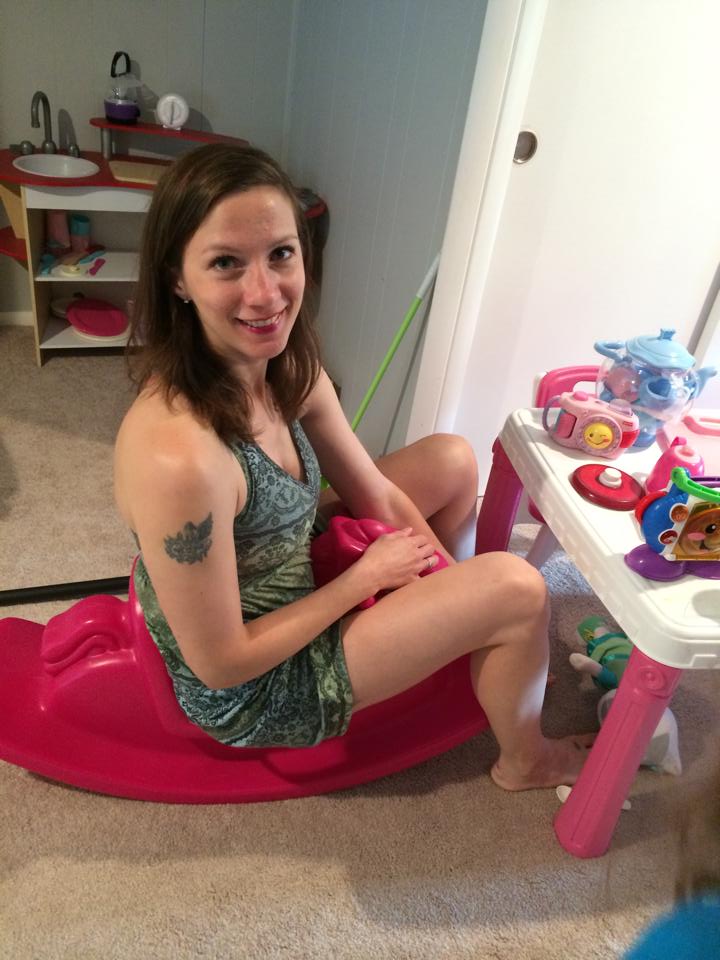
Yes, I am an extrovert—I’ve taken the official MBTI® personality, as well as several other similar ones, and I’m always an ENFJ. In other words, I am truly an extrovert.
I remember, however, the first time that I lived with someone other than my parents and sibling; the first time I “moved out.”
My husband-then-boyfriend and I decided to become roommates in college, and one of my crucial deciding considerations was, “Is this going to be a hang-out spot for our friends?” Because I didn’t want that.
There’s this perpetuating myth that introverts are all at home, cozied up under warm blankets reading novels while extroverts are out partying past ten p.m. This, of course, is absurd. So why do we believe this consistent stereotyping? Further, why is it detrimental to?
The reason I’ve taken so many tests is because I was utterly shocked to initially discover that I’m an extrovert. Upon further digging, I did relate completely to being an extrovert in a multitude of ways—none of which are typically found in these base stereotypes that I repeatedly find online.
One of the most ridiculous stereotypes of introverts versus extroverts is the myth that either one has anything to do with being shy. I have met my fair share of outgoing introverts, as well as shy extroverts—being shy has nothing to do with it.
The main difference between introversion and extroversion is simple: it’s entirely about where we get our energy.
Carl Jung, the founder of this format of personality typing initially meant for extroversion to describe people who receive energy from groups of people, as well as from the outside world. Let me give you a personal example.
Clearly, I’m an extrovert. Still, I can be shy and reclusive and all of the things that we widely accept introverts to lay claim to. However, my writing is one way that I identify fully with my extroversion: I noticed as a young girl when I began keeping my first journal, that I understood my thoughts and feelings better when I wrote them down or talked with a friend—it was almost like I could figure out my own problem as I was talking about it with a good listener, as opposed to pondering it internally—like an introvert might.
My husband-then-boyfriend is an introvert. He was significantly more popular than I was in high school and it was me that had to ask him before moving in together if having people over would become a “problem.”
Yet this personality myth and inappropriate stereotyping are damaging—it’s problematic because we fundamentally begin to believe that we need to be caricatures of ourselves in order to fit into one category or the other—much like (ahem) other dichotomous labels.
In short, the entire purpose of personality classification is to better understand both ourselves, as well as to improve the quality of the relationships that we forge with the outside world, whether extroverted or introverted, and these fictitious labels take us further from the reality of who we are and closer to a farce.
The reason that I prefer The Myers & Briggs personality typing is because it offers a spectrum of personality inventory, of which introversion and extroversion are just one aspect. Sure, they are fundamental parts of the structure of a personality, but there is a range instead of a two-way contest.
I’m an extrovert and my husband is an introvert; I don’t know yet what my children are—but I want them to know that they can be anything.
The idea that I’ll share with them that they are best suited towards leadership or writing or holing up at home on the couch on a Friday night specifically because they are introverts are extroverts is ridiculous—it’s a satire of parenting and of people in general. So let’s stop with this, please.
No, actually, come to think of it, I am thankful for these articles promoting such outlandish personality molds—I really do parent differently because I’m an extrovert. I parent differently because I know that I do not fit into such an easy division of what my behavior and life should look like.
The reality is that introverts and extroverts can both be creative, loving, warm, quiet, home-loving individuals, because people are much more complex than this one thing or that—and that’s the important knowledge that I’ll be raising my kids with.
The post This Introvert/Extrovert Contest Has Got to Stop. first appeared on Jennifer S. White.
]]>The post How to Care for a Reclusive Extrovert. first appeared on Jennifer S. White.
]]>
I smile and laugh and playfully enjoy the company of others.
I cringe at some of the things that just pop out of my mouth when I’m too at ease in conversation. I buckle under lonely, heartbroken legs when I feel isolated and not cared for by friends.
I shine and come alive in the presence of people who matter in my life.
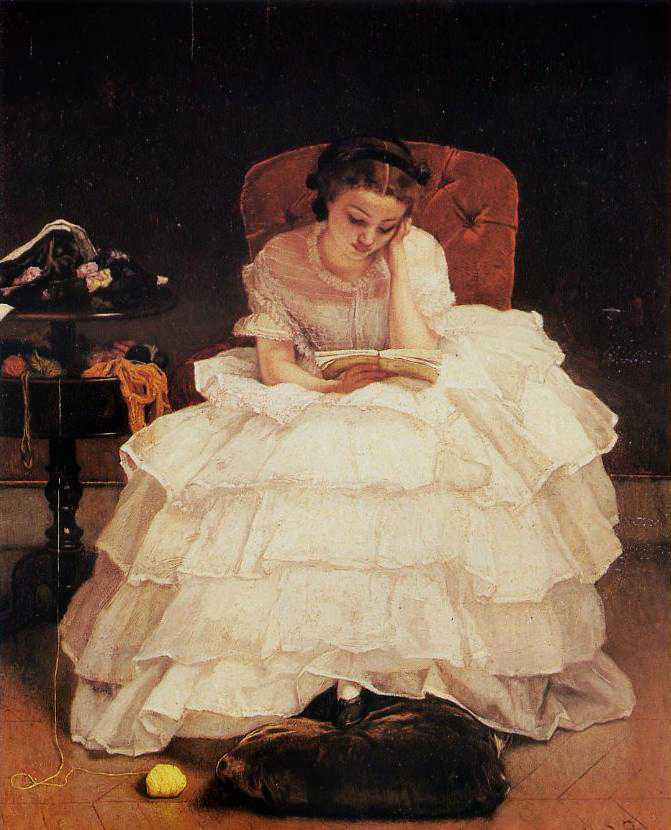
Yet when I’m sick and not feeling like my sunshiny self, I pull back—I crawl back into my active imagination and, like a sensitive child on a rain-drenched day, I curl up inside of my lonesomeness rather than seeking playmates.
So what should we do when those we love don’t return phone calls or texts?
What should we do when we want to give someone we care for space while still making them feel loved and supported?
We do this:
1. Call me and text me, but don’t take it personally if you don’t hear back quickly.
2. Make sure to tell me that you adore my company, even when I’m gloomy.
3. Understand that, though extroverted, I’m a whole person and I am okay on my own, just like someone who is deeply introverted. While I might garner energy from spending time with others, I too enjoy and need my alone time in order to be a healthy individual.
4. Ask me what I need. Don’t assume that I want to be left alone. Don’t assume that I want to be bothered either. I’m human and my needs vary, so don’t be afraid to ask me what exactly it is that I need from you.
5. Understand that simple interactions are meaningful. That hug you gave me; the smile from your eyes to mine; the text that succinctly said “I love you”—all of these made me feel supported and loved when I also felt under the weather.
6. Don’t hold back. You’re in my life as a friend or partner because I’ve chosen you to be there; I’ve trusted your judgment as a person and I respect and value the way that you decide to react in situations. In other words, follow your own instinct in our relationship too.
And as the days go by and I return to my more typically joyful self, I’ll remember who it was that held my heart up high for me when I wasn’t up to it—and I’ll thank you with love in return when these tables are reversed.
Photo: Flickr/Plum leaves
The post How to Care for a Reclusive Extrovert. first appeared on Jennifer S. White.
]]>The post 26 Signs of a Creative Soul. first appeared on Jennifer S. White.
]]>
“For me, insanity is super sanity. The normal is psychotic. Normal means lack of imagination, lack of creativity.” ~ Jean Dubuffet
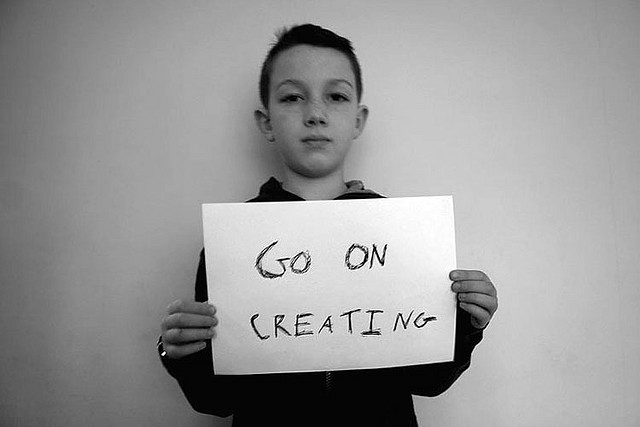
There’s a spark that flickers within all of us.
Sometimes it burns and burns and catches fire.
Yet for others, it’s put out by the occasionally cruel world or, worse, by ourselves.
There are legendary, and frequent, sad stories of this fire growing out of control—consuming the talent, the person, or both—but there are more stories of flames that could light the entire night sky, for all the world to enjoy—and it’s these that we’ll celebrate within this particular piece.
Here are 26 signs of an artistic, creative soul:
1. We don’t wait for inspiration—we are the inspiration.
2. We might still have a day job, but that doesn’t hinder creative—or productivity.
3. We believe in ourselves, even when it feels like the world does not.
4. We are tenacious—and not only because we know that an artistic temperament is dogmatic, but because we have no choice but to keep on creating.
5. While we believe in ourselves, we also believe in the talent of others—we drink in the art and work of our peers and we learn from it whenever possible.
6. We know that our early work is definitely different from our emerging, more sculpted talent—and we can’t wait to forever witness our own growth continually take shape.
7. We take breaks from producing in order to live, but we never take breaks from being creative; finding fodder in life too.
8. We never work tomorrow when we can work today.
9. We appreciate other art forms.
10. Creative souls come in a variety of colors and styles, but one thing that regularly matches is our passion, our drive and our willingness to be different.
11. We think “weird” is a compliment.
12. We don’t follow the rules of tried-and-true molds from previous artists—we create fresh, new ones.
13. We may or may not have good business sense, but we absolutely see the benefits—and joys—of networking.
14. When we tell people that we’re “self-employed,” we don’t care if they think it’s code for “unemployed.”
15. Even when “self-employed” feels like it translates to “unemployed,” we continue forth with our dreams because we can’t do anything else.
16. Our work clothes and our play clothes are often the exact same thing.
17. We’re observant—we may or may not be empaths (many of us are), but all of us have “observant” encrypted within our DNA.
18. We expect failure.
19. And then we get back up.
20. Time does not exist when we are working within our medium.
21. Whether introverted or extroverted, we see alone time as a way to rejuvenate, and we see social opportunities as a way to become inspired.
22. We believe in ourselves, but we can be pretty harsh critics too.
23. We generally have problems with authority, because we embody innovation.
24. We aren’t afraid to ask questions.
25. We care more about quality than quantity (and this includes public opinion).
26. We’re moody—and we take advantage of this with our art.
“Creativity is just connecting things. When you ask creative people how they did something, they feel a little guilty because they didn’t really do it, they just saw something. It seemed obvious to them after a while. That’s because they were able to connect experiences they’ve had and synthesize new things.”
~ Steve Jobs
Photo credit fotologic/Flickr.
The post 26 Signs of a Creative Soul. first appeared on Jennifer S. White.
]]>