The post 6 Things to Start Doing in your Yoga Practice Now. first appeared on Jennifer S. White.
]]>
The physical practice of yoga has so much to offer.
It gives us time away from our minds and hearts and space to grow and inhabit our present physical states of perfection. More, yoga offers us the gift of experimentation.
With these following suggestions, I offer you the opportunity to try new things within your practice.
Often, we get stuck within a “this is the only way to do a pose” mentality or we become afraid to toe the line of what’s acceptable and proper—and what’s not.
Here’s what I think: if it feels good and it’s healthy for you and for your body, it’s acceptable.
Yoga is a balance and part of that balance means embracing your present circumstance, your present posture and your always changing ability to shift, grow and advance in new—and possibly unlikely—directions.
In short, try something different. Try this:
1. Stop obsessively flexing your foot in pigeon pose and start “barbie footing.”
Catch: this is for the majority of people who have shins that are not parallel to the front edge of the sticky mat; rather your foot is slightly tucked inward and towards your opposite hip-crease.
In this case, flexing your foot likely causes sickling of the ankle, which is never ideal.
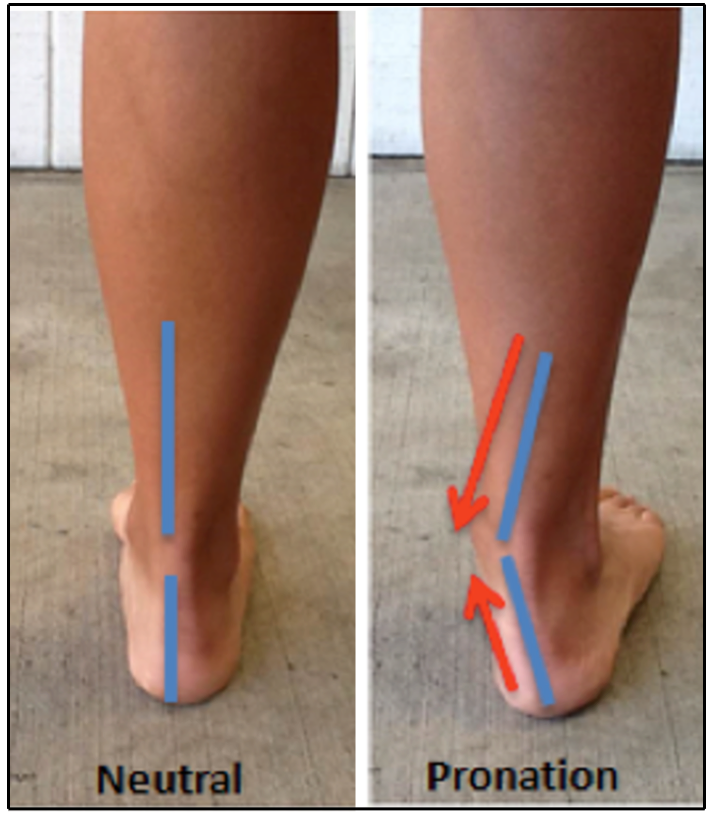
The above images are sickling during standing. In pigeon pose, I’m referring to the shortening the inner ankle—and taking your ankle out of a safe, neutral position.
So, yes, you do want to flex your foot if you’re able to fully get your shin parallel to the top edge of your mat, but if your foot is tucked in, play around with fointing your feet (otherwise known as the barbie foot).
Basically you’re flex/pointing your feet so that you are still slightly flexing (and protecting your knee) but you’re also extending out through the balls of your feet. (Seriously—envision a plastic barbie’s foot and play around with it—and with what feels good to you and your pose.)
2. Eclipsing your heels in downward dog.
As long as we’re on the sickling thing, get into downward facing dog and look at your ankles. Many students are shortening through the inner ankle in this posture as well.
The more common cue is to be told to roll your inner thighs apart and back—this helps lengthen equally through the leg and through both sides of your ankles. However, many students aren’t able to feel this in their bodies yet or, moreover, they think they’re feeling it, but the action isn’t working completely.
Instead, in your down dog, look at your feet and eclipse (or hide) your heels from sight. Notice how this helps equally lengthen through both sides of your ankles. (Then possibly notice how this change in your feet changes what you feel in your legs as well—starting from the ground up.)
3. Coming into extended pigeon pose with engaged legs.
You’ve possibly been told (I hope, at least) to level out your hips (touch your frontal hip points and they should be even) before coming forward (and maybe resting your head on a block or the ground). Additionally, you should experiment with engaging your legs.
Come into pigeon pose and momentarily curl under your back toes (the toes of your extended back leg). Lift your knee off the mat and begin to bring it in and more towards your center line (you know, that roll your inner thigh up and back thing again). Feel your inner thighs hug in towards each other and how this might bring your hips more off of the mat—that’s okay.
Continue to activate through the inner thighs this way and then take your palms flat in front of you (think downward facing dog arms). Next, without moving your hands, create the action of pushing the floor away with your hands as you press the shin of your front leg into the mat and back (again, without actually moving your leg backwards).
From this committed engagement, uncurl your back toes and allow the top of your back foot to rest on the mat and walk forward with your hands any amount that’s comfortable (or stay lifted).
This engagement creates proper pelvic alignment and sets you up for a more effective and safe stretch. (And this is also a huge reason to level out your hips during the posture, as previously mentioned.)
4. Set up for savasana, like you would in any other pose.
Savasana is a pose too. Actually, it’s the most difficult pose. (Read this for more detail on how to properly prepare for the pose of final relaxation.)
If you take the time to create equilibrium throughout your body in savasana (seeking out that same yogic balance that we do in all other asanas), you’ll be significantly more able to find savasana’s ideal relaxation and ease.
5. Breathe.
Okay, in all fairness, you definitely know to be doing this during your yoga practice. I’m nearly positive that you’ve been told something along the lines of if you’re not breathing, then it’s not yoga. And yet at one point or another, nearly all of us are guilty of going too deeply into a pose and at least hindering our best breath or, more likely still, we’ve encountered colds, sinus issues, etc, etc that prevent us from working our ujjayi breath at all.
Let me tell you, coming back to my fullest practice after sinusitis, bronchitis and sinus surgery has reminded me that it doesn’t matter how long my hamstrings are or how strong my core is if I cannot breathe during the process.
So, please, all I ask is that you continually check in with your breath not just throughout your practice but also consistently ask yourself if your breath or your poses have become the most important factor as you move—and breathe.
6. Press into your inner hand while transitioning from chaturanga (low plank) to upward facing dog.
This pose is similar to a triceps push-up—like it or not, that’s the reality. However, when you move from your low plank, or chaturanga—and remember you can drop your knees—press into your inner hand (the base of your thumbs and index fingers) while lifting up into up-dog.
Much like your feet helping to properly engage your legs, your hand placement helps to properly engage the muscles of your shoulder girdle. Without getting into too much detail (in this blog, at least), try it and see what happens. I’m confident you’ll like the results.
I have a few other things that I wanted to add to this list.
I wanted to talk about your hips in Warrior II and more about downward facing dog as well as your shoulder heads during chaturanga and arm balancing—but I don’t want to overwhelm.
Instead, my intention is to create excitement for you and for the many new and fresh things that you can continually be changing up within your practice. There’s no reason to ever become bored on your mat and there are always ways that we can continue to get in touch with micro mind-body movements in order to become healthier and happier within our poses.
So play around. Yeah, do that. Actually, if you never stop doing that, then you’re probably doing just fine.
Photos: Author’s own; Wiki Commons;
This article was first published by elephant journal.
The post 6 Things to Start Doing in your Yoga Practice Now. first appeared on Jennifer S. White.
]]>The post The Caged Girls: The Prologue Through Chapter Three. first appeared on Jennifer S. White.
]]>The prologue.
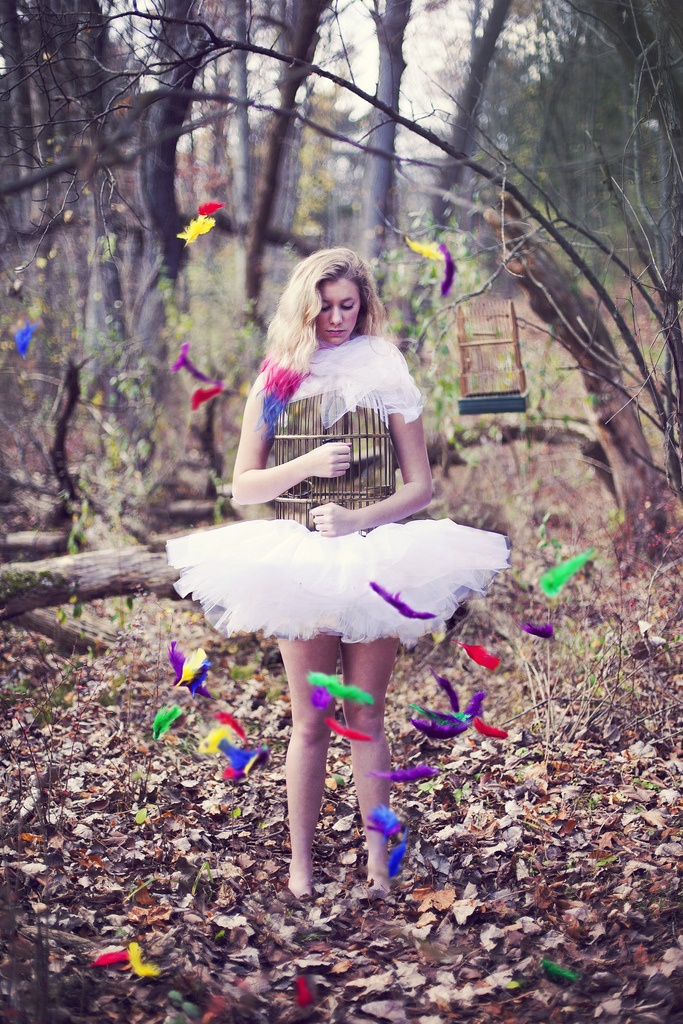
My body used to be a cage.
I used to claw and worm and wriggle and starve myself to fit through its bars.
Because the real me was trapped inside. Desperate. Aching. Lonely. Fearful.
Angry.
I was angry that my huge, bright spirit had to be contained within such a simple, limited form—and I didn’t accept these limitations, so I fought them.
I fought them for years. I fought with everyone around me too—it was their fault after all; their fault that I was too big to belong.
Because not all of us can be small and tiny and delicate, even though society wants women like this. No, some women are bossy and domineering and crude and loud and hilarious and, by default, manly.
And men are expected to be big and bright—actually, men are held within cages when they aren’t big enough—but I was a woman, and I was supposed to play the part. And so I did.
I threw away my careful, mother-packed brown sack lunches in the ugly, grey trash bins in the junior high cafeteria. Or I kept them on the top shelf of my locker until I had a week or two’s worth of rotted lunches and pitched them all at once, somewhere quickly and quietly.
And I needed to be quiet.
Not loud. Not boisterous. Certainly not unstoppable.
So I stopped myself first. (Which gave me a fictitiously dangerous semblance of control.)
I—so out of control, however—would be sent to the school nurse’s office to lie on the cold, hard “bed” with horribly low-count sheets because I was too emaciated to have the energy to sit through class; nearly passing out (so out of control was I).
I went from a cheerful, silly, large girl to a frightened, tiny mouse—not a person at all, much less a girl growing into a lady.
But I was never physically large. Sure, I was chubby enough to be picked on by peers. I loved food enough to not understand the children who got up from the white Formica tables to throw away their mother’s deserts.
I read my mother’s hand-written I love you notes every day; stashed inside those careful brown sacked lunches. I collected the Suzy’s Zoo stickers—inside too—within a photo album, behind clear cellophane.
And I felt loved. But I knew I was too big for people besides my loving mom.
Because I saw the pretty, polished things that I was supposed to be.
I already knew movie starlets with sweet, low voices and coquettish, comely charms.
I knew that I wasn’t a girl, because girls were supposed to be nothing like me.
But then I grew angry. I became livid. Because I was a woman. Suddenly and overnight. The starvation didn’t stop my breasts—entirely. It didn’t stop my hips from widening and my heart from expanding in its need for love that was different than my mother’s.
I hated the boys I went to school with because they were allowed to be big and brash and happy. They were encouraged. They didn’t have to shrivel up and whither in order to fit within another’s deplorable pleas to be better than you when they really weren’t.
So I shouted. I screamed. I grew. And I grew. And I breathed fire breath. Until I met him.
He saw me on the front porch and around him—from that first instance of awareness—I knew, once more, that I was not a man, but a woman with girth.
Around him I was huge—and he let me be. Because he, too, was big enough to not have to squash me underneath his own smallness.
So he slipped me the key, between the bars that had contained me for many, many years. I gingerly opened the door and I wouldn’t come out. He waited patiently on the other side, sticking his hand in to hold my tiny, gaunt one.
He would occasionally crawl inside my bed, and bury himself underneath my coarse, starched covers; sleeping on that cold, hard “bed” with me, so that I might not have to sleep alone anymore.
And he lured me out—with the prospect that I didn’t have to be invisible anymore. He could see me—and that was enough.
We walked through the high school hallways together and I, for awhile, was his muted shadow; the one he laughed with and played with and fed, but that others couldn’t see.
He brought me back to life.
His firm, young man’s hands were electric paddles that restarted my flatlining chest.
His lips were Snow White’s kiss—only I would never have to be a Snow White.
I would never have to be fair and cute. Or quiet. Or tiny. Ever again.
My body used to be my cage. Until I outgrew it.
I held onto that cage for sometime. I would peer inside and want to visit it again and again, for stays of different lengths. Of course, I had to be darling Alice and eat the right things in order to fit back through that tiny door.
But every time, I would hear a knock on the hollow metaled bars and finally one day I couldn’t fit back through the door anymore. No matter how hard I tried—because I didn’t want to anymore. Because I wasn’t angry anymore. And I wasn’t sad either.
No, I was, for the first time, able to understand that being caged wasn’t my place. I didn’t belong there. I never had.
I’d been used. I’d been wronged. I’d been treated reprehensibly—by myself.
And, yes, he’d given me the key to seeing myself through the eyes of love, but I couldn’t live behind his glasses. (He wears a different prescription.)
Instead, I had to accept my limitations. I had to accept that I might never have 20/20 vision. I had to become okay with my largeness. I had to own, in short, my voice. If I didn’t, who would?
He left me. Several times, he left me.
He couldn’t keep crawling into my bed. The sheets scratched his tender skin, and my caged heart—so perfectly quiet; so perfectly cold—froze him.
And he realized he couldn’t free me; that all he could do was be locked up with me—and he didn’t want to live inside of a cage.
Because he was too big and he knew it.
He left, but he came back, for stays of different lengths.
We didn’t know it then, yet inside of that jail cell we had become chained together, and we would throw the keys at each other so hard that we had scars, but, no matter what, we would still wind up chained.
My body is a cage I’ll be locked in forever, until my death.
My body is not my cage, though—it’s my home.
As it turns out, all I needed were some softer sheets, a few mirrors and permission from my jailer to visit the grounds from time to time.
My jailer?
I’m my own jailer; I’m my own master, too.
And, like him, I was too big to fit inside the one that society had placed me, after I was swaddled in pink and handed to my mother.
So I threw it away. (Honestly, I burned it—and I tattooed a blue phoenix on the body that rose from those once-jailed ashes.)
And then he and I were handed a pretty, tiny bundle—wrapped up in pink; while I kept these pink sheets for her, I painted her walls blue.
(Oh and I’m handing you the key. And when you get out, promise me to burn your cage and give this key to the next caged girl, until we are all standing together amongst the burning smell of metal, big loud and free.)
I lie in savasana and I realize something so profoundly life-altering that I begin to feel the intense need to sob—the kind of weeping that’s desperately unattractive.
Eyes swollen.
Eyelashes clumped together through wetness that looks out to the world as though from behind a Vaseline-smeared lens.
Body shaking. Soul pounding. Heart-wrenching. Not-okay-gut-grinding sobs.
But I don’t.
Instead, I lie there, moving just slightly more than usual—a twitch of a finger here, a slight rotation of a wrist there—and it isn’t until my teacher kneels over me and, with the gentle, loving, circular motions of her softly padded thumbs, begins to anoint my temples and forehead with a soothing blend of essential oils, that a slow, quiet trickle slips past my dry-fringed eyes.
And while I’m no longer caged, I’m not free either.
Not yet.
Chapter One.
I look down at the pool of water collecting in my belly button.
The water is see-through but orange—a strange swirl of the red and yellow water-coloring tablets that my daughter had gotten from a friend for her third birthday.
Our legs are intertwined and I observe our identical feet, with hers resting delicately—yet authoritatively—on top.
The orange-and-yellow-swirled water cascades down the front of her head, dripping into the crevices around her eyes and moving fluidly and easily through her loose, brown curls of hair.
She giggles so deeply—so richly—that anything outside of that moment—of her sunny smile and her throaty laugh—is instantly lost to me—all that exists is this one small space of time within this bathtub.
She points to my ankle and makes an “O” shape with her mouth, to indicate her curiosity of its official name.
“Ankle,” I say. “Mommy’s ankle,” I over-pronunciate.
She laughs again—this time at seemingly nothing—just life is worth a good snicker. (Or maybe it was my own smile, directed at her, that is being reflected back—like the smooth, glassy surface moving around our naked bodies in the bathtub.)
I look down at my belly button ring—a faux-diamond studded, miniature disco ball of sorts—and envision myself pregnant.
(I’m not pregnant, but I don’t know this yet.)
I look down and see the gentle rise of my stomach—that obvious, slightly dome-shaped swell of my abdomen—and I’m even happier, if this is actually possible.
And I realize—in this split second within that bathtub with my daughter—that I’m ready for another child; I’m finally ready.
After everything we’ve been through together, I wasn’t sure I’d ever truly be ready—but I am.
And it’s my second chance—I realize this too.
Not at parenthood—the sheer perfection of my gorgeous, darling girl is one reason I felt already completed after her birth and, subsequently, challenged to desire another. Rather, it’s another chance…at me.
I decide to write a book called “A Second Chance.”
I sit down at both my slightly gouged, nicked dark-wood dining table with my laptop and, alternately, in my childhood rocking chair—the one that my husband put skateboard ball bearings in a few years ago—with my turquoise and brown textured notebook and a simple ballpoint pen.
The words are lodged within me like empty, unformed, quaking crying episodes—like all of those tears that I’m too exhausted to shed. I bottle and cork them up, with a hand-written rescue-me note inside, and I seal it within the tomb of my caged heart.
And this profound, life-altering realization came upon me as quickly and wildly as a slap in the face—an emotional sucker punch—I do want a second chance, but with her—the one I already have—and with me.
Chapter Two.

The cold, black infiltrates my bedroom window.
Impatiently I stare at the too-bold moon, creeping inside my turquoise bed like an uninvited stranger; a straggler; a tempestuous outcast that I both despise and feel unfairly—and incorrectly—aligned with.
The family heirloom ring that I religiously wear on my right hand slips and tilts to the left slightly as I clickity-clack, clickity-clack on my laptop keyboard.
The translucent skin of my thin hands is marbled with blue and green veins beneath it, and the chill of this wintry air is felt from their tips, up to the tip of my nose. My rigid spine is lax and droopy, but just at the shoulders—slouched over my work and made unusually small by my wilting heart.
Stiff—I’m made stiff by my caged-girl status.
She sat at the white Formica table, a schoolgirl of barely seven, with her brown sack lunch in front of her, spread out on a thin paper napkin sent from home, along with a sandwich, a juice box and packaged desert.
She unwraps the clear cellophane—tearing open one corner—and peeks over her shoulder at the girl diagonally seated from her, eating kiwi and talking loudly.
She feels loud inside—like the girl seated near her—but she feels small—invisible—here at this white Formica table.
She throws the empty plastic into the grey trash bins perched in the center of the room where an unhappy, middle-aged woman monitors the students’ discarded waste thoroughly—as if these sad trash contents are worth more than the tiny people seated on the matching white Formica benches in front of her.
Quiet footsteps carry the small, invisible girl back to the table—and back to her waiting cage.
I wasn’t always locked up, but I was never really a girl either—I mean, I was never truly a child.
My first memories are from well before the age of one.
I would reach through the bars, trying to touch her, between her own bars.
We would graze fingertips—if we were lucky—but I think that’s only in my imagination, because I don’t think we could actually reach. More, we would stare at one another through those bars; our eyes partially concealed by long, thin planks of white-colored wood.
Growing up a twin isn’t as special as you’d think, in part because I didn’t grow up any other way—there were no other siblings besides us two and we never knew what it was like to not be a twin.
Simultaneously, though, our minds and thoughts and sensitive feelings were always intertwined—much like our fingers through those bars of our cribs (at least in our imaginations) —in a way that we knew most children and siblings couldn’t understand, or didn’t want to.
What? You can’t talk with your sister without hearing her words? You can’t tell that she has a headache unless she tells you? Oh. Hmmm.
Being part of a person has its ups and its downs.
I expect more from relationships and from people in general, and I’m usually disappointed, but more with my own inabilities than with theirs.
Still, I’ve never been as jointly exhilarated and disappointed with my performance than I am with myself as a mother.
One-half of me knows that I’m amazing—that my caring, thorough, thoughtful nature can fully shine from behind mothering’s rosy-pink-tinged shades—and yet that other half can’t help but understand that I’m the same selfish, detached person I was before I had her one unexpected, humid summer morning.
I always thought that having a baby—especially an infant girl—would be what finally sets me free—but it wasn’t. And I’m not.
I’m still caged—and my worst fear is that I will unwittingly build her a matching set of heavy, metal-linked bars, chained completely with mine.
My dreams for her, however, involve more than an untouched ivory tower—we all need to be held captive in order to relish freedom, when it finally does come.
And I don’t believe in heaven, but I don’t believe that life is a waiting-room hell either.
I believe that girls can wear pink, and that they can don blue too. I believe that girls can play popular, televised sports and also stay home on Friday nights, twirling their hair around fine fingertips, snapping bubblegum between their teeth as they speak in low, hushed tones into the telephone.
I believe, also, that when a daughter is born into the world, no matter where she arrives, that she comes with her own miraculously shiny, all-ready-for-her cage.
We are all caged girls, whether we like it or see it or not—and our masters and our jailers are all wearing cloaked masks, so that we might be prevented from intercepting this buried seed: we hold ourselves prisoners.
Each morning we wake and double check that our handcuffs are still locked in place.
Chapter Three.
The sun beats down on my sweat-lined tank top as I hike past the excrement of skinny cows, grazing from the mountain’s green-blue side.
I stare ahead at the orange-red dirt-packed trail and know that, surely, I can walk no further—I’ve reached my edge—my limit; I’m done.
And just when my pounding heart’s rhythm is about to momentarily pause and sink with the lowly finishing of a loser, I plow ahead, past more cow droppings and, soon, I find that I’m at the summit, peering over a steep ledge at the pink and orange setting sun.
The darkness falls across my cold shoulders like a gentleman’s thick, dark navy dinner jacket. The man standing next to me—the one who’s stood by my often grouchy side for the past several years—isn’t wearing such a heavy dinner jacket, but a salt-sweat drenched, faded red t-shirt.
We grin with easy health, but without pride, at one another; through sand-gritted teeth, the wind mussing up our hair, making our overheated bodies shockingly cool.
We set up camp and uncork a bottle of white wine.
We screw our camping wineglasses together—stem to cup—and the hollow sound of plastic fills the expansive mountaintop air as we push them together in cheers.
We sleep well and wake early, making bad coffee that we would never drink at home—in front of our blue-and-green plaid placements at our dining room table, in the middle of nowhere, New Mexico, we only drink press pot and freshly ground.
And then—suddenly—we wake from our hazy mountain dream and we’re packing—but not for another hike on our familiar, rocky hills. No, we’ve packed up to move out—for good (for now).
We stop at descent motels and pour flimsy plastic cups of pre-made waffle batter into minute-timed machines.
At one such breakfast, a seemingly random girl in an ugly fluorescent tie-dyed top pretends that she deserves some sort of tip for not letting us get our own waffle from the machine. Instead, she slips the dimpled pancake onto a Styrofoam plate and hands it to us, smiling, like she’s our special, tie-dyed, God-gifted waitress
We eat quickly and leave the motel, laughing at the absurdity—not just of her, but of life–and of our new destination out east.
Somehow we know that we’ll hate it, but we go through the motions of faking a happily anticipated life, there on the other side of two time zones.
I drink so much bad coffee during our road trip that I’m nauseous, light-headed and even more irritable than normal, although I manage to contain this within my caged-girl walls.
But I feel polluted—and I feel more caged than ever as we head to the other side of the country with our belongings piled behind us like the Beverly Hillbillies.
Keep reading! Click here to read the next two chapters.
Photo credits: Flickr: tanahelene, Author’s own.
The post The Caged Girls: The Prologue Through Chapter Three. first appeared on Jennifer S. White.
]]>The post 5 Ways to Advance & Shine in Upward Dog. first appeared on Jennifer S. White.
]]>
Upward-facing dog might be one of the top 10 yoga poses (after all, it is in the sun salute series), but this pose is not simple or even for many yogic bodies, regardless of their time spent on the mat.
However, the more time I spend shifting my hips from upward-facing dog to the inverted-V of downward-facing dog, the more I realize how complex this posture is.
Because many yogis (and non-yogis) incorrectly assume that the more time we spend inside of a yoga pose, the easier it becomes. While the pose might become more familiar—and possibly physically accessible, too—the shift towards being able to feel micro-movements of the body surely arises the more and more we practice.
I mean, up-dog is actually a pretty strong backbend—and one that takes a long-term relationship to feel out.
I’ve been practicing yoga since I was a teenager, and I’ve had a near-daily vinyasa practice for about nine years—yet I’m still in awe of this pose.
So here are five ways to help us all get more out of our upward-facing dog:
1. Practice child’s pose.
While child’s pose can surely be a great “rest and come back to your breath” pose, it can also help teach proper arm alignment.
Start in child’s pose with arms extended long in front of you and press into the hands as you lift your forearms away from the earth (this is often referred to as the rebound effect).
Next, begin to wrap your triceps in and down, creating the sensations of openness throughout the shoulders and softening in the upper trapezius (at the base of your neck).
From there, internally rotate through the forearms as you also press into the base of your index fingers and thumbs.
Remember this same arm engagement for your upward-facing dog and then…
2. Take this into your downward dog.
Once you’ve begun to access this complicated maneuvering of your arms during child’s pose, start by taking these actions into your down dog.
Once in downward facing dog, bend your knees to focus initially on the upper body.
Stretch and reach through the arms—particularly from the imaginary line running from the tip of your pinkie fingers to the shoulders—and the spine and side-waist muscles without crowding your neck (keep the broad, soft spaciousness of the upper traps you had in child’s pose). Preserve this and straighten the legs.
Recreate the tricep wrap from child’s pose, noticing that your elbow creases will begin to face the top of your mat, and equally feeling the pronation of the forearm—this action of externally rotating your upper arms at your shoulders while still pressing into your inner hand. It’s more challenging than you’d think, so be patient.
One tip is to focus this internal movement of the forearm from above your wrist. If you focus too strongly on perfecting the tricep wrap and then just pressing through your inner hand, too, you might strain the wrists or elbows over time.
Another personal tip from a joint-sensitive yogi: keep your elbows straight but not locked. A micro-bend is okay but, honestly, bending the elbow too much puts strain on that joint once you get into your upward facing dog.
3. Reach through your toes and press down.
The action of your legs is crucial to creating healthy spinal curvature during upward dog.
Think of how you used the press of your hands in your child’s pose to lift energetically up through the forearms—creating lightness and ease and, simultaneously, activity—and then use your legs in a similar fashion to get more lift through the upper spine, so that you don’t dump into the lower back.
Reach actively through the legs like you’re trying to touch the back of your mat and then press down evenly through every toenail, including and especially the pinkie so that you lengthen completely through the lower spine.
4. Slightly tuck your tailbone.
In all backbends, it’s wise to lengthen through your lower spine by engaging your lower abdominals and lengthening the tailbone toward your heels.
It’s kind of like you’re trying to create a forward bending action within your backbend—and to me this is the epitome of yoga—this fusing of opposing forces.
Moreover, you want to feel evenness throughout the entire length of the spine—and this tuck will help.
5. Pay attention to your chin.
Your chin will help you get in touch with the degree of curvature in your neck.
For many bodies, not looking up in upward dog is best—keeping a long, wrinkle-free back of the neck. For all bodies, however, it’s best to not jut out your chin regardless of where you take your gaze and the degree of arc you take to your cervical spine.
I’m not suggesting that you overly tuck your chin during this posture, but do make sure that you’re not jutting it out (this is so common, unfortunately, in most backbends, not just up-dog).
As yoga practitioners, we visit upward dog regularly, and, much like life, the opportunities for true growth and transformation often happen right here, in the spaces and places that we frequently inhabit but become too cozy and familiar with.
And there are so many ways to ceaselessly advance within a posture like up dog, but the most important thing is to never take ourselves or our practices too seriously.
So have fun, play around and feel the true opening and evenness that can accompany a well-refined upward-facing dog—because when we expand and open up in backbends, we’re also opening our hearts up to all that life has to offer.
It’s time to shine—what are we waiting for?
Photo: istolethetv/Flickr.
This article was first published by elephant journal.
The post 5 Ways to Advance & Shine in Upward Dog. first appeared on Jennifer S. White.
]]>