The post The Caged Girls: Flying Above the Storm. first appeared on Jennifer S. White.
]]>
Visit here for more of The Caged Girls.
Chapter 29.
My pen rolls across the paper—fluidly—and my words come out almost sloppily. (It’s not my usual, preferred ballpoint pen.)
My fingerprint-laden aviator sunglasses—the ones I’ve had for nearly a decade, with gold rims and the lenses that make the world appear brighter—rest in the cup-holder next to me, to my left.
The warmed car seat beneath my thick, off-white winter peacoat helps me to relax.
My rose gold and turquoise ring—a family piece that’s circulated within us for over 100 years—falls slightly to the right as my thumb and first two fingers press into the firm rubber grip of the black pen, gliding smoothly along my decomposition book.
My cheek itches suddenly and I pull down the mirrored visor to look.
Distracted, I notice the way my dark brown hair wisps out of the copper barrettes that pull it back on either side, creating a few haphazard chunks around my temples.
My forehead has maybe three shallow lines running across, broken in the middle and making it, more accurately, six.
My fine eyebrows arch high and I admire the perfection of their shape (thanks to a recent salon visit).
My eyes have light imprints of sleep-deprivation underneath them that appear somewhat like purple-tinted shadows. Above these shadows, I observe that today my eyes are more blue than green. This changes easily, though—due supposedly to my black Irish ancestry—and I trace the yellow that faintly edges my pupils, lending to this color changeability.
I hear the trunk pop open and smile intuitively at the sound of my husband returning to our little silver Jetta.
I feel the soft, grey light hit the surfaces of the car interior and I hear, once again, the sound of my daughter’s music playing through the speakers. I’m no longer alone inside of my mind and, although it takes me a moment to collect myself and shake free from my thought stream, I smile again; knowing that life isn’t meant to be continuously lived inside of ourselves.
He climbs into the driver’s seat and reaches for my hand. After squeezing it between his much larger thumb and forefinger he pulls away from the two, diagonal yellow lines—and towards the pink and peach setting sun.
Chapter 30.
My fluttering heart stopped beating.
At least it felt that way—time standing still and you swear that you can see a humming bird stopped, mid-flight over your shoulder.
And then it ends and time starts up again, but it’s still slower for you—making the speed of the world overwhelming in its unnecessarily rushed and hurried pace.
When something stops you in your tracks—a loss, horrible news, a heart-cutting blow—it doesn’t seem fair that life shouldn’t pause while we grieve and figure out how to collect ourselves in order to stand back up.
These incongruous places in life can feel hollow and desperately alone—and it’s when we feel hollow and alone that anorexia can become an unfortunately welcome friend.
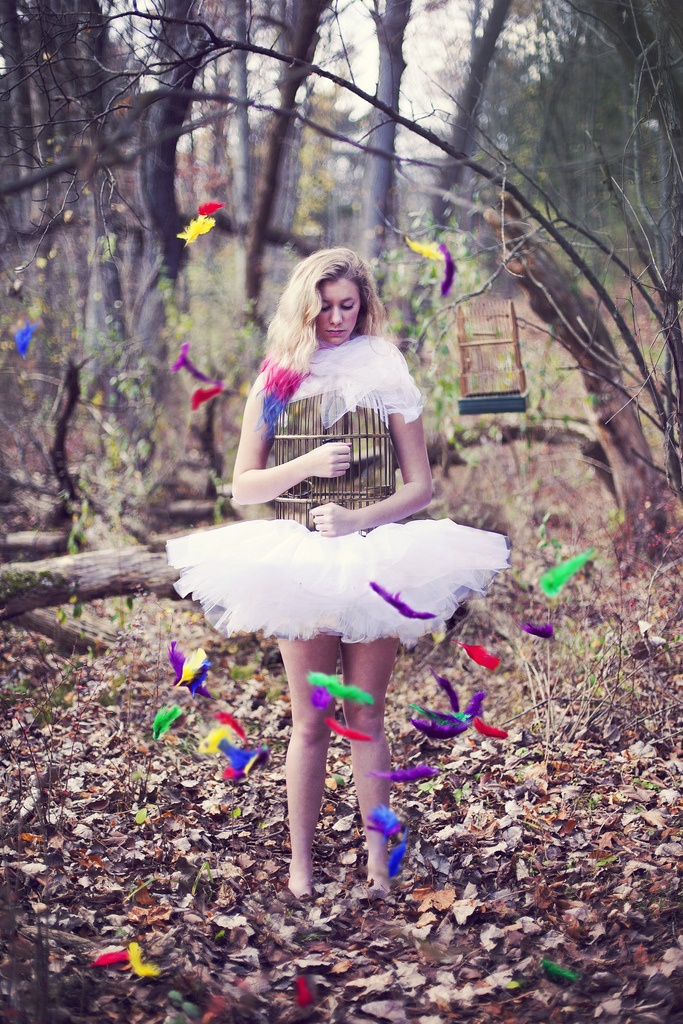
But anorexia is absolutely a frenemy—not a true friend. It doesn’t make hardships easier to deal with—it adds on to them; it becomes a distraction and, if we’re being honest, this is what we’re really seeking.
So, although I’m that rare once-anorexic bird who is completely recovered, I have to pay careful attention to myself—and to my heartbeat—when life deals me merciless challenges—because I know that I’m not immune from turning to an eating disorder to cope—no, I’m much more likely, considering that this is exactly what I did for years.
And there’s another cutesie saying that occasionally floats around the internet and pisses me off: fat is not a feeling. Because fat is absolutely a feeling—with an eating disordered person, that’s a perfect description of what it is.
And when, finally, we are ready to move forward from this night-terror of a coping mechanism—to begin picking up our pieces and moving a tiny bit closer towards our healing—we first need to admit what emotions we’re avoiding by feeling fat instead.
Anxiety?
Depression.
Loneliness?
Fear.
What is it that’s going on within the framework of our lives that we are trying so hard to avoid that it’s easier to abuse our bodies? (Note: this is where therapy can be helpful, within these early stages of the healing process.)
For me, I’m usually avoiding something that’s severely upsetting and that I’m not in control of—a situation with a family member, an illness, a death—and my eating disorder gives me that wonderful, false semblance of control.
More, it gives me something else to focus my mind and emotions on—my caged, needy body.
Chapter 31.
My fingers work clear, thick shampoo through my hair.
I close tear-rimmed eyes as white lather spills down my back.
Warm—almost hot—water runs down the length of my body, to my feet and down the drain near my toes—and I wordlessly beg for it to wash away anything that I don’t want to hold onto anymore.
I don’t want my guilt. The soapy water can have the fragments of my broken heart too.
I’m also ready to leave behind my anal-retentive need for authority—that piece of me that wants every minute, self-created element to fall in line with a cruelly fictitious plan that’s never played out correctly anyways.
Because I’m not in control—not wholly. Rather, I’m in control of the way that I react.
I’m in charge, also, of my actions. (Which reminds me of a few other things that I’d like the hot water to wash down this drain).
My fingers today don’t clickity-clack, clickity-clack. No, they sound more like pitter-patter, pitter-patter—light and not aggressive; softly hesitant.
Because I don’t mind sharing my intimate feelings—I want to explain how I broke out of my cage and how I don’t even keep it on my shelf for rainy days anymore—yet this doesn’t mean that I always love revisiting my past.
And that’s the strangest part about no longer being a caged girl, like my former self—the one who lived, at times, small and contented and, in others, angry and hostile—she doesn’t feel like me anymore. And when I step back in time and put on her fragile glass slippers and wear them around to see how well they fit now, I discover that, like Cinderella, they’re still perfect, and it scares me more than anything—the reality that I really was her and that she’s not just some character in a story.
Pitter-patter, pitter-patter—I want to tell her that she’s no longer welcome in my home with the sunny, open windows, but I know better—she’s more likely to come snooping—peeping—around if I ban her from my heart.
So I content myself, now, with those, thankfully, rare occasions when my heart stops beating and I can count how many times a hummingbird’s wings beat up and down, up and down, and I content myself, too, with my more reckless emotions and my upsetting human struggles, because it’s when I ignore them that she threatens to move back in—and I like my free—albeit humanly imperfect—life.
And I might not be able to stop my churning heart, nor the busied world from stalling, but I can count the pulsing of my own wings—I can feel the pumping of my reality and I can accept it, even when it doesn’t ideally mirror my quietly quaking soul.
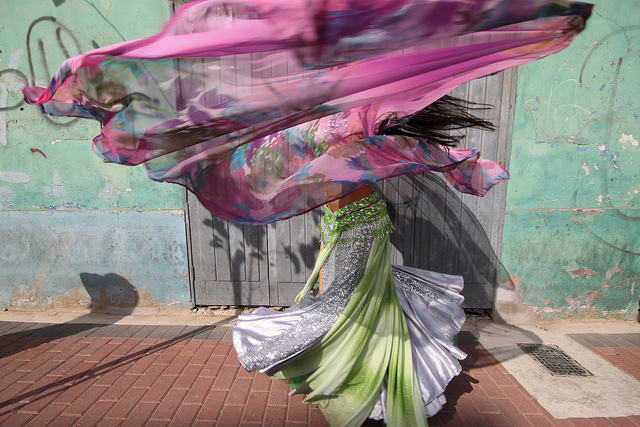
Photo credits: tanahelene/Flickr; Geraint Rowland/Flickr.
The post The Caged Girls: Flying Above the Storm. first appeared on Jennifer S. White.
]]>The post The Caged Girls: A Billion Steps Back—How to Trust Enough to Fail. first appeared on Jennifer S. White.
]]>Part Eight of The Caged Girls: A Billion Steps Back—How to Trust Enough to Fail (Chapters 25-28).
Chapter 25.
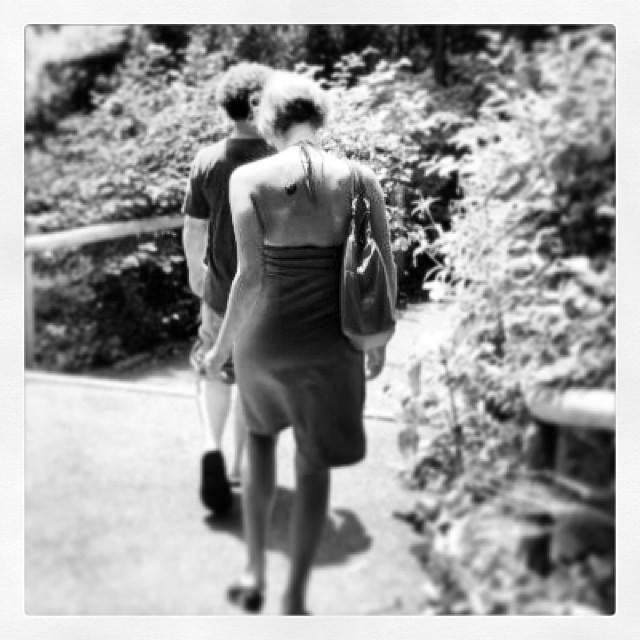
I decided to overcome my eating disorder once and for all because I wanted to get pregnant, and I had no desire to pass along my terribly unhealthy relationships with food and my body to a child.
This is not to shame, blame or guilt any mother who suffers; this is a reality of our world—living in cold, dark cages and not being able to get out, even when we’re raising children—even when we’re raising daughters.
Still, it wasn’t an entirely unselfish decision, my desire to be rid of my anorexia before expecting a baby.
For one, I longed to cherish, adore, welcome and be admirable of my growing body, not disgusted by it. I’ve known far too many women who were hung up on the pounds gained and where and how their bodies changed rather than focusing on the fact that we’re forming a new life!
And yet the first time around, when I was pregnant with my daughter, I pushed myself to exercise when I didn’t feel like it and I ate like a homegrown picture of perfection—although I did enjoy myself and my garden-produced food—but I didn’t let myself truly relax into my pregnancy.
I don’t regret it either—giving birth is the ultimate exercise. (My abs were sore with lactic acid build up for days afterwards.) I gave birth naturally—never having so much as a Tylenol during my pregnancy or her delivery—and when I see women letting themselves get horribly out of shape and eating like anything but the health warriors that their bodies are calling on them to be, I feel sad and I can’t help but wonder how that labor will go.
But we can’t see the future—complications happen, plain and simple—but what about the ones that we can prevent or help to ease along?
My body is a machine; my body is also my cozy, warm, quiet, safe home—my body is both of these things and I wanted to figure out how to treat it equally in these two regards.
Let me admit, this is not easy. We’re conditioned to think in one way or the other—our physical selves as round, supple, womanly places of worship or as rigid, muscle-rippled, health machines. So what I’m asking—and what I asked of myself—is why can’t we be both?
Why can’t we have our cake and eat it to?
So I set on a long, arduous road of keeping ice cream in the freezer but not eating it—or, more importantly, even wanting it—every evening.
I set out to exercise and keep my body in top shape, but not to the point of obsession or ruthlessness with myself. And this is what I learned: when we go to either of these extremes—shunning our bodies as health machines or accepting them in full as such—we are avoiding who we really are.
We’re avoiding our fear or our hurt or our life in a multitude of ways when we don’t allow ourselves to sit still and eat something for the pure sake of flavor; instead heading to the gym or for a walk outside for the second time that day (or third, or fourth, or fifth).
Simultaneously, we’re avoiding our primal need to be strong and to be able to endure life when we sit around and avoid exercise because sweating in a yoga class might mess up our hair or make us have to shower again.
In short, we can’t be recovered from an eating disorder until we learn to accept these extremes and then to couple them together into softer versions. I know this is a huge claim, but I’m standing fully on it—because it’s true.
Chapter 26.
I see so many women claiming recovery when they’ve basically lapsed and gone the other way.
For example, if bulimic, there’s a sense of pride in being able to portion food with extreme amounts of care—and control.
If anorexic, there’s a sense of intellectual fulfillment in watching the scale tip the other way and in eating things previously deemed “off limits.”
What I’ve also witnessed is how these behaviors then usually go to an unhealthy extreme too, causing a set-back or a full-on relapse.
Because part of the life of a recovering eating disordered person is taking five billion steps back for every step forward—and it’s more frustrating than it sounds, which is why many people just give up.
What I’m telling you is this: don’t give up.
The world is filled with people who want to jump and leap and soar forward without ever going backwards—and this is not success; this is not the path to success.
Every successful person out there will tell you that learning to accept failure and defeat is an absolute must if you plan on being a champion in whatever it is you seek. You have to invite failure, actually.
When I started keeping ice cream in the freezer (in—gasp!—quart-sized containers) I would eat so much that I would feel sick to my stomach, but I knew that I had to continue keeping it there, because if I took it away and vowed to never eat ice cream again—as I had cyclically done for years—then I would never learn how to have only a little; that I would never truly heal because much of healing is trust and much of self-love is self-trust.
We’re animals and we’re programmed for feast or famine. I see this even in my daughter.
If she knows that she can have something tomorrow, she’s more satisfied to have only a little bit today, but if I take it away and ban it, then she wants to hoard it when it’s around. (Not that our kids can always choose their diets and portions, but this type of behavior is learned early on.)
And by this type of behavior I mean, partially, learning what’s a “bad” food or a “good” one, rather than keeping foods as merely what they are and discovering that we simply feel better when we consume more of this and some of that in moderation.
But the anorexic and the bulimic don’t know moderation anymore—they’ve programmed themselves into only an extreme and they inhabit entirely that land of do’s and do not’s and of famished and of bursting.
And we’re using food control or lack of control to equal out our emotional selves—which is why we first need to take emotional attachments and judgments like “bad” and “good” away from food.
Chapter 27.
The first time I publicly acknowledged my eating disorder was in an article for elephant journal titled “How to Overcome an Eating Disorder in 6 Steps.”
In it I detailed and defined six critical steps towards recovery.
What interested me was the amount of positive feedback that I received and how many views it got from readers, but how little it was shared.
It interested me because people don’t want to “share” their eating disorder on Facebook. Nope, they want to share a cutesie photo of desert at a gourmet restaurant or a picture of themselves rocking out a fancy-looking yoga pose, which is definitely understandable. People don’t want to place the ugly and stigmatized parts of themselves in public, to be dissected and possibly discriminated against for it later.
And there’s nothing wrong with this—but we’ve become a culture of either over-sharing or over-sharing phoniness.
And it was after the publication of this particular piece that I decided what my writing genre would officially be: writing about—and then publishing—what people need and want to hear but are too afraid to outright admit and ask for.
Chapter 28.
How to Overcome an Eating Disorder in 6 Steps—yes, this bold title was meant to lure people in, but it’s bold because I believe in this process, not because I’m trying to become clickable in an already click-saturated online sphere.
And here’s what I subtitled that blog:
Or, rather, how I overcame mine.
And my six steps of recovery look like this:
1. See food as medicine. On your quest towards leaving your food-is-the-enemy mentality behind, see food as medicine. After all, food nourishes your body in a way that nothing else can; it is medicinal. As a foodie, I totally get that food is so much more than this; it nourishes so much more of us than just our bodies. Yet someone with a severe eating disorder is likely incapable, at least at first, of understanding this. Trying to get them to see food as love or anything spiritual or special is beyond the scope of reality. Hopefully this will come with time and healing, but focus first on not seeing food as something to fear.
2. Eat when you’re hungry, stop when you’re full. It’s not just the people with eating disorders who have stopped listening to their bodies. Our society as a whole does not prepare us for a life of eating when hungry and stopping when full. I’m not only talking about the clean plate club either. I’m talking about that one hour you have to eat lunch or that window of opportunity to give your kids breakfast before school. I’m talking about the no you can’t have that before dinner rule. Let me tell you, it took literally years to re-learn my body’s hunger queues, and at times I had to quite seriously fight my bosses to eat when I needed to (I won). This reconditioning takes patience and practice—and, trust me, it’s worth it.
3. Stop using the F-word! Fat. It’s become an ordinary part of our lexicon—and this sickens me. I don’t believe in saying never, but I will tell you that I will never call myself fat again—especially in front of my daughter. Please, even if you think it, stop saying it. Not only are you allowing the cycle to continue for your kids, you’re allowing it to continue for yourself. Ever heard the concept that thoughts become words and words become actions? There is something real in this. Sometimes we have to fake it to make it, so I’m begging you to stop using the f-word.
4. You always have the potential to become sick again. I was severely eating disordered for well over a decade, for definitely half of my life thus far. Yet I don’t see myself as eating disordered at all anymore. Ask anyone who knows and loves me; I love food and I eat extremely healthfully, yet I still eat what I want when I want (and I don’t over exercise anymore either). But you know what? Some of my absolute worst periods came after I had mentally declared myself eating disorder free. Then it dawned on me that I’m more like an alcoholic: I can be recovered, but I’ll always have an eating disorder. Maybe you don’t agree with this philosophy, and this might not be true for people that haven’t been severely ill with this disease, but I fully believe that seeing myself as having the potential for a relapse is what’s kept me well for the last decade. Sure, there’s some negativity behind this, but it’s the harsh reality for some.
5. Treat yourself like a beloved friend. In some cases this might not work, because some people don’t know how to treat other people with love and compassion. However, this step really helped me. I first read about this concept—talking to yourself like a dear friend—in a book during college. Would you say some of the things you say to yourself to someone you really loved, or would you treat them with more understanding and forgiveness? Being objective in this loving manner is a huge step towards the ultimate goal of health and self-love. (And this is true for everyone, not just people suffering from an eating disorder.) Remember that thoughts become words and words become actions—so start demanding that your inner voice speaks more gently.
6. Practice yoga. If you already practice yoga, great. If you don’t, start. Granted I had been practicing yoga for years—as a stretching routine after a run or weight lifting session. However, when I finally tuned into a daily yoga practice, I discovered so much health and ease and love for myself and for my body. Practicing yoga has helped me overcome a myriad of physical problems—from chronic low blood pressure to SI joint pain after childbirth—and you know what? I credit it for saving the real me that had to live inside a sick person. So thank you, yoga.
If these steps seem too easy to be true, it’s because they are. Just like anything else, you can be shown how to do something but it takes your own work and practice to be successful.
Recovering from an eating disorder is possible.
For many years, I defined myself as an eating disordered person first, who happened to have other qualities. Now it’s not even part of my vocabulary, much less my self-definition—and it took many years and many setbacks to achieve this.
So how do you overcome an eating disorder? One small step at a time.
Photo credits: Author’s own.
The post The Caged Girls: A Billion Steps Back—How to Trust Enough to Fail. first appeared on Jennifer S. White.
]]>The post The Caged Girls: How to Grow Wings. first appeared on Jennifer S. White.
]]>Part Seven of The Caged Girls: How to Grow Wings (Chapters 20 through 24).
Chapter 20
I’ve never been happier in my life, than when I was pregnant with you.
This doesn’t mean that my life was perfect.
I had difficult people running in and out, under the guise of challenging me to grow. I struggled to earn a reputation as not just a good yoga teacher, but a great one. I wasn’t rolling in money and our bathroom toilet frequently backed up—the only one in the house, mind you.
Yes, I had morning sickness—or, more accurately, all-day sickness—making the frequent joke that this term must have been made up by a man.
I taught classes at six in the morning, went back to teach at noon, sometimes subbed in between and then regularly subbed in the evenings. In short, I worked a lot and life wasn’t faultless—but, still, I know without a shadow of shaky idealistic doubt that I was positively the happiest I’ve ever been, when I was pregnant with you.
But then life doesn’t always happen according to plan.
Struggles that seem like they’ll break you rise and shine and start each new day and you watch the man you love more than anyone in this world—besides you, my dear child—dissolve into fits of anguish.
I had forgotten entirely what it felt like to be a shell of a woman.
I’d let go of that eating disordered girl years before—just turned my back on her and walked away. However, it wasn’t until I’d hit the largest obstacle of my life to date—without resorting to anorexia—that I knew I was truly healed, and I learned another lesson, too: that turning your back on something and letting it go are two entirely different things.
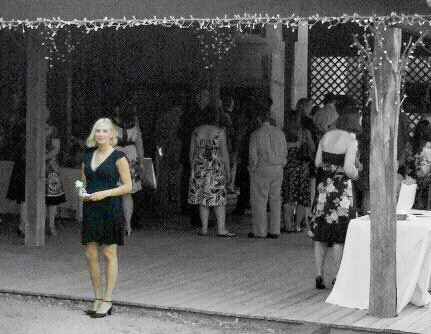
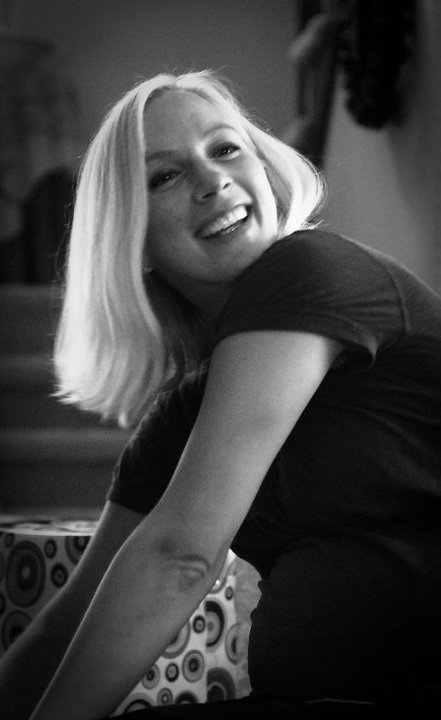
(P.S. That’s me at five months pregnant with you.)
Chapter 21
Hot tears stream down your temples.
They run in a quiet yet small stream that remind you of riverbeds made of black Egyptian kohl eyeliner.
Your hot tears trickle onto your bed where you lie on your right side in the shape of an L, bent at your hip creases.
You tell people that you are not a crier. You know that this only partially true and that we all cry, some of us just more—or less—willingly than others.
Ironically, you also consider yourself a fragile human being, but this fragility has encouraged you to move through your life with a nicely-built, thick shell—a shell that you falsely think is impenetrable to outside attack.
And you know that you are quite vulnerable in reality. Over time, you’ve encouraged yourself to drop your mask—watching it shatter and crack into fragments—only occasionally gluing it haplessly back together to don it once more.
You wear a mask of ego, of confidence and of an easy social butterfly—and sometimes you are these things—it’s not a mask, it’s the real you.
Your eyes are clamped shut and you hear a rustling at the edge of your bed where you still lie sideways in an L.
The soft whisper, whisper of movement is your tiny daughter as she comes in gracefully—delicately—to wave bye-bye to you before Daddy takes her to pre-school. The tears fall harder—now less of a quiet stream and more of a gathering storm.
You hear your husband in the kitchen, moving quickly and capably, to fill your last-minute request of child prep and school drop-off because your headache makes you feel that you cannot face the muted light of the cloudy day, much less the bright faces of other children and their bustling parents.
You’re thankful; thankful for a man who so lovingly steps in and for a daughter who, with your eyes re-closed, you feel gingerly brushing your hair for you—it’s a loving gesture from one female to another, even though one is only a girl of barely three.
You’re grateful for—no, mesmerized by—the old soul that inhabits a body of such miniature proportions.
She hugs you gently, and looks deeply into your wet eyes as she pulls away. She smiles and runs after her Daddy as he opens the front door.
The door shuts and you let your tears fall heavily onto your turquoise quilt.
This is the anatomy of letting go.
You saw your massage therapist yesterday and she released a spot underneath your shoulder-blade that you’re not sure has ever known relaxation—it’s uncomfortably close to your heart.
You drift into such a state of peacefulness that your skilled therapist notes your tranquility out loud. She tells you tostay there, so you do.
You observe later that the release has moved up from your shoulders—from the back of your heart—and into your throat.
Your throat becomes irritated and you lose your voice, much to the disappointment of your duet-loving daughter.
Still, you recognize that release—that letting go—isn’t meant to be comfortable.
You’ve held onto these emotions so forcefully that your muscles have knotted in places and your jaw can’t help but clench in your sleep. You dream of crumbling teeth.
And you slept well last night—much better than usual despite your aggravated throat—and you woke with a headache so fierce that you thought you might throw up.
Your head pounds while the space behind the back of your heart is strangely calm and still relaxed.
Your voice is still gone and there’s an enormous pressure between your ears, but you know that this is simply your clung-too past leaving your aching body.
You clumsily find your phone and call your doctor, making an appointment that gives you just enough time for a hot shower.
You know that she’ll most likely tell you that you have another sinus infection—you’re almost positive—and, yet, it doesn’t matter because you know that this is simply how it feels to let go.
This is the anatomy of liberation.
You pat your dripping hair with a warm blue towel after turning off the shower. You throw on yoga clothes, not because you think you’ll practice in them today as normal, but because they—in their own funny way—are an armor of a different kind—one of health and wellness, of happiness and ease.
You know that your pounding headache won’t last forever, although it worsens when you bend over to tie your jogging shoes. You know that it won’t last forever because you’ve become both too tired and too strong to hold onto your suitcase of burdens anymore.
It’s now your turn to open the front door, and, looking over your shoulder at your daughter’s pint-sized pink and white table and matching chairs, you visualize her waving bye-bye and do the same, and though your hand doesn’t move, you are saying good-bye—and you know that you’ve just made space to carry what lies ahead.
Chapter 22
I sit stiffly at my old dining table.
I feel rigid.
My fingers are pale from the lack of winter sun kissing it and my nails are painted a rich, dark blue. My ruby ring—shaped like a slice of the moon—is large and heavy and it doesn’t turn while my fingers race across my laptop keyboard.
My skin is not only pale, but it’s dry from the lack of humidity in the air. Strangely, however, I’m not ready for the end of winter to come.
Others are counting down days, while we sit patiently or irritably within this Midwestern season of arctic cold and snow accumulation. Yet I feel as if this parched season of chilliness settles perfectly into the stillness—the tiredness—of my bones.
My fingers move more cautiously than normal. The words don’t want to come, because I don’t want to anchor into my beating, churning heart.
This morning my tiny lady and I drove to her music class and I purposefully—and unusually—left my sunglasses off. And it wasn’t just the several inches of white that had fallen and then stuck the night before, but the ironically dry road that reflected the sun so brightly that it reminded me of an ocean—a sea of blinding yellow-peach light that felt like I was driving my little silver Volkswagen into a strange morning dream and not towards a shore of store fronts and rush hour traffic.
What hit me most about that gorgeous wash of early sunlight on the street was that I felt like it was washing me.
A euphoric calm penetrated my depths, as I sat on my heated car seat with my hands at ten and two o’clock. My daughter was quiet in the backseat, looking out the window.
And as I’m driving and this sensation is beginning to approach me on a conscious level, I recognize that the song playing through my car stereo has the refrain “big hard sun.”
I listen, I drive and I feel like everything will be okay, even though mentally and externally it seems that life is not coming together the way I have falsely—rigidly—designed.
We pulled into our destination—a muck and slush-covered parking lot next to the music building—and the tranquility dropped away, but I held onto that indescribable internal stabilizing and settling as the day wore on; as I eventually put on my sunglasses; as I drove home with a different song playing in the background—and as my emotions became more and more turbulent.
Chapter 23.
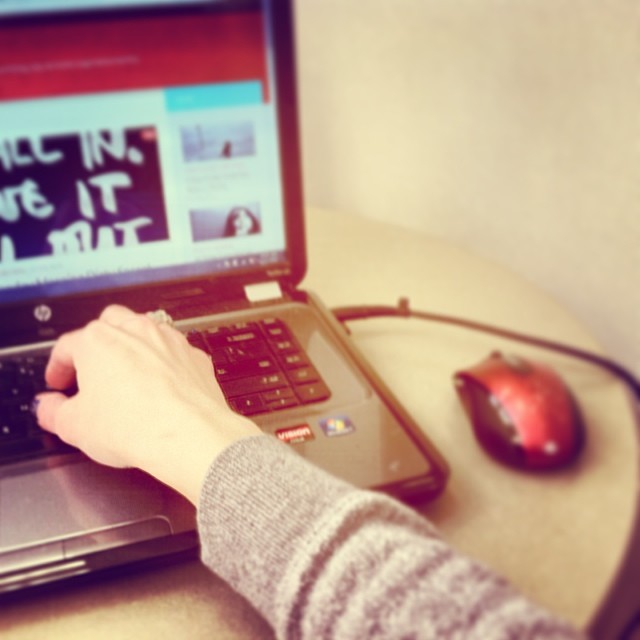
The family heirloom ring that I wear most days on my right fourth finger twists and turns as I type. The words do not want to come out.
Normally they burst forth with such a wave of passionate explosion that I can’t contain them, even when I sincerely give effort to doing so.
My right hand hovers above the laptop keyboard, moving quite a lot even though I’m willing it to hold it still.
Nerves are a funny thing.
I’ve been up since three a.m.
I awoke next to my daughter in pink princess sheets—her breath softly filling up my inhales; her delicate sleep sighs making me quake with love. I tip toe out of her room; shutting the door quietly but it still creaks into place anyway. I move methodically through making myself coffee; opening up the laptop.
I realize fairly early on that I don’t want to write about feeling this way because how do you describe anxiety as anything besides its unpleasant play of tangled emotions, sitting in the base of your stomach, making you want to vomit before you’ve had anything to eat or drink.
It hits me suddenly that this one person is my home; that this one, fragile human life has been my home base.
And how do you tell someone, in their tender earthbound skin, that they are your gravity; your weight; your lifeblood? How do you make enough homemade chicken soup to soothe an always breaking and repairing human soul? How can words not fail—despite all of their glory and aspiration—to convey something as unlimited, as unquenchable and as indefinable as love when their own shapes have beginning strokes and ends?
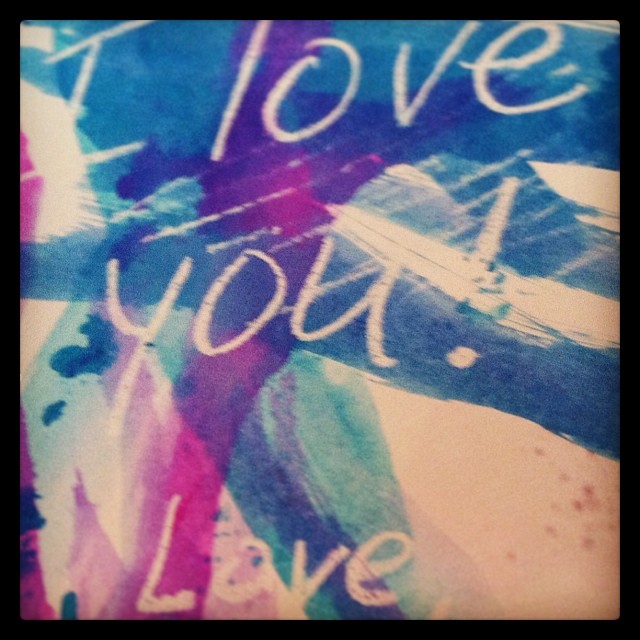
We tell people that it will be okay and that all things work out for a reason, but is this really true? Or are we just filling the uncomfortable space of the uncertainty of life with our flat and hollow mortal words?
I will not pour emptiness into the space just to watch it fill up.
But then I find myself shyly whispering it’s going to be okay.
Because, as it turns out, I’m not filling space with shallow words—I’m filling up another’s heart with love from my own.
Chapter 24.
We hold feelings and experiences in the tissues of our bodies—this is another belief and reality of a yoga practitioner.
I don’t doubt this because I observe the way I clench my jaw, my abdomen, and how I grip throughout my hips when I’m stressed or anxious.
Our hearts and our emotional beings are intrinsically connected with our physical selves.
I notice that I can work so hard to mentally get myself out of a bad mood or an intellectual funk and then I get onto my mat and flow and breathe and be and it just disappears all by itself, by working my muscles in and out of yoga poses.
And as an extremely sensitive, empathetic person, my yoga practice has played a crucial role in my self-love and my willingness to want to get out of my cage—to want to grow up into a strong, whole woman instead of living as a broken little girl.
But that’s the strange thing about healing and about love—we don’t always want to get well.
We don’t always want to be whole. It can be much easier living as a hollow, breakable individual because we’re not filled up with the gooey, mushy, penetrable parts of us that are never immune from pain; from hurt.
And the anorexic attempts to break herself first—a preemptive strike; a self-defense.
It doesn’t work.
Instead, she lives in a constantly broken state of pain and every small, inevitable blow of life comes crashing down with full-force blunt trauma that has the speed and power to cripplingly wound rather than temporarily disable.
What begins as self-salvation from a terror too large for her to handle turns into her Achilles’ heel; making everything that comes her way nearly impossible to manage.
She digs herself into her own grave, even though that was never her intention. Rather, her aim was to set herself free—to fly high above her worries and her sorrows—but now she has nowhere to go but down, down, down or up at a nearly vertical angle.
So what does she do?
Does she keep burying herself?
Or does she grow wings, so that she can finally fly, as she’d originally tried to do, but in vain.
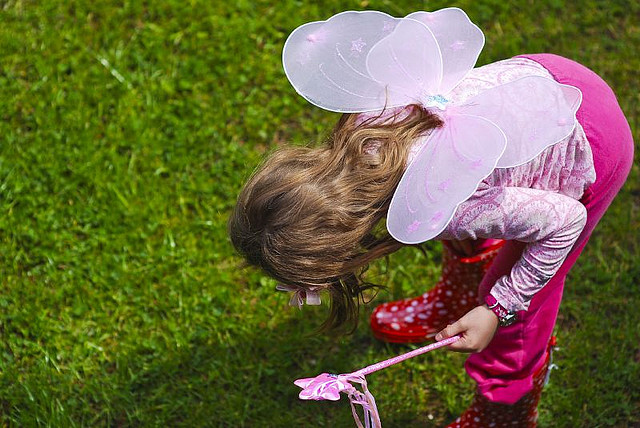
Photo credits: Author’s own; Arwen Abenstern – KWP/Flickr.
The post The Caged Girls: How to Grow Wings. first appeared on Jennifer S. White.
]]>The post The Caged Girls: The Key. first appeared on Jennifer S. White.
]]>Part Five: The Key (Chapters 13 through 17).
Chapter 13
She sits typing rhythmically in recycled plastic yoga leggings that are softer than satiny silk.
Unicorns run down the backs of her legs and the vibrant coral of the fabric’s magical desert-sunset backdrop goes completely with her fluorescent pink top.
She knows that she looks ridiculous to probably most people, but she doesn’t care.
Her new good luck charm—a gilded unicorn on a gold chain, adorned with a faceted and meaningful peach gem—rests below her throat and above her quaking heart.
Her fingers feel clumsy today—simultaneously sleepy and too rested. She glances quickly at the clock, notes the time and continues to work; wearing only her new gold necklace and wedding rings, the deep sapphire blue band sparkles as her fingers dance across her laptop keyboard.
The words tumble out freely—the releasing of long-stagnating water—and she contemplates her outright declaration that this will be the year of the unicorn—the year she’ll believe in magic.
Chapter 14
Her daughter now owns a matching pair of recycled plastic, unicorn-backed pants.
She sits on her mother’s lap, so that their thighs can touch and she can point to where their knees are cloaked in the same soft material.
She doesn’t yet understand the magic of the unicorn or what her new clothing symbolizes, but she feels deeply that they are special—if only because they allow her to match her mama.
But she knows that magic is real.
She sees the way that snow drifts down in huge whirls from their rooftop; the way the light catches on an icicle outside her bedroom window; how a person can hold the entire universe inside the palm of her tiny, closed hand—even if that hand is still much bigger than your own.
It intrigues, also, the older woman that people can be so small and inconsequential and yet so correspondingly huge.
She feels the way that she compares her popularity to others on base social network sites and the few friends that she has by how rarely they call when she needs. It disturbs her—these things playing any level of significance in her day’s thoughts—because, as she sets her phone aside, she sees plainly the way the younger girl looks at her—like the world would stop its turning if for one moment her mother’s small star set.
She closes the pieces of plastic that make up her laptop—where her fingers twist stories and her mind enters the tangible—and she sits motionless for a beat or two, so that the buzz of her words might settle and dissipate into the air that she and her daughter breathe.
Chapter 15
I can’t believe that I write about my eating disordered past.
It doesn’t shame me or feel lowly, but that girl feels like a ghost and nothing at all like me.
But then I place myself in time—back when she lived and thrived and flourished—and I recognize how ill I was and how this girl was definitely me, however removed from her I am currently.
And then I walk into the yoga studio and I hear women talking about their backsides as they scan them in the lengthwise mirror or a friend tells me how round she is in the middle or, worse yet, I see small children already noticing how and where their bodies differentiate from their peers.
I know that I can’t keep my daughter from this body assessment, no matter how hard I try—a cage awaits her, and it’s not as far down our road as I often like to think.
I can’t keep her safe from herself forever, but I can tell her my secret—the story of my own disease and how I learned to love myself after a long and arduous, up-hill journey and I can do something that most of us do not: I can let her in.
It’s definitely easier to push people away when life grows difficult, and I’m absolutely guilty of this behavior, even when what I need most is a gentle hug or a word of tender kindness from someone who knows me well; it’s a protective coping skill that’s developed as we learn how much we can tolerate and what makes us want to shut down, and it’s challenging times like these—when we fear we have broken irreparably—that a cage can actually become a welcome home.
Still, having anorexia is an extremely unsuccessful way of reclaiming this comfort of control.
At first, the hunger pangs that go ignored are empowering and the mind conditioning—not unlike a long-distance runner—becomes a source of pride. The inherent flaw with this plan, though, is that the downward spiral of physical weakness and the dependency on the disease itself both negate any semblance of control that the victim can possibly maintain (which usually isn’t much anyways).
There’s a reason, too, that many women never recover.
For one, our society has a horrible way of giving silent props to thin women, even if it took starvation to get there. At the same time, we condemn this unhealthy behavior, and this blatant double-standard does not go unnoticed—and it’s confusing, especially to young, forming girls.
Fashion models, actresses and gorgeous singers are gold-worthy goddesses, and the assumption is often that they are eating disordered in some way—they must be—and then, regardless, we hold them high on (tipsy) pedestals where our little girls look up at them in idol worship.
And how disturbing is that? Essentially, we’re promoting each round of new females to battle their bodies; to live in cages with limited stores of food and copious amounts of self-conscious critiques.
And, yes, we can argue that not every woman becomes anorexic or even eating disordered at all—and, surely, there are small amounts of truth buried there—but we can’t ignore how many of our daughters and sisters and mothers and lovers judge themselves next to unfair and unreachable standards. More, we can’t pretend that somewhere—every day—girls aren’t climbing into cages that they might never be able leave.
Chapter 16.
I would wake up in the morning before school and immediately stand in front of the bathroom mirror.
I would lift my lavender and white striped pajama top and look at my concave navel and the slight protrusion of my ribs.
Later, as I walked through the school corridors, I would look down at white tennis shoes as other girls passed by. I was a good girl who did my homework and didn’t let boys touch her underneath her shirt.
I sat down at the long, faux-wood table in front of a clunky, old computer and the boy next to me remarked that my glasses looked like they didn’t fit me anymore and that my face had shrunk over the summer and was I okay?
It struck me as fascinating that this boy with the slightly naughty reputation would be one of the only people to ever ask that question—to my face, at least.
And then I was sitting on the bench in the women’s locker room of the strip-mall gym that I frequented early in the morning, before my classes began at the university. The sun was barely up and the locker room was dim, bordering on dark.
A woman I didn’t recognize in the least asked me, almost frantically, if I was okay. She wasn’t able to walk past my gaunt frame lifting weights or working in the cardio room, the way that the others could and did.
I stepped on the scale before I left—92 pounds.
I walked down the long, underground school hallway to my mineralogy class and my favorite professor asked how I’d keep warm when it really got cold—I was wearing a thick, scratchy wool sweater and it was barely October.
I walked into the bathroom after class; the one where few girls entered because not many were in the geology building in the first place.
I bent at the waist and looked underneath the two stalls for feet and, seeing none, lifted my ribbed cotton shirt; examining my concave navel and protruding ribs. The girl who looked back at me was empty; hollow. Her eyes didn’t sparkle and her smile wasn’t there either. Her hair wasn’t shiny and her stomach had a thin coating of downy hair.
Who are you? I wanted to ask out loud—I wanted to shout. What have you done with the real me?
I pulled my shirt down and picked up my book-weighted backpack. I pulled with all of my 92 pounds on the metal handle of the heavy bathroom door and returned down the empty corridor to my chemistry class.
I wondered absently if this was the real me, in that bathroom mirror, and a shiver of terror ran from the back of my head to my empty stomach, creating goose-flesh on my almost skeletal arms.
Chapter 17.
My scrawny limbs scratch and the flesh tears as I reach desperately through the metal bars.
I can see white-blinding light streaming in through thin, parallel slats.
I went out to dinner with my boyfriend. He wants desperately for me to just eat; to be well; to not be slowly killing myself while pretending nothing’s happening.
I’m over 21, but I don’t drink. I sit down across from him at the round, alabaster cloth-covered table and order a glass of rosé. My first sip tastes bitter—like slightly tart juice. I decide to swallow it, not because I really care for the alcohol content, but because I hope that the wine will be my spoonful of sugar that helps the medicine go down.
It works and I regularly drink wine with my meals.
We order deep fried pickles served with a homemade, creamy white sauce, the consistency of which disturbs me on a deep level. I ask the waitress to bring the veggie sampler as my meal—it’s a plate of raw vegetables.
We walk home after dinner, to our cozy, we’re-in-love-and-this-is-our-first-ever apartment.
Inside I slip off my jacket and he touches my cheek with his work-toughened fingers. He lightly kisses me and pulls me towards our sparse bedroom, down the long, dark, narrow hallway. I’m needing his body in a way that’s absolutely more than physical—I’m needing him to love me.
We spend innumerable nights alternately studying, watching Seinfeld and, basically, growing up together in our second-floor apartment in a college town plopped down somewhere in a Midwestern cornfield.
We fall in love and we, sometimes, fall out of love to. (I’ve learned that the secret to a relationship’s survival is not falling out of love at the same time.)
Of course, we never truly fall out of love, but we do fall out of accord with each other—especially when I’m riddled with my disease. It affects every aspect of my being and it takes my personality away. The starvation doesn’t just hit my taut-skin-over-bone body, it dissolves the very center of myself to an almost empty state.
I watch acids work in similar fashions from where I sit, perched high on my black leather stool in chemistry class. I also watch liquids change color—periodically transforming completely—with the addition of just one small ingredient.
I begin to believe in magic—and not the kind that leads other college kids to purchase corny metal daggers and velveteen, hooded cloaks—but the kind where anything is possible—where I can be free.
I feel glaring light hitting my face in even, thin slants. I close my eyes and hug my thighs up to my chest—curling into a ball with the smallest surface area imaginable—and when I reopen them, I see a figure standing over me—arms outstretched, work-toughened palms wide and face up.
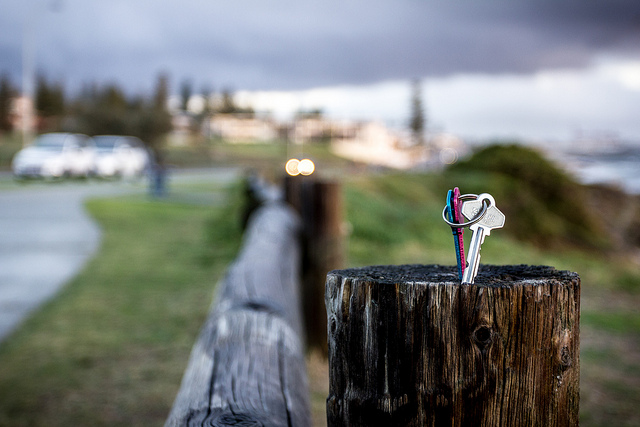
I blink repeatedly—being so unused to bright light and the juxtaposition of his dark shadow with it—and I hear the tinny clink of metal landing hard on metal. When I look over, to where the sound came from, all I see is a worn, thick key.
Photo credits: Daniel Lee/Flickr.
The post The Caged Girls: The Key. first appeared on Jennifer S. White.
]]>